1
allows the observer to work the radio to execute the coordination. The observer
will likely also have to be the one who keeps track of where you “left” your target.
After these tasks are delegated, the observer simply talks the ground team to
the target. What could be easier? Well, of course there are additional factors to
consider.
First of all, how do we get the aircrew and the ground team together in the
first place? You will often find that a poorly conducted rendezvous with the
ground team will result in a frustrating "search for the searchers." It is important to
brief the mission with the ground team, if possible, and at least agree on
communications frequencies and lost-com procedures, maps/charts to be used by
both teams, determine what vehicle the ground team is driving (e.g., type, color,
and any markings), determine what the ground team members are wearing (highly
visible vests are preferred), and a rendezvous point and time window for
rendezvous (+/- 15 minutes).
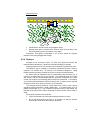
One tried-and-true method is to rendezvous at a landmark that both the
aircrew and the ground team can easily identify. A common rendezvous point is
an intersection of prominent roads; these are easily identifiable by both the
aircrew and ground team. The rendezvous location should be set up before you
leave mission base.
Also, ground teams that have a hand-held GPS can radio their latitude and
longitude coordinates to you and say, “Come and get me!” If you are unable to
loiter over the target and bring the ground team to it, you can simply radio the
coordinates to the ground team and let them navigate to it on their own. This is
not nearly as efficient, however, as when you lead them to it. Note that two
pieces of technology have to be working properly to make this work: 1) both air
and ground operators need to be proficient with their GPS units and 2) two-way
radio communication must be established and maintained.
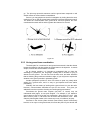
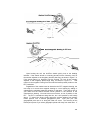
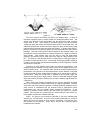
After visual contact with the ground team, the pilot may use flaps to reduce
groundspeed. If you lose radio communication, you can use the signals as listed
below. However, these signals may be used as a standard to be followed in
addition to two-way radio communication for additional clarity and practice. Allow
plenty of room for your maneuvers or you may confuse the ground team and do
not rush your signals.
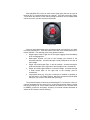
Note: It is important to plan for a loss of communications during the briefing.
The teams should agree on pre-arranged signals such as: stopping the vehicle
means lost com; blinking headlights indicate the message has been received; and
operating the flashers means the message hasn't been received.
32