1
Commercial Laboratory Equipment
161
2U, 3U, or 4U (for height). Keithley strives for similar dimensions in their
bench-top laboratory equipment. Their goal is encourage the smooth migration
of thought and test from the R&D bench top to the factory floor.
All enclosures are custom and conform to internal company standards.
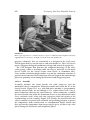
Mechanical engineers design the enclosures to account for thermal dissipation, vibration, and acoustic noise. For many years, Keithley has incorporated a considerable amount of reuse in developing new instruments. As
they move from pull-forward leveraging to using forward-looking platform
management, they have some standard dimensions and interfaces for buttons and displays.
While Keithley’s TSPTM can provide ‘‘seamless extensibility,’’ not every
customer application and not every instrument needs it. When it does not
provide enough added-value, the TSPTM is left out of the instrument design
to save component and manufacturing costs.
There is a balance to reuse and optimization; every module, whether
hardware or software, cannot be designed and built with such flexibility
that it can meet every possible future need or contingency. Even if it could
meet all of the performance needs, the cost of this modularity and flexibility
would probably violate other trade-offs in engineering. At some point, the
instrument will need some unique capability to perform its ultimate task.
6.9.2
Hardware
Forward-looking platform management strives for standard sets of
processors, memory, and processor boards. Common platforms save inventory costs by reducing the variety of different components. Common
platforms also reduce manufacturing and assembly costs by having increased
volumes. As stated in the previous section, a common platform may not suit a
particular instrument; unique requirements may force custom designs to
accomplish the task.
Circuit boards are another area for design trade-offs. Generally they are
multilayer, usually between 4 and 16 layers and possibly more. Both EMC
isolation and complex interconnects drive the design of the circuit boards,
their complexity, and the number of layers.
Keithley engineers try to balance between theory and practice. The skill
lies in understanding the point of ‘‘too much’’ versus ‘‘not enough’’ theoretical modeling and knowing when to do a quick turn PC board to test an
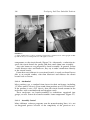
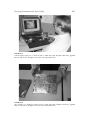
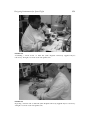
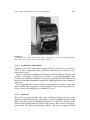
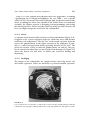
idea. Keithley has a PCB milling machine that can turn out a double-sided
PCB for prototyping circuits in less than an hour. This capability allows
them to quickly test out ideas for circuits.
6.9.3
Power
Keithley products sell internationally, with about one-third of its sales in
Asia, one-third in Europe, and one-third in America. Power supplies built
into their equipment, therefore, have universal inputs; they take 120–240