1
Developing Real-Time Embedded Products
336
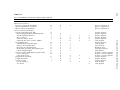
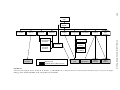
Systems engineer or architect
Electronic hardware engineers
Software and firmware engineers
Information technology (IT) specialists (which may be a corporate
function)
Industrial designers
Mechanical engineers
Manufacturing engineers
Technicians
Documentation specialists
Regulatory specialists and regulatory affairs representative
Quality assurance (QA)
Additional important groups:
Clinical
Packaging
Purchasing
Each of these people will probably overlap in function and expertise. Some
people, particularly in smaller organizations, may wear several ‘‘hats’’ and
do several different jobs simultaneously.
The team lead manages the business of the team and assures that the
project moves forward. They primarily care for the business case and for
getting the appropriate people and expertise on staff for the project.
The biomedical engineers will most likely have the greatest interaction
with the clinicians, physicians, medical staffs, and marketing team. They
usually are responsible for the project requirements and assure that testing
addresses the metrics. They tend to have more interaction with the clinical
staff than anyone else.
The systems architect or engineer may be the team leader in small projects.
In larger projects, the systems architect can play more of an advisory or
mentoring role to the design team. A systems architect helps everyone see
the ‘‘big picture’’ during development and can ease the functional integration of the different specialties.
The electronic hardware engineers and technicians shepherd the development of the circuitry of the medical device. The team may need a range of
expertise—digital, microprocessor, analog, and radio frequency (RF). They
handle component selection, circuit board design and fabrication, and event
tree analysis (ETA), fault tree analysis (FTA), and failure modes and effects
analysis (FMEA); they prepare testing and record the results; they write
instructions for assembly and prepare the bill of materials. In some cases,
a team might even design the integrated circuit chip for a processor or
application-specific integrated circuit (ASIC) for the medical device.