1
2.1.2 General Pre-Processing Options
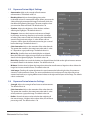
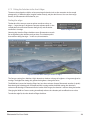
After the bracketed images are selected, the pre-processing settings for the images may be customized before
the 32-bit HDR image is generated. Refer to the following list for a description of the available options for
merging bracketed images:
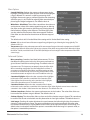
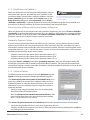
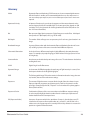
Alignment Options
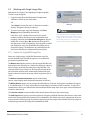
The Align source images option is checked by default. It corrects
misalignment problems when the camera moves slightly between
the bracketed frames. Hand-held photographs and even some
images shot with a tripod have camera movement.
•
By correcting horizontal and vertical shifts: Faster method,
but only corrects for translation movements.
•
By matching features: Corrects for rotation, translation
and scaling differences, as well as perspective distortion if
included. Recommended for hand-held shots.
•
Include perspective correction: Requests that the alignment
by matching features corrects for perspective distortion in
addition to correcting for translation, rotation and scaling
differences.
•
Crop aligned images: Checked by default. Removes the
unused borders that appear when the images are shifted to
correct for mis-registration. Leave this box unchecked if you
need the resulting image to have the same width and height
as the source images.
•
Maximum shift: Sets the maximum mis-registration shift
that the alignment attempts to correct for, and is expressed
as a percentage of the image dimensions. This setting does
not need adjusting in most cases. A situation when adjusting
this setting may be useful is when the camera barely moved
between the bracketed shots. In this case, setting a maximum
shift lower than 12% will restrict the number of alignment
corrections searched, thereby reducing the risk of selecting an
improper alignment correction.
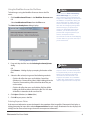
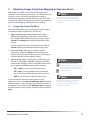
Selecting pre-processing options
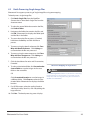
Note
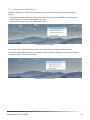
The Align source images option should
not be checked when your source images
are stitched panoramas or when they are
"fake exposures" derived from a single
RAW file.
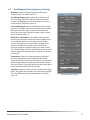
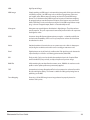
Deghosting Options
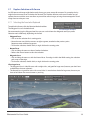
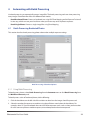
The Remove ghosts option addresses the problem of artifacts
that appear when combining images of a dynamic scene. For
example, if the moving subjects are people walking, the people
appear multiple times in the combined image as if there were
“ghosts”. This is why artifacts arising from movements in the
scene are commonly referred to as “ghosting” and the attempt to
eliminate them as “deghosting”.
Note
The deghosting option is effective for
images processed with Tone Mapping or
with the default Exposure Fusion method.
It is not effective for the other Exposure
Fusion methods.
•
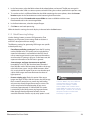
With selective deghosting tool: Activates the Selective Deghosting Tool, which lets you select ghosted
regions and choose the exposure used for each ghosted region.
•
Automatically: Automatically detects ghosted zones in the merged image.
•
Detection: Sets the criteria for determining if a pixel is or is not ghosted when using automatic deghosting.
Photomatix Pro User Guide
7