1
FOR RESEARCH USE ONLY!
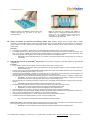
Figure 1: Insertion of the DiaEasy™ Dialyzer tubes in the
provided supporting tray. The arrow on the cap is
positioned face-up.
Sample concentration by evaporation with DiaEasyTM Dialyzer tubes: DiaEasy™ Dialyzer tubes are ideally suited for sample
concentration via evaporation because of their dual membranes and large surface area. Dialysis and concentration in the same device
reduces protein loss. Unlike closed-system centrifuge-type devices, sample concentration can be easily monitored in the DiaEasyTM
Dialysis tubes.
VIII.
•
•
IX.
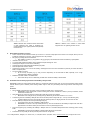
Figure 2: Supporting tray containing three DiaEasy™
Dialyzer tubes in a horizontal electrophoresis tank. The
arrow on the cap is positioned face up and the two
membranes of the DiaEasy™ Dialyzer tubes are in
perpendicular to the electric field.
Procedure:
Place sample in the DiaEasy™ Dialyzer tubes or use already dialyzed sample and place it on the microtube rack stand.
Let samples evaporate on the bench top (using fan to increase airflow across the membrane speed up evaporation process), check
every 10 min or less to prevent full evaporation and dry sample condition. Concentrating by evaporation of water with sample, small
molecules (buffer salts, reducing agents, etc.) will also get concentrated because no diffusion occurs.
IMPORTANT: When evaporating water from your sample, small molecules (buffer salts, reducing agents, etc.) will also be
concentrated.
DNA RNA extraction from gel with DiaEasyTM Dialyzer tubes: This procedure is designed to extract DNA or RNA from polyacrylamide
or agarose gels.
Procedure:
•
Fill the DiaEasy™ Dialyzer tube with 800 µl of dH2O. Incubate for at least 5 min. Empty the tube.
•
IMPORTANT: Check carefully that no dH2O is leaking from the tube. Absorbent of water, by the dry membrane, cause to the
decrease in water level.
•
Excise the slice of gel containing the desirable DNA or RNA fragment with a clean, sharp scalpel. Minimize the size of the gel slice by
removing extra gel. Maximum gel slice size 1 cm x 0.5 cm.
•
Transfer the gel slice to a DiaEasy™ Dialyzer tube. Fill the tube with 0.7 – 0.8 ml dH2O. Close the tube gently. Avoid air bubbles in the
tube. Don’t fill the tube with several gel slices, for larger gel slices use more than one tube.
•
Place the DiaEasy™ Dialyzer tube in the provided tray (see Figure 1). The supporting tray can comprise 1-4 DiaEasy™ Dialyzer tubes.
•
IMPORTANT: The arrow on the cap is pointing face up. The two membranes of the DiaEasy™ Dialyzer tube must be in
perpendicular to the electric field to permit the electric current to pass through the tube.
•
Place the supporting tray containing the DiaEasy™ Dialyzer tubes in a horizontal electrophoresis tank containing running buffer (see
Figure 2)
•
IMPORTANT: Immerse fully the DiaEasy™ Dialyzer tube with the tray in the buffer.
•
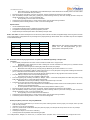
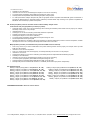
Pass electric current (usually at 80-150 volt) until the nucleic acid exits from the gel slice (see Tables 1 and 2).
•
Optional: Follow the DNA or RNA eluted out of the gel with a hand-held UV lamp or table.
•
IMPORTANT: The electro-elution time need to be adjusted for each individual sample.
•
Reverse the polarity of the current for 120 seconds. This step will release the nucleic acid from the membrane.
•
Open the DiaEasy™ Dialyzer tube gently, pipetting the solution up and down carefully (at least 5 times) and transfer the solution to a
clean 1.5 ml microcentrifuge tube. Do the pipetting on the inner side of the membrane.
•
Centrifuge the microcentrifuge tube for 1 min at maximum speed. This step will remove gel residues.
•
Transfer the nucleic acid containing solution to a clean 1.5 ml microcentrifuge tube.
•
Note: Concentrate the extracted nucleic acid by standard concentration methods;
Elution Time Tables: In this method the elution time depends on the size of the nucleic acid fragment, the concentration of the gel, the
size of the gel slice, the ratio of the polyacrylamide: bisacrylamide and the applied voltage.
•
IMPORTANT: The electro-elution time at the elution step needs to be adjusted for each individual sample.
155 S. Milpitas Blvd., Milpitas, CA 95035 USA | T: (408)493-1800 F: (408)493-1801 | www.biovision.com | [email protected]