1
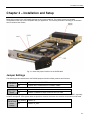
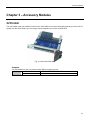
Introduction Chapter 1 – Introduction Xembedded’s XVPX-9400 is a rugged 8-Channel RAID Controller and PMC/XMC Carrier Module in the 3U VPX form factor, targeted for processing, communications and display applications in the commercial, military and aerospace markets. In addition to the RAID controller which provides connection for up to 8 drives, the XVPX-9400 also allows the use of a PMC or XMC module. The XVPX-9940 is the Rear Transition Module for the XVPX-9400 used to turn the backplane I/O into standard SATA connections. The XVPX-9400 supports up to eight PCI Express lanes from the backplane for connection to other cards in the system. Module Features 8-Channel RAID controller with Heartbeat monitor The PMC site is 64-bit, 133MHz 3.3VIO The XMC site is PCIe 8-lanes Gen 2.0 Supports standard IEEE1386.1 modules Supports Vita 65, OpenVPX Module conforms to VPX Spec. Vita 46.0, 46.4 and 46.9 Front panel I/O for the Air-cooled versions. Rear I/O for all differential I/O lines for all variants 8 lanes of PCI Express (Vita 46.0 and 46.4) 3U VPX form factor supporting OpenVPX and Vita 65 Air and conduction-cooled variants REDI covers supporting Vita 48 is available Module and Backplane Profiles The XVPX-9400 conforms to module profile MOD3-PAY-1D-16.2.6-2. Use of this module in an incompatible backplane profile could result in damage to this module or others in the chassis. Note Due to a BIOS limitation on the XVPX-6300, when used with this CPU module the XVPX-9400 RAID device or installed PMC/XMC card may not boot properly when connected to Fat Pipe B. They will function normally from inside an operating system. These devices will boot normally if connected to Fat Pipe A. Handling Modules should be handled in ESD-safe work areas in order to prevent damage to sensitive components from electrostatic discharges. These areas must be designed and maintained to prevent ESD damage. ESD Safe Work Area Guidelines 1. Module should be handled at properly designated work areas only. 2. Designated ESD safe work areas must be checked periodically to ensure their continued safety from ESD. The areas should be monitored for the following: a. Proper grounding methods. b. Static dissipation of work surfaces. 1-1