1
OWL-GEN-SYS-4-UM v1.5
24/06/08
GEN-SYS Rack Unit Installation
Regardless of modular configuration, each GEN-SYS Rack Unit is the same to install.
Gas line Installation
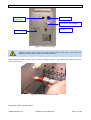
Connect a clean dry air supply (40psi) to the stainless steel ¼” inlet situated at the back of the rack unit. It is
recommended that ¼” analytical grade stainless steel tubing be used; however refrigeration copper tubing
may also be used.
Exhaust line Installation
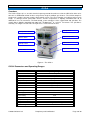
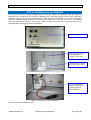
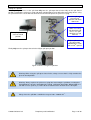
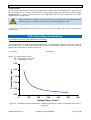
Referring to Figure 1 connect a 2 meter exhaust line venting into a fume-hood to the ¼” exhaust outlet
situated on the back of the racking unit below the inlet. It is important to note that using longer lengths of
exhaust line or an exhaust under negative pressure can effect the total split flow exiting each OVG.
Power Supply Unit
Connect the power supply to the back of the GEN-SYS Rack Unit and the plug to the mains power supply.
Please ensure that the mains plug is accessible during operation.
GEN-SYS Rack Unit Maintenance
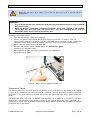
Maintenance is limited but the following tasks should be performed periodically:
•
Check that all cables are intact with no damaged insulation or frays.
•
Check that the pipe-work, particularly the exhaust pipe-work is in good condition and correctly
connected.
•
Clean the unit: Clean the outside of the equipment with a damp cloth, using water only. Do not
use chemical cleaning agents. Before using any other cleaning or decontamination method,
check with your local Owlstone representative to make sure that the proposed method will not
damage the equipment.
If potentially hazardous material is spilt onto the equipment, disconnect it from the power supply
and have it checked by a competent person. It is the user's responsibility to carry out appropriate
decontamination if hazardous material is spilt on the equipment.
•
Routine Safety Tests
The power supply supplied with this product provides protection by double insulation, but because it has
a functional earth, cannot be marked as double insulated. The earth connection is not a protective
conductor and should not be tested for continuity using e.g. a PAT tester.
If routine tests are to be made, we recommend an insulation test at 500 Vdc. Routine flash testing is not
recommended for any electrical equipment, because repeated high voltage tests degrade insulation
materials.
© 2008 Owlstone Ltd
Proprietary and Confidential
Page 8 of 20