1
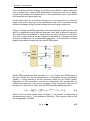
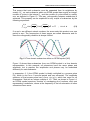
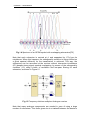
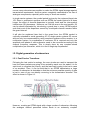
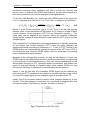
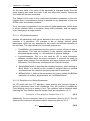
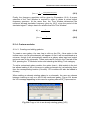
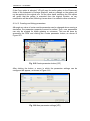
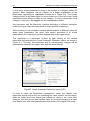
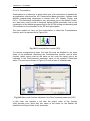
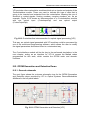
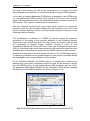
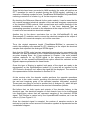
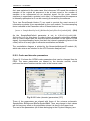
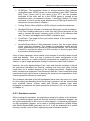
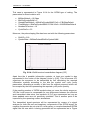
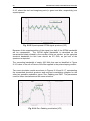
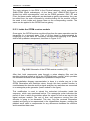
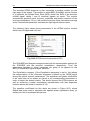
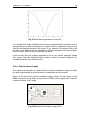
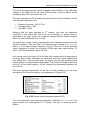
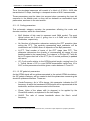
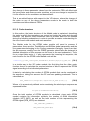
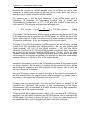
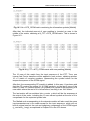
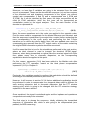
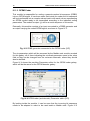
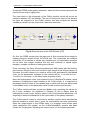
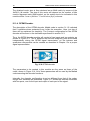
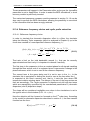
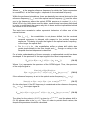
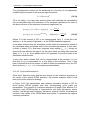
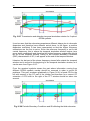
CHAPTER II – OPTICAL OFDM 23 At reception the same signal will be obtained without any distortion but with a constant delay. On the other hand, in a dispersive channel the phase constant has a nonlinear dependency with frequency and as a consequence of the different arrival times of the frequency components, the recovered signal at the reception end will differ from the transmitted one. Assuming a slow variation of the phase constant inside the signal’s frequency bandwidth, it is possible to consider a Taylor expansion of the propagation constant about a central pulse frequency as follows: o 2 o 3 0 o 2 6 2 3 2 3 o 1 2 3 2 6 2 3 (II.2) Where the third and higher order terms can be neglected if it is considered that , which enables the possibility to rewrite (II.2) as: (II.3) The coefficients in (II.3) are related to the following parameters: relates to the Phase Velocity , which verifies: (II.4) And it can be defined as the velocity at which the phase of a pure tone at frequency would propagate. is related to the Group Velocity , of the pulse by: (II.5) The group velocity can be defined as the rate with which changes in the envelope of the wave (amplitude) propagate. The Group Delay , given in (II.5) in seconds/fibre length, gives the delay experienced by an envelope centred at frequency , provided its bandwidth is not too large, as the Taylor expansion would no longer be valid. It can also be thought that this delay is a kind of average delay of all the frequencies in a small bandwidth around the carrier.