1
Chapter 11
Car Audio Applications
11.3 Vehicle Acoustics
The goal of this discussion is to point out the major aspects of vehicle acoustics.
Later sections will show you how to measure them with the pcRTA.
The acoustic space inside a vehicle is one of the most difficult and demanding
environments in which to install a sound system. The small size of the space and
the varying reflective and absorptive surfaces within it create many problems
when optimizing a system for sound quality.
On the other hand, the small size makes it possible to create Sound Pressure
Levels (SPL) at low frequencies that would require much more power and many
more speakers in a larger space.
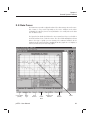
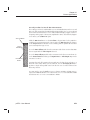
Standing Waves
When designing a car audio system, you must take into consideration the effect
of standing waves. Sometimes known as 'modes', they are a major problem in
car audio situations.
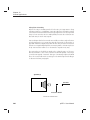
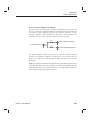
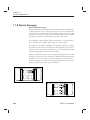
Whenever there is sound in an enclosed environment, there will be standing
waves within that environment. Standing waves occur at frequencies whose
wavelengths correspond to twice the distance between the walls of the space.
In cars, standing waves typically occur between 50Hz and 200Hz depending
on the size of the vehicle.
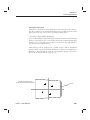
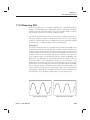
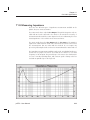
It is important to understand that there are several modes (standing waves) in
any car, and when these modes are combined they can cause large peaks or
dips in the frequency response curve. This is because the standing waves will
be at different phase angles. When two waves at the same frequency and equal
phase combine, they increase the SPL at that frequency. When two waves at
the same frequency and opposite phase combine, they decrease the SPL at that
frequency.
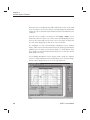
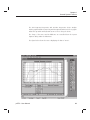
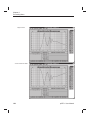
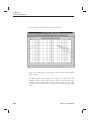
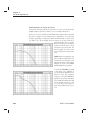
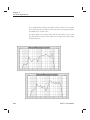
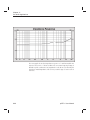
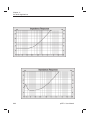
Standing waves are very apparent when measuring at a single point in space.
As the point of measurement is changed, the peaks and dips caused by the
standing waves will appear at different frequencies across the spectrum. For this
reason it is recommended that measurements be taken at several different
points in space and then averaged. This technique is called spatial averaging, and
is explained in greater detail in a later section.
pcRTA - User Manual
295