1
Trips/Faults
A Trip is an ASD response to a Fault (though, Fault and Trip are sometimes used interchangeably). A
Trip is a safety feature that disables the ASD system in the event that a subsystem of the ASD is
malfunctioning.
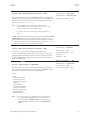
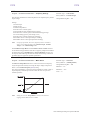
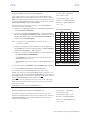
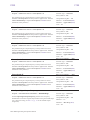
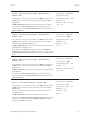
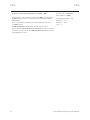
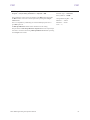
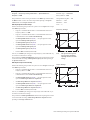
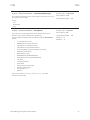
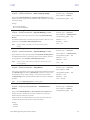
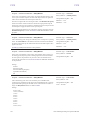
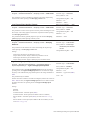
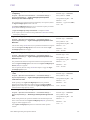
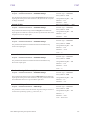
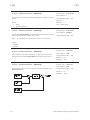
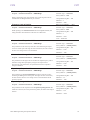
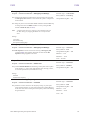
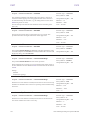
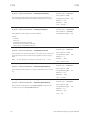
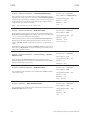
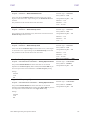
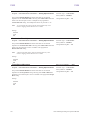
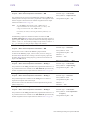
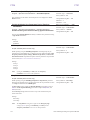
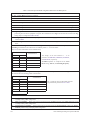
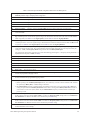
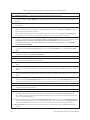
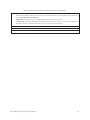
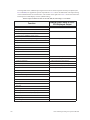
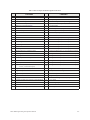
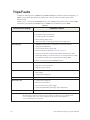
Listed in Table 10 are the possible Faults that may cause a Trip and the possible causes. When a Trip is
incurred the system displays the Fault screen. The Fault screen identifies the active Fault.
Table 10
Fault Screen Display
Inverter (ASD) OL
Possible Causes
• Acceleration time is too short.
• DC Injection current is too high.
• V/f setting needs to be adjusted.
• Motor running during restart.
• ASD or the motor is improperly matched to the application.
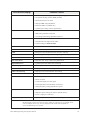
Autotuning Err
• Autotune readings that are significantly inconsistent with the
configuration information.
• A non-3-phase motor is being used.
• Incorrect settings at parameter F400, F413, or F414.
• Using a motor that has a significantly smaller rating than the ASD.
• ASD output cabling is too small, too long, or is being housed in a cable
tray with other cables that are producing an interfering EMF.
• Motor is running during the Autotune function.
Comm Error
• Communication malfunction.
• Improper or loose connection.
• Improper system settings.
Ctrl Undervolts
• This fault is caused by an undervoltage condition at the 5, 15, or the 24
VDC supply.
• 3-phase input voltage low.
CPU Error
• CPU malfunction.
Main Undervolts
• 3-phase input voltage low.
• Defective control board.
• Excessive load on the power supply.
• Undervoltage/Ridethrough settings require adjustment.
Fuse
• Internal DC bus fuse is open.
Note:
172
The event that caused the Trip(s) must be corrected or must decrease to less than the
threshold value required to cause the trip to allow for a Reset to be recognized. In the
event of multiple active trips, the trip displayed will remain until all faults are
corrected and all trips are cleared.
HX7 ASD Programming and Operation Manual