1
Overview
Asset Manager is an enterprise class software application. It is a highly scalable asset tracking and asset management software solution that
is tightly integrated with RF Code’s Real-Time Locating System (RTLS) readers and asset tags. It is also an advanced environmental
monitoring software solution that is tightly integrated with RF Code’s line of wire-free environmental sensors.
Asset Manager combines powerful, yet easy-to-use tools for configuring locations and asset hierarchies, creating comprehensive views of
how critical assets are deployed across departments, buildings, or entire organizations. All current and historical Asset Attributes, such as
financial information, physical location, and contractual information can be maintained in a database, enabling complete asset life cycle
management. Inventory reports are available at the touch of a button so users can proactively respond to audits and automate their
regulatory compliance efforts.
When deployed with RF Code’s active RFID tags and readers, physical asset location is tracked in real-time to quickly locate and identify
equipment for maintenance and service, avoiding costly downtime. Automated alerts and reports can be configured for immediate
notification of asset location or condition changes, delivering savings in both cost and time.
Asset Manager’s secure browser-based enterprise web console requires no software to be installed or maintained on user systems, and rolebased user accounts make it easy for system administrators to control who can view and who can modify asset details and conditions
within the deployment environment.
RF Code Asset Manager, combined with RF Code’s active RFID hardware, provides an end-to-end solution for real-time asset tracking
and environmental monitoring. In addition, Asset Manager can greatly enhance existing DCIM systems.
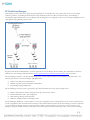
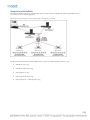
The major components of the Asset Manager system are the following:
•
•
•
•
•
•
Active RFID tags
RFID tag readers
The Asset Manager server
The Asset Manager web console
Optionally, infrared (IR) locators
Optionally, multiple separate instances of Zone Manager
The following sections are provided to give you a deeper understanding about RFID technology and use in general as well as technical and
operational details about RF Code hardware. If you want to begin using the RF Code Asset Manager system, you can skip these sections
and jump to the Licensing section, which is immediately followed by installation instructions for Asset Manager.
RFID Technology
Radio frequency identification (RFID) technology uses radio waves to identify objects. A radio transmitter (called a tag) is attached to the
object to be identified. A radio receiver (called a reader) decodes and reports the tag transmissions within its coverage zone. The reader
forwards this information over wired or wireless networks.
Each RF Code tag has its own on-board power supply, a CR2032 coin cell battery. Tags operate with a very low duty cycle; every 10
seconds, the tag wakes up and broadcasts a very short status message at 433 MHz before it sleeps again. The tags are one-way transmitters.
RF Code readers are dual-channel receivers tuned to receive signals at 433 MHz. They do not use high-powered radio or magnetic fields to
energize or trigger the tags in any way.
Typical RFID applications include item tracking, inventory control, asset management and environmental monitoring. A specific example
is the tracking of servers and network equipment in the data center. The impact of RFID on IT systems depends on three factors: the
power of the transmission, the distance from the emission source, and the type of equipment in the path of the transmission.
RF Regulatory Compliance and RF Transmissions Safety
Transmission power is strictly regulated by governments to ensure that IT devices can coexist with RFID systems. Part 1 of the US FCC
Part 15 mandates that a certified wireless device may not cause harmful interference. Moreover, most IT equipment is enclosed in a metal
casing that is RF-opaque to UHF transmissions at 433 MHz. RF Code tag transmissions do not penetrate the metal casings of typical IT
equipment.
RF Code systems do not have any negative affect on IT equipment in a data center or in similar environments like telecommunications
9