1
B. Jovanović, M. Jevtić
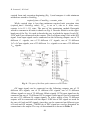
Monitoring module sets INTR (Interrupt request) signal each time when any
of currently executing tasks do not execute properly or execute outside of
required time interval. As a response, RTS reads the message from Data Bus
and sets INTA (Interrupt Acknowledge) signal. Message contains information
about the interrupt nature and the ID of the task that caused interrupt. It is now
scheduler policy to determine the actions that will be taken. When receiving
Interrupt Acknowledge, monitoring module resets INTR signal and continues to
monitor RTS.
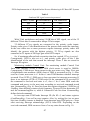
Sl signal is 3 bit select used by RTS when selecting the register from which
want to read data (or selecting the register to write data to). The use of this
signal will be later explained with more details.
Clr signal has a function of clear signal and it is used by RTS to reset
monitoring module.
Monitoring module is controlled by software primitives from RTS and has
the following functions:
• Setting the working mode of the timers-counters,
• Setting the time constraints,
• Enabling the timers-counters,
• Disabling the timers-counters,
• Reading the timers-counters,
• Timers-counters interrupt processing; and
• Comparison of the timers-counters state with time constraints.
During the system verification phase monitoring system provides
information about system timing characteristics and creates a log file. During
the system operation it should detect deviations from predicted timing
behaviour. These deviations could be the possible consequence of a failure in
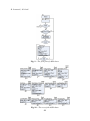
RTS. Thereby, monitoring system has two working modes. First mode refers to
the system analysis. It performs with the purpose to measure the execution time
of every RT task. Obtained information can be used for the future control of the
RTS. In the second mode monitoring module has the function of built-in selftesting based on a watchdog function. It checks the upper and lower time limit
at the tasks and periodic and quasi-periodic events level. The activation of each
task initiates the procedure of starting his assigned timer-counter. Monitoring
timer-counter sets to previously defined maximum task execution time and
starts its countdown. If excess of the time interval happens, monitoring module
sets interrupt request. If the task is complete before time excess, timer-counter
stops its countdown with the end of task execution. Monitoring module reads its
state and checks whether the task is executed before the minimum needed
execution time. If the task is executed in regular time intervals RTS continues to
42