1
We give a brief overview of how the theorem prover works in section 2.4. We
also describe encapsulation, a mechanism for introducing constrained functions,
functions that satisfy certain constraints, but that are otherwise undefined. We
end section 2.4 by describing books in section 2.4. Books are files of events that
often contain libraries of theorems and can be loaded by ACL2 quickly, without
having to prove theorems.
In section 2.5 we list some of the applications to which ACL2 has been
applied. We end in section 2.6, by showing, in detail, how to model hardware in
ACL2. We do this by defining a simple, but not trivial, pipelined machine and
its instruction set architecture.
2.1
Data Types
The ACL2 universe consists of atoms and conses. Atoms are atomic objects and
include the following.
1. Numbers includes integers, rationals, and complex rationals. Examples include -1, 3/2, and #c(-1 2).
2. Characters represent the ASCII characters. Examples include #\2, #\a, and
#\Space.
3. Strings are finite sequences of characters; an example is "Hello World!".
4. Symbols consist of two strings: a package name and a symbol name. For
example, the symbol FOO::BAR has package name "FOO" and symbol name
"BAR". ACL2 is case-insensitive with respect to symbol and package names.
If a package name is not given, then the current package name is used, e.g.,
if the current package is "FOO", then BAR denotes the symbol FOO::BAR. The
symbols t and nil are used to denote true and false, respectively.
Conses are ordered pairs of objects. For example, the ordered pair consisting
of the number 1 and the string "A" is written (X . "X"). The left component
of a cons is called the car and the right component is called the cdr. You can
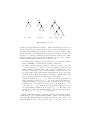
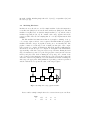
think of conses as binary trees; the cons (X . "X") is depicted in figure 1(a).
Of special interest are a class of conses called true lists. A true list is either
the symbol nil, which denotes the empty list and can be written (), or a cons
whose cdr is a true list. For example, the true list containing the numbers 0 and
1
2 , written (0 1/2), is depicted in figure 1(b). Also of interest are association
lists or alists. An alist is a true list of conses and is often used to represent a
mapping that associates the car of an element in the list with its cdr. The alist
((X . 3) (Y . 2)) is shown in figure 1(c).
2.2
Expressions
Expressions, which are also called terms, represent ACL2 programs and evaluate
to ACL2 objects. We give an informal overview of expressions in this section.
This allows us to suppress many of the details while focusing on the main ideas.
Expressions depend on what we call a history, a list recording events. One reason