1
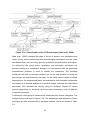
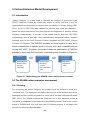
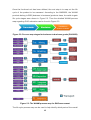
In the design for WAAM phase, component is designed by CAD software, and
then the temperature and stress properties during welding deposition will be
analyzed by finite element method (FEM), the most appropriate welding tool
paths will be identified and this helps to minimizing distortions of the WAAM
products (Mehnen, Ding, Lockett, Kazanas, 2010).
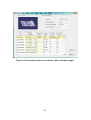
A robot path generation program RUAMROB© was developed for the WAAM
project. This soft ware tool consists of two main modules: a slicing module and a
robot program generation module. From Ding et al., (2010), “By executing these
two modules automatically, the program can slice the designed ALM parts and
generate the ready-to-use path code for a Fanuc robot in one go. A user-friendly
interface for RUAMROB© has also been developed to simplify the setting of
parameters”.
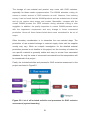
In the actual deposition Process, the welding tracks are executed by a robotic
system. A robot arm guides the welding torch along the optimized tool path. The
specific welding techniques for depositing may vary depending on material and
features of components (Williams, undated).
The integrated process aims to combine ALM and traditional machining such as
grinding, milling and rolling into one machine to form continuous process. This
integrated process helps to obtain final precise net shape with low cost and high
efficiency (Mehnen et al., 2010) (Kashoob, 2011).
2.2.2 Materials and features
After more than ten years development, the WAAM technique has made a
significant progress (Williams, undated). Modern welding and automation
technologies provide opportunities that were not available in the past. Now
WAAM can be used to deposit a variety of materials and features of real world
workpieces that can be welded, such as steel, Ni alloys, and even highly reactive
metallic e.g. Ti alloys in an out-of-chamber environment (Ding, et al., 2011).
The welding technique adopted by WAAM depends on the specific material and
geometry feature to be manufactured. Standard wire based welding processes
such as Gas Metal Arc Welding (GMAW) and Gas Tungsten Arc Welding
(GTAW) are widely adopted as heat sources due to their low cost, high
deposition rate and widespread Suitability for various kinds of metals as well
10