1
Previous numerical data treatment with MatLab
11
The relation between cost and performance was clearly favourable for the USB
digital oscilloscope. That is because the DAQ usually has between 8, 16, or 32
channels and they need a huge sampling frequency to obtain the possibility to work
in parallel with all of them, it implies also a huge transfer data velocity that makes the
device more powerful but also increase the price.
To decide which oscilloscope would be the best option it is important to determine its
main specifications: fs, n and Bandwidth. Then the first thing to do is to observe the
signal and characterize it with a commercial analogue oscilloscope.
5
4
Amplitude (V)
3
2
1
0
-1
3800
4000
4200
4400
Time (µs)
4600
4800
5000
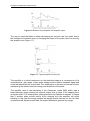
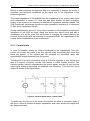
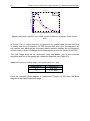
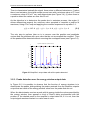
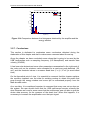
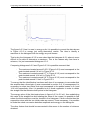
Figure 2.2 Example of the (digital) signal.
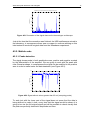
With a signal example (see figure 2.2) it is possible to determine the features that will
decide the optimum device.
2.2.1. Analysis of the number of bits
The first parameter to analyze was the required amplitude’s signal range. This
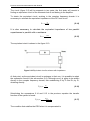
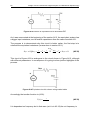
parameter determines the maximum value of peak to peak voltage ( ) admitted.
The output signal had a maximum value of 5 V and a minimum of -2 V, thus the
minimum ( ) accepted would be 10 V, in order to avoid the clipping effect that could
saturate the oscilloscope.
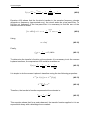
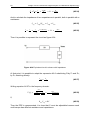
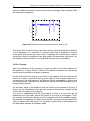
Once the value of
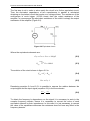
is known, it is possible to know the needed n (number of bits)
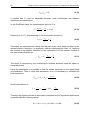
fixing previously the required data resolution using:
(2.1)
It is known that the electronic devices use an even number of bits; therefore, the
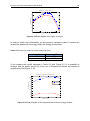
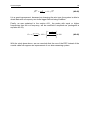
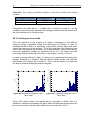
discussion was focused between 8, 10 or 12 bits. In Table 1 the resolution obtained
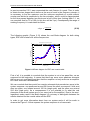
is shown as a function of the bit’s number for
equal to 10 V.