1
696
Section 5 Electrical Systems
Chapter 38 Hybrid Drive System Operation and Repair
Note!
A few mild hybrids use a small motor-generator
to assist the gas engine in accelerating from a
standstill to about 10–20 miles per hour. This
improves fuel economy slightly but not as much
as the full hybrid drive train.
Battery
pack
Power
control
module
Generator
Hybrid Drive Train Configurations
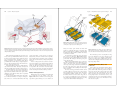
Hybrids are often classified by the configuration of
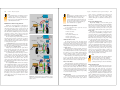
their drive train. A series hybrid has a separate generator
and traction motor. It does not use a motor-generator. In
a series hybrid configuration, the traction motor is the
only method used to apply torque to the vehicle’s drive
train. The internal combustion engine has no mechanical
connection to the drive train. At least one major auto
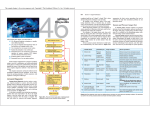
manufacturer is developing a series hybrid for mass production. This is illustrated in Figure 38-3A.
The series hybrid can operate in the all-electric mode
when the battery pack charge is sufficient to propel the
vehicle. When the battery pack becomes drained, the
internal combustion engine starts and turns the generator
to recharge the battery pack.
A parallel hybrid uses both an internal engine and a
motor-generator to apply mechanical torque to the drive
train. The engine and motor-generator operate in parallel,
or at the same time. See Figure 38-3B.
During rapid acceleration, both the engine and the
motor-generator apply torque to the drive train. At low
speeds, the parallel hybrid can operate in full-electric
mode, with the gas engine completely shut down.
A parallel hybrid provides the advantages of an allelectric vehicle in city driving but can perform like a
gasoline engine–powered vehicle under full acceleration
or at highway speeds. The drawback to the parallel
hybrid is that the motor-generator cannot drive the
vehicle and recharge the HV battery pack at the same
time. This limits the amount of time the vehicle is driven
by the motor-generator.
The series/parallel hybrid combines the advantages
of the parallel hybrid with those of the series hybrid. This
type of hybrid can recharge the HV battery pack even
when the electric motor is used to drive the vehicle. The
internal combustion engine can drive the wheels mechanically, but it can also be disconnected from the drive train
so that only the electric drive motor propels the vehicle.
The engine can also power a generator, which recharges
the battery pack. A power splitter is used to transfer
engine and electric motor power through the drive train.
Refer to Figure 38-3C.
Note!
Manufacturers are currently working to develop
plug-in hybrids. These hybrids can be connected to a 120-volt home outlet to fully
recharge the HV battery pack. Then, when the
vehicle is driven the next day, it can operate in
the all-electric mode without starting the gas
engine until the battery is depleted.
Hybrid Vehicle Operation
Motor
Internal
combustion
engine
Drive
out
A
Power
control
module
Battery
pack
All-Electric Drive Mode
Motorgenerator
Transmission
Engine
Drive
out
B
Battery
pack
A typical full hybrid drive system has six basic
modes of operation:
• All-electric drive mode.
• Motor-assist mode.
• Idle stop mode.
• Regenerative braking mode.
• Engine starting mode.
• Battery pack recharging mode.
Power
control
module
Generator
In the all-electric drive mode, the hybrid vehicle
operates just like an all-electric vehicle. The HV battery
pack provides all the energy needed to propel the vehicle.
The gasoline or diesel engine is shut off but is ready to
start up when the battery pack becomes discharged. Refer
to Figure 38-4A.
Many hybrid vehicles will stay in the all-electric mode
when accelerating up to 20–40 mph. If the driver accelerates normally, the hybrid’s electric drive system will propel
the vehicle up to city speed limits without starting the
internal combustion engine. An internal combustion
engine is least efficient when operating at very low rpm.
When backing up, most hybrids operate in all-electric drive—the internal combustion engine remains off.
When a hybrid runs on electrical energy only, it emits no
hydrocarbon emissions and does not burn any fuel.
Motor Assist Mode
Motor
Engine
Power
splitter
Drive
out
C
Figure 38-3. Compare the three types of hybrid drive configurations. A—Series hybrid. B—Parallel hybrid. C—Series/parallel
hybrid. (Toyota)
In the hybrid motor assist mode, both the motor-generator and the internal combustion engine apply torque to
the drive train for propulsion. See Figure 38-4B. Some
hybrid systems start out using only the motor-generator
during acceleration and operate in the motor assist mode
at cruising speeds. Other systems use both the motor-generator motor and the internal combustion engine during
acceleration and while cruising.
Idle Stop Mode
In the idle stop mode, the system automatically shuts
off the internal combustion engine when the vehicle
comes to a full stop and restarts the engine when the
697
vehicle reaches a predetermined speed (about 20–40
mph) or when the HV battery pack has partially discharged. This conserves energy and reduces exhaust
emissions during idle or at other times when the engine is
not needed.
Regenerative Braking Mode
Regenerative braking is an electric braking system
that works in conjunction with the conventional hydraulic
brakes. During regenerative braking mode, the motorgenerator serves as an electrical generator, sending high
current through the hybrid power cables, to the power
control module, and into the HV battery pack. Look at
Figure 38-4C.
When the brakes are applied, a brake pedal sensor
sends a signal to the hybrid ECU, prompting the motorgenerator to function as a generator. With moderate brake
pedal pressure, the conventional hydraulic brakes do not
apply the friction pads into the spinning brake armatures.
Instead, the motor-generator places a drag on the rotating
tires, wheels, and drive train, slowing the vehicle.
When the brake pedal is pressed harder for quicker
stops, the brake pedal sensor signals the computer system
to apply the conventional hydraulic brakes to stop the
vehicle more quickly. If the hybrid vehicle is braked carefully, almost all the kinetic energy of the moving vehicle
is recaptured as electrical energy and forced into the HV
battery pack. The battery pack stores this energy and
sends it to the motor-generator during acceleration to
move the vehicle. Braking may feel different in a hybrid
vehicle since the motor-generator drag slows the vehicle
without applying hydraulic friction brakes.
Note!
In some hybrid systems, the internal combustion
engine often aids the regenerative braking by
opening the engine valves so the engine freewheels and engine compression does not absorb
as much power during deceleration and braking.
Engine Starting Mode
In the hybrid engine-starting mode, the motor-generator spins the engine crankshaft to start the internal combustion engine. The engine then runs to propel the
vehicle at cruising speeds or to drive the motor-generator
when the battery pack has become partially discharged.
The hybrid ECU energizes transmission solenoids
that apply and release clutches in the transmission so the
engine crankshaft and motor-generator are locked and
turn together. The power control module then sends just
enough current to the motor-generator to spin the engine
crankshaft at about 300 rpm.