1
698
Section 5 Electrical Systems
The hybrid ECU also signals the engine ECU to provide
“spark and fuel” to the engine. The engine ECU electrically
energizes the engine’s fuel pumps, electronic fuel injectors,
and ignition coils while the motor-generator spins the crankshaft until the engine “fires” and runs on its own power.
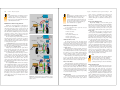
Battery Pack Charging Mode
After driving a few miles in the all-electric mode, the
HV battery pack becomes partially discharged. When the
hybrid ECU detects the lower voltage (about 70% discharge), it starts the internal combustion engine to propel
the vehicle and recharge the HV battery pack. Refer to
Figure 38-4D. The engine crankshaft spins the motorgenerator, which in turn sends electricity to the power
control module and battery pack.
Chapter 38 Hybrid Drive System Operation and Repair
Hybrid System Voltages
Most hybrids use two voltage systems: a highvoltage (HV) system for the electric drive system and a
12-volt system for most of the vehicle’s conventional
electrical/electronic components. Both systems are wired
separately but interface through the ECUs and the power
control module.
The hybrid high-voltage system typically operates
on voltages that range from around 250 volts up to 650
volts ac or dc. The large conductors and electrical/electronic components in the high-voltage system permit
thousands of amps of current to be fed through the electric drive system. This is enough energy to power several
small homes.
Refer to the vehicle specifications for exact hybrid
operating voltages. Specific voltage levels will vary with
each make and model of hybrid vehicle.
Hybrid nominal output voltage is the maximum dc
voltage available from the HV battery pack. Hybrid nominal
output voltages typically range from about 100 volts to
more than 300 volts. Higher nominal voltages increase the
efficiency of the electric drive system. Hybrid maximum
voltage is the 3-phase ac voltage (up to 650 volts) fed to
the motor-generator from the power control module.
A hybrid low-voltage system uses a conventional
12-volt battery. The low-voltage system is used to maintain computer memory and provide low voltage to electrical accessories. It provides the small amount of current
needed to operate the electronic fuel injectors, fuel
pumps, ignition coils, sensors, and other low-voltage
components. It also powers the dash display, stereo, and
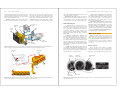
other accessories. See Figure 38-5.
Note!
Some hybrids do not have a 12-volt battery but
instead use a step-down transformer in the
power control module to send 12 volts to the
low-voltage electrical accessories.
Hybrid Drive Assemblies
The following sections detail the construction and
operation of various hybrid drive assemblies used in a
full hybrid. The assemblies used in other types of hybrid
vehicles may vary slightly.
A
699
High-voltage
cables
12-volt battery
Figure 38-5. This hybrid vehicle uses a conventional 12-volt
battery to power low-voltage components. (Honda)
Since a battery pack contains several modules wired
in series, you can use Ohm’s law to calculate the hybrid
nominal output voltage. If one battery pack module produces 7.2 volts dc, you would simply multiply the
number of modules times this voltage. For example, if
there are 38 battery pack modules with 7.2 volts each, the
HV battery pack would produce 274 volts dc. Another
manufacturer’s HV battery pack might have 30 modules
producing 9.6 volts each wired in series for a nominal
output voltage of 288 volts.
Power cables allow the battery pack to be fastened to
the power control module. Positive and negative cables
B
Battery Pack
C
D
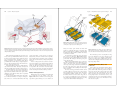
Figure 38-4. Study the basic modes of hybrid operation carefully. A—In the all-electric mode, the battery pack provides the energy
to propel the vehicle. B—The motor assist mode is often used during rapid acceleration. C—In the regenerative braking mode, the
motor-generator acts as an electric generator that places a drag on the drive train to help slow the vehicle. At the same time, current flow out of the motor-generator recharges the battery pack. D—In the battery recharging mode, the motor-generator is locked
to the crankshaft or transaxle gears to spin and act as a generator to recharge the battery pack.
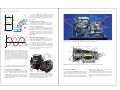
The hybrid battery pack sends high-voltage dc into
the power control module, which converts it to ac or
changes it to a higher or lower voltage. This ac voltage is
then fed to the motor-generator for propelling the vehicle
or starting the internal combustion engine.
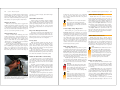
A battery pack contains several high efficiency NiMH
(sealed nickel metal hydride) battery modules stacked in a
sealed enclosure and wired in series to produce a highvoltage power source. The battery pack is normally
mounted in the rear of the chassis, often behind or under
the rear seat or in the trunk area. See Figure 38-6.
NiMH battery packs are designed to handle very high
current flow rates during charging and discharging. A
NiMH battery pack also has a good weight-to-power out
ratio. Even the largest battery pack weighs only about
200 lbs (90 kg).
Depending on the make and model of the vehicle and
the number of modules used, hybrid battery pack voltage
can range from about 150 volts up to approximately 300
volts dc.
Figure 38-6. The HV battery pack is enclosed in a metal
housing. Note the large orange power cables that connect the
battery pack to the power control module. (Toyota)