1
General Description
GCA40–242
Central Processor Switched Data Port Configuration
The CPU board provides a dual in-line pin (DIP) switch that enhances installer convenience in
setting up data communications between the FX II and an external data device. It is possible to
mismatch the data port configurations between the FX II and the external device in a manner that
prevents data communications from occurring. The DIP switches provide a hardware way of setting
the data configuration to a known set of parameters without the need for reprogramming the system.
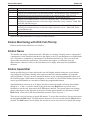
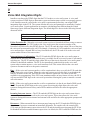
With the DIP switch 1 set to On, the FX II provides the following data parameters:
Parameter
Baud Rate In
Baud Rate Out
Data Bits
Stop Bits
Parity Bits
Flow Control
COM 1
2400
2400
8
1
None
None
COM 2
9600
9600
8
1
None
None
Channel Negotiation
Channel negotiation enhances the Primary Rate Interface (PRI) feature by preventing call collisions
on both inbound and outbound calls. If a call originates from within the communications system and
the selected channel is busy, the service provider needs to be able to deny the call or offer an
available channel. The Channel Negotiation feature prevents call collisions by allowing the service
provider to offer another channel to outbound calls if one is available. Conversely, if the service
provider is attempting to send a call to a busy channel on the communications side, the system will
not allow the call on that busy channel but offer an available channel as an alternate. The service
provider can either accept this alternate or discontinue the call and attempt to reestablish it on a
channel of its choosing.
There are no programming actions that installers need to take to enable this feature.
Clear Major Alarm Ring
Major alarm rings occur whenever a number of faults exceed a programmed threshold. You can use
a telephone station to clear a major alarm ring by pressing the Intercom button and then dialing a
feature code (default code is #09). However, the telephone station must have a class of service
(COS) assigned to it that has this feature enabled. The installer or installer enables this feature
through COS programming.
Common Audible Ringer Interface
Relay connections that provide dry-contact closure whenever ringing occurs are available on the
central processor unit circuit board. The relay closure tracks the ringing pattern of the applied ring
signal and is typically used to control an external ringer device. The installer can program the
particular ringing assignment that is tracked, and the ringing assignment can be any one of those that
are provided by the flexible ringing assignment feature.
Also refer to the discussions titled Auxiliary Ringer Interface, External Paging Interface, Flexible
Ringing Assignments, Line Answer From Any Station, and Night Transfer (Of Ringing).
Understanding the Features – 75