1
2. Installation
After purchase, the ESET Mail Security installer can be
downloaded from ESET’s website as an .msi package.
Once you launch the installer, the installation wizard will
guide you through the basic setup. There are two types
of installation available with different levels of setup
details:
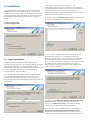
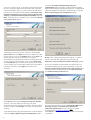
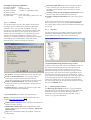
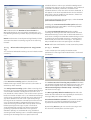
Enter your Username and Password, i.e., the
authentication data you received after the purchase or
registration of the product, into the corresponding fields.
If you do not currently have your username and
password available, authentication data can be inserted
at any time, directly from the program.
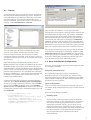
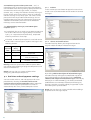
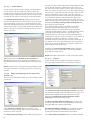
In the next step - License Manager - Add the license file
delivered via email after product purchase.
1. Typical Installation
2. Custom Installation
2.1 Typical Installation
Typical installation provides configuration options
appropriate for most users. The settings provide excellent
security coupled with ease of use and high system
performance. Typical installation is the default option and
is recommended if you do not have the particular
requirements for specific settings.
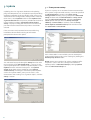
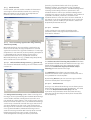
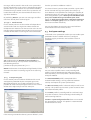
The next step is configuration of the ThreatSense.Net
Early Warning System. The ThreatSense.Net Early
Warning System helps ensure that ESET is immediately
and continuously informed about new infiltrations in
order to quickly protect its customers. The system allows
for submission of new threats to ESET‘s Threat Lab,
where they are analyzed, processed and added to the
virus signature database.
After selecting the installation mode and clicking Next,
you will be prompted to enter your username and
password for automatic updates of the program. This
plays a significant role in providing constant protection of
your system.
By default, the Enable ThreatSense.Net Early Warning
System option is selected, which will activate this
feature. Click Advanced setup... to modify detailed
settings for the submission of suspicious files.
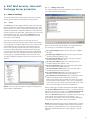
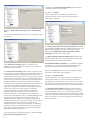
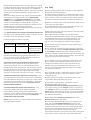
The next step in the installation process is to configure
Detection of potentially unwanted applications.
Potentially unwanted applications are not necessarily
malicious, but can often negatively affect the behavior of
6