1
5-34 SECTION 5: Checking and Configuring the Instruments
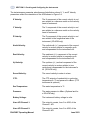
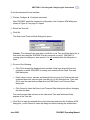
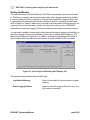
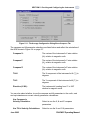
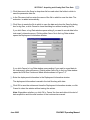
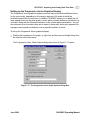
The instrument run times are entered in the following text boxes:
Interval Time:
The time in hours, minutes and seconds
between the start of each Average On Time or
Burst On Time.
Average On Time:
The time in hours, minutes and seconds
beginning at the start of each Interval Time
during which the instrument is on and
collecting the selected vector averaged current
velocity and tilt data. This data and one record
of the selected instantaneous parameters are
output and stored at the end of every averaging
interval.
Burst On Time:
The time in hours, minutes and seconds
beginning at the start of each Interval Time
during which the instrument is on and
collecting the selected burst parameter data at
the selected sampling rate. All data are output
and stored.
Note: If the Interval Time is set to zero, or if the Average On Time or the Burst On
Time is greater than the Interval Time, the instrument will begin collecting data
continuously when it is turned on or at the specified Delayed Time and Delayed
Date, as described below, after it is turned on.
Note: If one or more of the current velocity and tilt vector averages are selected and
a value for Average Interval is entered, the Average On Time should be set to an
integer number that is evenly divisible by the Average Interval. (See “Selecting Vector
Averaged Current Velocity and Tilt: on page 5-26 for information on the Average
Interval.) For example, if the Average Interval is 5 minutes, the Average On Time
should be set to 5, 10, 15 or any multiple of 5 minutes. Otherwise some averaging
intervals will be shorter than the Average Interval.
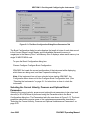
Delayed Date:
The date on which the instrument will turn on
and begin collecting data at the Delayed Time.
Delayed Time:
The time of day on the Delayed Date the
instrument will turn on and begin collecting
data.
3DACM97 Operating Manual
June 2003