1
2. Configuration
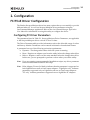
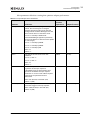
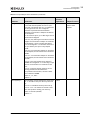
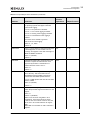
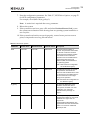
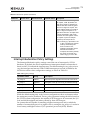
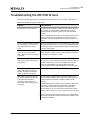
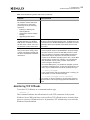
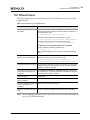
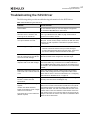
NIC/TOE Driver Configuration
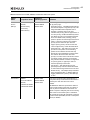
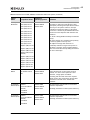
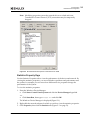
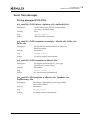
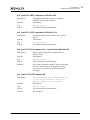
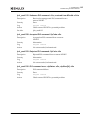
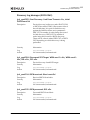
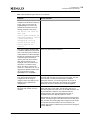
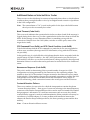
RSS is only supported on two primary adapters per device. It will
appear disabled for additional PCI functions in blade server
configurations.
RSS requires Windows 2008 and later.
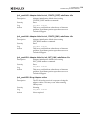
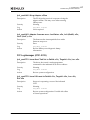
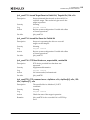
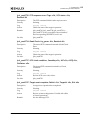
Registry Key: *RSS
Default Value : 1 (Enable)
Valid Values :
0 = Disable
1 = Enable
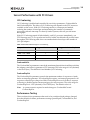
Network Driver Performance Tuning
Network driver performance tuning improves performance of the network and TOE
driver for the Windows Server operating system. The OneConnect UCNA (OCe111xx
and OCe101xx) is a x8, Generation 2 (Gen 2, or Gen2) PCI-Express device and requires
substantial memory bandwidth in a system to support 10 Gb/s data streams.
Optimizing Server Hardware and BIOS Configuration
UCNA performance can be improved by selecting a more efficient PCI-Express packet
payload size. If the system BIOS allows selection of a larger PCI-Express packet size,
selecting at least a 512-byte PCIe packet payload size provides the best efficiency for
PCIe data transfers. This may be an option in the server's system BIOS. The current
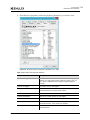
value is displayed in Device Manager on the Status property page for the adapter.
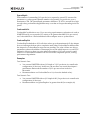
Most computers offer multiple distinct memory channels, which should be configured
for channel interleaving for optimal performance. Optimal interleaving is achieved by
using the exact same DIMM configuration for each memory channel. Check the
manufacturer's documentation and BIOS parameters for details about optimizing
memory bandwidth. Typically, all the dual in-line memory module (DIMM) slots must
be populated to make use of all the memory channels. As a general rule, more DIMMs
provide better performance by allowing a higher degree of memory-access interleaving
to occur. However, some servers decrease the memory speed if using more than 2
DIMMs per memory channel – so it is important to understand the trade-off for a
particular server platform.
Some servers may allow memory mirroring or memory sparing, where the total
memory is divided in half and each location is stored twice. This allows fault recovery
if one memory location detects an error, but it greatly reduces the perceived memory
bandwidth of the system.
Nearly any desktop or low-end server has enough memory bandwidth for the UCNA
to support Direct Memory Access (DMA) at 20 Gb/s of data (10 Gb/s read, 10 Gb/s
write). However, most of the memory demands come from the processor accessing the
data for either packet copies in the non-offloaded networking stack or application.
Increasing the clock speed of the memory interface to the processor can be critical for
achieving the best networking performance. This interface may be the front side bus
(FSB), Intel's QPI, or AMD's HyperTransport.
Emulex Drivers for Windows User Manual
P008011-01A Rev. A
59