1
Part V - Properties
Chapter 16 - Emission Processes
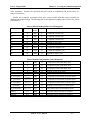
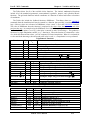
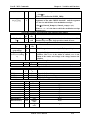
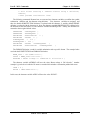
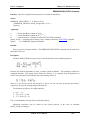
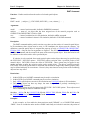
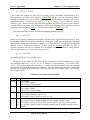
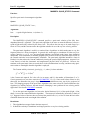
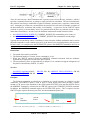
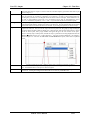
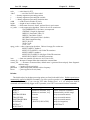
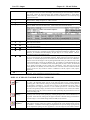
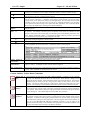
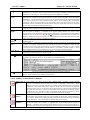
— production rate of charged species (number/m3/s), constant or defined in FUNCTION
command.
σelectron-neutral(Ei,β,γ) — function defining the electron-neutral cross section in units of unit atomic cross
section (πao2) as a function of incident kinetic energy, Ei in eV and β and γ, defined in
FUNCTION command.
rate
electron_species— electron mass species, ELECTRON (default) or suitable species defined in SPECIES
command.
ion_species— ion species name, either ‘neutralgas’_ION (default) or suitable species defined in
SPECIES command or INACTIVE.
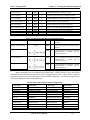
kcreation — particle pair creation rate (LORENTZ time step multiplier factor).
kcreate_electron— electron creation rate (LORENTZ time step multiplier factor).
kcreate_ion — ion creation rate (LORENTZ time step multiplier factor).
starttime — time in seconds at which ionization starts.
endtime
— time in seconds at which ionization ends.
energy
— initial thermal energy of ions (eV), constant.
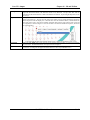
dedxelectron-neutral(Ei,β,γ) — function defining the electron neutral stopping power in eV/m, as a function of
incident kinetic energy, Ei in eV and β and γ, defined in FUNCTION command.
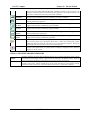
σion-neutral
— ion-neutral cross section in units of unit atomic cross section (πao2).
ν0
— collision_frequency, 1/seconds.
β min
— low energy beta limit, unitless.
nβ
— exponent for beta—factor in collision frequency, unitless.
nγ
— exponent for gamma—factor in collision frequency, unitless.
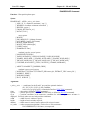
area, volume— name of spatial area/volume, defined in the AREA/VOLUME command.
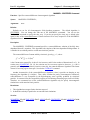
Description:
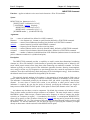
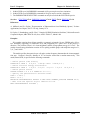
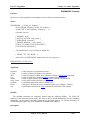
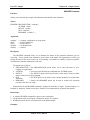
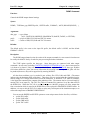
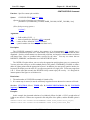
The IONIZATION command controls the generation of charged particles due to ionization in a
background neutral gas. By default, the ionization pair will be the particle species, ELECTRON and
‘neutralgas’_ION. Only one (1) ionization command may be used.
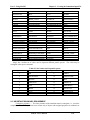
The argument, neutralgas, is the name of the background gas. There are several predefined gases
available. Their names and properties are defined in the materials tables or you enter your own properties
using the MATERIAL command. The required properties are Z, the ATOMIC_NUMBER, or for
polyatomic gases, the MOLECULAR_CHARGE, and CROSS_SECTION coefficients. Additionally you
must specify the gas pressure, P, and temperature, T. The number density, ngas, is calculated from the
ideal gas law, e.g., P=ngaskBT. (For polyatomic gases, specify the molecular number and mass values.
Ionization models
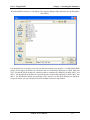
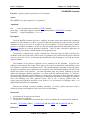
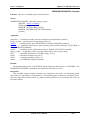
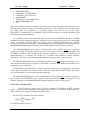
You must select one of the three ionization models. These are IMPACT (ambient electrons colliding
with background gas), SOURCE (arbitrary ionization rate function), or NO_IONIZATION (just uses the
electron and ion drag terms). Each model represents different physical processes. Regardless of which
ionization model is selected, the background neutral gas allows energy loss to the ambient kinetic particles.
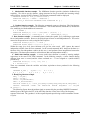
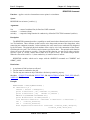
SOURCE model
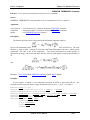
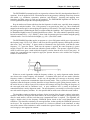
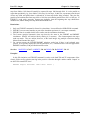
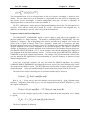
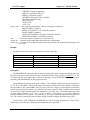
The SOURCE model is the most direct ionization model. It contains no built-in physics; the user simply
supplies the ionization rate directly. The user-supplied rate function may vary in time and space:
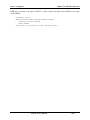
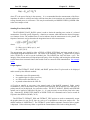
dn-/dt = dn+/dt = rate(t,x1,x2,x3).
Where: rate =
ionization rate function
MAGIC User’s Manual
16-31