1
Final Design Report
MEDSense: A Portable Pill Dispensing Device
By
Ashley Martin
Christopher Falkner
Ryan Pogemiller
Timothy Coons
Team 7
Rehabilitation Engineering Research Center
Dr. John Enderle
[email protected]
860-486-5521
Table of Contents
Section
Page #
Abstract
1) Introduction
Background
Clients and Disabilities
Purpose
Previous Work Done By Others
Map for the Rest of the Report
2) Project Design
Design Alternatives
Design 1
Design 2
Design 3
Optimal Design
Prototype
3) Realistic Constraints
4) Safety Issues
5) Global Impact
6) Life Long Learning
7) Budget
8) Team Members Contributions to Project
9) Conclusion
10) References
11) Acknowledgements
1
3
3
3
4
5
6
8
9
9
9
19
23
33
84
84
119
123
125
126
126
128
130
131
Abstract
In this design the group sought to ease the process of taking medication for persons with
disabilities by providing an accurate, easy-to-use device that cuts and dispenses medication.
While there are currently similar products on the market today, none of them have all the
components seen in this design. The first unique component is that there is automated cutting of
medication when necessary. It is difficult for anyone regardless of physical ability to cut
medication accurately. This problem is compounded for persons who have decreased hand
strength and control or other disabilities such as vision loss. MEDSense aims to facilitate this
process greatly. Another unique aspect of this design is that there is an offsite alert built in. This
would notify a person of interest such as a doctor or family member that the user had not taken
their medication. This feature would be especially useful for identifying potential problems with
the user that prohibited them from taking their medication. One problem with persons with
memory loss is that they often forget to take their medication which eliminates the health
benefits of the pharmaceuticals. This device has a multi-modal alert system which notifies the
user using visual, auditory and vibrating alerts. Using a multi-modal alert system allows
person’s with vision loss, hearing loss or both to be notified to take their medication. Finally, the
group will create a pharmacist interface that will allow the pharmacist to easily program the
device at the pharmacy. Having the pharmacist program the device reduces the effort needed by
the user who may have physical or mental impairments. The interface will be clear and easy-touse. This device will alleviate many of the concerns of persons with disabilities in regards to
medication intake and thus increase their quality of life.
1. Introduction
1.1 Background
During a series of scientific innovations sparked by a neo-classical rebirth of interest in the
th
human body around the 17 century, medical research was revolutionized as scientists began to
understand how the body functions. Long before the crucial technique of magnification was
conceived, the concept of microorganisms, for example, was limited to ambiguous and
mysterious descriptions, often referred to as “invisible living creatures” (Prescot, Microbiology).
Needless to say, when Antony van Leeuwenhoek discovered, in 1673, that observing samples
through a series of lenses unveiled an entire world of interacting cells, the field of microbiology
was truly born. Soon the entire world became fascinated with the autonomous microcosm of life
within the human body and doctors began to study the science behind accepted medical
techniques to the point where they were capable of understanding the details of common
th
illnesses and disease. As the focus of medical research around the turn of the 19 century turned
away from holistic methods emphasized by the pioneers of cellular biology, it transitioned
towards an analytical approach that allowed scientists to map out detailed rationalizations to
explain the causes and effects of common sicknesses. Such a deductive approach to medical
research would later lead to multiple discoveries of the power of man-made chemical composites
in fighting commonly fatal diseases such as polio and smallpox. Eventually, to address high
demand for these composites, ingredients were process into pills or capsules of varying sizes and
colors and mass-produced and distributed to the public. Thus, the pharmaceutical company was
born.
2
Today, modern pharmacological establishments spend billions of dollars each year on
advertising due to the exponentially growing supply of competing prescription medications.
Patients now find themselves in a world where dangerous conditions and diseases are easily
managed by relatively affordable medications. Although a remarkable increase in life expectancy
of the American population over the past fifty years could additionally be attributed to an
increased awareness of daily health issues, it could easily be argued that the primary culprit is the
ubiquity of pharmaceutical products. As the number of available medications increases, however,
patients are finding themselves reliant on a growing number of daily medications. Ultimately,
many individuals accumulate an unmanageable number of medications, a problem that could
potentially lead to unintentional neglect of prescribed schedules and dosages. Busy mothers
trying to balance the hectic schedule of multiple children, elderly individuals with chronic
memory loss, and patients with mild or severe physical limitations are all inconvenienced by
complex medication schedules. Additionally, many prescriptions require half dosages,
demanding that patients take the time and effort to cut pills into halves and to count out the
correct dosages. Many patients, however, are physically incapable of cutting a small pill and
calculating the correct dosage or perhaps too busy to take the time to cut each pill, all of which
can lead to miss-consumption of important medications.
Although there are multiple devices on the market that are capable of reminding patients when to
take their medications or that dispense pills at certain intervals or that can easily cut pills in half,
no one device sufficiently addresses the needs of modern patients. Many pill dispensing
instruments are bulky and expensive despite their ability to dispense multiple medications at
once. Others are compact and portable but difficult to use for elderly patients and those with
physical disabilities. Additionally, while there are many manual pill cutting devices on the
market, there are few that are automatic and easy to use, another serious problem for elderly and
physically challenged patients. Finally, there is not a single device on the market that is capable
of performing all the necessary aspects of pill monitoring in one easy to use affordable unit, thus
resulting in an incredible demand for a fully automated device capable of addressing the modern
patient’s varying needs.
1.2 Clients and Disabilities
Phylis is an energetic 77 year old woman that has rheumatoid arthritis. This condition causes
joint pain and loss of hand strength. She also has macular degeneration and hearing loss but is
resolute to staying active and healthy. She has difficulties with using complex interfaces and
wishes that the design of the device is simple.
Aaron is a war hero from Iraq, with an amputation of the arm above the elbow, neck pain and
recurring head aches. Although he has a prosthetic limb, he sometimes does not use it and
improvises by only using one hand. Due to the many aliments, he has a number of medications to
take.
Keisha just recently had a stroke which caused her to loose function in her dominant right hand.
Due to the recent stroke, she also has memory loss and has to rely on her family to remind her of
3
when to take her medication. She also has minor hearing loss that is progressively getting worse.
She also deals with the challenges of incontinence.
Jerry is an 82 year old man that has Parkinson’s disease. This disease causes him to have
tremors, stiffness, and a decrease range in motion. Also he has been experiencing symptoms of
Dementia.
Jamie is an active basketball player and has to use a wheelchair because of her spinal cord injury.
She wants to stay active while controlling her urinary problems.
Violet is a mother of three who has blood pressure medication to take. She wants a device that
will dispense her medication as well as keeping the medication away from her children.
1.3 Purpose
Today, modern pharmacological establishments spend billions of dollars each year on
advertising due to the exponentially growing supply of competing prescription medications.
Patients now find themselves in a world where dangerous conditions and diseases are easily
managed by relatively affordable medications. Although a remarkable increase in life expectancy
of the American population over the past fifty years could additionally be attributed to an
increased awareness of daily health issues, it could easily be argued that the primary culprit is the
ubiquity of pharmaceutical products. As the number of available medications increases, however,
patients are finding themselves reliant on a growing number of daily medications. Ultimately,
many individuals accumulate an unmanageable number of medications, a problem that could
potentially lead to unintentional neglect of prescribed schedules and dosages.
This product is an accessible pill cap that dispenses the correct amount of medication at a set
time for elderly patients or patients with disabilities. It is difficult for some patients to remember
when to take their medication, as well as how much medication to take. It may also be a problem
for the patient to cut a pill in half if a half dosage is prescribed. The diverse disabilities of the
patients for whom we are designing this pill cap include vision loss due to macular degeneration,
hearing loss, loss of or decreased strength and motion in one hand or arm, memory loss and
Dementia. Some minor problems that affect these patients that must be kept in mind while
designing this pill cap are being in a wheelchair, loss of legs, neuropathy in the hands, hand
tremors, having small children and being easily intimidated by high-tech machines.
The main features of this product are designed to aid the patients in their medication routine.
The multi-modal alert system lets patients know when it is time to take their medication with
both visual and auditory alarms for patients with hearing loss or vision loss. The automated
cutting mechanism accurately cuts pills in half if a half dose is required for patients with macular
degeneration or a missing limb. The reminder to order a new prescription when the old
prescription runs out is designed for elderly patients, patients with Dementia or memory loss, or
busy patients who don’t have a lot of time to think about their medication. The offsite alert
system, which notifies a family member, nurse or doctor offsite if a dose is missed by the patient,
is a built in safety device so a responsible party is notified if something happens to the patient
and they miss their dose. An easy-to-use interface is needed since many elderly persons are
intimidated by technology and so the device is simple and user-friendly
4
1.4 Previous Work Done by Others
1.4.1 Products
Although many facets of the pill dispensing process are provided by currently marketed devices,
each has significant oversights with respect to the modern patient’s needs. Additionally, many
devices accurately approach only one aspect of the pill dispensing process, leaving the patient to
do the rest of the work, often an infeasible demand.
For patients on a budget, there are many devices available that act as static systems that allow
patients to place medications in individual compartments that will unlock at the programmed
dispensing times such as the Pill Reminder which is compact, affordable, and easy to use.
Although such devices do not satisfy all of the market demands, when combined with other
inexpensive static or manual devices, they could cumulatively address all of a patient’s
medication needs. The E-Pill Vibrating Countdown Timer and Alarm, for example, could
supplement the Pill Reminder as a portable device that hangs around the neck and acts as a
portable alarm clock. To address elderly patients with hearing loss, the device is capable of
vibrating in addition to sounding an alarm to ensure
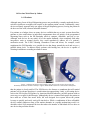
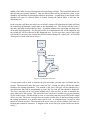
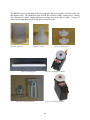
Figure 1. Although inexpensive and portable, many devices such as these do not meet the
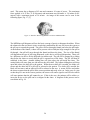
demand of the modern market. From left to right A) Pill Reminder B) E-Pill C) EZ-Swallow Pill Splitter
that the patient is clearly notified. The E-Pill device also features a countdown that will remind
patients well in advance that there is a medication time approaching. Lastly, a pill cutting device
such as the EZ-Swallow Pill Splitter, by American Medical Industries, provides patients with an
easier way to cut pills for half dosages. Although the device is manual and requires the patient to
have mild use of their fine motor skills, the well designed lever system allows the patient
leverage to quickly and easily crack pills into halves. While a combination of these affordable
devices certainly addresses many of the market demands, in a rapidly modernizing world, it is
desirable to have fully automated devices that reduce the number of individual devices down to
one device that performs all tasks.
5
One such model that has received attention is the Med-Time Automatic Pill Dispenser, by the
American Medical Alert Corporation, a small circular device that automatically rotates at given
time intervals to make the appropriate pills available at each prescribed time. While the device is
certainly compact, weighing in at only 17 ounces when empty, its small size actually inhibits
easy use by many patients. Elderly patients often have not only poor eye sight, but also an
inability to manage simple small motor skills such as programming a device with small buttons
or loading and unloading the pills at the beginning of each month. Although the system allows
the patient to tip the device upside down to easily release the appropriate pills, there is no doubt
that sorting and dispersing multiple medications into each day’s position would be a burdening
task. Therefore, the market demands a device that is certainly compact, but also that provides
large displays and easy to use buttons and voice commands. Additionally, there is a need for a
device that automatically separates different medications from individual easy to fill reservoirs
and that is capable of cutting them into halves before dispensing.
Another popular device on the market, the Monitored Automatic Pill Dispenser MD2, by e-pill
Medication Reminders, has benefits addressing needs not addressed by the Med-Time device,
but once again falls short of satisfying all of the market demands. Unlike the Med-Time device,
the MD2 is bulky and expensive. In addition to the unit’s ability to dispense predetermined pill
dosages at given time intervals, the MD2 features a voice command option that will verbally
instruct patients when and how to take their medications. In addition, there is an off switch that
the patient must hit when taking their
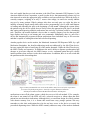
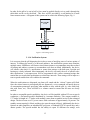
Figure 2. Many automated devices on the market address many but not all of the requirements
for a universal pill dispensing device. From left to right A) Monitored Automatic
Pill Dispenser MD2 with details B) Med-Time Automatic Pill Dispenser
medications to turn off the alarm system, which also acts as a fail safe method. If, for example,
the alarm is not turned off, the MD2 will call a selected caregiver to inform them that their
patient has not taken their medications. Although this is a convenient design for elderly patients
with chronic memory loss, it is a feature that would turn away younger patients who may
remember to take their medications but who do not have access to the device at exactly the
prescribed dispensing times. While the MD2 certainly addresses many of the markets demands
6
for a pill dispensing device it, as with the Med-Time device, is also incapable of cutting pills in
half before dispensing them, a serious problem as previously discussed.
1.4.2 Patent Search Results
CASSETTE FOR DISPENSING PILLS (7,225,597): This device has many cassettes, each filed
with a supply of pills and positionable over a target location. The device has a platen beneath the
target location with receptacles configured to hold both vials and blister packs. The platen or the
cassette is movable so that any blister of the blister pack or the vial can be positioned under the
target location to receive a quantity of pills from a cassette.
PILL DISPENSER WITH REMINDER (6,581,797): A programmable vitamin and pill dispenser
that is capable of storing multiple pill groups. The dispenser provides reminders to an individual
when it is time to ingest the next serving. The serving is dispensed into a cup upon depressing a
dispenser button. By loading the individual compartments specific to each serving, an individual
does not have to create the serving each time.
ONE DOSE AT-A-TIME PILL DISPENSER AND CONTAINER HAVING SAME
(7,100,797): A device for dispensing pills one at a time or one dose at a time includes a unit
chamber fittable within/integral with the rim of a bottle. The unit chamber includes a plurality of
radial projections which project inwardly to define discrete pill holding areas. The distance
between adjacent radial projections is slightly larger than the width of the pill sought to be
contained and dispensed by the container. As the bottle is inverted, pills will fall into the pill
holding areas, one pill or dosage amount per area. A dispensing cap is rotatable relative to the
unit chamber. A single pill-width window in the cap is positionable opposite the pill holding
areas of the unit chamber. When a pill is meant to be dispensed, the bottle is inverted or angled
downward, and a single pill in the pill holding area opposite the window falls out of the bottle.
1.5 Map for the Rest of the Report
The following information aims to describe in detail the design process thus far. The first three
alternative designs are discussed which will show a progression in both our understanding of the
various subunits as well as an increasingly efficient ways of accomplishing the task. Following
the three alternative designs will be a detailed, technical discussion of the group’s optimal design
for the device. This is the plan of which the device will be built upon. From the information
presented there will be a greater understanding of how the device will be programmed and built.
Each subunit of the device is broken down and technical analysis of the mechanical and
electrical elements of the design is provided. Once the device is explained in great detail its
impact on the user and society as a whole will be discussed. This includes the realistic
constraints, safety issues and global impact of the device. As engineers learning of new material
is essential to growth in the industry. An outline of the knowledge gained through designing this
device will be included. This device is not without economic and time limitations. There will be
a discussion of the proposed budget as well as a timeline to keep the group on time for
completion of the project. Finally each member’s contribution to the report as a whole as well as
a summary of the device concludes the report.
7
2. Project Design
2.1 Design Alternatives
2.1.1 Design 1
2.1.1.1 Dimensions and Materials
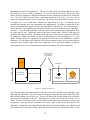
The first design concept for the device is to use a square shape for the base. The medication
bottle will be placed on top of the device. The use of a square shape will ensure that the user has
a firm grip on the device while in operation. It is critical that the device be placed on a hard
surface with good support so that the mechanisms that are cutting the pill do not cut a different
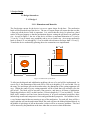
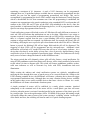
size. As seen in Figure 3, the size of the device will have a maximum dimension of 7.6 cm by
7.6 cm by 7.6 cm to insure easy portability and to act as a bottle cap. An average medication
bottle is about 6.35 cm in height by 2.5 cm in width with a diameter no larger than 2.54 cm [1].
To make the device aesthetically pleasing, these size constraints were implemented.
2.5 c m
6.35 c m
M ed icatio n
7.6 cm
M
ed
ic
at
io
n
P ill D isp en s in g D evice
2.5 cm
7.6 c m
P ill D is p en sin g D e vic e
P ill E xit
B u tto n
7.6 cm
7.6 cm
Figure 3: Dimensions of the device
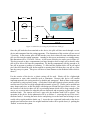
To alleviate the disposal and stabilization problems, the use of a card will be implemented. As
seen in Fig. 4, the dimensions of this card will be 5.08 cm in height by 2.54 cm in width. Due to
the many size and shape pills on the market today, the dimensions of the cutting apparatus will
vary. Within the center of every cutting apparatus will be a blade that will accurately slice the
pill in half. The blade will be non-toxic, non-corrosive, and inert to all forms of medication.
Single-edge blades are 0.023 cm thick and are 2.54cm in height by 1.27 cm in width [2]. For the
blade itself, stainless steel has been chosen because of its great mechanical properties; these
include large tensile and compressive forces and good hardness properties. Also stainless steel is
a very bioinert material thus not reacting to any of the medication. For each pill, there will be a
single card that will cut the medication in half; this card will have the blade positioned directly in
the middle of each shape of pill on the market, so there will be no accuracy problems. This card
will be inserted by the pharmacist at the time when the user receives their medication.
8
2 .5 4 c m
T a b le t P la te
5 .0 8 c m
1 .2 7 c m
½ P ill C u t
5 .0 8 c m
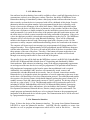
Figure 4: Tablet Plate for cutting the pills and razor blade [2]
Once the pill bottle has been attached to the device, the pills will then travel through a screw
device and transported into the cutting apparatus. The dimensions of this section will not exceed
7.6cm long. In this section, pills will fall into the screw device that will rotate and dispense one
pill at a time into the cutting apparatus. Attached to this screw mechanism is a rotating motor;
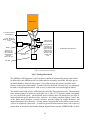
this dimension will be 2.54 cm to 5.08 cm. A full layout of this device can be seen in Figure #5.
This device needs to have compartments just large enough to hold a single pill so that no other
pills will be able to fall into the compartment. By having compartments just big enough to fit
one pill in presents a problem of jamming. To alleviate this problem there will be an angled
piece that will funnel the pills down towards an opening that will then place one pill at a time
into the conveyer system. This piece will have to same diameter as the medicine bottle which is
about 1”.
For the exterior of the device, a plastic casing will be used. Plastic will be a lightweight
comparison to some other materials such as aluminum. Because this device will contain
important materials, the casing needs to be durable and waterproof. Both of these requirements
are satisfied by using a plastic casing. A Polyether Polyol and Polymeric plastic mixture will be
used because of its low cost, high strength and resistance to heat [2]. Plastic can be molded into
many shapes and sizes, so this also helps with design an efficient and cost effective device. On
the exterior of the device there will be, an activating button which will be large enough of the
user to see, an exit window for when the pills are dispensed, and an opening to place the cap-less
medicine bottle. The exterior will have a port were the medicine bottle will be placed. The
operation of the device for the pharmacist will be as follows: 1. removing the cap of the user’s
medicine bottle, 2. inverting the entire device and placing it over the bottle and securing it as one
would with a regular medicine bottle cap, 3. invert the now connected bottle and set the device
upright on a hard surface (note: the original medicine bottle will be upside down), 4. pushing the
“button” to activate the system.
9
2.5 cm
6.35 cm
Medication
Screw Transportation
Motor
(Linear)
This motor will be used
to rotate the screw
mechanism which will
separate the pills
before entering the
cutting or dispensing
device
This motor will be used
to push the pill through
the tablet plate
For full tablet a divider
will be inserted to divert
the pill to be dispensed;
if divider is not inserted
then the pill will fall into
the tablet plate where
the linear motor will
come down and push
the pill through the
blade
Motor
7.6 cm
Electronics
Tablet Plate
Electronics and
batteries will be kept in
this area
½ Pill ½ Pill
Storage Storage
Pill Exit
Batteries
These hinges will be
controlled by the
microprocessor, as the
½ pills are needed,
these storage
compartments will open
and dispense a pill
7.6 cm
Figure #5: Internal look of the device and layout
2.1.1.2 Pill Transport
The MEDSense pill dispenser mainly uses the principle of gravity to move the tablet from the
pill bottle to the output. When the user is alerted that it is time to take their medication, they will
invert the pill bottle so the pill cap is pointing downwards. The pill dispenser should be held
fairly straight and steady, or placed on a tabletop, to ensure that gravity can be used to move the
pills through the system.
The tablets will start in the pill bottle. When inverted, they will slide down an inclined plane to a
small screw conveyor that can hold two pills at a time. The screw conveyor is necessary to
ensure that only one pill be released into the pill cap at a time. When the button is pushed to start
the flow of the pills through the device, a motor will be used to rotate the screw conveyor 360˚,
releasing one tablet into the system. The tablet will fall through a small funnel that leads to the
tablet plate. The raised edges of the tablet-shaped hole will ensure that the tablet falls with the
correct orientation. The linear actuator motor will then be activated and apply pressure to the
10
middle of the tablet, forcing it through the hole and slicing it in half. The two halved tablets will
then fall into two separate chambers. Only one halved tablet will be consumed at a time, so the
chambers will alternate in releasing the tablets to the patient. A small hinge on the bottom of the
chamber will open if a halved tablet is needed, causing the halved tablet to fall into the
dispensing area.
In the case that a pill does not need to be cut in half, a hinge will redirection the whole pill from
the funnel directly through a small chute to the dispensing area. This design will also work if
one and a half pills are prescribed per dose. A program written to the microchip will keep track
of the pills being dispensed. The first pill will be cut in half and one half will be outputted, and
the second pill will be redirected to the dispensing area. For the next dose, since a halved pill
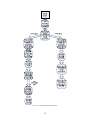
will already be present in the system, that will be released along will a whole pill. A flowchart
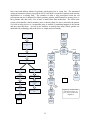
of this process can be seen below in Fig. 6.
Figure 6: Pill Transport Flowchart
A rotary motor will be used to separate the pills and make sure only one is released into the
system. The motor will rotate the screw conveyor 360º, causing one pill to fall into the funnel
leading to the cutting mechanism. The rotation of the screw conveyor will be controlled by a
microprocessor that will be programmed to rotate 360º for each pill that should be dispensed.
The screw conveyor will be very small, holding only 2 pills at a time, in order to minimize the
space taken up by this system. The reason the screw conveyor is needed is to prevent jamming
of pills in the system. For this design to work, it is necessary that only one pill fall to the cutting
device at a time. The screw conveyor does not require as much force as the motor being used for
the cutting mechanism, so a smaller motor can be used. A rotational motor can also be used
instead of a linear actuator. The material of the screw conveyer will be stainless steel since it is
bioinert and resistant to corrosion. A diagram of the screw conveyor system can be seen below
in Fig. 7.
11
Figure 7: Screw Conveyer System
The last part of the pill transport system is the system of chutes and hinges. These will all be
made of smooth plastic. The plastic will be polyether polyol and polymeric mixture. This
plastic is bioinert and non-toxic. It’s also smooth to enable the pills to fall through with as little
friction as possible.
2.1.1.3 Cutting Device
The MEDSense Pill Dispenser is a pill cap that is capable of automatically cutting a pill in half.
The device should be compatible with a number of pill sizes and shapes since there are a great
variety of pill sizes available on the market.
In order to have the MEDSense device cut the tablet as accurately as possible, the stress put on
the tablet should be almost all shear stress. If any other stresses are present, the tablet could
fracture in other places and crumble. In order to do this, the blade will have to be very sharp and
be made of an appropriate material, such as steel, to ensure that it can cut through the tablets.
The MEDSense pill cap is a device that must be compatible with multiple sizes and shapes of
pills. In order to accommodate for the different tablets shown in Table #1, removable plates will
be used that match the size and shape of different tablets. These plates will be inserted into the
pill cap by the pharmacist. The plates will be made of metal with the shape of the tablet cut out
in the middle. A steel blade will run across the tablet-shaped hole in order to cut the tablet in
half. The sides of the tablet hole will be slightly raised to ensure that the tablet falls directly into
the hole in the correct orientation. A diagram of the plate can be seen in Fig. 8.
Figure 8: Tablet Plate and Blade
12
In order for the pill to be cut in half, a force must be applied directly to it to push it through the
tablet hole and be cut by the blade. This force will be provided by a rod attached to a small
linear actuator motor. A diagram of this system can be seen in the following figure, Fig. 9.
Figure 9: Pill Cutting System
2.1.1.4 Notification System
It is necessary that the pill dispensing device has a mean of notifying users of various points of
interest. To address the needs of a universal audience, the notification systems must stimulate
multiple senses. MEDSense will feature visual alarm systems to accommodate users that are hard
of hearing and auditory systems to accommodate users that are blind. Additionally, the device
will vibrate when there is a notification to ensure that patience with both poor eyesight and
hearing are clearly informed. Most importantly, the device will notify the user of when to take
their medications. A microprocessor will be programmed with various command strings that
remind the user to take their medications at certain time intervals. These strings will be input to a
text to speech module that will verbalize the command.
When the medications are dispensed, an alarm will sound and the “release” button will flash.
Once the release button is pressed and pills are dispensed, a voice command will notify the user
of consumption parameters specifying what medium to take with the pills (i.e. take with food,
take with water, etc.). There will also be a volume control to ensure that all users are clearly
notified.
In order to accomplish speech capabilities, the device will be installed with an IC2 text to speech
synthesizer, a Devantech product distributed by Acroname Robotics. This compact module is
1.57 inches in length in 1.57 inches wide making it more than acceptable in size for the estimated
design. The device runs on a 5V power source with a tolerance of approximately 10 percent. The
standby current required is 20mA and the active speech current is 80mA. Additionally the device
features an audio amplifier, an imbedded PIC processor, a Winbond WTS701 speech chip, and a
40mm speaker. The speech module has the ability to repeat 30 different text strings, each
13
containing a maximum of 81 characters. A total of 1925 characters can be programmed.
Although there are 30 predefined phrases available that are automatically programmed into the
module, the user has the option of programming personalized text strings. This can be
accomplished by programming the device SP03 module using the Brainstem Console Program,
which is downloaded for free from acroname.com. Once the programming is established, the
computer can communicate to the speech synthesizer using a standard RS232 serial port that will
connect to the GND, RX and TX pins on the SP03 chip embedded on the device. Once the
speech module is implemented into the pill dispensing device, it will be programmed to initiate
specific text strings at programmed time intervals.
Visual notification systems will include a series of LEDs that will notify different occurrences. A
static red LED will indicate that medications are not to be taken. When there is no action or
response required (ie not prescribed medication time) the red LED will be constantly on. When
there is a response required from the user a green blinking LED will be triggered and will
continue to trigger until the user responds. At medication time, for example, the green LED will
be blinking, notifying the user to press the pill release button on the side of the device. When the
button is pressed, the blinking LED will no longer blink and the pill will be dispensed. The
triggering of these LEDs will be programmed into the microprocessor. Additional visual
notifications will include a PC mount LED array that will act as a low battery indicator. As a
device that relies heavily on the ability to keep time, a loss of power by depleted battery charge
could lead to a loss of exact regulation of prescription times. A battery level indicator will clearly
notify users of when to change the batteries in their MEDSense unit.
The trigger switch that will ultimately release pills will also feature a visual notification. By
using an LED pushbutton switch from Honeywell, the user will be clearly notified of what action
to take when it is time to dispense pills. The switch will feature pushbuttons, paddles, rockers,
solid state indicators as well as electronic key locks with LED, incandescent and neon
illumination.
While creating the auditory and visual notification systems are relatively straightforward,
notifying the user through their sense of touch proves to be a more difficult task. Similar to the
E-Pill vibrating reminder device, the MEDSense will feature a vibrating device that will trigger
at programmed medication times. Although there are many vibration sensing devices available
on the market, there are no readily available devices that cause a device to vibrate. As a result,
the MEDSense will feature a homemade vibration system.
A simple rotational dc motor will be stabilized in a sturdy plastic container. Attached
orthogonally to the rotational end of the motor will be a small plastic gear that will rotate
clockwise when the motor is activated. Attached parallel on the perimeter of the plastic gear will
be a small weight. Due to the rapid rotation (100 to 150 RPM) of the system, the rotating weight
will rapidly change the center of mass of the system causing a “wobbling” motion. As the speed
of the motor increases, the wobbling will increase until it is a quick vibrating response.
14
2.1.1.5 Offsite Alert
Not until now has the technology been readily available to allow a small pill dispensing device to
communicate wirelessly to an emergency contact. Therefore, the ability of MEDSense to use
Bluetooth technology to immediately contact a third party member when medications are not
taken correctly or when the device is tampered with will be a hallmark of this design. From the
pharmacist interface any phone number can be programmed into the device allowing a wide
variety of users to take advantage of the offsite alert feature. While elderly individuals might
choose to have the device call their doctor or pharmacist, a busy mother could have the system
call her own cell phone as a double reminder in case the notification systems do not successfully
catch her attention. It is crucial for the safety of the patient to take their medication on time, and
the offsite alert is a failsafe system to maximize the safety and health of the patient. If they miss
a dose, the third party member is alerted and can respond however they feel fit. The MEDSense
dispenser will be a wireless device using Bluetooth technology. There will be a Bluetooth
module in the dispenser that will send a short-range signal with a frequency in the 2.4 GHz
spectrum to a nearby computer with Bluetooth technology that is also connected to the internet.
The computer will in turn send a text message to a pre-programmed cell phone number of the
assigned caretaker. This cell phone number will be programmed into the MEDSense dispenser
with the other information. The device will send an alert offsite if the dose is not taken within
thirty minutes of the start of the alarm. Therefore, if the button to dispense medication is not
pushed within thirty minutes of the programmed dosage time, the caretaker will be alerted
through a text message and be able to come to the aid of the patient.
The specific device that will be built into the MEDSense system is an RCM3100, EmbeddedBlue
eb506-AHC-IN Bluetooth Radio Module from A7 Engineering and distributed by Rabbit
Semiconductors. With advances in technology, many of the tedious programming requirements
are no longer need because the devices come pre-programmed. This particular model features
fully implemented components on the board to ensure that no additional code is required.
Additionally, the embedded UART interface will automatically search, connect, and
communicate with other Bluetooth devices nearby. Once it is located, connection to another
Bluetooth device is designed to mimic the appearance of a serial connection so that users do not
need to have a full knowledge of wireless communication protocol. The rabbit Bluetooth module
also requires a low driving current, which should ultimately prolong the system’s battery life. A
standby current of 3mA and a data transfer current of 25mA is required. The driving voltage is
also low at a value of only 3.3 Vdc. The Bluetooth module will be purchased as part of a kit
including RCM3100, EmbeddedBlue eb506-AHC-IN Bluetooth Radio Module, prototyping
board, and miscellaneous cables and hardware. Also included are the Dynamic C Integrated
Development Environment, Bluetooth drivers, libraries, sample programs, and manuals. The
sample programs and manuals should prove to be an integral element to the programming and
integration of the Bluetooth device into the system. The communication device will be activated
by a programmed microprocessor.
2.1.1.6 Pharmacist Interface
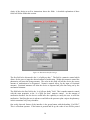
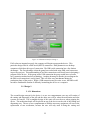
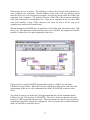
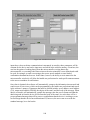
Figure 10 shows the design of the pharmacist interface. The group chose National Instruments
LabVIEW to create the pharmacist interface. LabVIEW has the capability to create clear
interfaces as well as program microprocessors which will be used in this device.
Note the
15
clarity of the design as well as instructions above the fields. A detailed explanation of these
fields will follow within this section.
Figure 10: Pharmacist Interface Design
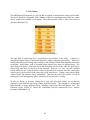
The first field to be discussed is the “# of pills per dose.” The field is a numeric control which
allows for the user to input the desired amount of medication. Within this numeric control the
pharmacist will enter the dosage amount. The value in this field will tell the device the correct
amount of medication to be dispensed. Numeric controls allow for the input of fractional
amounts. Fractional amounts will alert the device to dispense half pills after being cut by the
mechanical elements.
The field below the first field is the “# of pills per bottle” field. This is another numeric control
with the same properties as the “# of pills per dose” numeric control. As the amount of
medication becomes low the device would have the capability to notify the user to refill the
medication. Notifying the user in advance would allow the person to plan a trip to the pharmacy
in their sometimes very busy schedules.
One easily observed feature of the interface is the green button with the heading “Cut Pills?”
This is a Boolean operator. If the button is pressed and lit up, the value of true will be passed
16
through the program. If the button is not pressed and not lit up, the value of false will be passed
through the program. Once pressed, the button will alert the device to cut the pills.
On the right side of the interface is a series of dosage time fields. To set times within a
LabVIEW program time stamps are used. It is the hope of the designers that the pharmacist
could work in accordance with the user to program the times that would fit the user’s schedule.
This provides the user some control over the times to take the medication without the potential
hazards of programming. For display purposes, this interface was designed for a medication that
needs to be taken four times per day. The final interface would allow for the pharmacist to input
the number of dosage times needed. This increases the versatility of the program in
accommodating many different medications.
Below the “Cut Pills?” button and the dosage time fields is emergency contact information. This
is one of the unique features of this device. One major element of the device is its ability to
notify someone offsite if a person does not take their medication. A person offsite could check
up on the user and make sure that there are no problems with either the person or the medication
LabVIEW has the ability to send text messages to PDAs. This would allow instant contact to
family, medical professionals or persons taking care of the user. Each cell phone acts as an email address for receiving messages. Text messages can be sent from a computer to a phone or a
phone to a computer. Knowing that cell phones in essence have e-mail addresses, the device will
also send an e-mail. If a person does not have text receiving capability or is not with their phone,
there will be a second level of notification. This second notification is by e-mail. The device
will send a short message to an e-mail address saying that the person did not receive their
medication. By inputting these values as strings, the pharmacist will provide information as to
how to contact important people. The numbers and e-mail addresses will be provided by the user
which again allows the user increased control over their health.
Directly above the program button is detailed instructions as to how to operate the pharmacists
interface. This should greatly reduce any confusion as to how to program the device.
Instructions are provided on the interface to ensure that everything is done correctly as well as to
save time. It would take a lot of time to refer to a user’s manual to solve programming problems.
Reducing the time it takes to program the device would make the device more attractive in the
market.
The final element of the pharmacist interface is the “Program” button. Once the “Program”
button is pushed, the program will check all fields for the correct information. If values are not
inputted in the correct form or fields are left out, the device will not be programmed and the
pharmacist will have to correct the errors and try again. The error message will be in the form of
an indicator located to the right of the instructions on the pharmacist interface. The red indicator
will light up if the device did not program successfully. The pharmacist will have to re-enter the
values and hopefully correct potential mistakes.
If all values are inputted correctly the computer will begin to program the device. The design
calls for a USB interaction with the computer. This was done since many computers have USB
ports and no new technology would have to be purchased by the pharmacy to use the device.
17
Another reason for using USB is that many people have experience using USB ports either with
flash memory devices or printers. The technology would not be as foreign to the pharmacist as
using completely new equipment. Familiar hardware along with a clear user interface should
make the device easy to use and quick to program.
2.1.2 Design 2
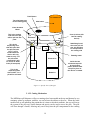
2.1.2.1. Dimensions
The second design concept for the device is to use a cylindrical shape for the unit. The
ergonomic design of this unit will ease the user when gripping the device. The base will include
all of the necessary equipment to cut, dispense and to notify the user. The medication bottle will
be placed on top of the device. The use of a cylindrical shape will insure that the user has a firm
grip on the device while in operation. It is critical that the device be placed on a hard surface
with good support so that the mechanisms that are cutting the pill do not cut a different size.
To cut the pill in half there will be a motor with a linear actuator; this motor will be no larger
than 22 mm. Within the center of every linear actuator there will be a blade that will accurately
slice the pill in half. The blade will be non-toxic, non-corrosive, and inert to all forms of
medication. For the blade itself, stainless steel has been chosen because of its great mechanical
properties; these include large tensile and compressive forces and good hardness properties.
Once the pill bottle has been attached to the device, the pills will then travel through a cone
shape into the rotating plate and cutting apparatus. In this section, pills will fall into one of the
funnels, and then the apparatus will rotate to the cutting side where the pill will be cut into two
halves. From there the correct amount of medication will be dispensed. This device needs to
have compartments just large enough to hold a single pill so that no other pills will be able to fall
into the compartment. By having compartments just big enough to fit one pill in presents a
problem of jamming. To alleviate this problem there will be an angled piece that will funnel the
pills down towards an opening that will then place one pill at a time into the rotating plate. The
material used for the funnel and the inside rotating plate will be the polyether plastic that is the
same material used for the outside casing. While the material used for the two plates that line the
top of the rotating plate will be aluminum. This allows for support throughout the device and
when the device is under duress the pills will not become jammed.
For the exterior of the device, a plastic casing will be used. Plastic will be a lightweight
comparison to some other materials such as aluminum. Because this device will contain
important materials, the casing needs to be durable and waterproof. Both of these requirements
are satisfied by using a plastic casing. Plastic can be molded into many shapes and sizes, so this
also helps with design an efficient and cost effective device. On the exterior of the device there
will be, an activating button which will be large enough of the user to see, an exit window for
when the pills are dispensed, and an opening to place the cap-less medicine bottle. The exterior
will have a port were the medicine bottle will be placed.
18
Push Button
Two aluminum tops
to the rotating plate
Medication
Linear Actuator
Motor
This is the cutting
side where the pill
will be spit into two
parts
This is the
dispensing door
that will open after
the pill has been
cut, if ½ pill is
needed then the
device will only
rotate so only ½ of
the pill can be
released (this will
be shown in detail
in the pill transport)
Cone (to direct pills
into the cutting
device)
Stabilizing funnel
where the pill will
rest; this will then
be transported to
the cutting side
Rotating motor
Electronics
Inside the two
aluminum tops will
be a polyether
plastic that will hold
the pill in place as
the device is rotated
Pill Exit
This is the
dispensing tube
where either ½ or 1
pill will be released
Batteries
Figure 11-. Specific View of Design 2
2.1.2.2 Cutting Mechanism
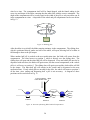
The MEDSense pill dispenser will use a rotating wheel surrounded on the top and bottom by two
stationary plates to transport, stabilize, cut and release the tablets to the user. When the multi
modal alerts go off informing the patient that it is time to take their medicine, the user will invert
the system so the pill cap is on the bottom and gravity can be used to move the pills. The pills
will flow through a funnel, allowing only one to drop into the pill compartment in the rotating
19
wheel at a time. The compartment itself will be funnel-shaped, with the funnel ending in the
exact size and shape of the tablet, ensuring that the tablet falls with the correct orientation. The
depth of the compartment will be exactly equal to the width of the pill, so only one tablet can fit
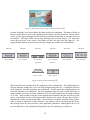
in the compartment at a time. A depiction of the wheel and pill compartment can be seen below
in Fig. 12.
Figure 12- Rotating plate
After the tablet is cut in half, the blade remains stationary in the compartment. The sliding door,
which is positioned directly under one half of the tablet, will open, allowing half of a tablet to
fall through a chute to the pill output.
When another half pill is needed at the next medication time, the blade will retract from the
compartment. The wheel moves to position 3, which is directly over the sliding door. The
sliding door will open and the other half pill will be dispensed. If one and a half pills need to be
dispensed with each dose, the blade will again retract, but the second compartment, with a whole
pill in it, will move to position 3. The sliding door will again open and the whole tablet will fall
to the output. The other half pill will remain in the system and be dispensed at the next
medication time. If only whole pills are needed for the dose, the wheel will rotate to position 3
all the time, since cutting and dispensing half a pill is not necessary. A diagram of these
positions can be seen below in Fig. 13.
Force provided by Blade
linear actuator motor
Sliding door
opens
20 mm
Position 1
10 mm
20 mm
Position 2
Sliding
door
Sliding door
opens
20 mm
Position 3
Figure 13- Positions of Rotating Wheel and Pill Compartments
20
Sliding
door
2.1.2.3. Notification System
It is necessary that the pill dispensing device has a mean of notifying users of various points of
interest. To address the needs of a universal audience, the notification systems must stimulate
multiple senses. MEDSense will feature visual alarm systems to accommodate users that are hard
of hearing and auditory systems to accommodate users that are blind. Additionally, the device
will vibrate when there is a notification to ensure that patience with both poor eyesight and
hearing are clearly informed. Most importantly, the device will notify the user of when to take
their medications. A microprocessor will be programmed with various command strings that
remind the user to take their medications at certain time intervals. These strings will be input to a
text to speech module that will verbalize the command. Selected times will be specific intervals
before medication is dispensed, as selected by the user. The user can, for example, select that the
device notify him/her every ten minutes before pills are dispensed to ensure that they are nearby
and able to take their medications at that time. For a user with a busier schedule, selecting that
the device notifies him/her half an hour before dispensing medications could be more
convenient. Additionally, the user can select that the device notify him/her multiple times before
dispensing pills. When the medications are dispensed, an alarm will sound and the “release”
button will flash. Once the release button is pressed and pills are dispensed, a voice command
will notify the user of consumption parameters specifying what medium to take with the pills
(i.e. take with food, take with water, etc.). There will also be a volume control to ensure that all
users are clearly notified.
2.1.2.4 Pharmacists assist
Figure 14 shows the design of the pharmacist interface. The group chose National Instruments
LabVIEW to create the pharmacist interface. LabVIEW has the capability to create clear
interfaces as well as program microprocessors which will be used in this device.
Note the
clarity of the design as well as instructions above the fields. A detailed explanation of these
fields will follow within this section.
21
Figure 14- Pharmacist Interface Design 2
If all values are inputted correctly, the computer will begin to program the device. This
particular design calls for a DB9 serial (RS232) connection. Most pharmacies use desktop
computers which have this type of connection. The DB9 serial connection has a few distinct
advantages. The first advantage is that the group has worked with using DB9 serial connectors
in previous projects. This understanding of how this connection works would ease in designing a
program for the device. If the group used a USB connection the group would have to learn a
new connection method and new technology. Another advantage is that the pin out diagram for
the DB9 serial connection is easily found. This will allow easy attachments during the
production phase of the project. While a USB connection may be easier to use, the DB9 would
not add a considerable amount of difficulty in attaching the device to a computer.
2.1.3 Design 3
2.1.3.1 Dimensions
The second design concept for the device is to use two compartments; one area will consist of
the cutting and dispensing of the pill and the other area will be where the notification and alert
systems are housed. The rectangular design of this unit will ease the user when gripping the
device. The medication bottle will be placed on top of the device on the side of the cutting and
dispensing area. The use of two compartments to hold the necessary equipment will ease in the
replacement of new medication, because the user will only need to bring the cutting and
22
dispensing area back to the pharmacist. The use of a wider shape will ensure that the user has a
firm grip on the device while in operation. It is critical that the device be placed on a hard
surface with good support so that the mechanisms that are cutting the pill do not cut a different
size. The size of the device will have a maximum dimension of 6 cm by 12 cm by 6 cm to
ensure easy portability and to act as a bottle cap. An average medication bottle is about 6.35 cm
in height by 2.5 cm in width with a diameter no larger than 2.54 cm. To make the device
aesthetically pleasing, these size constraints were implemented. The ability to return half of the
device to the pharmacist greatly increases the convenience of this device. This also alleviates a
bulk of the device so the pharmacist and user do not have to carry around any extra weight than
necessary. To cut the pill in half there will be a motor with a linear actuator; this motor will be
no larger than 22 mm. Within the center of the linear actuator there will be a blade that will
accurately slice the pill in half. The blade will be non-toxic, non-corrosive, and inert to all forms
of medication. Single-edge blades are 0.023 cm thick and are 2.54cm in height by 1.27 cm in
width. Because of the size constraints the normal blade will have to be modified to a smaller
dimension. For the blade itself, stainless steel has been chosen because of its great mechanical
properties; these include large tensile and compressive forces and good hardness properties.
Also stainless steel is a very bioinert material thus not reacting to any of the medication.
Removable from the
cutting and
dispensing area
Medication
Pill cutting and
dispensing area
6 cm
6 cm
Push Button
Notification and alert area
Medication
Notification and
alert area
12 cm
Pill cutting and
dispensing area
12 cm
Figure 15- Outside of the Device
Once the pill bottle has been attached to the device, the pills will then travel through a cone
shape into the pill holder. This will consist of a hole just larger then the actual width of the pill;
this will help stabilize the pill to be cut. The pill will land on the second sliding doors so that the
pill can not pass through to the exit. The dimensions of this section can not exceed 6 cm in
width. The pill will be detected by an LED light to ensure that the pill has fallen correctly into
the position. Once the pill has been detected a “ready” light on the outside of the device will
illuminate. If jamming occurs this indicator light will notify the user and the user will then need
to invert the device and slowly bring it back into position so pills can fall into the chute. A full
23
layout of this device can be seen in Fig. 16. This device needs to have a chute just large enough
to hold a single pill so that no other pills will be able to fall into the chute. The material used for
the funnel and the chute will be the polyether plastic that is the same material used for the
outside casing.
The notification and alert systems area will be able to be removed from the cutting and
dispensing area of the device. In this area will hold the power source, PCB board, and the
microchips for the LabVIEW program and the alerts. This part will also be able to be recharged
when it is disconnected from the other half. The material used for this part will consist of the
same plastic casting as the cutting and dispensing half; this will allow for this part to be
waterproof, durable and capable of resisting moderate heat. The dimensions of this side will be 6
cm by 6cm.
For the exterior of the cutting and dispensing part, a plastic casing will be used. Plastic will be a
lightweight comparison to some other materials such as aluminum. Because this device will
contain important materials, the casing needs to be durable and waterproof. Both of these
requirements are satisfied by using a plastic casing. A Polyether Polyol and Polymeric plastic
mixture will be used because of its low cost, high strength and resistance to heat. Plastic can be
molded into many shapes and sizes, so this also helps with design an efficient and cost effective
device. On the exterior of the device there will be, an activating button which will be large
enough of the user to see, a “ready” light to alert the user when the pill has fallen correctly into
the position, an exit window for when the pills are dispensed, and an opening to place the capless medicine bottle. The exterior will have a port were the medicine bottle will be placed. The
operation of the device for the pharmacist will be as follows: 1. removing the cap of the user’s
medicine bottle, 2. inverting the entire device and placing it over the bottle and securing it as one
would with a regular medicine bottle cap, 3. invert the now connected bottle and set the device
upright on a hard surface (note: the original medicine bottle will be upside down), 4. pushing the
“button” to activate the system once the jamming light has gone off.
24
M e d ic atio n
F u n n e l fo r p ills to
b e s e p arate d
L in ea r A c tu a to r
M o to r to cu t th e p ill
in h alf
C h u te fo r th e
p ills to tra ve l
B la d e
+ -
S e n s o rs fo r
w h en th e p ill
h as c o rre ctly
a lig n ed its elf
a n d th e
m o to r ca n c u t
V o ltag e s o u rc e fo r
s en so rs
S lid in g d o o r to
se p a ra te th e
p ills an d a ls o
w h en o n e p ill
h as b e en cu t
in h alf to s to re
th e h alf a p ill
in s id e th at
a re a
N o tificatio n an d alert area
P ill E x it
Figure 16. Specific View of Design
2.3.1.2 Cutting Mechanism
The MEDSense Pill Dispenser is a pill cap that is capable of automatically cutting a pill in half.
In order to have the MEDSense device cut the tablet as accurately as possible, the stress put on
the tablet should be almost all shear stress. If any other stresses are present, the tablet could
fracture in other places and crumble. In order to do this, the blade will have to be very sharp and
be made of an appropriate material, such as steel, to ensure that it can cut through the tablets.
The stainless steel blade will be welded onto the end of the linear actuator motor. The maximum
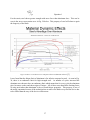
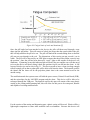
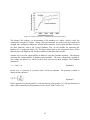
force measured that was needed to cut the pills was 3.9 lbs (17.35 Newtons) which corresponds
to a very small blade speed. An ideal blade speed would be above 20 in/min since less force is
required with this speed, and the accuracy increases. It is clearly seen from Figures 2 and 3 that
as the blade speed increases, accuracy increases (percent change in weight decreases) and
required maximum force decreases. A faster motor is also desirable so the patient’s wait time for
a pill to be dispensed is decreased. A small but powerful linear actuator motor with a speed of
greater than 20 in/min like the Danaher Motion Digital Linear Actuator 42DBL20C2B-L will be
25
used. This motor has a diameter of 42 mm and consumes 10 watts of power. The maximum
force applied is 16.25 lbs (72.28 Newtons) and maximum travel distance is 2.4 inches (0.061
meters) with a maximum speed of 36 in/min. An image of this motor can be seen in the
following figure, Fig. 17. [3]
Figure 17. Danaher Motion Digital Linear Actuator 42DBL20C2B-L
The MEDSense pill dispenser will use the basic concept of gravity to dispense the tablets. When
the alarms alert the user that it is time to take their medication, the user will invert the system so
the pill cap is towards the ground. The pills will flow through a funnel just below the pill bottle.
At the bottom of the funnel, a chute will be present with a width just large enough for one pill to
fit through. One pill will move through the funnel and down the chute. The size of the funnel
will depend on the type of pill being dispensed, so this device will be pill-dependent. There will
be a different size device for the different size tablets used. The pill will be stopped by a sliding
door below the chute so exactly half the pill is exposed out of the chute. The pill will then be
stabilized in the chute. Another sliding door will close above the pill inside the chute. The
cutting blade will come from one side and cut the pill in half. The bottom sliding door will then
open and release the half pill to the patient. When the next half pill is needed, the blade will
retract and the other half of a pill will be released to the patient. If a whole pill is needed, the
blade will not move and an entire pill will be released to the user. A sensor will be used under
the chute to ensure that the pill is in the correct position and ready to be cut. In the case of a jam
or that the pill is not in the correct position, the sensor will send a signal to an LED alert which
will warn patients that the pill cannot be cut. If this is the case, the patients will be told to reinvert the device so the pills can be re-aligned in the chute. A diagram of this process can be
seen below in Fig. 18.
26
Sliding
Door 1
Threaded Shaft
Blade
10 mm
20 mm
10 mm
Sliding
Door 2
Force
Linear Actuator
To Output
Figure 18. Cutting Mechanism.
This design can be used to dispense ½, 1 or 1 ½ pills. The following figure, Fig. 19, is a
flowchart describing the cutting process the MEDSense dispenser goes through in order to
release these three amounts of medication. In order to dispense 1 ½ pills, first one pill will be
dispensed then a half pill. At the next medication time, first a half pill will be dispensed then one
pill using the same process described below.
27
Figure 19. Cutting Mechanism Flowchart
28
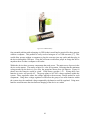
The motors that will be used to control the two sliding doors will also be linear actuator motors
but only have to produce enough force to open and shut the doors. Therefore, very small motors
can be used, such as the Danaher Motion Digital Linear Actuator 20DAM40D1U-K. This motor
is only 20 mm wide, consumes 5 Watts of power, and produces a maximum force of 1.88 lbs
(8.34 Newtons). All the motors used in this device will be controlled by the microprocessor. A
picture of this small linear actuator can be seen in Fig. 20. [3]
Figure 20. Danaher Motion Digital Linear Actuator 20DAM40D1U-K
2.3.1.3 Notification System
While creating the auditory and visual notification systems are relatively straightforward,
notifying the user through their sense of touch proves to be a more difficult task. Similar to the
E-Pill vibrating reminder device, the MEDSense will feature a vibrational device that will trigger
at programmed medication times. Although there are many vibration sensing devices available
on the market, there are no readily available devices that cause a device to vibrate. As a result,
the MEDSense will feature a homemade vibration system.
A simple rotational dc motor will be stabilized in a sturdy plastic container. Attached
orthogonally to the rotational end of the motor will be a small plastic gear that will rotate
clockwise when the motor is activated. Attached parallel on the perimeter of the plastic gear will
be a small weight. Due to the rapid rotation (100 to 150 RPM) of the system, rotating weight will
rapidly change the center of mass of the system causing a “wobbling” motion. As the speed of
the motor increases, the wobbling will increase until it is a quick vibrating response [4]. The
homemade vibration device will undoubtedly require a significant amount of trial and error and
trouble shooting. As a result, precise values have not yet been determined. However, the basic
design has been clearly conceptualized.
29
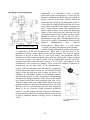
Additionally, it is important to have a failsafe
notification in the event that there is a jam in the pill
dispenser. Although the funnel device described in
previous sections is the most efficient method to
ensure that only one pill passes through the system at
a time, there is a slight possibility that the device jam
at the funnel output due to the random orientation of
pills. A simple optical system will be installed at the
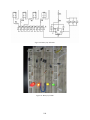
funnel output to detect a jam in the pill dispensing
funnel. At the second trap door where the pill will
rest vertically before being cut, there will be a simple
photodiode LED on one side of the pill and a
photodetector on the other. The photodetector diode
used will be a QSB363 Subminiature Plastic Silicon
Indrared
Phototransistor
from
Fairchild
Semiconductors. When there is a pill resting
Figure 21- Photodector diode
vertically, the path of the photons will be blocked
and the cutting and dispensing process will continue
as programmed in the PIC microprocessor. When there is no pill however, the
photodetector will be excited and the process will not continue. This case will suggest
that there is no pill in place due to a jam in the funnel. The photodiode and the
photodetector will be activated when the user presses the “pill dispense” button described
in previous sections. The optical system will be programmed into the same PIC
microprocessor that controls the entire system as an “If, Then” type program. IF the
photodetector is not excited, for example, THEN system will continue to function as
programmed. On the other hand, IF the photodetector is
excited, THEN the microprocessor will activate a notification
LED on the external shell of the device. The external LED will
signify to the user that they need to shake the device. The
“shaking” or “vibrational” motion will immediately reorient
the pills in the reservoir in such a way that one will fall through
the funnel exit. Rough simulations of the effects of this motion
on a jammed funnel have been performed using One a Day:
Women’s vitamin pills and a simple plastic funnel. Due to the
random orientation of the pills in the static reservoir, it is likely
that there will be a jam blocking any pills from exiting the
funnel to be cut. From the rough experiment performed,
however, even the slightest amount of motion is sufficient to
reorient the pills, making it very unlikely that the user will need
to apply a significant amount of energy or force to shake the
device.
Fig 22 Photodetector and
Schematic
30
2.3.1.4 Offsite Alert
The specific device that will be built into the MEDSense system is an RCM3100, EmbeddedBlue
eb506-AHC-IN Bluetooth Radio Module from A7 Engineering and distributed by Rabbit
Semiconductors. With advances in technology, many of the tedious programming requirements
are no longer need because the devices come pre-programmed. This particular model features
fully implemented components on the board to ensure that no additional code is required.
Additionally, the embedded UART interface will automatically search, connect, and
communicate with other Bluetooth devices nearby. Once it is located, connection to another
Bluetooth device is designed to mimic the appearance of a serial connection so that users do not
need to have a full knowledge of wireless communication protocol. The rabbit Bluetooth module
also requires a low driving current, which should ultimately prolong the system’s battery life. A
standby current of 3mA and a data transfer current of 25mA is required. The driving voltage is
also low at a value of only 3.3 Vdc. The Bluetooth module will be purchased as part of a kit
including RCM3100, EmbeddedBlue eb506-AHC-IN Bluetooth Radio Module, prototyping
board, and miscellaneous cables and hardware. Although it is not absolutely essential to purchase
the entire kit, it would undoubtedly be useful to have the informational resources that are
included. This will ensure that even with a limited knowledge of wireless transmission and
programming, the device will successfully be integrated into the final system with optimal
efficiency. Also included are the Dynamic C Integrated Development Environment, Bluetooth
drivers, libraries, sample programs, and manuals. The sample programs and manuals should
prove to be an integral element to the programming and integration of the Bluetooth device into
the system. The communication device will be activated by a programmed microprocessor.
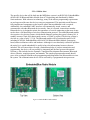
Figure 23 EmbeddedBlue Radio Module
31
2.3.1.5 Pharmacist Interface
Figure 14 shows the design of the pharmacist interface. The group chose National Instruments
LabVIEW to create the pharmacist interface. LabVIEW has the capability to create clear
interfaces as well as program microprocessors which will be used in this device. Note the clarity
of the design as well as instructions above the fields.
This particular design calls for a DB9 serial (RS232) connection. Most pharmacies use desktop
computers which have this type of connection. The DB9 serial connection has a few distinct
advantages. The first advantage is that the group has worked with using DB9 serial connectors
in previous projects. This understanding of how this connection works would ease in designing a
program for the device. If the group used a USB connection the group would have to learn a
new connection method and new technology. Another advantage is that the pin out diagram for
the DB9 serial connection is easily found. This will allow easy attachments during the
production phase of the project. While a USB connection may be easier to use, the DB9 would
not add a considerable amount of difficulty in attaching the device to a computer.
National Instruments LabVIEW has an application called VISA that can interact with a DB9
connector. This application would allow the group to use LabVIEW, the program on which the
interface is written on, to also pass information to the device. In past projects the group has seen
the interaction between the DB9 serial connector and a microprocessor so programming a
microprocessor using LabVIEW and a DB9 serial connection will be possible.
2.2 Optimal Design
2.2.1 Objective
The objective of this device is to provide an easy way to cut and dispense a user’s medication.
The device will have the ability to cut a user’s medication into ½, 1, and 1 ½, dosages. The
specifications of this design need to be portable, lightweight, and accurate. Because many
people have difficulty with the tedious nature of cutting their medication into the correct
dosages, this device was created to alleviate the stress and pain of cutting the medication.
This product is an accessible pill cap that dispenses the correct amount of medication at a set
time for elderly patients or patients with disabilities. It is difficult for some patients to remember
when to take their medication, as well as how much medication to take. It may also be a problem
for the patient to cut a pill in half if a half dosage is prescribed. The diverse disabilities of the
patients for whom we are designing this pill cap include vision loss due to macular degeneration,
hearing loss, loss of or decreased strength and motion in one hand or arm, memory loss and
Dementia. Some minor problems that affect these patients that must be kept in mind while
designing this pill cap are being in a wheelchair, loss of legs, neuropathy in the hands, hand
tremors, having small children and being easily intimidated by high-tech machines. Outlines of
medication alerts and medication dispensing are seen in Fig. 24.
The main features of this product are designed to aid the patients in their medication routine.
The multi-modal alert system lets patients know when it is time to take their medication with
32
both visual and auditory alarms for patients with hearing loss or vision loss. The automated
cutting mechanism accurately cuts pills in half if a half dose is required for patients with macular
degeneration or a missing limb. The reminder to order a new prescription when the old
prescription runs out is designed for elderly patients, patients with Dementia or memory loss, or
busy patients who don’t have a lot of time to think about their medication. The offsite alert
system, which notifies a family member, nurse or doctor offsite if a dose is missed by the patient,
is a built in safety device so a responsible party is notified if something happens to the patient
and they miss their dose. An easy-to-use interface is needed since many elderly persons are
intimidated by technology and so the device is simple and user-friendly.
Program Device (# of pills,
# of doses, times of doses)
Pills in
bottle
Alarms go
off
indicating
medication
time
Cuts Specified Number of
Pills
½ Pill Dose
Scheduled Time To Administer Medication
Medication
Bottle
Inverted and
button
pushed
One pill falls
through chute
and is
stopped by
Disk 2
1 Pill Dose
One pill falls
through chute
and is
stopped by
disk 2
Visual and Auditory Alarms
Motor
rotates so
disk 1
covers pill
If Button Pushed
Alarms Turned Off
Medication Dispensed
Reminder of Medication
Instructions
If Button not Pushed within
30 minutes
Motor
rotates so
pill aligns
with disk 2
opening
Blade
cuts pill in
half
Pill is
dispensed
Medication Not Dispensed
Motor rotates
so half pill
aligns with
disk 2
opening
Device Notifies Someone
Offsite that Medication was
not taken
(b)
Next
medication
time
Blade
retracts
and other
half pill is
dispensed
Device Records that
Medication has not been
taken
Device Records that
Medication has been taken
Motor
rotates to
position 1
(a)
33
Figure 24 . (a) flow chart
of medication alerts, (b)
flow chart of medication
dispense
Overall the objective of this design was to create a device that would allow people to become
more independent. Living ones life, not worrying about having to cut their medication, will
greatly increase ones health and well being.
2.2.2 Subunits
2.2.2.1 Dimensions and Materials
The optimal design concept for the device is to use a
cylindrical shape for the unit. The ergonomic design of
this unit will ease the user when gripping the device.
The base will include all of the necessary equipment to
cut, dispense and to notify the user. The medication
bottle will be placed on top of the device. The use of a
cylindrical shape will ensure that the user has a firm
grip on the device while in operation. It is critical that
the device be placed on a hard surface with good
support so that the mechanisms that are cutting the pill
do not cut a different size. The size of the device will
have a maximum dimension of 12.2 cm by 7 cm by 7
cm to ensure easy portability and to act as a bottle cap.
An average medication bottle is about 6.35 cm in height
by 2.5 cm in width with a diameter no larger than 2.54 cm. Figure 25 Medication bottle [1]
To make the device aesthetically pleasing, these size
constraints were implemented.
34
Medication
Push Button
12.2 cm
LED Alert Light
Cutting /
Dispensing /
Notification / Alert
Area
7 cm
7 cm
Figure 26. Side and Top View of Design 2
The ability to return the device to the pharmacist greatly increases the convenience of this
device. This also alleviates user error with this device because the pharmacist will preload the
medication and change out any necessary equipment. To cut the pill in half there will be a motor
with a linear actuator; this motor will be no larger than 22 mm. Within the center of the linear
actuator there will be a blade that will accurately slice the pill in half. The blade will be nontoxic, non-corrosive, and inert to all forms of medication. Single-edge blades are 0.023 cm thick
and are 2.54cm in height by 1.27 cm in width [2]. Because of the size constraints the normal
blade will have to be modified to a smaller dimension. For the blade itself, stainless steel has
been chosen because of its great mechanical properties; these include large tensile and
compressive forces and good hardness properties, these properties are compared in further detail
below. Also stainless steel is a very bioinert material thus not reacting to any of the medication.
35
Figure 27. Razor which will be used for cutting the medication [2]
In order to find the correct razor blade, the shape needs to be considered. The shape will help in
the wear of the blade as well as the attachment of the blade to the linear actuator. Because there
will be a fairly large load applied to the blade the attachment of the blade to the motor needs to
be seamless. The figure below shows many different types of blade design. The shape that
exerts the most force at the center of the blade will have the best wear and longevity. The
trapezoid shape blade was chosen due to the large cutting area and the area of attachment.
PRE 4000
PRE 4001
PRE 4002
PRE 4003
PRE 4004
PRE 4005
57.2 x 18.8mm
57.2 x 18.8mm
38.0 x 8.0mm
57.2 x 18.8mm
43.0 x 22.2mm
44.0 x 22.0mm
PRE 4012
PRE 4013
60.0 x 19.0mm
38.0 x 19.0mm
Figure 28. Design of the cutting blade [2]
Many materials were considered for the application of the cutting blade. The qualifications for
the best materials would exert a low cost, high strength and good wear. Comparisons between
steel, aluminum, and other materials were considered. For this report the comparison between
steel and aluminum were addressed. The first comparison that was made was the difference in
elastic modulus; steel has an elastic modulus of 210 GPa and aluminum has an elastic modulus
of 70 GPa. Steel has three times the elastic modulus than aluminum and this will allow for the
device to last longer because of the high modulus that the steel exerts. Because there will be a
high amount of force exerting on the blade, a dense material is required. Steel has a density three
times as much as aluminum. Using equation 1, the stiffness can be calculated and this shows
that for high forces the steel will have a more applicable application. Although this device will
not exert high forces, this calculation will pertain to the wear and longevity of the piece.
36
Equation 1
For the strain, steel shows greater strength with more force than aluminum does. This can be
seen in the stress versus strain curve in Fig. 29 below. This property of steel will relate to again
the longevity of the blade.
Figure 29. Stress versus Strain curve comparison between aluminum and steel [5]
It was found that the fatigue limit of aluminum is far inferior compared to steel. As seen in Fig.
30, there is an endurance limit for high strength steel. As number of cycles increased the
aluminum was shown to have no endurance limit which means that for every cycle the aluminum
piece becomes weaker and shows signs of fatigue. All of these tests showed the limiting factor
of using steel rather than aluminum is the wear and fatigue properties. This property is one of
the major constraints because if the technician has to remove the blade every time the device has
to be refilled than the easy of the device will decrease.
37
Figure 30. Fatigue limits of steel and aluminum [5]
Once the pill bottle has been attached to the device, the pills will then travel through a cone
shape into the pill holder. This will consist of a hole just larger then the actual width of the pill;
this will help stabilize the pill to be cut. The pill will land on the second sliding doors so that the
pill can not pass through to the exit. The dimensions of this section can not exceed 6 cm in
width. The pill will be detected by an LED light to ensure that the pill has fallen correctly into
the position. Once the pill has been detected a “ready” light on the outside of the device will
illuminate. If jamming occurs this indicator light will notify the user and the user will then need
to invert the device and slowly bring it back into position so pills can fall into the chute. A full
layout of this device can be seen in Fig. 31. This device needs to have a chute just large enough
to hold a single pill so that no other pills will be able to fall into the chute. The material used for
the funnel and the chute will be the polyether plastic that is the same material used for the
outside casing.
The notification and alert systems area will hold the power source, Printed Circuit Board (PCB),
and the microchips for the LabVIEW program and the alerts. This device will be able to be
recharged through the USB port. The material used for this part will consist of the same plastic
casting as the cutting and dispensing half; this will allow for this part to be waterproof, durable
and capable of resisting moderate heat.
For the exterior of the cutting and dispensing part, a plastic casing will be used. Plastic will be a
lightweight comparison to some other materials such as aluminum. Because this device will
38
contain important materials, the casing needs to be durable and waterproof. Both of these
requirements are satisfied by using a plastic casing. A Polyether Polyol and Polymeric plastic
mixture will be used for the case because of its low cost, high strength and resistance to heat [6].
Table 1. Mechanical property comparisons [7]
For the disks that will rotate around the medication, a frictionless material needs to be
considered. The table above shows many mechanical properties of different plastic materials.
The best candidate for the disks is a type of nylon which is called Nylatron. The properties of
nylon include very good physical properties, very good heat resistance, excellent chemical
resistance, excellent wear resistance, moderate price, and fair to easy processing. Plastic can be
molded into many shapes and sizes, so this also helps with design an efficient and cost effective
device.
On the exterior of the device there will be, an activating button which will be large enough of the
user to see, a “ready” light to alert the user when the pill has fallen correctly into the position, an
exit window for when the pills are dispensed, and an opening to place the cap-less medicine
bottle. The exterior will have a port were the medicine bottle will be placed. The operation of
the device for the pharmacist will be as follows: 1. removing the cap of the user’s medicine
bottle, 2. inverting the entire device and placing it over the bottle and securing it as one would
with a regular medicine bottle cap, 3. invert the now connected bottle and set the device upright
on a hard surface (note: the original medicine bottle will be upside down), 4. pushing the
“button” to activate the system once the jamming light has gone off.
39
Medication
Linear actuator motor to
cut the pill
Supports
for pill
Hole to dispense pill
Turing disks to act as
covers and supports
Rotating axis
Pill chute
Rotating motor
Pill exit
Batteries and electronics
Figure 31. Specific View of Optimal Design
40
Below shows what will be included within the batteries and electronics sections. For this device,
this section will take up a majority of the interior. Figure 32 shows a basic layout with all of the
alerts and circuitry that will be needed to run the device. The scheduling program will be
developed using LabVIEW.
Figure 32. Layout of batteries and electronic area
41
2.2.2.2 Cutting
The MEDSense Pill Dispenser is a pill cap that is capable of automatically cutting a pill in half.
The device should be compatible with a number of pill sizes and shapes since there are a great
variety of pill sizes available on the market. The following table, Table 2, shows the variety of
pill sizes and shapes. [8]
Table 2. Tablet Sizes and Shapes.
The only kind of medication that is prescribed in the half-dose is the tablet. A tablet is a
carefully measured dosage of powdered drug that is tightly compressed into tablets. Tablets are
usually coated by press-coating, sugar-coating or film-coating to make them smoother and easier
to swallow. Some tablets, such as extended release tablets, have layers of different drugs. The
outer drugs will dissolve faster and release the medication into the body, while the inner layers
remain inert until they are dissolved in the stomach. However, it is very rare that extended
release tablets be cut. A halved tablet’s center is exposed to the stomach, therefore causing the
center layers to be dissolved at the same time as the outer layers. Cutting a time-release tablet
“short-circuits” the medicine, and is undesirable. Therefore, the only kind of tablet we will be
focusing on is the homogeneous tablet, which may or may not have a coating.
In order to design an accurate cutting device that will split these tablets, the mechanical
properties of the materials used in the tablets should be known. The strength of a compressed
tablet depends on many different factors, including compression force and particle size. The
following figure, Figure 33, shows the relationship between compression force, fracture
resistance and hardness. [9]
42
Figure 33. Compression Forces vs. Hardness and Fracture Resistance
The Strong Cobb reading is a measurement of the hardness of a tablet, which is really the
compression strength of a tablet. Strong Cobb measurements are used to test the compression
strength since compressed tablets are usually brittle materials, and a regular hardness test used
for other materials, such as the Vickers Hardness Test, are not suitable for measuring the
hardness of a compressed tablet. [10] This figure shows that as the compression forces of the
tablet increase, the hardness and fracture resistance of the tablet also increase.
Another way to test for compressibility in tablets is using the Gurnham equation. This equation
calculates the compressibility of pharmaceutical powders. The more compressed a powder is
into a tablet, the denser it is, which, in most cases, increases its shear strength. The Gurnham
equation is:
ε = −c ln( P ) + d
Equation 2
In this case, ε is porosity, P is pressure and c and d are constants. The porosity is related to
density by this equation:
Equation 3
In this equation, D is density and Dtrue is the true density of the powder. [11] The true densities of
many solids commonly used in pharmacy can be seen in Table 3 below. [9]
43
Table 3. True Density of Solids Commonly Used in Pharmacy
The main mechanical property that affects the cutting of a tablet in half is the shear stress. Shear
stress is a stress that is parallel to the face of the material and would be exerted on the tablet by
the blade cutting it in half. Shear stress can be measured by the following equations:
VQ
It
F
τ=
A
τ=
Equation 4
Equation 5
In the above equation, τ is the shear stress, V is the shear force, Q is the first moment of area, I is
the second moment of area of the cross section, t is the thickness of the material perpendicular to
shear, F is the force parallel to shear and A is the area. The force required to cause a tablet to
shear will be tested using a Tinius Olsen machine.
In order to have the MEDSense device cut the tablet as accurately as possible, the stress put on
the tablet should be almost all shear stress. If any other stresses are present, the tablet could
fracture in other places and crumble. In order to do this, the blade will have to be very sharp and
be made of an appropriate material, such as steel, to ensure that it can cut through the tablets.
A thin steel blade will be strong enough to provide the correct amount of force required to cut the
tablets in half. The tablet will be held in a compartment and a steel blade will be used to cut the
tablet. A linear actuator motor will provide the force necessary to accurately cut the pill in half.
Stainless steel is chosen for the material because it is a strong metal and non-corrosive. The
properties of stainless steel can be seen in Table 4 below. [12]
44
Material
Density
kg/m3
Stainless
Steel, AISI
302,
Annealed
7920
Ultimate
Yield
Yield
Modulus Modulus Ductility,
Strength, Strength, Strength,
of
of Rigidity Percent
Tension Tension Shear MPa Elasticity
GPa
Elongation
MPa
MPa
GPa
in 50 mm
655
260
150
190
75
50
Table 4. Properties of Stainless Steel
It can be seen from table 4 above that stainless steel is a very strong material and would be
appropriate to use for cutting the tablet since it will be able to transfer enough force to cut the
tablet in half.
Two different pills were tested in the laboratory using a Tinius Olsen machine for the force
needed to cut the pills in half using a stainless steel razorblade. The two different pills that were
tested were One-A-Day Women’s Formula from Bayer Corporation and Move Free Joint
Strengthener from Schiff Products. These products can be seen in Figure 7. The process of
cutting the pill using the Tinius Olsen can be seen in Figure 8 and the razor blade used to cut the
pills can be seen in Figure 34.
Figure 34. Pills Used to Test Cutting
45
Figure 35. Tinius Olsen Cutting the Pill
Figure 36. Razorblade Used to Cut Pills
46
Table 5 shows the forces needed to cut the pills along with the initial and final weights of the
pills to test the accuracy of the cut. Table 6 shows how the velocity of the blade affects the force
needed to cut the tablet as well as the accuracy using the percent change in weight.
Pill Force Testing
Speed
(in/min)
Trial #
1
2
Move
Free:
3
Joint
4
Strength
5
Average
0.1
1
2
3
4
5
0.1
One a
Day:
Women's
Average
0.1
0.1
0.1
0.1
0.1
0.1
0.1
0.1
0.1
0.1
Maximum
Initial
Final
% Change in
Force (lbs.)
Weight (g) Weight (g) Weight
2.60
1.74
1.70
2.13
3.40
1.74
1.64
5.75
3.40
1.74
1.63
6.32
3.40
1.74
1.68
3.45
2.60
1.74
1.63
6.32
3.08
1.74
1.66
4.79
2.60
3.00
3.00
3.00
2.20
1.76
1.76
1.76
1.76
1.76
1.76
2.76
Table 5. Pill Force Testing
47
1.66
1.65
1.70
1.62
1.60
5.41
1.65
6.21
5.98
3.13
7.69
8.83
Pill Velocity Testing
Speed
(in/min)
Trial #
One a
Day:
Women's
Initial
Final
Maximum
Weight
Weight
% Change
Force (lbs.)
in Weight
(g)
(g)
3.40
1.76
1.66
5.51
4.30
1.76
1.65
6.25
4.00
1.76
1.66
5.97
3.90
1.76
1.66
5.91
1
2
3
Average
0.10
0.10
0.10
0.10
1
2
3
Average
0.50
0.50
0.50
0.50
3.70
3.40
4.00
3.70
1.76
1.76
1.76
1.76
1.69
1.69
1.71
3.98
1.70
3.60
1
2
3
Average
10.00
10.00
10.00
10.00
3.40
3.00
3.00
3.13
1.76
1.76
1.76
1.76
1.71
1.70
1.74
2.84
1.72
2.46
1
2
3
20.00
20.00
20.00
20.00
2.20
1.90
2.00
1.74
1.71
1.76
1.14
1.74
1.33
Average
1.76
1.76
1.76
1.76
2.03
Table 6 Pill Velocity Testing
3.98
2.84
3.41
1.14
2.84
0.00
Table 7 shows the maximum force and change in weight corresponding to different blade speeds.
Speed
(in/min)
Maximum Force
(lbs.)
% Change in Weight
0.1
3.9
5.91
0.5
3.7
3.6
10
3.13
2.46
20
2.03
1.33
Table 7. Speed, Maximum Force and Percent Change in Weight
48
A change in weight of the tablet is seen because during cutting, the shear stress is not perfect and
some of the material comes off the pill with the blade. In order to be as exact as possible, the
amount of material coming off the tablet should be minimized. It can be seen from the data that
with faster blade speed, less material comes off the tablet and the process is more accurate.
Figures 37 and 38 show the relationship between blade speed and maximum force and blade
speed and accuracy, respectively.
Speed vs. Force
4.5
Maximum Force (lbs.)
4
3.5
3
2.5
2
1.5
1
0.5
0
-5
0
5
10
15
Speed of Blade (in/min)
Figure 37. Speed vs. Force
49
20
25
Speed vs. Accuracy
% Change in Pill Weight (g)
7
6
5
4
3
2
1
0
-5
0
5
10
15
20
25
Speed of Blade (in/min)
Figure 38. Speed vs. Accuracy
Equation 6 can be applied to these tablets in order to find the shear stress. At 20 in/min, the
maximum force needed to cut the tablet was 2.03 lbs. The cross sectional area of the pill can be
estimated as a circle, with r = 0.1 inches. Therefore, the shear stress is:
τ=
2.03
2.03
=
2
πr
π 0.12
Equation 6
From this equation, the shear stress τ is 64.6 psi.
Using the data above, an appropriate motor can be selected to cut the tablets in half. The
stainless steel blade will be welded onto the end of the linear actuator motor. The maximum
force measured that was needed to cut the pills was 3.9 lbs (17.35 Newtons) which corresponds
to a very small blade speed. An ideal blade speed would be above 20 in/min since less force is
required with this speed, and the accuracy increases. It is clearly seen from Figures 2 and 3 that
as the blade speed increases, accuracy increases (percent change in weight decreases) and
required maximum force decreases. A faster motor is also desirable so the patient’s wait time for
a pill to be dispensed is decreased. A small but powerful linear actuator motor with a speed of
greater than 20 in/min like the Danaher Motion Digital Linear Actuator 42DBL20C2B-L will be
used. This motor has a diameter of 42 mm and consumes 10 watts of power. The maximum
force applied is 16.25 lbs (72.28 Newtons) and maximum travel distance is 2.4 inches (0.061
meters) with a maximum speed of 36 in/min. An image of this motor can be seen in the
following figure, Figure 39. [3]
50
Figure 39. Danaher Motion Digital Linear Actuator 42DBL20C2B-L
The MEDSense pill dispenser will use the basic concept of gravity to dispense the tablets. When
the alarms alert the user that it is time to take their medication, the user will invert the system so
the pill cap is towards the ground. The pills will flow through a funnel just below the pill bottle.
At the bottom of the funnel, a chute will be present with a width just large enough for one pill to
fit through. One pill will move through the funnel and down the chute. The size of the funnel
will depend on the type of pill being dispensed, so this device will be pill-dependent. There will
be a different size device for the different size tablets used. The pill will be stopped by a rotating
disc with an opening so the pill can fall through below the chute so exactly half the pill is
exposed out of the chute. Another rotating disc with an opening will rotate so it is closed above
the pill inside the chute. The cutting blade will come from one side and cut the pill in half. The
bottom rotating disc will then rotate to where the hole is located in the disc and the half pill will
fall through the hole, releasing the half pill to the patient. When the next half pill is needed, the
blade will retract and the other half of a pill will be released to the patient through the hole in the
rotating disc. If a whole pill is needed, the blade will not move and an entire pill will be released
to the user. A sensor will be used under the chute to ensure that the pill is in the correct position
and ready to be cut. In the case of a jam or that the pill is not in the correct position, the sensor
will send a signal to an LED alert which will warn patients that the pill cannot be cut. If this is
the case, the patients will be told to re-invert the device so the pills can be re-aligned in the
chute. A diagram of this process can be seen below in Figure 40.
51
Rotating
Disc 1
Threaded Shaft
Linear Actuator
Blade
20 mm
10 mm
10 mm
Force
Axis of
Rotation
Rotating
Disc 2
To Output
Rotating
Motor
Figure 40. Cutting Mechanism.
The two discs will be rotated using a single rotating motor. Using only one motor reduces the
size of the product and reduces the power consumption of the mechanical portion. The discs will
have holes cut out so the pill can fall through at a certain time. The rotation of the discs and
placement of the holes will be calculated so the pills fall through at the correct time. When there
is no hole, the pill will be supported by the solid disc even though the disc is still rotating. A
diagram of the rotating discs can be seen in Figure 41.
The rotation of the discs will be controlled by a rotational motor, controlled by the
microprocessor. This motor does not need to be able to provide a lot of force since it will just be
rotating the discs. The Danaher Motion Slotted BLDC Motor can be used. This motor has static
winding attached to motor housing to improve heat dissipation and provide overload capability
and has feedback options so it can shut off in case of a jam. It can provide a torque up to 9.5
Nm. An image of the BLDC Motor can be seen below in Figure 42. [3]
52
Disc 1
Holes
Sensor
Disc 2
Rotating Axis
Rotational Motor
Pill falls through
hole and is
dispensed
Figure 41. Rotating Discs
53
Figure 42. Danaher Motion Slotted BLDC Motor
This design can be used to dispense ½, 1 or 1 ½ pills. The following figure, Figure 43, is a
flowchart describing the cutting process the MEDSense dispenser goes through in order to
release these three amounts of medication. In order to dispense 1 ½ pills, first one pill will be
dispensed then a half pill. At the next medication time, first a half pill will be dispensed then one
pill using the same process described below.
Figure 43. Cutting Mechanism Flowchart
54
This design was chosen as the optimal design because it is the simplest. With a simple
mechanical design, fewer things can go wrong. This design has the lowest possibility of the pill
jamming since the only mechanisms used to control the movement of the tablets are a funnel and
two doors. This design will also be the easiest to build since it is mechanically simple. It has
only two small motors which limit power consumption by the mechanical subunit. In the
possibility that a pill does not fall correctly into the chute, a basic sensor will test to make sure
the pill is in the correct position and send a signal to the user. This fail-safe mechanism is very
important to our design and makes it much more useable and desirable.
55
2.2.2.3 Notification
It is necessary that the pill dispensing device has a mean of notifying users of various points of
interest. To address the needs of a universal audience, the notification systems must stimulate
multiple senses. By stimulating one’s hearing, touch and sight, the notification system will
optimize the chances of the user being clearly notified that it is time to take their medication.
MEDSense will feature visual alarm systems to accommodate users that are hard of hearing and
auditory systems to accommodate users that are blind. Additionally, the device will vibrate when
there is a notification to ensure that patience with both poor eyesight and hearing are clearly
informed. Most importantly, the device will notify the user of when to take their medications. A
PIC microprocessor from Digikey will be programmed with various command strings that
remind the user to take their medications at certain time intervals. These strings will be input to a
text to speech module that will verbalize the command. Selected times will be specific intervals
before medication is dispensed, as selected by the user. The user can, for example, select that the
device notify him/her every ten minutes before pills are dispensed to ensure that they are nearby
and able to take their medications at that time. For a user with a busier schedule, selecting that
the device notifies him/her half an hour before dispensing medications could be more
convenient. Additionally, the user can select that the device notify him/her multiple times before
dispensing pills. When the medications are dispensed, an alarm will sound and the “release”
button will flash. Once the release button is pressed and pills are dispensed, a voice command
will notify the user of consumption parameters specifying what medium to take with the pills
(i.e. take with food, take with water, etc.). There will also be a 30-315GC Electronics Audio
Volume Control from Newark Electronics to ensure that all users are clearly notified.
In order to accomplish speech capabilities, the device will be installed with an IC2 text to speech
synthesizer, a Devantech product distributed by Acroname Robotics. This compact module is
1.57 inches in length in 1.57 inches wide making it more than acceptable in size for the estimated
design. The device runs on a 5V power source with a tolerance of approximately 10 percent. The
standby current required is 20mA and the active speech current is 80mA. Additionally the device
features an audio amplifier, an imbedded PIC processor, a Winbond WTS701 speech chip, and a
40mm speaker. The speech module has the ability to repeat 30 different text strings, each
containing a maximum of 81 characters. A total of 1925 characters can be programmed.
Although
A
B
Figure 44. A look at the IC2 text to speech synthesizer. A) Schematic drawing B) Top view
56
A
B
Figure 45. SP03 Programming. A) RS232 serial cable B) SP03 interface
there are 30 predefined phrases available that are automatically programmed into the module, the
user has the option of programming personalized text strings [13]. This can be accomplished by
programming the device SP03 module using the Brainstem Console Program, which is
downloaded for free from acroname.com. Once the programming is established, the computer
can communicate to the speech synthesizer using a standard RS232 serial port that will connect
to the GND, RX and TX pins on the SP03 chip embedded on the device. Once the speech
module is implemented into the pill dispensing device, it will be programmed to initiate specific
text strings at programmed time intervals.
Visual notification systems will include a series of LEDs that will notify different occurrences. A
static red LED will indicate that medications are not to be taken. When there is no action or
response required (ie not prescribed medication time) the red LED will be constantly on. When
there is a response required from the user a green blinking LED will be triggered and will
continue to trigger until the user responds. The solid LEDs will run off of a simple current
buffering circuit using an LM78L05 voltage regulator which is explained later in greater detail.
At medication time, for example, the green LED will be blinking, notifying the user to press the
pill release button on the side of the device. When the button is pressed, the blinking LED will
no longer blink and the pill will be dispensed. The triggering of the blinking LED will be
programmed into the microprocessor using a layout similar to what is show in Fig. 46. Each
element of this particular design is explained in greater detail in a later section.
Additional visual notifications will include a PC mount LED array that will act as a low battery
indicator. A full battery charge will show all bars illuminated with one bar deactivating as the
battery loses its charge. The LED array will feature a total of ten illuminating bars, thus, each bar
will represent 10 percent of the total charge. As a device that relies heavily on the ability to keep
time, a loss of power by depleted battery charge could lead to a loss of exact regulation of
prescription times. A battery level indicator will clearly notify users of when to change the
batteries in their MEDSense unit. It should be noted that a total voltage of 5V will be sufficient
to drive all of the components of the pill dispenser. As such, only a series of four double AA
batteries (@1.5V each) are necessary to drive the device. However, because the device is
designed to run constantly and because most electrical components that are voltage sensitive
57
have voltage and current regulators, the device will be run on an excess of 5V dependent on
however many batteries can easily be fit into the base. Having a total of six batteries (surplus
voltage), for example, should increase the battery life of the device.
Figure 46. Blinking LED design
58
The trigger switch that will ultimately release pills will also feature a visual notification. By
using an LED pushbutton switch from Honeywell, the user will be clearly notified of what action
to take when it is time to dispense pills. The switch will feature pushbuttons, paddles, rockers,
solid state indicators as well as electronic key locks with LED, incandescent and neon
illumination.
While creating the auditory and visual notification systems are
relatively straightforward, notifying the user through their sense of
touch proves to be a more difficult task. Similar to the E-Pill vibrating
reminder device, the MEDSense will feature a vibration device that
will trigger at programmed medication times. The device that will be
used is a DC “pancake” micro vibrator motor from Linglong Electric
Company, which is commonly used in cellular phones and electronic
toothbrushes. The circular device is approximately 12 mm in diameter
and only 2.6 mm thick, an ideal size for a portable device. The
micro vibrator, seen in figure 47, requires a drive voltage of 3.0V DC
and a current of 85 mA. At a voltage of 2.3V DC the device will begin to vibrate and will
ultimately reach a rotational speed of 9,000rpm until the maximum driving voltage of 4.0V DC
is exceeded and the device stops working optimally. A common result of exceeding the optimal
voltage range of 2.3-4.0V DC is overheating of the motor. In a compact and portable device such
as MEDSense, it is imperative that all components have minimal heat dissipation to avoid
possible injury to the user. As a result, a simple “buffer” circuit will separate the 9V source/PIC
processor combination and the motor. The circuit will feature a set of resistors that will allow the
correct voltage and current across the motor and can be seen in Fig. 48. Assuming that the PIC
microprocessor has a maximum current output of 25mA*, it can be determined using Ohm’s law
that a resistor value (R1) of 120 Ohms is necessary to obtain the appropriate 3V driving voltage
across the load (RL). It may be necessary to replace the “buffer” resistor with a 1k potentiometer
to find the optimal working region between 2.3V and 4.0V DC. Additionally, the 25mA current
is well under the maximum current of 85mA required for optimization of the micro vibrating
motor.
Fig 47. Microvibrator
Figure 48 A.) Voltage regulator circuit B.) Variable Voltage regulator
59
Additionally, it is important to have a failsafe
notification in the event that there is a jam in the pill
dispenser. Although the funnel device described in
previous sections is the most efficient method to
ensure that only one pill passes through the system at
a time, there is a slight possibility that the device jam
at the funnel output due to the random orientation of
pills. A simple optical system will be installed at the
funnel output to detect a jam in the pill dispensing
funnel. At the second trap door where the pill will
rest vertically before being cut, there will be a simple
photodiode LED on one side of the pill and a
photodetector on the other. The photodetector diode
used will be a QSB363 Subminiature Plastic Silicon
Indrared
Phototransistor
from
Fairchild
Semiconductors. When there is a pill resting
vertically, the path of the photons will be blocked
Figure 49- Phodetector diode
and the cutting and dispensing process will continue
as programmed in the PIC microprocessor. When there is no pill however, the photodetector will
be excited and the process will not continue. This case will suggest that there is no pill in place
due to a jam in the funnel. The photodiode and the photodetector will be activated when the user
presses the “pill dispense” button described in previous sections. The optical system will be
programmed into the same PIC microprocessor that controls the entire system as an “If, Then”
type program. IF the photodetector is not excited, for example, THEN system will continue to
function as programmed. On the other hand, IF the photodetector is excited, THEN the
microprocessor will activate a notification LED on the external shell of
the device. The external LED will signify to the user that they need to
shake the device. The “shaking” or “vibrational” motion will
immediately reorient the pills in the reservoir in such a way that one
will fall through the funnel exit. Rough simulations of the effects of
this motion on a jammed funnel have been performed using One a
Day: Women’s vitamin pills and a simple plastic funnel. Due to the
random orientation of the pills in the static reservoir, it is likely that
there will be a jam blocking any pills from exiting the funnel to be cut.
From the rough experiment performed, however, even the slightest
amount of motion is sufficient to reorient the pills, making it very
unlikely that the user will need to apply a significant amount of energy
or force to shake the device.
Fig 50 Photodetector and
Schematic
60
iv. Offsite Alert
Not until now has the technology been readily available to allow a small pill dispensing device to
communicate wirelessly to an emergency contact. Therefore, the ability of MEDSense to use
Bluetooth technology to immediately contact a third party member when medications are not
taken correctly or when the device is tampered with will be a hallmark of this design. From the
pharmacist interface any phone number can be programmed into the device allowing a wide
variety of users to take advantage of the offsite alert feature. While elderly individuals might
choose to have the device call their doctor or pharmacist, a busy mother could have the system
call her own cell phone as a double reminder in case the notification systems do not successfully
catch her attention. Additionally, rehabilitation patients using the MEDSense device as a means
of strictly regulating their medication intake to avoid a relapse of chemical dependencies could
program their rehab officer’s contact information into the device to notify them of when
medications are not taken correctly or if the device is tampered with. It is crucial for the safety of
the patient to take their medication on time, and the offsite alert is a failsafe system to maximize
the safety and health of the patient. If they miss a dose, the third party member is alerted and can
respond however they feel fit. The MEDSense dispenser will be a wireless device using
Bluetooth technology. There will be a Bluetooth module in the dispenser that will send a shortrange signal with a frequency in the 2.4 GHz spectrum to a nearby computer with Bluetooth
technology that is also connected to the internet. The computer will in turn send a text message
to a pre-programmed cell phone number of the assigned caretaker. This cell phone number will
be programmed into the MEDSense dispenser with the other information. The device will send
an alert offsite if the dose is not taken within thirty minutes of the start of the alarm. Therefore,
if the button to dispense medication is not pushed within thirty minutes of the programmed
dosage time, the caretaker will be alerted through a text message and be able to come to the aid
of the patient.
Figure 51. Electromagnetic Spectrum
61
Figure 52. Embedded Blue Radio Module. A) Top View B) Bottom View
The specific device that will be built into the MEDSense system is an RCM3100, EmbeddedBlue
eb506-AHC-IN Bluetooth Radio Module from A7 Engineering and distributed by Rabbit
Semiconductors. With advances in technology, many of the tedious programming requirements
are no longer need because the devices come pre-programmed. This particular model features
fully implemented components on the board to ensure that no additional code is required.
Additionally, the embedded UART interface will automatically search, connect, and
communicate with other Bluetooth devices nearby. Once it is located, connection to another
Bluetooth device is designed to mimic the appearance of a serial connection so that users do not
need to have a full knowledge of wireless communication protocol. The rabbit Bluetooth module
also requires a low driving curent which should ultimately prolong the system’s battery life. A
standby current of 3mA and a data transfer current of 25mA is required. The driving voltage is
also low at a value of only 3.3 Vdc. It may or may not be necessary to purchase a prototyping
board and miscellaneous cables. A full inspection of what is available in the laboratory will have
to be done before purchasing these parts. Available online are libraries, sample programs, and
manuals, which will prove to be very helpful when trying to program and integrate the module
into the overall design. The sample programs and manuals should prove to be an integral element
to the programming and integration of the Bluetooth device into the system. The communication
device will be activated by a programmed PIC microprocessor. The device will communicate
directly with a National Instruments LABview program that we will design once we have a
more complete understanding of Bluetooth communication systems. Using a Bluetooth system
for wireless communication will optimize our offsite notification system because it offers the
greatest range of communication and is compatible with many other systems as it is an
increasingly popular method of wireless communication. Although there will undoubtedly be a
steep learning curve with the Bluetooth module, it will ultimately simplify the overall design of
the prototype.
62
Bluetooth Communication:
Bluetooth communication systems function within a license free ISM (industry, scientific,
medical) radio band at a frequency of 2.4GHz. Many RF devices use the ISM radio band
including microwave ovens, wireless communication standards such as 802.11, and automobile
security systems. As a portable device that will be taken into many different environments where
interference may occur, it is important to ensure that there is a minimal possibility of signal
contamination. In order to reduce the amount of noise interference in the lower end of the ISM
radio band (100MHz-1GHz) from devices including cordless and cellular telephones, GPS
systems, Airtraffic control systems and some television signals, a simple Butterworth high pass
filter (HPF) will be integrated into the circuit design. Butterworth filters have a steep and smooth
curvature from the passband to the stop band, or “rolloff” transition. Additionally, Butterworth
filters have very flat pass band frequency responses as compared to Bessel or Chebychev filter
types and have only moderate pulse-response overshoots, both of which are important in
perfecting the overall performance of the wireless system. Most importantly, however,
Butterworth filters have steep attenuation in the stop band, which will most efficiently eliminate
low-end-frequency interference. With a four pole transfer function, the HPF will feature a very
steep attenuation in the stop band and will prove to be economical by using two inverted
operational amplifiers (op-amps) in series. Although the “steepness” of the stop band increases
with an increase in the number of poles, an increase in poles requires more electrical
components. Although it is necessary to have a steep stop band with a wireless communication
system such as this, the overall device has a limited amount of internal space and, as such, a four
pole system will provide a balance between accuracy and economic restrictions.
Figure 53 High Pass Filter Frequency Response
63
Figure 54 High Pass Filter Logarithmic Frequency Response
The op-amps will be complimented by a series of “buffering” resistors and capacitors such as
C10, C2 and R1 as seen in Fig. 55. Additionally, feedback loops will “normalize” the signal by
providing dynamic stability and an approximate signal gain of 1. The values of each resistor and
capacitor were determined using Texas Instruments FilterPro, a program that automatically
designs a filter based on user input specifications. The lower cutoff frequency of this filter is
1GHz, the response frequency is 1.11GHz and the design is based on a Butterworth Multiple
Feedback design. It should be noted that this particular filter type is often difficult to apply into a
high frequency system such as wireless communication. This is primarily due to the high closedloop gain at high frequencies because of the “differentiator” characteristics, ultimately resulting
in an amplification of interference noise. Fortunately, however, Bluetooth technology avoids
noise amplification by “frequency hopping”, which will be discussed later in greater detail.*
As mentioned, the filter is composed of two “cascading” high pass filters in series. The poles and
coefficients of a general Butterworth filter can be observed in the transfer equation:
H (s) =
s + a n −1 s
n
n −1
1
+ L + a1 s + 1
64
Eq. 7
Figure 55 Butterworth Filter Design
The value of a for any filter order n can be solved manually or easily using the Matlab buttap
command that will solve the poles and gain of any Butterworth filter as is shown below:
[z,p,k] = buttap(n)
Where: z = [];
p = exp(sqrt(-1)*(pi*(1:2:2*n-1)/(2*n)+pi/2)).';
k = real(prod(-p));
Each high pass filter in this particular system has a transfer function:
H ( s) =
V0
=
Vi
s2
2
1
s +
s+
R2 C
R1 R2 C 2
Eq. 8
2
Although the Butterworth high pass filter will often amplify noise signals within the pass
band, the effect of noise at frequencies higher than 1GHz is nullified by Bluetooth’s ability to
constantly change from one transmitting frequency to another within the ISM radio band, or
“frequency hop”. Each time a Bluetooth device transmits a packet of information it immediately
jumps to another frequency within the band and instructs the receiving end to jump to that same
frequency. A common Bluetooth device will “hop” frequencies approximately 1,600 times per
second between the 79 1-MHz RF
65
Figure 56 Texas Instruments FilterPro Program
channels available. The correlation between the transmitting and the receiving end frequencies
must be well synchronized or signals will not be transmitted or received. By establishing the
transmitting end as the “master”, it can send device specific information such as device address
and internal clock values to a “slave” device which can then, for example, change its receiving
frequency to receive a signal from the “master” at the new frequency. Frequency hopping
eliminates the effect of amplified noise at specific frequencies because each frequency range is
short lived. If by chance a signal is distorted by noise, it can be resent once the transmitting
frequency has changed to one that is not affected by that particular noise source. Additionally,
frequency hopping acts as a passive security system due to the “unpredictable” transmitting
frequency. Although it can be assumed that a Bluetooth device will be functioning within the
ISM radio band, there is no predicting what specific frequency within that range the device will
be functioning. Lastly, the constantly changing frequency of the wireless device will limit the
amount of “air pollution” within the IMS range.
66
Microcontroller:
The specific microcontroller that will be used is a PIC 12F675 which has a vast array of
capabilities that will be useful for the overall function of the pill dispensing device. Each of the
electrical components will inevitably be programmed to run at a specific time as determined by
the microcontroller. Some of the many features that will be most important to the proper
functioning of the over all device are the internal timer, an analogue comparator, 64 bytes of
RAM, and in ISCP programming interface.
Although microprocessors and microcontrollers can be used interchangeably, the major
difference between the two is that micrcontrollers have a built in memory. This will allow us to
store vital status data and ultimately send it to a computer file (i.e. excel spreadsheet) or send it
via Bluetooth to a health care professional. One method of storing this data is in the RAM or the
Electrically Erasable ROM (EEROM), which will store data in between power up and power
down. With a device that is constantly running, such as the MEDSense pill dispenser, using the
EEROM is a convenient way to save device status data. Although there is a limit to the amount
of information that can be saved to the EEROM, the data that will be saved is only a couple of
bytes per file and will take up a very small portion of the 8k total memory. A sample “file” of
saved date is shown below:
>>Status 11/29/07: OK
7:00:00AM: OK
12:00:00PM: OK
7:00:00PM: OK
>>Done
Although this save file can be up to 500-1kbytes, the data will be automatically transferred to a
computer through a USB connection when the device is charged. The EEROM will erase the
information that is saved to a file on the computer. Assuming that the user charges their pill
dispenser at the correct intervals, it can be assured that there is not an overflow of saved data to
the RAM or the EEROM.
An additional memory feature of the PIC 12F675 is its flash memory capabilities. The majority
of the programming code will be sent and stored in the flash memory because, unlike many other
microcontrollers, the “F” in 12F675 stands for “Flash”, which means that the device can be
programmed multiple times. Other microcontrollers such as One-Time-Programmable (OTPs)
only allow the user to write information to the device once and as such leaves very little room for
error. The PIC 12F675, on the other hand allows the user to write and rewrite data up to 100,000
times, allowing for correction and perfection of programming code. Additionally, the flash
memory features an In Circuit Serial Programming (ICSP), which allows the user to program the
chip once it has
67
Figure 57 PIC Programming Hardware
already been implemented into a circuit. This is a truly vital feature to the optimization of the
MEDSense pill dispenser and will be described in greater detail.
ICSP
Unlike many microcontrollers that require the chip to be locked into a development board to be
programmed before it is soldered into a circuit, the PIC 12F675 features an In Circuit Serial
Programming (ICSP) capability that allows the user to program the chip “in vitro.” A simple
block diagram of the ICSP setup is shown in Fig. 57. Connected to the microcontroller circuit is
one of two data transfer options: RS232 or a parallel port. Both of these connection options
require additional hardware to interface communication between the programming code and the
ISCP circuit.
Serial RS232 connections allow the transferal of data consisting of 3 to 22 signals each in one
direction at baud rate of 100-20kbps. The baud rate of data transaction can be thought of more
easily as the transmission speed measured in bits per second (bps), which describes the
frequency of each period. In other words, a baud rate of 20kbps will have a frequency of
2000Hz. Additionally, the bit period can easily be calculated:
BaudFrequency = 2000 Hz
BitPeriod = 1 / BaudFrequency
BitPeriod = 1 / 2000 Hz = 5 * 10 − 4 = 500us
Data traveling in two different directions must be done on two different wires. A wire that
transmits (TX) data, for example, must be independent of a wire that receives (RX) different
data. As such, a two way communication (TX and RX) requires three wires: TX, RX and ground
(GND). Unlike other serial communications that use a 5 voltage TTL range (+5 to 0), an RS232
connector has an increased voltage range of 20 volts (-10 to +10). Transmitting data creates an
asynchronous digital data stream, meaning that there is
68
Figure 58 Sample Baud Logic
no “clock” timer or direct timing correlation between the transmitter and the receiver. Instead,
there is a start bit that is transmitted before each bit of information is sent to ensure that the
receiver is prepared to receive information. If only text is being transmitted, there will be 7 bits
of information per data “package” out of the total of 8 available bits per transmission. This
ultimately reduces the transmission speed rather than sending an 8 bit data package when
sending large sets of text. Transmitting data will occur using digital highs and lows were
different voltages distinguish between 1 (high) and 0 (low). Although the voltage swing can be
anywhere from -25 to +25 and -5 to +25 volts, the typical voltage swing is -12 to +12 volts. At a
voltage of +12V the serial device will transmit a logic 0 value and at a voltage of -12V the
device will transmit a logic 1 as is seen in Fig. 58. The use of parity bits allows the serial system
to check itself for transmission errors by evaluating the number of bits transmitted. If an even
number of bits is expected and an even number of bits is received, the parity bit will return a
logic value of one, suggesting that the data set was successfully sent. Similarly, an odd number
of transmitted bits for a set of odd bits will return a value of 1 and a value of 0 for an even
number of transmitted bits. While the
use of parity bits is a good preliminary
way to evaluate transmission error, an
even number of errors will nullify the
check and give a false parity reading. If
there is no parity bit, however, a stop bit
will be sent for 1-2 bit periods to end the
transmission of data. A parity bit,
however, can also act as a stop bit.
Using an RS232 serial connection
requires additional circuit to convert
data from programming code to RS232
format which is then transmitted to the
PIC microcontroller. The main element
in the “conversion” circuit is a MAX232
chip which is display in Fig. 59.
Figure 59 MAX232 Circuit
69
Another method of connecting the ICSP circuit board and the microcontroller to the source code
is to use a PIC programmer to create what is called a parallel port. While it essentially “buffers”
information in a similar manner to the RS232 module, the benefit of using a PIC programmer is
that there is no additional circuit design. By purchasing a programmer such as the AN589 seen in
figure 60, the user should be able to connect the device to the ICSP circuit board and begin
transferring programmed data; a “plug and play”
device, if you will. One of the main components
of the device is a voltage regulator such as the
LM78L05 or the LM317, which have the ability
to limit voltages and currents running through a
circuit. Many circuit designs require specific
voltage ranges to function optimally and
damage can occur when the supplied voltage is
out of range. Including a voltage regulator into a
voltage sensitive circuit is a way of controlling the
voltage that ultimately passes into the sensitive
units. The LM78L05 seen in Fig. 61,
for example, will always output 5 volts no matter
Figure 60. AN589 PIC Programmer
what voltage is input into pin 1 up to +/-37V. With
a heat sink that is well over 30% of the overall unit size, excess voltage power is dissipated as
heat. Additionally, a resistor can be placed in series with pin 3 (output) to limit the current using
Ohms basic laws of circuitry:
OhmsLaw : V = Current * Re sis tan ce = I * R
Then : Current = Voltage / Re sis tan ce = V / R
withLM 7805 : Current = 5V / R
Another important element of the PIC programmer is the use of diodes as logic gates. Diodes
have the ability to pass and prevent signals from passing through a circuit based on the applied
voltage. A diode is said to be “forward biased” if the applied voltages are correctly oriented to
allow signals to pass and “reverse biased” if nothing is to pass. With a positive and a negative
end, a forward biased diode will have a negative voltage applied to the negative end and a
positive voltage applied to the positive end. If this is not the case, the diode is reversed biased.
On the next page is an overall circuit layout of the AN589 PIC programmer.
Figure 61 Voltage Regulator
Circuit Sample
70
71
Although the use of RS232 serial communication will be necessary for other portions of the
overall pill dispensing device, an inexpensive AN589 PIC programmer will be purchased to
ensure an easy programming set up for the microcontroller.
Now that the connection between the ICSP and the programming code has been established by
either an RS232 or a parallel port connection, a simple ICSP circuit must be designed to transfer
data directly to the PIC 12F675 microcontroller. Figure 62 shows a sample ICSP circuit that will
bridge data from the computer to the microcontroller.
Figure 62 Sample ICSP Circuit
2.2.2.5 Pharmacist Interface
The original idea once the group received the product description was to have the user program
the device. The user interface would have been easy to use and clear to those persons who have
disabilities. Upon further review, the group realized this idea was impractical. Those persons
72
with vision or motor loss would have difficulty programming any device regardless of the
simplicity seen by the designers. Furthermore, these users would have to learn new technology
which could be very intimidating. Also, from a design standpoint, many safeguards against
incorrect programming would have to be instituted. The process of instituting numerous
safeguards would be cumbersome and add complexity to the programming of the device. Even if
these safeguards were a part of the device, there would still be a substantial risk that the device
would be programmed incorrectly. This could cause either too much or too little medication to
be dispensed which could have grave consequences. Another factor to take into account with the
user programming method is that people could become discouraged. If the programming proved
to be too difficult or the device too complicated people would not use the device and thus the
device would not provide a service. All of these problems could easily be solved if the user was
taken completely out of the programming aspect of the design. This particular design reflects
this ideal.
Instead of the user programming the device, the pharmacist will program this device. There are
many reasons for this. The first reason is that the product would be sold to the pharmacist
instead of the user. The pharmacist would then give the device to the user along with the
medication which allows for preprogramming. More products could be sold if the device were
sold to a pharmacy instead of the actual users. Another reason is that the pharmacist, in theory,
would better be able to program a device than a person with various disabilities. If the device
were to be sold on the market a company could send representatives to the pharmacist for
extensive training which would ensure that the pharmacist was comfortable with the program.
After this training, the pharmacist would be able to correctly program the device with ease. The
final reason for the pharmacist to program the device is that the pharmacist would know the
correct dosages for the medication. This eliminates the possibility that the user could enter the
wrong amounts of medication due to vision impairment or simply misreading the label.
Though having the pharmacist program the device is better than the user programming method, it
is not without limitations. Most pharmacists would not have extensive experience in computer
programming. If the interface was too difficult to understand for the pharmacist, the pharmacist
would not use the product. The legal ramifications for programming the device incorrectly
would be too great for the pharmacist to undertake. In some instances the pharmacist could be
held liable if a person took the wrong amount of medication due to incorrect programming.
Therefore, the first element of the pharmacist interface must be clear and easy to use. The
second limitation of having the pharmacist program the device is the lack of resources in a
pharmacy. A pharmacy is unlikely to have complex equipment to program microprocessors.
Due to this fact, the device must be able to be programmed by a personal computer. This design
aims to solve both of these potential problems
Figure 63 shows the design of the pharmacist interface. The group chose National Instruments
LabVIEW to create the pharmacist interface. LabVIEW has the capability to create clear
interfaces as well as program microprocessors which will be used in this device.
Note the
clarity of the design as well as instructions above the fields. A detailed explanation of these
fields will follow within this section.
73
Figure 63 - Pharmacist Interface Design
The first field to be discussed is the “# of pills per dose.” The field is a numeric control which
allows for the user to input the desired amount of medication. The default amount for the field is
zero. A default amount of zero requires the pharmacist to actively implement the dosage which
reduces mistakes. Numeric controls allow the user to easily input the desired amount by simply
typing in the amount or using the up or down arrows to either increase or decrease the value.
Within this numeric control the pharmacist will enter the dosage amount. The value in this field
74
will tell the device the correct amount of medication to be dispensed at the determined times.
Numeric controls allow for the input of fractional amounts. Fractional amounts will alert the
device to dispense half pills after being cut by the mechanical elements. In the previous design a
cut pills trigger was included. This was excluded from this design because it is redundant
because the device could determine if the pills should be cut from the fractional amount entered.
The cut pills button was entered as a safety factor but the function it would provide would not be
worth an extra step for the pharmacist.
The field below the first field is the “# of dosages” field. This is another numeric control with
the same properties as the “# of pills per dose” numeric control. Once a value is entered into this
field it will allow the device to know exactly how much medication is in the device. After each
medication is dispensed the device will update the amount of medication in the device. Once the
medication is low, there will be an alert to the user that the medication needs to be refilled. This
will allow the user to plan a trip to the pharmacy days in advance.
Below the “# of dosages” field is the expiration date. This is a time stamp that only includes the
date instead of the time. Knowing the expiration date of the medication will allow the device to
notify the pharmacy as to when the prescription needs to be refilled. This will allow the device
to alert the pharmacy so that when the user goes to the pharmacy the prescription will be ready
for them.
On the right side of the interface is a series of dosage time fields. To set times within a
LabVIEW program time stamps are used. The default settings for the time stamp include the
date as well. Note that the date is not seen in any of the time stamps in Fig. 63. Since
programming the date of each dose is unnecessary it was removed so it would not confuse the
pharmacist who may think the date is necessary. Within the properties of the time stamp the date
can be removed. The default value of the time stamp is 00:00 PM. Pharmacists can change the
value in these areas by either typing in a new time or by using the arrows to either increase or
decrease the time within the field. It is the hope of the designers that the pharmacist could work
in accordance with the user to program the times that would fit the user’s schedule. This
provides the user some control over the times to take the medication without the potential
hazards of programming. For display purposes, this interface was designed for a medication that
needs to be taken four times per day. The final interface would allow for the pharmacist to input
the number of dosage times needed. This increases the versatility of the program in
accommodating many different medications.
Towards the bottom of the interface is the emergency contact information. This is one of the
unique features of this device. One major element of the device is its ability to notify someone
offsite if a person does not take their medication. A person offsite could check up on the user
and make sure that there are no problems with either the person or the medication. This could be
especially useful in elderly users who consistently have family members monitor them. Another
usage of the offsite alert would be to allow living assistants or nurses to know what medication
has not been taken. This design does not have a tolerance feature for missed medication right
now. The reason for this is that it would be difficult for a pharmacist or doctor to figure out the
amount of medication that could be missed without effects due to the fact that medication affects
75
people differently. While it could be unnecessary to notify if certain medications are missed
once in awhile, it is better to err on the side of caution.
LabVIEW has the ability to send text messages to PDAs. This would allow instant contact to
family, medical professionals or persons taking care of the user. Each cell phone acts as an email address for receiving messages. Text messages can be sent from a computer to a phone or a
phone to a computer. Knowing that cell phones in essence have e-mail addresses, the device will
also send an e-mail. If a person does not have text receiving capability or is not with their phone,
there will be a second level of notification. This second notification is by e-mail. The device
will send a short message to an e-mail address saying that the person did not receive their
medication. By inputting these values as strings, the pharmacist will provide information as to
how to contact important people. The numbers and e-mail addresses will be provided by the user
which again allows the user increased control over their health.
Verification is another important element of the pharmacist interface. The offsite notification
will not work if the entries provided by the pharmacist were incorrect. By asking the pharmacist
to input the values twice it decreases the risk since it unlikely the person would make the same
mistake twice. The program would compare the two string values. If the string values are not
the same in both the e-mail and phone number fields, an error message will be displayed. The
only way the device can be programmed to have invalid offsite alert strings is that the pharmacist
makes the same mistake in entering the values twice.
Directly above the program button is detailed instructions as to how to operate the pharmacists
interface. This should greatly reduce any confusion as to how to program the device.
Instructions are provided on the interface to ensure that everything is done correctly as well as to
save time. It would take a lot of time to refer to a user’s manual to solve programming problems.
Reducing the time it takes to program the device would make the device more attractive in the
market.
The final element of the pharmacist interface is the “Program” button. Once the “Program”
button is pushed, the program will check all fields for the correct information. This design has
both a light and a text indicator of the result of the programming. If the device is programmed
successfully the light will become green and a message reading “Program Successful!” will be
displayed. If there are errors within the fields the device will not be programmed, the light will
become red and a message reading “Program Unsuccessful” will be displayed. Adding text to
the changing color provides another level of notification. This is much clearer than the previous
design where only a color indicator was present. Overall this design of the pharmacists interface
allows for the pharmacist to easily and quickly enter information. It will not be cumbersome and
thus the pharmacist would be more willing to use it. Also the error message, which uses both
text and a light indicator, will clearly notify the pharmacist if the device has been programmed
incorrectly. This will eliminate errors associated with programming the device.
If all values are inputted correctly the computer will begin to program the device. The design
calls for a USB interaction with the computer. This was done since many computers have USB
ports and no new technology would have to be purchased by the pharmacy to use the device.
Another reason for using USB is that many people have experience using USB ports either with
76
flash memory devices or printers. The technology would not be as foreign to the pharmacist as
using completely new equipment. Familiar hardware along with a clear user interface should
make the device easy to use and quick to program. One previous design called for a DB9 serial
connection with a computer. The problem with this is that USB is the prominent technology
while DB9 connections are being phased out. Some newer computers do not even have DB9
serial ports installed. Using a USB connection will ensure the device will be used on all
computers now and in the foreseeable future.
National Instruments LabVIEW has an application called VISA that can interact with a USB
device [14]. This application would allow the group to use LabVIEW, the program on which the
interface is written on, to also pass information to the device.
Figure 64- Sample LabVIEW Program
Figure 64 shows a sample LabVIEW program that recognizes a USB device and allows
LabVIEW to interact with it. While this is not the actual program that will be used in the final
programming of this device, it does demonstrate the ability for LabVIEW to interact with a
device.
Two kinds of resources are within the VISA application that allow for the communication to
USB devices [14]. The first class is USB INSTR. This class is for devices that have the same
protocol as USB Test and Measurement class. These instruments have the necessary protocols to
communicate with VISA without any configuration. These are known devices that facilitate the
ability of LabVIEW to control the device.
77
The second class is USB RAW. In all likelihood this will be the class used when programming
this device. Conforming to the USB Test and Measurement protocol could prove to be difficult
since learning the specifications of this class would take time. The major difference between the
two resources is that interacting with the USB INSTR resource requires no configuration while
the USB RAW does require configuration of NI-VISA to allow for the controlling of the device.
Since this would be difficult for most programmers to do, LabVIEW has created a wizard that
brings the programmer through the necessary steps.
There are three major steps to ensure that NI-VISA is configured correctly. The first step
includes the creation of an INF file. The wizard takes the user through many different panels
within each information as to the various elements of the device is entered. An example of a
panel is shown in Fig. 65.
Figure 65- INF File Creation Wizard Panel [14]
Following the creation of the INF file the INF file and the device must be installed into the
computer. Figure 66 is a panel that reveals that NI-VISA is configured correctly so that
LabVIEW can interact with the device.
78
Figure 66- LabVIEW Configuration Check [14]
Finally, LabVIEW tests the connection between the computer and the device so the programmer
knows everything has been done correctly. Once all of this has been accomplished the device is
ready to interact with the VISA application. The program within VISA that is used to control
USB devices is called VISA Interactive Control (VISAIC) [14]. Within this program commands
to the device can be sent so components within the device can be controlled. Figure 67 is a panel
within the VISA Interactive Control. If the device is not shown on this panel the device cannot
be used as is by VISA. The programmer would have to further configure VISA so that it would
work with the device. From VISAIC the group will set up a program so the pharmacist could
accurately set a timing schedule for dispensing medication.
79
Figure 67- VISAIC Panel [14]
LabVIEW also has the power to program microprocessors. This will be especially useful since
the group plans to use a microprocessor in the design. Upon further research, interaction
between USB and PIC Microprocessors has been accomplished [15]. The group plans to use
these capabilities to pass information from LabVIEW out through a USB cable, into the device
and finally into the microprocessor. Knowing that it is possible that all of these devices can
communicate with each other, the group believes that programming the device through USB will
be achieved.
USB is also a powerful tool in recharging batteries. This device as designed now is going to use
a relatively large amount of power. It is becoming increasingly apparent that using nonrechargeable batteries will not be feasible. The group is hoping to use the same USB port that is
used to program the device to also recharge the device. USBCell is a company that has designed
a battery that can be inserted into a USB port and be recharged [16]. After only five hours of
charging the battery is already at 90% charge capacity. The company also states that charging
for only a few minutes can provide hours of usage. This product is also viable for person’s who
do not have computers. The number of batteries used will be directly related to the amount of
voltage needed by the device.
80
Figure 68- USBCell Battery
One potential problem with recharging via USB is that it would not be practical for those persons
without a computer. This problem is easily resolved using an AC to USB converter [17]. This
would allow persons without a computer to plug the converter into any outlet and then plug in
the device through the USB port. Using this converter would allow people to charge the device
anywhere there is either a computer or an outlet.
Within the device there are many components that need power. The major users of power in the
device are the motors. The motors require five volts for operation. Knowing that the minimum
voltage needed by the device is five volts, the group has chosen four AA batteries. Figure 69
shows how the batteries would be wired. Each battery provides 1.5V. Wiring these four
batteries in series will provide 6V. The group plans to use 7805 voltage regulators within the
system. These regulators reduce the voltage applied to the necessary voltage needed for each
component. Using these voltage regulators would allow the group to use more batteries within
the system since the combined voltage outputted by the batteries could be regulated. Using more
batteries would increase the time between charging of the device as a whole
81
Figure 69- Diagram of batteries wired in series
The group has also investigated the amount of voltage needed when the device is idle. The
limited range of Bluetooth technology actually helps the amount of drain on the batteries. The
device would not be able to send alerts all of the time since the device would not be around a
computer. This enables the group to program the technology so that it is only on at a scheduled
time of the day which would be when the person would be near their computer. At all other
times the Bluetooth technology would be off. However, the main drain on the batteries would be
the motors.
While the motors will draw a lot of voltage from the source each time they are run this will not
hinder the overall performance of the device. At most the motors will be on for thirty seconds.
Most medications are taken less than four times per day so at most the motor will be on for two
minutes per day. This would not drain the battery before each day is done. The group has
determined that it is not unreasonable to require the user to charge the device every twenty-four
hours. Cell phones typically need to be charged once a day and this does not hinder many
people’s lives.
The group has also determined that the only component of the device that would be on constantly
would be the microprocessor. The internal clock within the microprocessor will be needed to
schedule the times that the medication will be dispensed. The microprocessor does not require a
large amount of voltage so the group believes the chosen power supply will be sufficient for
everyday use.
82
2.3 Prototype
2.3.1 Prototype Testing
To ensure that the device is working to the correct qualifications, the device needed to be tested
using a mock setup. Below will be the discussion of the prototype testing. The first qualification
that needed to be addressed was if a blind person could use the machine. The tester pushed the
on button to activate the system; the tester had no problem finding the button which is located on
the top of the system. Also the audio alert will allow for the user to know where the device is;
once the medication has been dispense no alerts will be going off which will signal the user to
take their medication. This can be seen below in Figure 70.
Figure 70- Testing of the Device
83
The second qualification is to address if a deaf person can operate the device. When the device
lights up with both the LEDs (red and green), this is alerts the user that it is time to take their
medication. When the LEDs go red this alerts the user that the device has not detected a pill
within the system. Once the system has found a pill it will stop blinking and the system will
begin. After the device has dispensed the medication, it will blink green LEDs to alert the user
that the medication is ready. This can be seen below in Figures 71 and 72.
Figure 71- Alert LEDs
84
Figure 71- Pressing Button to Dispense Medication
85
The third trial is was where the user has fine motor skills. To relive this problem the push button
was installed. This button will allow for an easy acknowledgment from the user to the system so
that their medication can be dispensed.
Figure 72- Operating Device with Gross Motor Skills
86
2.3.2
Mechanical Elements
The mechanical portion of this device is very similar to the one proposed in the optimal design.
The major change made was to the motors. Originally, our device was designed with a linear
actuator motor to push the blade to cut the pill. It was decided, however, that a linear actuator
would take up too much room in the device. Instead, it was decided that a servo motor will be
used to push the blade to cut the pill. The servo motor produces a torque to a blade backing.
The blade backing is attached to the blade and stabilizes it. The blade slides along a cutting track
and cuts the pill. Two springs mounted to the blade backing then pull the blade back when the
servo motor retracts. An intensive force analysis was done to ensure that the torque provided by
the servo motor would be sufficient to cut the pill and oppose the forces provided by the springs.
The lever arm also had to be long enough to provide the correct force. A schematic of the
cutting mechanism can be seen below in Figure 73.
Figure 73- Cutting Mechanism Schematic
The two springs are attached to the razor blade stabilizer and work to retract the blade after the
pill is cut. The springs are in parallel, so the spring constants, which are equal for the two
springs, may be added together in order to calculate the total force provided by the springs,
which is F . The setup of the springs can be seen below in Figure 74.
s
87
Figure 74- Spring Setup
The total force of the springs is found with Hooke’s Law:
Equation 7
The distance traveled by the springs, x, is 0.625 inches. The spring constant of both is 0.26 lb/in.
Plugging these numbers into the equation, we get the force of the springs pulling to the left is F
s
= 0.325 lbs.
From previous testing, we found that the maximum force needed to cut the pill was 3.9 lbs. In
order to be safe, we can round up and say F = 5.0 lbs.
p
The force provided by the motor is in the form of torque:
Equation 8
From the specifications of the motor, the HiTec HS-645MG Ultra Torque, the stall torque
provided by the motor is 106.93 oz/in, which equals 6.68 lbs/in. With a lever arm of one inch,
the force provided by the motor, F , is 6.68 lbs.
m
A free body diagram of the blade can be seen in Figure 75.
Figure 75- Free Body Diagram of Blade
We know that the force provided by the motor has to be greater than the force provided by other
factors:
88
Equation 9
By plugging in the numbers we see that
Equation 10
Therefore we see that the force provided by the motor, 6.68 lbs, should be enough to cut the pills.
The servo motor that is being used is the HiTec HS-645MG Ultra Torque. This motor is 1.59" x
0.77"x 1.48" and weighs 1.94 oz. It operates at 4.8-6.0 Volts and requires a 3-5 Volt Peak to
Peak square wave pulse with a current of 8.8mA (idle) and 350mA during no load operating. Its
operating speed is 0.24sec/60° at no load and torque is 106.93 oz/in.
It was also decided that a servo motor would be used to rotate the discs. With a servo motor,
there is much more precise control over the placement of the discs. Servo motors use errorsensing feedback to control movement. This negative feedback controls the input position to the
actual position of the mechanism as measured by a transducer. The position is inputted in
degrees. The motor has home position at zero degrees and as different values are input, the motor
rotates to that location. The positions are sent as pulse-width modulation signals to the servo. A
DC motor rotates the servo to the correct position, which is indicated by a potentiometer that
reaches a value that corresponds to the indicated position. The motor used for the rotation of the
discs is the HiTec HS-422 Deluxe.
The basic concept of our design was to make it look as accurately like a pill cap as possible.
However, we realized that we could not make the prototype the same size as a real pill cap so we
have scaled it up in size. The cap is about 4.5 times larger than an actual pill cap. A schematic
of the pill cap drawn in Autodesk Inventor Professional 2008 can be seen below in Figure 76.
89
Figure 76- Pill Cap Schematic
The layout of the actual pill cap is very similar to the one envisioned. The parts are mostly in the
same place, with the addition of the electrical components, including the Bluetooth module, the
Text-to-Speech module, the PCB, LEDs and batteries. A picture of the final product can be seen
below in Figure 77.
90
Figure 77- Pill Cap
In order for the pill cap to look as realistic as possible, we also designed a pill bottle to go with it.
We also scaled the bottle up so its dimensions would be relevant to the dimensions of the pill
cap. A picture of the MEDSense pill cap and bottle can be seen below in Figure 78. A picture of
an actual pill cap can be seen in Figure 79. The picture of the MEDSense pill cap has been
shrunk down to see the similarities between it and a real pill cap.
91
Figure 78- MEDSense Pill Cap and Bottle
92
Figure 79- Actual Pill Bottle and Cap
A schematic of the final pill cap and bottle drawn in Autodesk Inventor can be seen below in
Figure 80.
Figure 80- Drawing of Device
93
The MEDSense pill cap has many different components that work together in order to safely cut
and dispense pills. The mechanical parts include the enclosure, funnel, rotating discs, rotating
axis, rotating servo motor, cutting mechanism, cutting servo motor and exit chute. Pictures of
each of these components can be found below in Figures 81-88.
Figure 81- Enclosure
Figure 82- Funnel
Figure 84- Rotating Axis
Figure 86- Cutting Mechanism
Figure 83- Rotating Discs
Figure 85- Rotating Servo Motor
Figure 87- Cutting Servo Motor
94
Figure 88- Exit Chute
Most of these parts were machined by our team members in the machine shop out of various
materials. The enclosure is made out of PVC. It is the container for all of the other components
of the device. The funnel ensures that only one pill goes from the bottle into the cutting
mechanism at a time. This prevents jamming from occurring and ensures the smooth flow of
pills through the system. This funnel is made out of polyethylene. The rotating discs control the
movement of the pills through the device. The top disc rotates and the hole gets aligned with the
funnel and pill stabilizer so that the pill can fall from the funnel into the pill stabilizer. The discs
rotate and help hold the pill in place when it gets cut then the bottom disc rotates so that the hole
lines up with the pill stabilizer and exit chute and the pill falls from the pill stabilizer into the exit
chute. The discs are controlled with one servo motor. The rotating discs are made out of PVC.
The rotating axis connects the two rotating discs to the servo motor. The motor rotates the discs
to the correct position. The rotating axis is made out of steel. The rotating servo motor controls
the position of the two rotating discs through the rotating axis. It is controlled directly by the
microprocessor. The microprocessor sends signals and tells the servo motor where to rotate.
The motor uses a closed-loop self-regulating system to ensure that it is in the correct position.
This servo motor is the HiTec Delux HS-422.
The cutting mechanism itself is made up of many components. It contains a blade, cutting track,
pill stabilizer, blade stabilizer, springs, and razor backing. A standard stainless steel razor blade
is used to cut the pills in half. This razor blade is made by Stanley U.S.A. The cutting track
stabilizes the blade so that it accurately cuts the pills in half. The blade slides along the track and
through the pill stabilizer to cut the pill. The cutting track is made out of acrylic. The pill
stabilizer holds the pill steady as it is being cut by the blade. The pill falls into the pill stabilizer
from the funnel and out of the pill stabilizer into the exit chute. The pill stabilizer is made out of
polyethylene. The blade stabilizer is attached to the back of the blade. It provides a larger
surface area for the cutting servo motor to push against in order to move the blade and cut the
pill. The blade stabilizer is accurately fitted so that it slides through the cutting track. This
component is made of acrylic. The springs are used to retract the blade along the cutting track
after it has cut the pill. The servo motor pushes the blade forward along the track and when it
goes back to its original position the springs pull the blade back along with it. The springs are
302 SS Instruments Extension Springs from Small Parts, Inc. The razor backing holds the
cutting track securely to the wall of the enclosure. This backing is rounded since the enclosure is
a cylinder. The curvature of the backing directly matches the curvature of the enclosure to
ensure a tight fit. The razor backing is made of acrylic.
95
The cutting servo motor is used to push the blade along the cutting track to cut the pill. Enough
torque has to be provided to cut a pill. This servo motor is directly controlled from the
microcontroller. The Hitec Ultra Torque HS-645 MG motor is being used for the cutting servo
motor. The exit chute is positioned directly below the pill stabilizer. When the bottom rotating
disc rotates so that the hole lines up with both, the pill falls through into the exit chute. The pill
falls down through the exit chute and is dispensed out of the device. The exit chute uses the
concept of gravity to move it through the device. The exit chute is attached to the wall of the
enclosure. The exit chute is made out of Tygon Tubing.
The user is notified that it is time to take their medication by a multi-modal alert system. This
alert system includes a visual alert, through LEDs, and an audio alert, through a Text-to-Speech
module. The medication time is pre-programmed into the device so that the user does not have
to worry about the programming. When the alerts go off, the device will announce that it is time
for the user to take their medication and the LEDs will begin to flash. This process can be seen
below in Figure 89.
Figure 89- Alert System
The user then inverts the entire pill cap and bottle and places it on a flat surface. This device
uses the concept of gravity to move the pill through the pill cap so it should not be touched or
disturbed in any way while in operation. The inverted device can be seen in Figure 90.
96
Figure 90- Inverted Pill Cap and Bottle
The user then pushes the pushbutton located on the side of the device to start the cutting process.
This can be seen below in Figure 91.
97
Figure 91- Pushing the Button
The pushbutton starts the process of cutting the pill. One pill falls through the funnel. The upper
rotating discs will rotate so that the hole is aligned with the funnel and the pill stabilizer. One
pill will then fall through the funnel and top rotating disc into the pill stabilizer. The pill
stabilizer is only large enough for one pill to fit in at a time so jamming should not occur. The
pill in the pill stabilizer can be seen below in Figure 92.
98
Figure 92- Pill in Pill Stabilizer
If a pill happens to get jammed and does not fall correctly into the pill stabilizer, an alert will be
sent to the user to re-invert the device to move the pills around. The inversion of the bottle and
cap shakes the pills up and allows them to fall correctly into the device. This jam is detected
using photodetectors located in the pill stabilizer. If a pill is correctly positioned in the pill
stabilizer, the infrared light sent by the transmitter will not be detected by the receiver, and the
cutting process will go as planned. If the receiver detects the infrared light, that means that the
pill is not correctly positioned in the pill stabilizer. The user will then be notified that a jam has
occurred and prompted to re-invert the device. This can be seen below in Figure 93.
99
Figure 93- Re-Inverting the Pill Cap
The rotating discs rotate again once the pill is in the pill stabilizer. If the pill is to get cut in half,
they rotate to the middle of the discs, between the holes. The pill is held steady and the cutting
servo motor is activated. The blade is pushed forward by the servo motor and the pill gets cut in
half. The blade remains in the pill stabilizer.
Once the pill is cut all the way through, the rotating discs rotate again so that the hole in the
bottom disc is aligned with the pill stabilizer and exit chute. The bottom half of the pill falls
through the hole, through the exit chute and out of the device. This can be seen below in Figure
##. Only one half of a pill falls through since the blade is still in the pill stabilizer, blocking the
other half of the pill from being released. The second half of the pill will be released when it is
the next medication time and the user pushes the pushbutton again. The blade will retract and
then the second half pill will fall out of the pill stabilizer and into the exit chute and out of the
device. Once the pill falls through the exit chute, the user is free to take their medication
however it was prescribed by their doctor or pharmacist.
100
Figure 94- Half Pill in Exit Chute
If the dosage prescribed is a whole pill, the device will skip the cutting process. Once the pill is
in the pill stabilizer, the rotating discs will rotate so that the hole in the bottom disc is correctly
lined up with the pill stabilizer and chute. Then the whole pill will fall out of the pill stabilizer,
through the chute, and out of the device so that the user can take it as prescribed.
A block diagram of this cutting process can be seen below in Figure 95.
101
Figure 95- Block Diagram of Cutting
102
2.3.3
Hardware
The MEDSense is a portable pill cap that not only cuts and dispenses pills but also
communicates wirelessly to any off-site source in the event of an emergency. Powered by one
9V battery, the MEDSense is capable of executing a multi modal alarm sequence to ensure that
patients with varying levels of handicaps can comfortably use the device. The visual alarm
system is accomplished using multiple LEDs that flash in a sequence when the patient is
expected to take there medications. Additional LEDs act as “status” notifications that indicate
different scenarios. An auditory alarm system that uses an SP03 text-to-speech module to
verbally notify the patient that it is time to take their medication is also provided. Additionally,
the text-to-speech module provides a series of instructions that remind the user of the correct use
of the device. Lastly, a vibrating DC motor provides mechanical alarm system that will vibrate in
a series of pulses when it is time for pills to be dispensed. The logic driving the MEDSense is
handled by a PIC16F877 microcontroller as well as passive elements that include a SPDT
Micromini 5VDC relay and a number of 1N4004 Diodes. In the event of an emergency, wireless
communication will be accomplished via Bluetooth through an eb505 Bluetooth module.
2.3.3.1 Microcontroller
The PIC16F877 microcontroller is responsible for the majority of the logic and timing for each
pill dispensing sequence. Connected to the controller are the cutting motor, rotational motor,
SP03 text-to-speech module, eb505 Bluetooth module, real time clock module, switches and
relays. By programming it to execute a set of commands, the microcontroller manages the
function and timing of the cutting/rotational motor system, vibrating mechanical notification
system, text-to-speech auditory notification, and the real time clock applications. There are also a
number of passive devices attached to the microcontroller. These devices include a resistor at the
MCLR/Reset pin, a 4MHz oscillator crystal, an npn transistor and a 5V voltage regulator.
103
Figure 96- PIC16F877 Schematic with Peripherals
2.3.3.2 Voltage Regulation
Although the device is powered by 9V batteries, the majority of the peripheral devices are
capable of running on only 5 volts. A listing of the required voltages to drive each device on the
network is seen in table [----]. An LM317T adjustable voltage regulator is used to reduce the
voltage from 9 volts to 5 volts. This three pin regulator has a limited current (Cout) of 1.5amps
and a maximum power dissipation of 15 watts. This output current is more than sufficient to
drive all the devices on the network. The adjustable output voltage (Vout) ranges anywhere from
+1.2V to 37V and is regulated by the values of R1 and R2 as seen in figure [----]. The output
voltage can be calculated as:
Vout = 1.25V*(1+R2/R1)
[@ Vout = 5V]
5 = 1.25V*(1+R2/R1)
[solving R2/R1]
R2/R1 = 3
The ratio, then, of R2 to R1 must be equal to 3. For the [Medicator v.1], the values of R2
and R1 are 6.07Kohms and 2.2Kohms. It should be noted that a resistance of 6.07 is
accomplished using a 5.6Kohm and 470ohm resistors in series and the principles of Ohms Law.
Additionally, two capacitors connect Vin (pin 1) and Vout (pin 2) to stabilize the transient
response of the output signal.
104
Figure 97- Voltage Regulator Schematic
2.3.3.3 Power Indicator
With any device that is designed to ensure a strict time dependent regiment such as pill
dispensing, it is important that there is always power being delivered to the system. As a result, a
battery life indicator has been included in the circuit. The battery life indicator is composed of
four LEDs driven by a power source traveling at different stages through a series of diodes. The
more diodes before a LED, the more power will be required to drive the LED because of their
threshold voltage of about 0.7 volts. As a result, a green LED is connected at the end of 9 diodes,
indicating that that battery is full. The voltage required to exceed the total threshold of the diode
system is about 9V, which will be the voltage of the battery source. If the battery life is full, the
9V threshold will be exceeded and the green LED will be illuminated. With 8 diodes before it, a
yellow LED will indicate that there is around 7.5 volts left in the batteries. There is also an
orange a red LED to indicate lower battery lives:
Red LED:
.7V*2 Diodes = 1.4 volts
Orange LED: .7V*7 Diodes = 4.9 volts
Yellow LED: .7V*8 Diodes = 5.6 volts
Green LED:
.7V*9 Diodes = 6.3 volts
105
Figure 98- Battery Life Schematic
Figure 99- Battery Life LEDs
106
2.3.3.4 Wireless Communication
The specific device that will be built into the MEDSense system is an RCM3100, EmbeddedBlue
eb506-AHC-IN Bluetooth Radio Module from A7 Engineering and distributed by Rabbit
Semiconductors. With advances in technology, many of the tedious programming requirements
are no longer need because the devices come pre-programmed. This particular model features
fully implemented components on the board to ensure that no additional code is required.
Additionally, the embedded UART interface will automatically search, connect, and
communicate with other Bluetooth devices nearby. Once it is located, connection to another
Bluetooth device is designed to mimic the appearance of a serial connection so that users do not
need to have a full knowledge of wireless communication protocol. The rabbit Bluetooth module
also requires a low driving curent which should ultimately prolong the system’s battery life. A
standby current of 3mA and a data transfer current of 25mA is required. The driving voltage is
also low at a value of only 3.3 Vdc.
2.3.3.5 Data Acquisition Details
The system that will be used to acquire data from the Bluetooth module is National Instrument’s
LabVIEW. An image of the final front panel and block diagram is seen below. On the highest
level, the health care provider is prompted to input a series of parameters that will ensure that the
data is received correctly from the wireless module. These parameters include: the serial
communication port, baud rate, data bits, parity, stop bits, flow control and delay. While the
program prototype will prompt the user to
107
Figure 100- LabVIEW Front Panel
input these values each time communication is attempted, in actuality, these parameters will be
constant for the device and can be input once and stored in the software memory. From here, the
user has the option of reading data in from the microcontroller, writing data to the
microcontroller, or executing both. Data written to the microcontroller is user defined and could
be used, for example, to send a text string to the text to speech module as some kind of
confirmation that data has been set. In the future, however, the ability to write material to the
microcontroller wirelessly will allow the health care professional to send specific announcements
to the user as reminders or notifications.
Once data is obtained, the software will automatically compose the information into an email and
send it to an off site source, which can be programmed by the health care professional and stored
in the software’s memory. Parameters that must be defined include: server address, email address
(TO), return email address (FROM), the subject of the email, and the body of the message. When
data is collected it will automatically compile the messages into the correct format such that the
data being read in from the device will become the body of the email. As such, there will be a
pre-programmed message that will be sent as a confirmation that the device is working or as an
error message that the device has malfunctioned. If, however, the user wants to override the
standard message, he or she has the
108
Figure 101- LabVIEW Logic Diagram
option of doing so by activating a toggle switch on the front panel. When this occurs, the user
will be prompted by an LED to write their own message in the “Attention Message” box, which
will then become the body of the email that is sent out. This option is available for those patients
that want to communicate something specific directly to their healthcare provider. Although it is
often difficult for elderly patients to manage technology and the Internet, the MEDSense data
acquisition and email front panel will provide such patients with an easy all in one place to
communication directly with a doctor or pharmacist in the event of an emergency. It should be
noted, however, that the option of overriding the original message is password protected to
ensure that the doctor or pharmacist has full discretion as to whether or not the patient should
have the option available to them.
A detailed explanation of each component of the LabVIEW software is provided below
2.3.3.6 VISA Serial
LabVIEW has provided programmers with a set of pre-programmed units that are intended to
execute very specific functions. One such example is the VISA Serial unit, which initializes the
serial port specified by the VISA resource name. In addition to being able to specify the port
where data will be flowing, the user has the option to set a number of parameters including time
out, baud rate, data bits, parity, stop bits and flow control. For this particular application, the time
out option sets the time out value for the read and write operation and will be set to 10000
(10sec). After the specified amount of time has elapsed, communication will be terminated. The
baud rate controls the speed of communication. Another way of thinking of the baud rate is the
number of bits being sent per second. As a result, the unit of baud rate is bits per second or bps.
For this application the baud rate will be 9600bps. The data bits is the number of bits in the
incoming data signal. The value of data bits is between 5 and 8 and will default to a value of 8.
Parity specifies the parity for every frame to be transmitted or received. Often times, parity can
109
be used as a quick verification that data has been sent and received correctly. By specifying that
the parity is either even or odd notifies the system that the data being transmitted contains either
an even or an odd number of bits and, as such, should be received in that way. If for any reason,
a byte of data is received that does not match the parity, the system knows that there was data
corruption and the byte must be resent. A minor flaw in this method of signal paring, however, is
that it is possible, although unlikely, that there will be two bits corrupted. As a result, the signal
will once again have the original parity:
For Even Parity:
Sent Byte:
10101001001001001111010011101010 (32-bits, even parity)
First Corruption:
1010100100100100111101001110101 (31-bits)
Second Corruption: 101010010010010011110100111010 (30-bits)
Received Byte:
101010010010010011110100111010 (30-bit, even parity)
In the case of the example above, the system will not detect any errors because the parity is the
same for the sent and received signal regardless of the number of bits. The stop bit options
allows the number of stop bits to be specified to ensure that the program knows when to stop
reading data in. For this application, the number of stop bits is one. Lastly, flow control sets the
type of control used by the transfer mechanism. Below is a table that describes the types of flow
control.
VISA Read:
It is important that the software is able to read data sent from the microcontroller. The
VISA Read unit reads the specified number of bytes from the device that is specified by the
VISA resource name. This data is then sent through the read buffer which allows the strings to be
viewed or sent to another sub-unit within the software.
VISA Write:
In addition to being able to read data in from the microcontroller, the MEDSense medical
device is also capable of writing data to peripheral devices. This data could be anything from an
acknowledge signal that tells the controller to continue its daily functions, or it could be a
command that alters the function of the microcontroller code. The VISA Write function transmits
data from the write buffer to the system or interface that is specified by the VISA resource name.
For this particular application, the write buffer is the path that contains data that is to be written
to the microcontroller. By writing information to the microcontroller, the pharamacist or health
care professional is capable of modifying the timing and doses of medication dispensing to make
it specific to the patient.
110
Table --. Flow Control Types
0
None (default)—The transfer mechanism does not use flow control. Buffers on both sides of
the connection are assumed to be large enough to hold all data transferred.
XON/XOFF—The transfer mechanism uses the XON and XOFF characters to perform flow
control. The transfer mechanism controls input flow by sending XOFF when the receive buffer
1
is nearly full, and it controls the output flow by suspending transmission when XOFF is
received.
RTS/CTS—The transfer mechanism uses the RTS output signal and the CTS input signal to
perform flow control The transfer mechanism controls input flow by unasserting the RTS
2
signal when the receive buffer is nearly full, and it controls output flow by suspending the
transmission when the CTS signal is unasserted.
XON/XOFF and RTS/CTS—The transfer mechanism uses the XON and XOFF characters
and the RTS output signal and CTS input signal to perform flow control. The transfer
3 mechanism controls input flow by sending XOFF and unasserting the RTS signal when the
receive buffer is nearly full, and it controls the output flow by suspending transmission when
XOFF is received and the CTS is unasserted.
DTR/DSR—The transfer mechanism uses the DTR output signal and the DSR input signal to
perform flow control. The transfer mechanism controls input flow by unasserting the DTR
4
signal when the receive buffer is nearly full, and it controls output flow by suspending the
transmission when the DSR signal is unasserted.
XON/XOFF and DTR/DSR—The transfer mechanism uses the XON and XOFF characters
and the DTR output signal and DSR input signal to perform flow control. The transfer
5 mechanism controls input flow by sending XOFF and unasserting the DTR signal when the
receive buffer is nearly full, and it controls the output flow by suspending transmission when
XOFF is received and the DSR signal is unasserted.
111
2.3.3.7 Programming Device
In addition to being able to program the device wirelessly, the pharmacist is capable of
programming the device using “in circuit serial programming” (ICSP). Unlike many
microcontrollers that require the chip to be locked into a development board to be programmed
before it is soldered into a circuit, the PIC 16F877 features an In Circuit Serial Programming
(ICSP) capability that allows the user to program the chip “in vitro.” Connected to the
microcontroller circuit is one of two data transfer options: RS232 or a parallel port. Both of these
connection options require additional hardware to interface communication between the
programming code and the ISCP circuit. Serial RS232 connections allow the transferal of data
consisting of 3 to 22 signals each in one direction at baud rate of 100-20kbps. The baud rate of
data transaction can be thought of more easily as the transmission speed measured in bits per
second (bps), which describes the frequency of each period. In other words, a baud rate of
20kbps will have a frequency of 2000Hz. Additionally, the bit period can easily be calculated:
Data traveling in two different directions must be done on two different wires. A wire that
transmits (TX) data, for example, must be independent of a wire that receives (RX) different
data. As such, a two way communication (TX and RX) requires three wires: TX, RX and ground
(GND). Unlike other serial communications that use a 5 voltage TTL range (+5 to 0), an RS232
connector has an increased voltage range of 20 volts (-10 to +10). Transmitting data creates an
asynchronous digital data stream, meaning that
Figure 102- Sample Baud Logic
112
there is no “clock” timer or direct timing correlation between the transmitter and the receiver.
Instead, there is a start bit that is transmitted before each bit of information is sent to ensure that
the receiver is prepared to receive information. If only text is being transmitted, there will be 7
bits of information per data “package” out of the total of 8 available bits per transmission. This
ultimately reduces the transmission speed rather than sending an 8 bit data package when
sending large sets of text. Transmitting data will occur using digital highs and lows were
different voltages distinguish between 1 (high) and 0 (low). Although the voltage swing can be
anywhere from -25 to +25 and -5 to +25 volts, the typical voltage swing is -12 to +12 volts. At a
voltage of +12V the serial device will transmit a logic 0 value and at a voltage of -12V the
device will transmit a logic 1 as is seen in Fig. 58. The use of parity bits allows the serial system
to check itself for transmission errors by evaluating the number of bits transmitted. If an even
number of bits is expected and an even number of bits is received, the parity bit will return a
logic value of one, suggesting that the data set was successfully sent. Similarly, an odd number
of transmitted bits for a set of odd bits will return a value of 1 and a value of 0 for an even
number of transmitted bits. While the use of parity bits is a good preliminary way to evaluate
transmission error, an even number of errors will nullify the check and give a false parity
reading. If there is no parity bit, however, a stop bit will be sent for 1-2 bit periods to end the
transmission of data. A parity bit, however, can also act as a stop bit. Using an RS232 serial
connection requires additional circuit to convert data from programming code to RS232 format
which is then transmitted to the PIC microcontroller. The main element in the “conversion”
circuit is a MAX232 chip which acts as a buffer for communication signals between devices. The
MEDSense medical device, however, uses only embedded devices that have built-in chips that
assimilate the MAX232. As a result, the circuit board contains no additional signal buffering.
2.3.3.8 Motor Relay
The vibrating motors on the system must be controlled by the microcontroller, but require far
more current than the controller can provide. To avoid having to amplify the current from the
microcontroller, the system uses the current from the microcontroller to trigger a 5V relay. To
ensure that the current driving the relay is sufficient, it is first passed through a simple NPN
transistor that amplifies the small current out of the microcontroller. The current into the base of
the transistor is amplified by a factor of the transistors Beta value, which is approximately 100. A
diode between the collector of the transistor and the 5V power supply acts as a switch that will
trigger the relay. When a current is applied to the base of the transistor, the diode is forward
biased and 5V passes into the relay trigger. When this occurs, the relay passes the 5V power
supply into the miniature vibrating motor, which acts as a notification system.
113
Figure 103- Relay Schematic
2.3.3.9 Power Consumption
Unit
Microcontroller
Text-to-Speech
Minimum
Voltage (V)
5
5
eb505 Bluetooth
Motors
LEDs (all)
3.3
5
Variable
idle: 8
data tx: 35
500
100
AverageRunning
Total
5
150
2.3.4
Operating Current
(mA)
100
Software
All programming for the prototype was done in C code. This is a high level language in which
members of the group had had previous experience. It was also done in C to facilitate interaction
between the computer and the microcontroller. The compiler from HI-TECH software allowed
for the conversion of C code to program the microcontroller. Once the code was written the
PIC16F877 was programmed using the MPLAB ICD2. The original plan was to use in circuit
programming but there was a problem with this function in the ICD2. Instead the group used a
development board to program the microcontroller.
114
There were seven major elements of the project that needed to be programmed individually. The
visual alarms, the audio alarm, the vibrating motor, pill detection, the servo motors, the
Bluetooth module and the internal clock were all essential to the functioning of the device.
Figure 104- Flowchart of program
This is an overview of how the program will work with user interaction. The alarm will be set
off at the correct time. This alarm will set off the text-to-speech module, the LEDs and the
vibrating motor. If the button is pushed then the infrared detector will detect if there is a pill in
the holder. If there is a pill in the holder the motor sequence will commence and the medication
will be distributed. If there is not a pill in the device a status LED will light up and the text-tospeech module will notify the user that there is a problem and the device needs to be inverted to
loosen the pills so only one pill could fall through. Once the pill is in the correct position the
motor sequence will start. If the button is not pushed within a 30 min. time period the Bluetooth
module will send an alert that the person did not take their medication. All of these elements
need to work both individually and within the overall program of the device.
2.3.4.1 Visual Alarms
The programming of the visual alarms consisted of creating a program that would turn LEDs on
and off at specific times. This can be accomplished by setting the pin on the microcontroller
high when the LED should be turned on and low when the LED should be turned off. Another
element of the visual alarms would be blinking LEDs. The program for the blinking LEDs used
the same program as before but added delay functions. This allowed the certain LEDs to be on
for a period of time and then turn off.
115
2.3.4.2 Audio Alarms
2.3.4.3 The audio alarm used in this device was a buzzer. This is more
like a cell phone alarm because it would only beep. This was more
practical than a text to speech module because it is less imposing
and more discrete. The elderly users of the device would not be
intimidated by the buzzer which would not necessarily be the case
with the text-to-speech module. The buzzer has two different
frequencies of alerting the user. The buzzer emits a sound at a
quicker pace when there is an error with the device. This would
notify a person with vision impairment that there is a problem that
needs to be addressed. The buzzer emits sound at a slower pace
when just the alarm is occurring.
2.3.4.4 Pill Detection
One potential problem with the design is that there was no way to ensure that a pill would fall
into the holder. If there was not a pill in the holder the medication would not be dispensed and
the user would not be able to take their medication. To combat this problem an infrared detector
and an infrared emitter were placed on the sides of the pill holder. When there was not a pill in
the holder, the voltage would be passed through the emitter to the corresponding pin on the
microcontroller. When there is a pill in the holder the voltage would not be passed to the pin and
it would register as a low.
The program for the device has a simple if statement. If the pin which corresponds to the
detector is low the motor sequence will commence. If this pin is high there is no pill in the
holder and the user will be prompted to invert the bottle by the text-to-speech module. Also, a
status indicator LED will also light up if there is a problem with the pill not being in the holder.
This allows for both a visual and auditory alarm when there is a problem with the device.
2.3.4.5 Motors
The motors are the most essential elements to the device. The motors are what cuts the pills and
dispenses the medication. The motors used in this device are Servo motors. Servo motors are
controlled by pulse width modulation. Each motor is controlled by a square wave with a
frequency of 50 Hz. The angle to which the motor moves is determined by the Up-Time and
Down-Time of the square wave. As the Up-Time is increased, which also means that the DownTime decreases to maintain the same frequency, the angle to which the motor moves is
increased. Reversing the motors requires a decrease in the Up-Time. Using this theory the
group was able to control the motors.
The mechanical system was built before the motors were put in place because it is much easier to
make corrections to the motor position than to the spring-blade system. The motors were then
tested to achieve the optimum angle to cut the pill. Moving the motor too far could result in
breaking the mechanical system while not moving the motor far enough would result in the pill
116
not being cut. After many trials the group finally achieved the optimum angle which was then
recorded.
The motor sequence involves first moving the rotational motor to 90 degrees. The hole in the top
disc was set to correspond with 90 degrees on the rotational motor. Once the pill falls in, the
motor will move to 45 degrees which is half way between the holes on the top disc and the
bottom disc. The cutting motor will then move to cut the pill. The blade then stays in while the
rotational motor moves to 0 degrees which is the location of the hole on the bottom disc. This
results in one half-pill being dispensed. The rotational motor then rotates back to 45 degrees and
the blade is then retracted. This would complete the process of dispensing the medication.
The next time the person needs their medication the rotational motor would rotate to the
dispensing position which would then release the pill. Following the pill being dispensed the
rotational motor will then rotate back to the original position of 90 degrees to allow another pill
to fall into the holder.
2.3.4.6 Clock
The group initially attempted to interface with a real time clock but that proved to create more
problems than it was worth. Instead of using an external clock, the group took advantage of the
timing capabilities of the microcontroller. Using the fact that the frequency of the
microcontroller is 40 MHz, a clock can be created using the fact that instructions are carried out
every .025 ms. The device utilizes this and creates a clock that counts the instructions and
converts it to time. From this an alarm can be set which is a comparison between the values in
the time and compares them to the values set in the alarm. When these values match the device
notifies the user to take their medication.
2.3.4.7 Bluetooth
The Bluetooth module utilizes the USART capabilities of the microcontroller. The module was
initially programmed using a serial cable to set values for the baud rate and to connect to the
Bluetooth dongle. This was achieved through HyperTerminal by typing the commands and
receiving ACK for a correct command and NACK for an incorrect command. Once the initial
programming was completed the group connected the module wirelessly through a Bluetooth
dongle in the computer USB drive using the microcontroller to send data. Using USART and a
simple printf function the group was able to send to the computer that the person did not take
their medication. This interaction was finalized and ultimately put into the overall program to
only send alerts when the user does not take their medication.
117
3. Realistic constraints
3.1. Engineering Standards
The FDA classifies medical devices into three categories. Class I devices pose little risk to the
patient. If a device fails it will have a minimal adverse affect on the patient. Class II devices are
more risky to the patient when failure occurs but are not used to sustain life. Class III devices
are life sustaining devices. This design would be of a Class I device because if the device were
to fail it would not directly affect the health of the person. It could potentially make the process
of obtaining medication more difficult but it would not injure the person [18].
For production the manufacturer of the device would have to register with the FDA. This
process is done by an online application. Following registration the manufacture would have to
list the devices produced with the FDA. Class I devices are exempt from the Premarket
Notification and Premarket Approval sections because of the low risk involved. This device
would be subjected to Good Manufacturing Practices (GMP) and Quality System (QS)
Regulation. The GMP/QS regulations ensure that medical devices are safe to use by consumers.
The higher the risk posed to patients by the device, the higher the scrutiny of the review. Table 7
shows the list of requirements by the GMP/QS [19]. Once all these requirements were satisfied
to the FDA standards the device could be sold in the United States.
1. Obtaining information on GMP requirements
2. Determining the appropriate quality system needed to control the design, production and
distribution of the proposed device
3. Designing products and processes
4. Training employees
5. Acquiring adequate facilities
6. Purchasing and installing processing equipment
7. Drafting the device master record
8. Noting how to change the device master records
9. Procuring components and materials
10. Producing devices
11. Labeling devices
12. Evaluating finished devices
13. Packaging devices
14. Distributing devices
15. Processing complaints and analyzing service and repair data
16. Servicing devices
17. Auditing and correcting deficiencies in the quality system
18. Preparing for an FDA inspection
Table 7. GMP/QS requirements [19]
3.2 Economics
For this optimal design the group decided on a reusable design. Each design would be specific to
one size and shape of pill. The device would still be sold to pharmacies to maximize the amount
118
of items that could be sold. A reusable design is more practical for this application since the
device cost will most likely be too costly to be disposable. Pharmacies would not want to spend
a large amount of money for something that would be used only once. The intent for this device
is that once the prescription is finished, the device will be returned to the pharmacy for use by
another person. To ensure the device is returned to the pharmacy the pharmacist could force the
user to give a deposit that will be returned when the device is returned. Another option is that
the pharmacy could charge the user for late returns of the device. These two ideas would help
the pharmacy protect their investment. For the device to be reusable it must be durable, effective
for long periods of time and should be easy to clean. These are particular challenges for the
reusable design.
While designing a low cost, partly disposable device presents challenges, it also presents
opportunities. One major opportunity is that many mechanical parts of the devices will be
needed. People will need a new device from the pharmacy every time they need a new
medication. In 1999, according to the most recent census, approximately 2.974 billion
prescriptions were sold in the United States [19]. Since both the population of the United States
and the pharmaceutical industry have grown, this number is sure to be much higher today than
that of only eight years ago.
3.3 Environmental
With continued concerns about global warming becoming more important in mainstream society,
the environmental impact of devices is becoming more relevant. More and more consumers are
looking to the long term impact of devices on the environment as selling points for certain
equipment. If the impact on the environment of this device could be minimized, it could become
more attractive in the market and thus sell better.
All materials used in the product must not have an adverse reaction to the environment that
would contaminate the surrounding area. Since the materials used in this device must be inert,
due to the fact these materials have to be in contact with medication, the group does not expect
there to be any environmental issues. The main components of the device will either be metal or
plastic which would not pose environmental problems. This device will be reusable by the
pharmacy which eliminates many environmental problems. Reusable designs are undoubtedly
the most environmentally friendly. A rechargeable battery will be used with this design so that
both the user and the pharmacy can recharge the device. This eliminates the battery disposable
problems seen in the previous designs.
3.4 Sustainability
Sustainability is a major concern for this device. If this device is going to be a wise investment
for a pharmacy, the device must be able to last for years at a time with little or no maintenance.
For this design, high quality materials that have been proven to resist wear will be used. The
group will also take steps so that there is little wear between the mechanical parts of the device.
Mechanical wear is the most likely point of failure within the device so sustainability is a major
concern in this area. The other parts, since there is little wear, do not seem to have any
sustainability issues.
119
One major area where sustainability is an issue is the power source. The group has chosen
rechargeable batteries. These batteries will eliminate the need for persons with disabilities to go
through the sometimes difficult task of recharging batteries. This group believes that charging a
battery is much easier than replacing a battery. Also the group has tried to choose elements that
do not take up a lot of power so that the batteries are not drained quickly. This will allow for the
device to become more portable and thus more attractive to a larger client base.
3.5 Manufacturability
Manufacturability is an issue in designing any device. The ultimate goal of the device is to be
put on all prescription bottles. Since there are billions of prescriptions written every year the
manufacturing process would have to be easy so many devices could be produced in a short
period of time. Shape is one aspect of manufacturability that the group has considered. A shape
that has many angles and details may be aesthetically pleasing but would be difficult to
manufacture. The group has chosen easy to manufacture shapes since cost, not beauty, will be
the main selling point of the design. Also the group plans to use parts from retailers. This would
aid in the manufacturing because the company would not have to build its own parts. Finally,
the group aims to design a device in which the assembly is easy. The electronics would be
separated from the mechanical aspects of the device so that each could be assembled separately
and then put together. This would reduce the time of manufacturing since people would not have
to wait until the electronic components to be assembled to assemble the mechanical components.
3.6 Ethical
Profit versus quality is the major ethical question facing all companies. This question is easily
answered because this is a medical device. Quality must be the first consideration. The group
will design and build a device of the highest quality to greatly reduce the likelihood of failure.
The device may cost more due to the increased quality but the potential consequences of building
a low quality device are too great.
3.7 Health and Safety
This device will have many safety factors to ensure that the device aids a person’s health and
does not hinder it. One safety factor is to only dispense medication at the desired time. This
prevents people from overdosing on medication because they forgot how much medication to
take. Another safety factor will be making the device childproof. The effects of medication on
children are much more severe than adults. The portability of the device makes the device more
childproof since the user can have the device close at hand at all times. Leaving the device at
home with children while the user is away could result in the child taking the medication. People
can bring this device with them and it won’t be too large as to hinder their daily activities. Also,
the user would have to actively push a button to receive their medication. This would prevent
medication from being released when the person is not around. Safety in all conditions is also a
consideration. The device will be waterproof since many people take their medication in the
bathroom where water is present. Other safety factors include material selection and the alert
system. The materials used in the device will not react with the medication. This is especially
120
important in the blade being used to cut the pills. Any reaction could reduce the effectiveness of
the medication or even cause harm to the user. All materials throughout the device will be inert.
The alert system aims to notify users that have many disabilities. The multi-modal alert system
will alert three different senses. The device will have visual, audio and vibrating alerts. This
will allow persons with hearing loss, vision loss or both to be notified to take their medication.
3.8 Social and Political
Many times persons with disabilities are not thought of in the design of devices. Countless
devices cannot be used by persons with varying levels of disabilities because engineers did not
take these individuals into account. This will not be an issue with this device. This device will
allow persons with disabilities to have greater control over their lives which is what many of
these people desire. Also it will allow these people to live healthier lives. The medications they
are taking aim to increase the quality of their lives. This device aims to further increase that
quality of life.
In the upcoming presidential election healthcare is undoubtedly going to be one of the most
important issues each candidate will have to face. Some candidates have already proposed
universal health care programs. This would provide health care to many more people in the
United States. An increase in the amount of health care usually coincides with an increase in
pharmaceuticals. As more people take medication, the impact of this device could greatly
increase.
4. Safety Issues
Safety is one of the biggest concerns in the design process of the MEDSense pill dispenser.
Since the patients will have contact with this device multiple times per day, it is absolutely
necessary that the device be perfectly safe for them to use. However, the safety of the patient is
not the only concern. The design team must also think about the safety of other parties, such as
children, and the environment. Different safety concerns that should be addressed by the design
team are electrical, mechanical, chemical and environmental safety issues.
Electrical safety is one of the biggest problems for this device. It is a battery-powered device
with many electrical components, including a microchip and two motors. A safe and fail-proof
electrical circuit should be designed so that there will be no chance of this device shorting or
overheating and injuring the patient. Correct soldering techniques, approved components and
sufficient insulation are also required to ensure the safety of the user. A major issue with
electrical safety is making the device waterproof. Almost all medications are taken with water so
it is essential that the pill dispenser be waterproof. If the device was not waterproof, the patient
could be seriously injured through electrocution, since water is a conductor of electricity, and the
device could fail. The failure of this medication dispenser could be very dangerous for a user.
Many of the patients will rely solely on this pill dispenser to keep track of their medication doses
and schedule. If the device fails and does not remind a user to take their medicine, the patient
could become very ill because of their missed dose.
121
The next big safety concern with this product is mechanical safety. The pill dispenser has the
ability to cut pills in half, so will contain a sharp blade in order to cut the pills. This blade should
be fully protected inside the device so there is no chance the user could harm themselves on it.
There should also be no sharp edges or other sharp components present on which the patient
could cut themselves, and the device should not be too heavy or bulky so the patient can easily
manage it and not injure themselves while trying to use it.
Safety from chemical hazards is a large concern for the design of the pill dispenser. This device
must be designed for use with many different medications which contain a variety of chemicals.
The device must be designed with materials that are non-reactive to any chemicals present in the
pills. The metal cutting blade should be non-corrosive and non-reactive when coming into
contact with the medication, as well as the rest of the device. All of the materials used in the pill
dispenser should be non-toxic and biocompatible since the materials will come into contact with
an orally digested pill.
Perhaps the largest safety concern having to do with the medication itself is the risk of overdose
for the patient or other persons coming into contact with the device. This pill dispenser should
be completely childproof. Children often mistake medicine for candy and will swallow many
pills at once. The device will be fully childproof, with the pills sealed using a childproof lock on
the pill dispenser. Overdosing on medication is a serious health concern that should be fully
prevented by the pill dispensing device. It will be designed so the patient will only have access
to the pills at the pre-programmed dosage times. This way, the risk of overdose for the patient is
removed.
The last main safety concern for the MEDSense pill dispenser is environmental safety. Since
batteries will be used in this device, the user should be instructed on how to safely dispose of
them. The other components should be safely disposed of by the user. All the materials used
should not be harmful to the environment when decomposing.
5. Global Impact
Having discussed both the demand for a portable device that cuts and dispenses pills and how
MEDSense, specifically, will address these demands, it is important to extenuate the inevitable
impact of such a device on the global community. Although its impact may take time to diffuse
through the many facets of society, accurate speculations on the ultimate impact of the
MEDSense device can be made for each individual facet including global, economic,
environmental and societal context.
The primary impact of the MEDSense device is to improve and optimize the health of a global
community. Individuals are becoming more and more dependent on prescribed medications,
resulting in an increased need to remain organized and strictly methodical when consuming
multiple daily medications. As a device that will automatically dispense correct medication
dosages at the correct times, the ultimate impact of the device will be to significantly lower the
possibility of misusing prescription drugs. Often times it is difficult for elderly individuals to
122
sufficiently keep track of the correct dosages of medications and when to take them.
Additionally, busy parents are often too involved with other activities to remember to take their
own or their children’s medications. Furthermore, parents with multiple children might find it
difficult to organize and monitor multiple medications, dosages, and prescribed directions. As a
solution, MEDSense will automatically notify the user of the medication times and dispense the
correct dosage of pills, allowing the user to continue on with their regular busy schedules. By
removing the human element, there is a much smaller margin of potential human error, resulting
in an overall healthier global community.
Another global concern is whether or not some elderly individuals are capable of performing the
required tasks to prepare each medication dosage and also take the pills in the correct prescribed
manor. Not being able to correctly prepare dosages could lead to misuse or neglect of vital
prescription medications. Many individuals, for example, are unable to divide single pills into
halves for their correct dosages. Although the pills that need to be divided are often “perforated”
at the break-point, many elderly men and women may be too weak or physically immobile to
properly prepare their medications. In addition, they may be unable to remember or unable to
read from the prescription label the proper way to take their medications. Some prescription
drugs require that the user consume them with a specific fluid or perhaps with food. A simple
antibiotic such as Tetracylclin, for example, must not be consumed with milk because the active
ingredients are deactivated by the Ca+ ions that are found in dairy products [20]. Not consuming
the pills in the correct manor, therefore, could lead to unwanted and potentially fatal
repercussions. As a solution, MEDSense will output a series of voice commands that will instruct
the user of how to properly consume the specific pill to ensure that all users are safely following
the suggested directions. These reminders will, as a result, significantly reduce the likelihood that
an individual will misuse the prescribed medications, thus, improving the general health and
safety of the community. As the presence of prescription medications available on the market
increases, there is a concurrently increasing societal dependence on the consumption of pills.
Many would argue that this increasing chemical dependency will ultimately have a negative
effect on the overall health of the American public by artificially creating or altering chemical
balances within the body. Medications like opioids, cns depressants, and powerful stimulants, for
example, all have long term negative effects such as seizure, irregular body temperatures,
cardiovascular failure, and even death in extreme cases [21]. A long term side-effect that is
paralleled in many prescription medications is the strong possibility of creating a chemical
dependency or an addiction to one in particular. When particular portions of the brain are
stimulated by prescription medications, they deplete the brain’s supply of dopamine, a chemical
messenger that elicits feelings of “pleasure” throughout the day. With a lowered concentration of
dopamine, patients will have reduced emotional reactions to daily activities. In order to
reestablish a sense of feeling and enjoyment, the individual will turn to their prescription
medication, which will force the excrement of dopamine. Without proper control of pill
consumption regulation, many users of antidepressants and stimulants will deviate from their
prescribed dosages, often consuming more pills than is necessary in order to feel good [22]. As a
solution, the MEDSense pill dispensing device will be carefully programmed by a professional
pharmacist to only dispense pills at the suggested times, eliminating the possibility of
intentionally drug misuse. In fact, the MEDSense device could be specifically used on rehab
patients that need strict regulation of their prescription medications. While assisted rehabilitation
is an invaluable experience for those individuals in need of help with dangerous chemical
123
dependencies, it is logistically impossible for there to always be a professional pharmacist or
rehab officer sitting at their side to monitor their progress. MEDSense, however, could be used to
automatically ensure the regulation of individual’s pill consumption. Furthermore, the offsite
alert will immediately notify rehabilitation professionals if the individual’s medications are not
taken on time or if the device is tampered with.
With a partially disposable instrument such as MEDSense, it is important to consider the
potential environmental impact of the device. This design will feature inert, lightweight plastic
materials for the majority of the parts. Inert materials will ensure that no detrimental
environmental alterations will occur from the long term disposal of the device. Additionally, the
possibility of using recyclable plastics is being researched, which would further minimize the
environmental impact of the MEDSense pill dispenser. It should also be noted that it is important
that users understand the proper disposal methods for used batteries. Properly disposing “empty”
batteries will be clearly noted in the device instruction manual to ensure that there is a negligible
amount of long term environmental impact.
One of the main deterrents of similar pill dispensing devices on the market is the incredibly high
cost. Many devices cost anywhere between 800 and 1000 US dollars from retail outlets, a cost
that most individuals cannot afford. The initial design of the MEDSense device, however, has an
estimated budget of approximately 1000 dollars. Considering that the final product should cost
about 35% of the prototype design, the final cost of the MEDSense pill dispenser will be a very
manageable 300 dollars. This will allow individuals that are unable to afford other designs to
purchase a pill dispensing device that will accurately manage their medications.
6. Life Long Learning
This design project allows for enhanced education in the engineering discipline. This project
allows for the development of new skills including design, budgeting and planning. As we go
into industry, these skills will excel us so we can develop new and innovative solutions.
For the optimal design, the use of a motor device for cutting the pill has been suggested and the
ability to remove half of the device. The advantages of using a motor device over a human
mechanical device is that users with amputated arms, arthritis and other disabilities that limit
human motor skills can use this device with ease. The previous designs call for the pill to be
dropped on to the tablet plate or a disk but these designs had flaws. If the pill were to fall
vertically and not horizontally, the pill would become lodged the wrong way, thus causing the
device to become jammed. For this system, we will need to learn the properties of a linear
motor, such as the amount of force the motor gives, so that the right amount of force will be used
to cut the pill. The amount of energy that the motor needs to operate without exceeding certain
restraints will need to be investigated. Also compression testing, on the medication itself, will
need to be investigated; this will also help in determining the correct linear motor needed for this
device. For the mechanical part of this design, many features will need to be investigated and
thus life long learning will take place.
In order for this device to work properly, understanding the fundamentals of programming,
timing, and design will be necessary. Because this design will have two sliding doors that act to
124
keep out other pills and a motorized blade, it is necessary to gain the knowledge of timing and
programming so that no two doors are open and allowing pills to fall through. The use of a
scheduling system will be employed to alert the user when the medication is needed to be taken.
Using LabVIEW, a program will be constructed so that the user’s pharmacist will be able to set a
correct schedule. For this it is necessary to learn the LabVIEW program and to develop a user
interface that is easy for the pharmacist to use. Once understood this software will aid in the
development of a scheduling system. Also, alerts will be used when the medication is needed to
be taken and when the medication has not been taken. The software will help in the development
of different alerts for the user.
For optimal design, the skills that were learned are human mechanics and force needed to cut a
pill in half, the LabVIEW software to build a scheduling system, and the alerts to notify the user
when to take their medication. With all of these new skills, life long learning was applied. From
working as a team to developing a pill dispenser, life long learning does not stop and these skills
will help as we go into industry.
7. Budget
The following figures show the budget for our project (Table 8) and the prospective timeline
(Figure 70).
Subtotal
Product
Devantech Text-to-Speech Module
Infrared Emitter
Infrared Detector
Bluespoon USB Dongle
PIC16F877 microcontroller
Extension Springs
Dip Sockets
Push Button
PCB Board
LEDs
Vibrating Motor
Rotational Motor
Cutting Motor
Bluetooth Module
Total
$116.00
$0.20
$0.13
$39.99
$6.15
$7.38
$2.64
$15.47
$44.99
$5.00
$3.00
$19.99
$35.99
$69.00
$365.93
Table 8. Budget
8. Team Members Contribution to the Project
Throughout the semester, Team #7 met at least once a week to work on the MEDSense Pill
Dispenser. Within these meetings brainstorm sessions occurred with each member contributing
ideas. The vast differences in the way the task was accomplished in all three designs is a
reflection of the combination of many ideas from all group members. Each group member was
supportive of the other member’s ideas which fostered a comfortable environment where ideas
125
could be shared. Though much of the thought process was done together, portions of the graded
elements were done separately to expedite the process. All of the papers and presentations
formulated by this team were collaborative efforts involving all members of the group. Below
are the contributions each member made to the group over the course of the semester.
8.1 Ashley Martin
Ashley was in charge of the mechanical design of the project. She wrote all of the subunits
involving the cutting and transportation of the pills. She did research on the pharmaceutical
industry and the different types of pills available, as well as prospective materials to be used in
this device. Ashley came up with all the equations involving the mechanical properties of the
tablets and used Microsoft Visio to draw many diagrams of the pill cutting and transport
mechanisms. She also aided with the pill cutting testing. Ashley was in charge of using
Microsoft Dreamweaver to upload all papers and presentations to the website. She, along with
her teammates, put together each report, combining everyone’s work.
During the building of the device, Ashley worked on the mechanical portion. She worked in the
machine shop building the different components of the pill cap and figuring out the placement of
the components. She worked with Autodesk Inventor modeling each component and the entire
device.
8.2 Chistopher Falkner
Christopher was the driving force behind both the notification system and the offsite alert
subunits. Research into the inner workings of Bluetooth technology was done early in the
beginning and was compounded with each design. Christopher also did extensive research into
the microprocessor to ensure that the one chosen could support all elements of the device. While
doing research into the various components he gained knowledge on how the device should be
programmed which will prove to be valuable once the plan is enacted in the following semester.
Within the notification system, Christopher has contributed information and technical analysis
about visual alerts (LEDs) as well as auditory alerts (text to speech module.) This information
was new to Christopher and thus much research was done in the area. Circuit designs, filter
designs, integration of components into the system as a whole are only some of the other
contributions Christopher made to the project. Additionally, Christopher managed the electrical
construction of the circuit and designed the layout of the PCB for the final prototype.
8.3 Timothy Coons
Tim focused on the material aspect of the device. Doing research on various different materials,
he found and analyzed the best fit for the device. Comparing many different materials,
mechanical, economical, safety, and environmental issues, he found materials suitable for the
outside case as well as the razor blade used for cutting the medication. Once the design was
agreed upon with the group, Tim designed the overview and the main systems for the device
126
using Microsoft Visio. After the components were decided on, Tim positioned and designed a
fluid way for them to run and look in the device. For the alterative designs, he designed new
overview Visio diagrams that allowed the reader to visualize the device. Overall he took the
challenge of designing the components and layout of the device.
Tim worked in the machine shop developing the components for the medication device. Using
the milling machine and a lathe machine, Tim created the individual parts for the internal device.
8.4 Ryan Pogemiller
Ryan did the programming of the device including the motor control, visual alerts, the text-tospeech module, the Bluetooth module and the vibrating motor. All of the code was written in C
and the microcontroller was programmed in MPLAB. Ryan also worked with establishing
wireless interaction between the dongle and the microcontroller.
9. Conclusion
The MEDSense Pill Dispenser is designed with the user in mind. It is a device that takes into
account all of the needs of the patient, even if the patient is disabled. The main objective of this
device is to decrease the stress and simplify the process of taking medication every day. This
product is ideal for anyone who takes medication on a daily basis. It alerts the patient when it is
time for the medication to be taken and cuts a tablet if a half dose is needed. The medication is
dispensed when the user is ready to take it.
This product caters to many elderly or disabled persons. A multi-modal alert system, with
visual, auditory and touch-sensory alarms let the patient know when it is time to take their
medication. This multi-modal alert enables users who are hard of hearing, vision, or both to be
able to use the device. The device is fully automated and is programmed by the pharmacist so
the user doesn’t have to remember what time to take the medication or even the correct dosage
amount. The user interface is very simple and easy to use, even for people who may be
intimidated by technology. A single button is pushed by the user to dispense the medication.
One LED is used in the alert system and another is used to let the patient know if an error in the
drug administration has occurred. The pill is dispensed through a sliding door, which will be
easily operated by patients with muscular problems or even loss of limb. For elderly or forgetful
patients, an alert will automatically be sent to an off-site caregiver or other third-member party if
a dosage is missed. This device takes all of the stress out of taking a daily medication.
The MEDSense Dispenser has five main subunits that are designed for optimal performance of
this device. The first subunit is the physical properties and materials of the device. The pill
dispenser will attach directly to the medicine bottle and be lightweight and small enough so the
user can carry it around with them. It will be made of non-toxic, plastic material that is sturdy
and will not react with the medication inside the device. The product will also be re-usable after
the patient returns it to the pharmacist for cleaning in order to be as environmentally-friendly as
possible. The next subunit is the cutting mechanism. A simple design that utilizes gravity to
transport the pill out of the device will be used. Only one motor controlled by a microprocessor
is used to rotate three stacked plates that control the movement and cutting of the pill in order to
127
reduce the size of the product. This motor will provide a force of four pounds to accurately cut
the pill in half. The third subunit is the notification system. This system will be controlled by a
single microprocessor that is programmed using a simple LabView program by the pharmacist.
The microprocessor will control the automated functions of the product, including the multimodal alerts with a text-to-speech module, the button to dispense the medicine, the motor and the
LED that lights up to let the user know if there is a jam. The next subunit is the offsite alert.
This is controlled by the microprocessor. An alert will be sent through a text message using
Bluetooth Wireless. The last subunit is the pharmacist interface. This interface will be a
computer program designed with LabView. The pharmacist will input the times the medication
should be taken along with the number of pills taken at each dose. The device will be
programmed through a USB cable and ready to use when the patient picks up their medication.
The MEDSense Pill Dispenser is an easy-to-use pill dispenser that helps a variety of patients
with their daily medication regimen. Using cutting edge technology and easy to use design
enables the patient to easily take their medication without worrying. This product reduces stress
and improves the quality of life for its patients.
128
10. References
[1] eBottles.com, Inc., Plastic Bottles. [online], 2007, Available
http://www.ebottles.com/
[2] T. A. Davies Co, Tadco 11B Series. [online], 2007, Available
http://www.tadavies.com/11b.htm
[3] Danaher Motion, Miniature Motors and Actuators. [Online] Available:
http://www.danahermotion.com/frame.php?pcid=104&url=http://products.danahermotion.com/v
41/CheckOff.asp?User=SpecMotor&Q=Product%20Family|Digital%20Linear%20Actuator^Reg
ion|North+America
[4] How Stuff Works. “How does a vibrating Cell Phone or Pager Work?”, HowStuffWorks, Inc.
© 1998-2007. Cited 10/15/07.
http://www.howstuffworks.com/question368.htm
[5] USS, Steel vs. Aluminum. [online], 2007 Available
http://www.ussautomotive.com
[6] IDES, The Plastics Web. [online], 2007, Available
http://www.ides.com/
[7] American Plastics, Mechanics. [online], 2007 Available
http://www.americanplastics.net
[8] Invite Health Inc., Pill Size Chart. [online], (2006), Available
http://www.invitehealth.com/graphics/pillchart.pdf.
[9] Patrick J. Sinko, Martin’s Physical Pharmacy and Pharmaceutical Sciences, Fifth Edition,
David Troy, ed., Philadelphia: Lippincott Williams & Wilkins, 2006.
[10] Denis Cooper and Simon Carter, Engineering Systems Ltd., Mechanical Strength Testing
Machines. [online], Available http://www.engsys.co.uk/pages/testing.htm
[11] J. Zhao, H.M. Burt and R.A. Miller, “The Gurnham equation in characterizing the
compressibility of pharmaceutical materials”, International Journal of Pharmaceutics, [online],
317 (2), 109-113, (July 2006). Available:
http://www.sciencedirect.com/science?_ob=ArticleURL&_udi=B6T7W-4JFYW6M3&_user=669286&_coverDate=07%2F24%2F2006&_rdoc=1&_fmt=&_orig=search&_sort=d&
view=c&_acct=C000036298&_version=1&_urlVersion=0&_userid=669286&md5=60e12812b8
14cfbebab33ff70ecd1dc7.
[12] Ferdinand P. Beer, E. Russell Johnston, Jr. and John T. DeWolf. Mechanics of Materials,
Fourth Edition. Boston: McGraw Hill Higher Education, 2006.
129
[13] Acroname Robotics. “Devantech Speech Synthesizer Fact Sheet”, Acroname, Inc., Boulder,
Colorado. © Copyright 1994-2007. Cited 10/15/07.
http://www.acroname.com/robotics/parts/R184-SP03.html
[14] National Instruments Technical Support, “USB Instrument Control Tutorial,” February
2006, “http://zone.ni.com/devzone/cda/tut/p/id/4478.”
[15] National Instruments Technical Support, “USB Instrument Control Tutorial,” February
2006, “http://zone.ni.com/devzone/cda/tut/p/id/4478.”
[16] Macek, “USB and PIC Microprocessors 16C745 and 18F2455,” September 2006,
"http://www.alanmacek.com/usb/.”
[17] USBCell, “AA Batteries- 2 cell pack- usbcell.com,” 2000,
“http://www.usbcell.com/product/1.”
[18] Environmental Health and Safety Online, “Battery Disposal Guide for Households,”
October 2007, http://www.ehso.com/ehshome/batteries.php.
[19] Food and Drug Administration, “Device Advice- Overview of Device Regulations,”
October 2007, http://www.fda.gov/cdrh/devadvice/overview.html.
[20] National Institure of Health.“Tetracycline”, American Society of Health-System
Pharmacists, Inc., Bethesda, Maryland Copyright© 2007. Updated 10/05. Cited 10/15/07.
http://www.nlm.nih.gov/medlineplus/druginfo/medmaster/a682098.html
[21] National Institute of Drug Abuse. “Some Commonly Prescribed Medications”, National
Institute of Health, Copyright© 2007. Updated 09/05. Cited 10/15/07.
http://www.nida.nih.gov/ResearchReports/Prescription/prescription8.html
[22] Encyclopedia of Mental Disorders. “Disease Concept of Chemical Dependency”, Advameg
Inc. Copyright © 2007. Cited 10/15/07.
http://www.minddisorders.com/Del-Fi/Disease-concept-of-chemical-dependency.html
11. Acknowledgements
The group would like to thank first of all thank the RERC on AMI competition committee for
providing funding for this device. Without their financial support this project would not be
possible. We would like to thank Dave Kaputa for input on design elements as well as allowing
us to conduct testing in the biomechanics laboratory. We would also like to thank David Price
for his aid and support throughout the entire design process. We would like to thank Rich and
Serge in the machine shop for all of their help in constructing the device. Finally we would like
to thank Dr. John Enderle for his valued information on the design process as well as pushing the
group to make continued improvements on the design.
130