1
6.3.4
Zero Padding
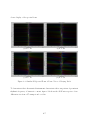
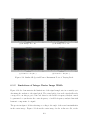
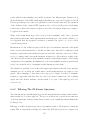
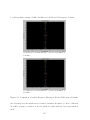
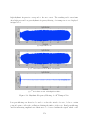
The use of zero padding in the software tool’s signal analysis was not well designed. In
Fourier analysis zero padding is used to reduce the frequency interval between spectrum
points, improving the resolution of frequency analysis.
The analysis process of this project used a single row and/or column of zero padding to
ensure that the spectrum had odd dimensions (see section 4.4.4). The issue is that this
resizing of the spectrum changes the centre frequency of the analysis bins, invalidating
any synchronous analysis which would originally have improved the clarity of the spectral
representation.
Zero padding should have been used to greatly improve the spectral resolution, applying
many more rows and columns of padding, or not at all, to maintain the synchronous
analysis. The drawback of using significant zero padding in a 2D signal representation is
that it greatly increases memory requirements, which are already considerable larger than
for a 1D representation.
6.4
2D Fourier Processing
The investigation into audio transformation using the 2D Fourier transform has provided
some novel and interesting results, but there are also many limitations of the analysis
data when it comes to processing. This section will describe the general features of the
2D Fourier spectrum, as obtained by the analysis techniques of this investigation, that
affect the transformation of audio data. It will then give an evaluation of each of the
transformation processes within the software tool. A set of audio examples are provided
on the accompanying CD to this report (appendix B).
6.4.1
Analysis Limitations
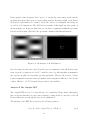
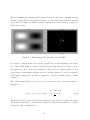
Section 4.3.2 gave an analysis of the 2D Fourier transform. It stated that the 2D Fourier
spectrum in not symmetrically valued in both axes since the process involves a Fourier
transform of complex data. However, when properly synchronised in both axes a single
amplitude-modulated sinusoidal component is represented by four symmetrically placed
170