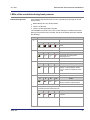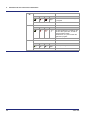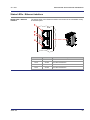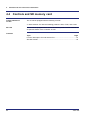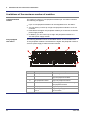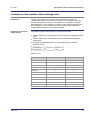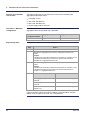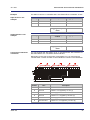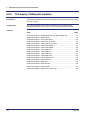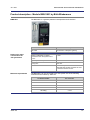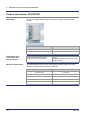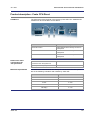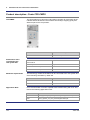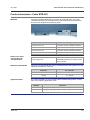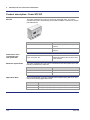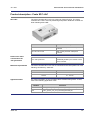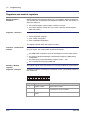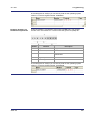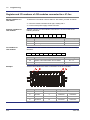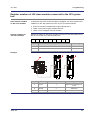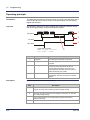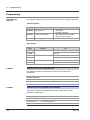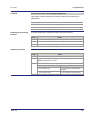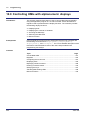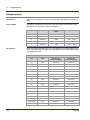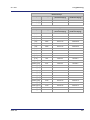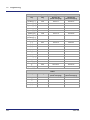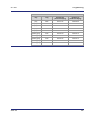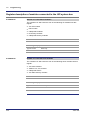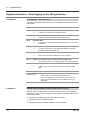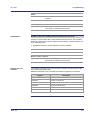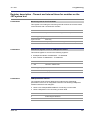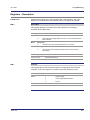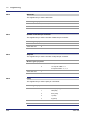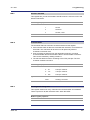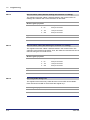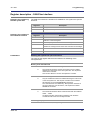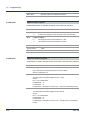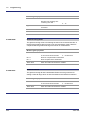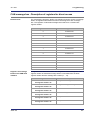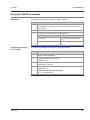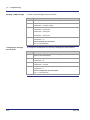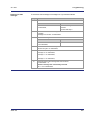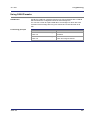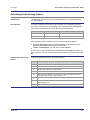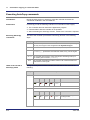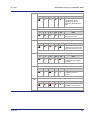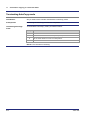
1
User Manual JC-350 - Controller 60874480 We automate your success. Introduction Item # 60874480 Revision 1.24.1 August 2015 / Printed in Germany This document has been compiled by Jetter AG with due diligence, and based on the known state of the art. In the case of modifications, further developments or enhancements to products shipped in the past, a revised document will be supplied only if required by law, or deemed appropriate by Jetter AG. Jetter AG shall not be liable for errors in form or content, or for missing updates, as well as for damages or disadvantages resulting from such failure. The logos, brand names, and product names mentioned in this document are trademarks or registered trademarks of Jetter AG, of associated companies or other title owners and must not be used without consent of the respective title owner. 2 Jetter AG JC-350 Address Introduction How to contact us: Jetter AG Graeterstrasse 2 71642 Ludwigsburg Germany Assignment to product Phone - Switchboard: +49 7141 2550-0 Phone - Sales: +49 7141 2550-433 Phone - Technical Hotline: +49 7141 2550-444 Fax - Sales: +49 7141 2550-484 E-mail - Sales: [email protected] E-mail - Technical Hotline: [email protected] This user manual is an integral part of JC-350: Type: Serial #: Year of manufacture: Order #: To be entered by the customer: Inventory #: Place of operation: Jetter AG 3 Introduction Significance of this user manual This document is an integral part of the JC-350: Keep this document in a way that it is always at hand until the JC-350 will be disposed of. Pass this document on if the JC-350 is sold or loaned/leased out. In any case you encounter difficulties to clearly understand the contents of this document, please contact Jetter AG. We would appreciate any suggestions and contributions on your part and would ask you to contact us at the following e-mail address: [email protected]. Your feedback will help us produce manuals that are more user-friendly, as well as address your wishes and requirements. This document contains important information on the following topics: Transport Mounting Installation Programming Operation Maintenance Repair Therefore, you must carefully read, understand and observe this document, and especially the safety instructions. In the case of missing or inadequate knowledge of this document Jetter AG shall be exempted from any liability. Therefore, the operating company is recommended to obtain the persons' confirmation that they have read and understood this manual in writing. 4 Jetter AG JC-350 Contents Table of Contents 1 Safety instructions 13 Basic safety instructions .............................................................................................................. 14 Instructions on EMI ...................................................................................................................... 16 2 Product description and design 19 Product description of the JC-350................................................................................................ 20 Parts and interfaces of the controller JC-350 .............................................................................. 21 Order reference/options ............................................................................................................... 22 List of documentation ................................................................................................................... 23 Accessories for the JX3 system ................................................................................................... 25 Physical dimensions .................................................................................................................... 26 3 Identifying 3.1 3.2 3.3 4 Identification by means of the nameplate ............................................................................... 28 JC-3xx: Nameplate ...................................................................................................................... 29 Electronic Data Sheet EDS ........................................................................................................ 30 EDS file ........................................................................................................................................ 31 EDS registers ............................................................................................................................... 35 Version registers ........................................................................................................................ 37 Hardware revisions ...................................................................................................................... 38 Software versions......................................................................................................................... 39 Mechanical and electrical installation 4.1 4.2 4.3 4.4 4.5 4.6 Jetter AG 27 41 Interfaces .................................................................................................................................... 42 Power supply terminal X10 .......................................................................................................... 43 Serial interface port X11 ............................................................................................................... 44 Ethernet ports - Female connectors X14, X15 ............................................................................. 47 JX2 system bus interface - Female connector X19 ................................................................ 48 Female connector X19 - Pin assignment ..................................................................................... 49 JX2 system bus cable specification ............................................................................................. 51 Line length and baud rate of the JX2 system bus........................................................................ 53 LEDs indicating various states ................................................................................................. 54 LEDs of the controller .................................................................................................................. 55 LEDs of the controller during boot process .................................................................................. 57 Status LEDs - Ethernet interface.................................................................................................. 59 Controls and SD memory card ................................................................................................. 60 Function description of mode selector S11 .................................................................................. 61 SD card slot X61 .......................................................................................................................... 63 Installing, replacing and removing the module ...................................................................... 65 Installing the JC-350 on a DIN rail ............................................................................................... 66 Replacing the controller JC-350................................................................................................... 67 Removing the JC-350 from the DIN rail ....................................................................................... 69 IP configuration .......................................................................................................................... 70 Factory settings ............................................................................................................................ 71 The configuration memory ........................................................................................................... 72 The configuration file .................................................................................................................... 73 Configuration registers ................................................................................................................. 77 5 Contents 4.7 4.7.1 4.8 4.8.1 4.8.2 4.9 5 Changing the IP address of the controller ................................................................................... 78 Setting the default IP address 192.168.10.15 ............................................................................. 79 Setting the IP address via configuration file ................................................................................ 80 Setting the IP address via configuration file and DIP switch ....................................................... 81 Setting the IP address via registers to be non-volatile ................................................................ 83 Setting the IP address during runtime ......................................................................................... 85 IP address in the GNN operating mode ...................................................................................... 86 Using names for IP addresses .................................................................................................... 88 Engineering of JX3 station equipped with a JC-350 .............................................................. 90 Limitations to be taken into account when engineering a JX3 station ................................ 91 Limitations of the maximum number of modules......................................................................... 94 Limitations of the modules' data exchange rates ........................................................................ 95 Limitation depending on the power consumption of the modules ............................................... 98 Configuring the JX2 system bus ........................................................................................... 103 Wiring the JX2 system bus..................................................................................................... 104 Line length and baud rate of the JX2 system bus ..................................................................... 105 JX2 system bus topology .......................................................................................................... 106 Power supply of JX2-I/O modules ............................................................................................. 107 Power supply of JX2 slave modules ......................................................................................... 109 Third-party CANopen® modules ............................................................................................ 110 Product description - Module BWU1821 by Bihl+Wiedemann................................................... 111 Product description - ECOSTEP® ............................................................................................. 112 Product description - Festo CPV-Direct ..................................................................................... 113 Product description - Festo CPX terminals ................................................................................ 114 Product description - Festo CPX-CP interface ........................................................................... 116 Product description - Festo CPX-CMAX--1 ................................................................................ 117 Product description - Festo CPX-CMPX .................................................................................... 118 Product description - Festo MTR-DCI ........................................................................................ 119 Product description - Festo SFC-DC ......................................................................................... 120 Product description - Festo SFC-LAC ....................................................................................... 121 Product description - Festo SFC-LACI ...................................................................................... 122 Product description - Lenze 8200 vector................................................................................... 123 Product description – maxon EPOS .......................................................................................... 124 Product description - Milan drive ............................................................................................... 125 Product description – SMC EX120 ............................................................................................ 126 Product description – SMC EX250 ............................................................................................ 127 Product description - WAGO I/O-System 750 ........................................................................... 128 Connecting displays and HMIs .............................................................................................. 129 Overview of displays and HMIs ................................................................................................. 130 Connecting a display or HMI ..................................................................................................... 131 Connecting several displays or HMIs: Multi-display mode........................................................ 132 Multi-display mode - Wiring ....................................................................................................... 133 Interface cable JC-DK-Xm......................................................................................................... 135 Interface cable KAY_0386-xxxx ................................................................................................ 137 Interface cable KAY_0533-0025................................................................................................ 139 Initial commissioning 141 Preparatory work for initial commissioning ................................................................................ 142 Initial commissioning of a JC-350 ............................................................................................. 143 Configuring error states ............................................................................................................. 145 Configuration in JetSym ............................................................................................................ 146 6 Jetter AG JC-350 6 Contents File system 6.1 6.2 6.3 6.4 6.5 7 151 Properties ................................................................................................................................. 152 Flash disk - Properties ............................................................................................................... 153 SD card - Properties .................................................................................................................. 154 User administration ................................................................................................................. 155 Administration of users .............................................................................................................. 157 As-delivered condition/Predefined users and keys .................................................................... 159 Assigning locks .......................................................................................................................... 160 Assigning names to keys/locks .................................................................................................. 162 Reviewing the flash disk capacity used ................................................................................ 164 Flash disk capacity used ............................................................................................................ 165 Operating system update and application program ............................................................. 168 Formatting and checking ........................................................................................................ 169 Formatting the flash disk ............................................................................................................ 170 Formatting the SD card .............................................................................................................. 171 Checking the SD card ................................................................................................................ 172 FTP server 173 Logon ......................................................................................................................................... 174 Example: Windows FTP client ................................................................................................... 175 8 FTP client 8.1 8.2 9 Programming ............................................................................................................................ 178 Initializing the FTP client ............................................................................................................ 179 Establishing a connection to the FTP server ............................................................................. 180 Terminating a connection ........................................................................................................... 182 Reading a file ............................................................................................................................. 183 Writing to a file ........................................................................................................................... 185 Deleting a file ............................................................................................................................. 187 Changing directories .................................................................................................................. 189 Creating a directory .................................................................................................................... 191 Deleting directories .................................................................................................................... 193 Determining the current directory............................................................................................... 195 Registers ................................................................................................................................... 197 Register numbers ....................................................................................................................... 198 Registers - Description ............................................................................................................... 199 HTTP server 9.1 10 Jetter AG 203 Server Side Includes ................................................................................................................ 204 First entry in the HTML file ......................................................................................................... 205 Inserting real-time controller values ........................................................................................... 206 Example of an HTML page ........................................................................................................ 211 Programming 10.1 177 213 Abbreviations, module register properties and formats ............................................................. 214 Memories - Overview ............................................................................................................... 215 Operating system memory ......................................................................................................... 216 File system memory ................................................................................................................... 217 Application program memory ..................................................................................................... 218 Memory for volatile application program variables .................................................................... 219 7 Contents 10.2 10.3 10.3.1 10.3.2 10.3.3 10.3.4 10.3.5 10.3.6 10.3.7 10.3.8 8 Memory for non-volatile application program registers ............................................................. 220 Speicher für nichtflüchtige Variablen desAnwendungsprogramms ........................................... 221 Registers on I/O modules .......................................................................................................... 222 Memory for non-volatile registers on the backplane module .................................................... 223 Special registers ........................................................................................................................ 224 Inputs and outputs ..................................................................................................................... 225 Flags .......................................................................................................................................... 226 Register and I/O numbers with a JC-3xx .............................................................................. 227 Registers and module registers ................................................................................................ 228 Register and I/O numbers of JX3 modules connected to a JC-3xx .......................................... 230 Register numbers of JX2 slave modules connected to the JX2 system bus ............................ 231 Registers and I/O numbers of JX2-I/O modules on the JX2 system bus .................................. 232 Register and I/O numbers of IP67-I/O modules on the JX2 system bus .................................. 233 Registers and I/O numbers of CANopen® modules on the JX2 system bus............................ 234 Register and I/O numbers of JX3 modules connected to a JX3-BN-ETH ................................ 235 Registers and I/O numbers of JX3 nodules from the JX3-BN-ETH perspective....................... 237 Jetter Ethernet system bus .................................................................................................... 238 The Global Node Number ......................................................................................................... 240 Acyclic data interchange ........................................................................................................ 241 Command group NetCopy() ...................................................................................................... 243 Command group NetBit() .......................................................................................................... 245 Network registers ...................................................................................................................... 246 Registers located on JX3 modules ............................................................................................ 248 Indirect addressing of remote modules ..................................................................................... 250 Addressing with variable destination window ............................................................................ 252 Register description - Acyclic data interchange ........................................................................ 254 Cyclic data interchange .......................................................................................................... 257 Publish/subscribe ...................................................................................................................... 259 Publish/subscribe - Registers .................................................................................................... 261 Network registers, network inputs and outputs ......................................................................... 267 Hardware Manager .................................................................................................................. 270 Hardware Manager .................................................................................................................... 271 Error handling at the Jetter Ethernet system bus ............................................................... 272 Acyclic data interchange - Error logging ................................................................................... 273 Error message during CRC computing ..................................................................................... 274 Error message on part of a subscription ................................................................................... 275 Controller evaluates errors reported by a remote network node............................................... 276 NetConsistency function ........................................................................................................ 277 NetConsistency function............................................................................................................ 279 Assigning the network parameters dependent on the GNN ...................................................... 281 Activating and deactivating JetIPScan in JetControl ................................................................. 286 Program run at system launch .................................................................................................. 287 Register description - NetConsistency basic driver .................................................................. 288 Register description of the NetConsistency instance ................................................................ 296 Error evaluation at NetConsistency........................................................................................... 297 JetIPScan - Register description ........................................................................................... 299 Register numbers ...................................................................................................................... 300 Global status - Register description .......................................................................................... 301 Warnings and errors - Register description ............................................................................... 304 Configuration - Register description .......................................................................................... 308 Administrating the connections of the JetIP/TCP and STX debug server ........................ 310 Automatic termination of connections ........................................................................................ 311 Register ..................................................................................................................................... 313 Executing an ARP request ..................................................................................................... 314 Executing an ARP request ........................................................................................................ 315 Jetter AG JC-350 10.3.9 10.4 10.5 10.6 10.7 10.8 10.9 10.9.1 10.9.2 10.9.3 10.9.4 10.9.5 10.9.6 10.9.7 10.9.8 10.9.9 Jetter AG Contents JetSync blockage ..................................................................................................................... 316 Description of system command registers ................................................................................. 317 Description of the JetSync blockage system commands .......................................................... 320 General system registers ........................................................................................................ 322 Description of system command registers ................................................................................. 323 Description of system commands .............................................................................................. 326 Startup delay register .............................................................................................................. 331 Setting the startup delay ............................................................................................................ 332 Real-time clock (RTC) .............................................................................................................. 333 Technical specifications ............................................................................................................. 334 Programming.............................................................................................................................. 335 Runtime registers .................................................................................................................... 342 Description of the runtime registers ........................................................................................... 343 Monitoring interface activities ................................................................................................ 345 Operating principle ..................................................................................................................... 346 Programming.............................................................................................................................. 348 Controlling HMIs with alphanumeric displays ...................................................................... 350 Connectable HMIs .................................................................................................................... 351 Overview of displays and HMIs.................................................................................................. 352 Registers ................................................................................................................................... 353 Register numbers ....................................................................................................................... 354 Registers - Overview .................................................................................................................. 355 Configuring the screen size .................................................................................................... 357 Configuring the screen size manually ........................................................................................ 358 Displaying texts........................................................................................................................ 359 STX Instructions for displaying texts .......................................................................................... 360 Device numbers ......................................................................................................................... 362 Cursor position ........................................................................................................................... 364 Clearing the screen .................................................................................................................... 366 Displaying numerical values................................................................................................... 368 STX instruction for displaying numerical values ........................................................................ 369 Device numbers ......................................................................................................................... 370 Cursor position ........................................................................................................................... 372 Setting the length of the display field ......................................................................................... 374 Setting the sign option ............................................................................................................... 375 Setting the number of decimal places ........................................................................................ 376 Setting the format of numerical values ...................................................................................... 377 Entering numerical values ...................................................................................................... 378 STX instruction for the input of numerical values ...................................................................... 380 Device numbers ......................................................................................................................... 381 Cursor position ........................................................................................................................... 383 Setting the length of the input field ............................................................................................ 385 Setting the maximum number of decimal places ....................................................................... 386 Setting the suggested value....................................................................................................... 387 Polling the number of decimal places ........................................................................................ 388 UserInput - Polling the status ..................................................................................................... 389 UserInput - Aborting the instruction............................................................................................ 390 Querying the keys .................................................................................................................... 391 Assigning keys ........................................................................................................................... 392 Registers of basic flag numbers................................................................................................. 396 Activating/deactivating LEDs ................................................................................................. 398 Assigning LEDs .......................................................................................................................... 399 Registers of LED register numbers ............................................................................................ 400 Monitor functions ..................................................................................................................... 402 Overview of displays and HMIs.................................................................................................. 403 Meaning of keys in monitor function .......................................................................................... 404 9 Contents 10.10 10.10.1 10.10.2 10.10.3 10.10.4 10.10.5 10.11 10.12 10.13 10.13.1 10.13.2 10.13.3 10.13.4 10 Displaying and changing variables ............................................................................................ 405 Configuring the monitor function ............................................................................................... 407 Controlling printer and serial interfaces ............................................................................... 409 Supported serial interfaces .................................................................................................... 410 Overview - Interfaces ................................................................................................................. 411 Registers .................................................................................................................................. 412 Register numbers ...................................................................................................................... 413 Registers - Overview ................................................................................................................. 414 Module numbers - Interface modules ................................................................................... 415 Configuring module numbers .................................................................................................... 416 Outputting texts ....................................................................................................................... 417 STX instructions for outputting texts ......................................................................................... 418 Device numbers ........................................................................................................................ 420 Outputting numerical values .................................................................................................. 421 STX instruction for outputting numerical values ........................................................................ 422 Device numbers ........................................................................................................................ 423 Setting the length of the display field ........................................................................................ 424 Setting the sign option ............................................................................................................... 425 Setting the number of decimal places ....................................................................................... 426 Setting the format of numerical values ...................................................................................... 427 JX2 system bus ....................................................................................................................... 428 Module array and module codes of connected modules .......................................................... 429 JX2 system bus - Baud rate ...................................................................................................... 432 Dummy modules on the JX2 system bus .................................................................................. 434 Monitoring intervals on the JX2 system bus.............................................................................. 435 JX2 system bus - Description of non-volatile registers ............................................................. 437 Register description of modules connected to the JX2 system bus.......................................... 440 Register description - Error logging on the JX2 system bus ..................................................... 442 Register description - Timeout and interval times for modules on the JX2 system bus............ 445 Register description - Retry counter for JX2 system bus modules ........................................... 448 Register description - Versions of JX2 system bus drivers ....................................................... 449 JX3 system bus ....................................................................................................................... 450 Module array and module codes of connected modules .......................................................... 451 Dummy modules on the JX3 system bus .................................................................................. 453 JX3 system bus - Description of non-volatile registers ............................................................. 454 Register description - Modules detected on the JX3 system bus ............................................. 455 Register description - Error logging on the JX3 system bus ..................................................... 456 Register description - Timeout intervals on the JX3 system bus .............................................. 458 Register description - Versions of JX3 system bus drivers ....................................................... 459 E-mail ........................................................................................................................................ 460 Configuring the E-mail feature ............................................................................................... 461 Structure of the configuration file ............................................................................................... 462 Section [SMTP] ......................................................................................................................... 463 Section [POP3] .......................................................................................................................... 465 Section [DEFAULT] ................................................................................................................... 467 Configuration file - Examples .................................................................................................... 468 Creating e-mails ...................................................................................................................... 469 Name of the e-mail template file ............................................................................................... 470 Structure of the e-mail template file ........................................................................................... 471 Inserting real-time controller values .......................................................................................... 473 Sending an e-mail.................................................................................................................... 478 Registers .................................................................................................................................. 479 Overview of registers ................................................................................................................. 480 Registers - Description .............................................................................................................. 481 Jetter AG JC-350 Contents 10.14 Sorting data .............................................................................................................................. 484 10.15 Modbus/TCP ............................................................................................................................. 485 10.15.1 Modbus/TCP server ................................................................................................................. 486 Addressing ................................................................................................................................. 487 Supported commands - Class 0................................................................................................. 489 Supported commands - Class 1................................................................................................. 490 Supported commands - Class 2................................................................................................. 491 10.15.2 Modbus/TCP client ................................................................................................................... 492 10.15.3 Modbus/TCP client with STX variables .................................................................................. 494 10.16 User-programmable serial interface ...................................................................................... 496 10.16.1 Interface .................................................................................................................................... 497 Serial interface port X11 ............................................................................................................. 498 10.16.2 Functioning principle of the user-programmable serial interface ...................................... 501 Functioning principle .................................................................................................................. 502 10.16.3 Registers ................................................................................................................................... 505 Register numbers ....................................................................................................................... 506 Registers - Description ............................................................................................................... 507 10.16.4 Programming ............................................................................................................................ 514 Configuring the interface ............................................................................................................ 515 Sending characters .................................................................................................................... 516 Sending texts ............................................................................................................................. 517 Sending values........................................................................................................................... 518 Receiving characters ................................................................................................................. 519 Receiving values ........................................................................................................................ 520 10.17 User-programmable IP interface ............................................................................................ 521 10.17.1 Programming ............................................................................................................................ 523 Initializing the user-programmable IP interface ......................................................................... 524 Establishing a connection .......................................................................................................... 525 Sending data .............................................................................................................................. 529 Receiving data ........................................................................................................................... 531 Terminating a connection ........................................................................................................... 534 10.17.2 Registers ................................................................................................................................... 535 Register numbers ....................................................................................................................... 536 Register description ................................................................................................................... 537 10.18 User-programmable CAN-Prim interface ............................................................................... 540 Restrictions regarding the CAN-Prim interface .......................................................................... 541 User-programmable CAN-Prim interface - Operating principle ................................................. 545 Internal processes of the CAN-Prim interface ........................................................................... 546 Register description - CAN-Prim interface ................................................................................. 547 CAN message box - Description of registers for direct access ................................................. 551 CAN message box - Description of registers for indirect access ............................................... 557 Using the CAN-Prim interface .................................................................................................... 561 CAN-Prim interface - Sample program ...................................................................................... 564 Using CAN-ID masks ................................................................................................................. 565 RTR frames via CAN-Prim interface .......................................................................................... 566 11 Automatic copying of controller data 11.1 11.2 Jetter AG 568 Operating principle .................................................................................................................. 570 Activating the AutoCopy feature................................................................................................. 571 Executing AutoCopy commands ................................................................................................ 572 Terminating AutoCopy mode ...................................................................................................... 574 autocopy.ini - Structure ........................................................................................................... 575 Section [OPTIONS] .................................................................................................................... 576 Command sections .................................................................................................................... 577 Example of a command file........................................................................................................ 585 11 Contents 11.3 11.4 12 Log file ...................................................................................................................................... 588 File contents .............................................................................................................................. 589 Data files ................................................................................................................................... 590 File format ................................................................................................................................. 591 OS update 12.1 12.2 13 593 Updating the operating system of the controller ................................................................. 594 OS update by means of JetSym ............................................................................................... 595 Operating system update via FTP ............................................................................................. 596 Automatic OS update from an SD card ..................................................................................... 597 Operating system update from within the application program ................................................. 598 OS update of a JX module ...................................................................................................... 599 OS update by means of JetSym ............................................................................................... 600 Operating system update via FTP ............................................................................................. 601 Automatic OS update from an SD card ..................................................................................... 602 Operating system update from within the application program ................................................. 603 Application program 605 Application program - Default path ............................................................................................ 606 The application program is stored to the SD card ..................................................................... 607 Loading an application program ................................................................................................ 608 14 Quick reference - JC-3xx Appendix A: B: 12 609 625 Technical specifications ......................................................................................................... 626 JC-350: Technical data .............................................................................................................. 627 Physical dimensions .................................................................................................................. 629 Operating parameters - Environment and mechanics .............................................................. 630 Operating parameters: Enclosure ............................................................................................. 631 DC power supply inputs and outputs ........................................................................................ 632 Shielded data and I/O lines ....................................................................................................... 633 Index ......................................................................................................................................... 634 Jetter AG JC-350 1 Safety instructions Safety instructions Introduction This chapter informs the user of basic safety instructions. It also warns the user of residual dangers, if there are any. Furthermore, it contains information on EMC. Contents Topic Page Basic safety instructions ............................................................................... 14 Instructions on EMI ....................................................................................... 16 Jetter AG 13 1 Safety instructions Basic safety instructions Introduction This device complies with the valid safety regulations and standards. Jetter AG attaches great importance to the safety of the users. Of course, the user should adhere to the following regulations: Relevant accident prevention regulations Accepted safety rules EC guidelines and other country-specific regulations Intended conditions of use Usage according to the intended conditions of use implies operation in accordance with this user manual. The controller JC-350 is used to control machinery, such as conveyors, production machines, and handling machines. Operate the controller JC-350 only within the limits and conditions set forth in the technical specifications. The operating voltage of the controller JC-350 is classified as SELV (Safety Extra Low Voltage). Therefore, the JC-350 controller is not subject to the EU Low Voltage Directive. Usage other than intended The device must not be used in technical systems which to a high degree have to be fail-safe, such as, for example, in ropeways and airplanes. The JC-350 is no safety-related part as per Machinery Directive 2006/42/EC. This device is not qualified for safety-relevant applications and must, therefore, NOT be used to protect persons. If you intend to operate the device at ambient conditions not being in conformity with the permitted operating conditions, please contact Jetter AG beforehand. Personnel qualification Depending on the life cycle of the product, the persons involved must possess different qualifications. These qualifications are required to ensure proper handling of the device in the corresponding life cycle. Modifications and alterations to the module 14 Product life cycle Minimum qualification Transport/storage: Trained and instructed personnel with knowledge in handling electrostatic sensitive components. Mounting/installation: Specialized personnel with training in electrical engineering, such as industrial electronics technician. Commissioning/ programming: Trained and instructed experts with profound knowledge of, and experience with, electrical/drive engineering, such as electronics engineer for automation technology. Operation: Trained, instructed and assigned personnel with knowledge in operating electronic devices. Decommissioning/ disposal: Specialized personnel with training in electrical engineering, such as industrial electronics technician. For safety reasons, no modifications and changes to the device and its functions are permitted. Any modifications to the device not expressly authorized by Jetter AG will Jetter AG JC-350 Safety instructions result in a loss of any liability claims to Jetter AG. The original parts are specifically designed for the device. Parts and equipment from other manufacturers have not been tested by Jetter AG and are, therefore, not released by Jetter AG. The installation of such parts may impair the safety and the proper functioning of the device. Any liability on the part of Jetter AG for any damages resulting from the use of non-original parts and equipment is excluded. Transport The JC-350 contains electrostatically sensitive components which can be damaged if not handled properly. To exclude damages to the JC-350 during transport, the backplane module must be mounted to it, and it must be shipped in its original packaging, as well as in apt protective packaging.. Use an appropriate outer packaging to protect the JC-350 against impact or shock. In case of damaged packaging inspect the device for any visible damage. Inform your freight forwarder and Jetter AG. Storing When storing the JC-350 observe the environmental conditions given in the technical specification. Repair and maintenance The operator is not allowed to repair the device. The device does not contain any parts that could be repaired by the operator. If the device needs repairing, please send it to Jetter AG. Replacing modules When replacing the JC-350, class of protection IP20 is not ensured. Do not touch any electronic components once a module housing has been removed from the backplane module. If you touch the EMC clip, you may damage this clip. A damaged clip may result in lower noise immunity. Disposal When disposing of devices, the local environmental regulations must be complied with. Jetter AG 15 1 Safety instructions Instructions on EMI Noise immunity of a system The noise immunity of a system is determined by the weakest component of the system. For this reason, correct wiring and shielding of cables is of paramount importance. Measures Measures for increasing EMI in electric plants: Attach the JC-350 to a DIN rail to EN 60715 having got the dimensions 35 x 7.5 mm. The DIN rail must be electrically conducting and grounded by either of the two ways: • Directly: • Via rear panel of the electric cabinet Also refer to Application Note 016 EMC-compatible installation of electric cabinets by Jetter AG. The following instructions are excerpts from Application Note 016: Physically separate signal and power lines. Jetter AG recommend spacing greater than 20 cm. Cables and lines should cross each other at an angle of 90°. The following line cables must be shielded: Analog lines, data lines, motor cables coming from inverter drives (servo output stage, frequency converter), lines between components and interference suppressor filter, if the suppressor filter has not been placed at the component directly. Shield cables at both ends. Unshielded wire ends of shielded cables should be as short as possible. The entire shield, must, in its entire perimeter, be drawn behind the isolation, and then be clamped under the earthed strain relief with the greatest possible surface area. When male connectors are used: Draw the shield, in its entire perimeter, under the shielding clamp of the metallized connector housing (impedance shielding), respectively of the EMC gland bushing, its greatest possible surface area being clamped under a strain relief. Only use metallized connectors, e.g. Sub-D with metallized housing. Make sure that the strain relief is directly connected with the housing here as well. 16 Jetter AG JC-350 Downloading Application Note 016 Jetter AG Safety instructions You can download Application Note 016 EMC-Compatible Installation of Electric Cabinets from the Jetter AG homepage http://www.jetter.de. In order to download Application Note 016, browse the following path: Industrial Automation - Support - Downloads - 07_application_notes. 17 JC-350 2 Product description and design Product description and design Introduction This chapter covers the design of the device, as well as how the order reference is made up including all options. Contents Topic Page Product description of the JC-350 ................................................................ 20 Parts and interfaces of the controller JC-350 ............................................... 21 Order reference/options ................................................................................ 22 List of documentation.................................................................................... 23 Accessories for the JX3 system ................................................................... 25 Physical dimensions ..................................................................................... 26 Jetter AG 19 2 Product description and design Product description of the JC-350 The controller JC-350 The JC-350 is a high-performance compact controller. Its enhanced expandability makes this controller an excellent choice for complex tasks in modern industry. Product features The features of this product are listed below: Additional options 4, 6 or 8 axes 2 Ethernet ports with integrated switch Powerful programming language JetSym STX Non-volatile registers: 30,000 Program/data memory: 2 MByte 1 serial port (RS-232/422/485) 1 JX2 system bus interface Up to 16 JX3 modules can directly be added. Real-time clock Modbus/TCP SD card You must specify the additional options for your controller when placing the order already. The controller cannot be equipped with additional features afterwards. When ordering the controller JC-350 you may choose the following options. Integrated Web server/e-mail feature Scope of delivery 20 The following items are included in the scope of delivery of the controller JC-350: Item no. Quantity Description Depending on options 1 Controller JC-350 60870409 1 2-pin connector, spring-cage connection 60870411 10 Terminal labels 60873050 1 Installation manual 60870410 1 Keying pins Jetter AG JC-350 Product description and design Parts and interfaces of the controller JC-350 Parts and interfaces The controller JC-350 features the following parts and interfaces: Number Jetter AG Part Description 1 Upper latch Lets you remove the module enclosure from the backplane module 2 X18 JX2 system bus interface 3 Backplane module For installing the module on a DIN rail 4 X119 Connector for additional JX3 modules 5 Module enclosure 6 DIN rail latch For removing the JC-3xx from the DIN rail 7 Lower latch Lets you remove the module enclosure from the backplane module Not visible in the illustration 8 X61 SD card slot 9 X10 Power supply 10 X11 Serial interface 11 X14, X15 Two Ethernet ports 12 LED Diagnostic and status LEDs 21 2 Product description and design Order reference/options Order reference The order reference consists of the name of the controller JC-350 and the desired options. Each of the additional options given below supplements the controller JC-350. The order reference reflects only existing options. JC-350 - A - W Element JC-350 Description Controller A Number of axes: 4, 6 or 8 W Additional option: Integrated Web server and e-mail feature Ordering additional options Specify your desired options in the order. The controller cannot be equipped with additional features afterwards. Number of axes The controller JC-350 allows connection of four, six, or eight axes. Item no. Integrated Web server and e-mail feature Order reference 10000654 JC-350-4 10000861 JC-350-6 10000655 JC-350-8 If the controller JC-350 is equipped with integrated Web server and e-mail feature, it supports the following functions: HTTP server: This feature lets the user download the homepages into the Modbus/TCP 22 controller via FTP. They can be accessed with any standard internet browser. SMTP client: This feature lets the controller send e-mails. The controller JC-350 supports the Modbus/TCP protocol. The controller can act as both server and client. Jetter AG JC-350 Product description and design List of documentation Introduction Various documents and software tools support you in engineering, installing and programming the JC-350 controller. You can download these documents and software tools from the Jetter AG homepage http://www.jetter.de. Engineering The following documents and files support you in engineering the controller: Industrial automation catalog Product description Technical specifications Manual on the controller JC-3xx The document at hand CAD data of the controller JC-350 Engineering a JX2 station on the JX2 system bus dxf file with 2D illustrations stp file with 3D illustrations The following document and the following software tool support you in engineering a JX2 station on the JX2 system bus: Manual on the controller JC-3xx System bus topology JX2 system bus specification Product descriptions of JX2 modules, IP 67 modules, as well as third-party modules System bus configurator Jetter AG Excel file for designing the system bus SysBus_Configuration_xxx_e.xls (xxx: Version) 23 2 Product description and design Engineering a JX3 station on the JX3 system bus The following document and the following software tool support you in engineering a JX3 station on the JX3 system bus: Manual on the controller JC-3xx Engineering a JX3 station Product descriptions of JX3 modules System bus configurator Installation Excel file for designing the JX3 system bus JX3-SysBus_Configurator_xxx_e.xls (xxx: Version) The following documents support you at installing the controller: Installation manual It is included in the boxed controller JC-350 and contains information on: Installing the controller on a DIN rail Terminal assignment Specification of terminals Diagnostics via LEDs Manual on the controller JC-3xx Programming The document at hand The following document and software tool support you at programming the controller: Manual on the controller JC-3xx The document at hand JetSym 24 Programming Tool Jetter AG JC-350 Product description and design Accessories for the JX3 system Labelling strips Keying pins Strain relief for BU_10_E_BLZF_GE_RM 3.5 End clamp for DIN rail Screwdriver Jetter AG Ten labelling strips are included in the scope of delivery of the JC-350. Order reference DIV_DEK_5/5_MC-10_NEUT_WS Item no. 60870411 Packaging unit 100 pcs. Order reference DIV_BL_SL_3.5_KO_OR Item no. 60870410 Order reference DIV_BL_3.5_ZE_8 Item no. 60870963 Order reference DIV_CLIPFIX_35 Item no. 60863970 Type SD 0.4 x 2.5 - DIN 5264-A Order reference DIV_SCHRAUBENDREHER_2,5*75 Item no. 60871712 25 2 Product description and design Physical dimensions JC-350 Physical dimensions Minimum clearances SD U1 U2 U3 U4 At mounting the controller JC-350, a minimum clearance above and below must be maintained. This way, there must be enough room to press the latches of the backplane module when replacing modules. Minimum clearance, above: 30 mm Minimum clearance, below: 25 mm Module width The width of the controller JC-350 is 56 mm. When the controller JC-350 is attached to a JX3 station, its width increases by 50 mm. Mounting orientation The orientation of the controller JC-350 is vertical. 26 Jetter AG JC-350 3 Identifying Identifying Purpose of this chapter This chapter is for supporting you in identifying the following information with regard to JC-350: Determining the hardware revision Retrieving Electronic Data Sheet (EDS) information. The EDS holds numerous remanent production-relevant data. Determining the OS version of the device and its software components Prerequisites To be able to identify the JC-350, the following prerequisites must be fulfilled: The controller is connected to a PC. The programming software JetSym 4.1.2 or higher is installed on the PC. Information for hotline requests If you wish to contact the hotline of Jetter AG in case of a problem, please have the following information on the JC-350 ready: Serial number OS version number Hardware revision Contents Topic Page Identification by means of the nameplate ..................................................... 28 Electronic Data Sheet EDS .......................................................................... 30 Version registers ........................................................................................... 37 Jetter AG 27 3 Identifying 3.1 Identification by means of the nameplate Introduction The nameplate is attached to the housing of the JC-350 and contains details, such as hardware revision number and serial number. If you wish to contact the hotline of Jetter AG in case of a problem, please have this information ready. Contents Topic Page JC-3xx: Nameplate ....................................................................................... 29 28 Jetter AG JC-350 Identifying JC-3xx: Nameplate Nameplate The nameplate of a JC-3xx controller contains the following information: 1 S. / N. : 20080130060039 Part No.:10000704 Rev.: 02.00.00 JC-3xx-x 2 Number Jetter AG 3 4 Description 1 Serial number 2 Controller name 3 Hardware revision 4 Item number 29 3 Identifying 3.2 Electronic Data Sheet EDS Introduction Each JC-350 features an Electronic Data Sheet (EDS). Numerous production-relevant data are permanently stored in the EDS. The EDS data can be read out via files in the file system of the JC-350 or via special registers. Contents Topic Page EDS file ......................................................................................................... 31 EDS registers ................................................................................................ 35 30 Jetter AG JC-350 Identifying EDS file Introduction EDS data can be retrieved from the file eds.ini. Properties You can access this file through the file system of the controller. For an FTP connection, the user needs administrator rights (user admin) or system rights (user system). The EDS file of the controller is located in the directory System. The EDS file of JX3 modules is located in the directory of the corresponding module /System/JX3-ModuleXX. This file is read-only. Formatting the flash disk or SD card does not influence this file. Path to EDS files The illustration below shows an example of the contents of the directory System holding the EDS files of the controller and JX3 modules: In the directory JX3-ModuleXX of the JX3 modules, the OS of which can be updated by transferring an OS file *.os, there is the directory OS which is not shown in the image. File structure Jetter AG The EDS file is a text file the entries of which are grouped into several sections. 31 3 Identifying Example This is an example of an EDS file belonging to a JetControl 350: ;Jetter AG Electronic Data Sheet [IDENTIFICATION] Version = 0 Code = 848 Name = JC-350-4-W-M PcbRev = 03 PcbOpt = 00 [PRODUCTION] Version = 0 SerNum = 20090513070001 Day = 9 Month = 7 Year = 2009 TestNum = 1 TestRev = 01.08.03.25 [FEATURES] Version = 1 MAC-Addr = 00:50:CB:00:8D:3C Serial = 1 Switch = 1 STX = 1 NVRegs = 30000 JX3 bus = 1 CAN = 1 SD card = 1 Axes = 4 Web = 1 ModbusTCP = 1 SDLed = 1 UserLeds = 1 RTC = 1 Section [IDENTIFICATION] The general hardware configuration can be seen from section [IDENTIFICATION]. Name 32 Example Description Version 0 Version of this section Code 848 Module code for JC-350 Name JC-350-4-W-M Corresponds to the information on the nameplate PcbRev 03 Hardware revision PcbOpt 00 Hardware option Jetter AG JC-350 Section [PRODUCTION] Identifying The serial number and production date can be seen from section [PRODUCTION]. Name Section [FEATURES] Example Version 0 Version of this section SerNum 20090513070001 Corresponds to the information on the nameplate Day 09 Production date: Day Month 07 Production date: Month Year 2009 Production date: Year TestNum 1 Internal usage TestRev 01.08.03.25 Internal usage In the section [FEATURES] special properties of the controller are specified. The OS of the controller will ignore properties of missing entries in the file. Name EDS file of JX3 modules Jetter AG Description Example Description Version 1 Version of this section MAC Addr 00:50:CB:00:8D:3C Ethernet MAC address Serial 1 The serial interface is available Switch 1 A RUN/STOP/LOAD switch is available STX 1 Runtime environment for application program is available NVRegs 30000 Number of remanent registers JX3 bus 1 Bus interface for JX3 modules is available CAN 1 Bus interface for JX2 modules is available SD card 1 Slot for the SD memory card is available Axes 4 Number of supported JX2 axis modules Web 1 Web server and e-mail client are available ModbusTCP 1 Modbus/TCP client and server are available SD LED 1 The LED for the SD memory card is available UserLEDs 1 Application-specific LEDs are available RTC 1 A real-time clock is available For examples of EDS files for JX3 modules refer to the manual of the corresponding module. 33 3 Identifying Related topics EDS registers (see page 35) 34 Jetter AG JC-350 Identifying EDS registers Introduction EDS registers let you retrieve entries in the Electronic Data Sheet (EDS). Register numbers The basic register number is dependent on the controller. The register number is calculated by adding the number of the module register (MR) to the number of the basic register. Device Basic register number JC-350 Readable data 100000 Register numbers 100500 ... 100817 The following table lists the EDS registers of a controller, as well as their connection to the entries in the EDS file /System/eds.ini. By means of this register array, you can have the EDS of the controller or of a JX3 module displayed. For this, you must select the controller or the desired JX3 module via module registers 500 and 501. The contents of the selected EDS are then displayed in the following registers. Register Section in the EDS file Name in the EDS file MR 500 - - Description Functional group: 0: CPU 1: JX3 modules MR 501 MR 600 - IDENTIFICATION Version Module number (if MR 500 > 0) Version of this section MR 601 Code Module code MR 602 through MR 612 Name Module name or controller name MR 613 PcbRev Hardware revision MR 614 PcbOpt Hardware option Version Version of this section MR 701 through MR 707 SerNum Serial number MR 708 Day Production date: Day MR 709 Month Production date: Month MR 710 Year Production date: Year MR 711 TestNum Internal usage MR 712 TestRev Internal usage MR 700 Jetter AG - PRODUCTION 35 3 Identifying EDS file of JX3 modules Register Section in the EDS file MR 800 FEATURES Name in the EDS file Description Version Version of this section MR 801 MAC Addr MAC address (manufacturer section) MR 802 MAC Addr MAC address (device section) MR 803 Serial Serial interface MR 804 Switch Mode selector RUN/STOP/LOAD MR 805 STX Runtime environment for the application program MR 806 NVRegs Number of remanent registers MR 807 JX3 bus Bus interface for JX3 modules MR 808 CAN Bus interface for JX2 modules MR 809 SD card SD card slot MR 810 MotionControl MC software MR 811 Axes Number of supported JX2 axis modules MR 812 Web Web server and e-mail client MR 813 ModbusTCP Modbus/TCP client and server MR 815 SD LED LED of the SD card slot MR 816 UserLEDs User-defined LEDs MR 817 RTC Real-time clock The assignment of module registers 6xx and 7xx corresponds to the assignment with JX3 module. Related topics EDS file (see page 31) 36 Jetter AG JC-350 Identifying 3.3 Version registers Introduction The operating system provides several registers which can be used to read out the revision number of the hardware or the version of the operating system and its components. If you wish to contact the hotline of Jetter AG in case of a problem, please have this revision ready. Contents Topic Page Hardware revisions ....................................................................................... 38 Software versions ......................................................................................... 39 Jetter AG 37 3 Identifying Hardware revisions Introduction The JC-350 features special registers, the content of which lets you identify the hardware. Register overview The following registers let you read out the hardware revisions: Register Version numbers in JetSym setup Description 108020 Hardware revision of the backplane module 108021 Hardware revision - CPU board 200170 Controller type The following screenshot shows a JetSym setup window displaying the version registers: Related topics Software versions (see page 39) 38 Jetter AG JC-350 Identifying Software versions Introduction The JC-350 features software with unique version numbers which can be read out from special registers. Format of software version numbers The software version numbers of the JC-350 are four-figure values. 1 . 2 . 3 . 4 Element Description 1 Major or main version number 2 Minor or secondary version number 3 Branch or intermediate version number 4 Build version number Released version A released version can be recognized by both Branch and Build having got value 0. Register overview The following registers let you read out the software versions: Register Version numbers in JetSym setup 200168 Boot loader version 200169 Operating system version 210001 Version of the execution unit for the STX application program 200002000 Version of the JX2 system bus driver 100002000 Version of the JX3 system bus driver The following screenshot shows a JetSym setup window displaying version registers. To have the version number displayed in the setup window of JetSym, select the format IP address. Number 1 Jetter AG Description Description V 1.03.0.07 Function OS version number of the controller JetSym displays this information in the title bar of each setup window. 39 3 Identifying Related topics Hardware revisions (see page 38) 40 Jetter AG JC-350 4 Mechanical and electrical installation Mechanical and electrical installation Purpose of this chapter This chapter deals with mechanical and electrical installation of the JC-350 regarding the following aspects: Wiring the JC-350 Description of the indicators Description of control elements Mechanical installation Connecting JX3 modules to the JC-350 Connecting modules to the JX2 system bus Connecting displays and HMIs Contents Topic Page Interfaces ...................................................................................................... 42 JX2 system bus interface - Female connector X19 ...................................... 48 LEDs indicating various states ..................................................................... 54 Controls and SD memory card ..................................................................... 60 Installing, replacing and removing the module ............................................. 65 IP configuration ............................................................................................. 70 Engineering of JX3 station equipped with a JC-350..................................... 90 Configuring the JX2 system bus ................................................................. 103 Connecting displays and HMIs ................................................................... 129 Jetter AG 41 4 Mechanical and electrical installation 4.1 Interfaces Terminal X10 The function of terminal X10 is as follows: Power supply for the controller JC-350 Power supply for connected JX3 peripheral modules Terminal X11 The function of terminal X11 is as follows: Serial interface to a PC Serial interface to an HMI by Jetter AG Serial interface to any device Connectors X14, X15 The function of terminals X14 and X15 is as follows: Ethernet port to a hub, switch or router Ethernet port to a PC Ethernet port to an HMI by Jetter AG Ethernet port to a JX3-BN-ETH, a JX3-COM-xxxx, or a JetMove-200-ETH Ethernet port to any device Contents Topic Page Power supply terminal X10 ........................................................................... 43 Serial interface port X11 ................................................................................ 44 Ethernet ports - Female connectors X14, X15.............................................. 47 42 Jetter AG JC-350 Mechanical and electrical installation Power supply terminal X10 Devices to connect with this terminal X10 lets you connect the following devices: Power supply for the controller JC-350 Power supply of JX3 modules which are connected upstream of a JX3-PS1. Terminal assignment X10 POWER DC24V 1,5A 0V Terminal point Description DC 24 V 1.5A Power supply for the JC-350 and connected JX3 peripheral modules 0V Technical specifications Connector for power supply terminal X10 Jetter AG Reference potential Parameter Description Rated voltage DC 24 V Permissible voltage range -15 % ... +20 % Input current without HMI 1.0 A max. Power consumption 24 W max. A 2-pin connector is included in the scope of delivery of the JC-350. Designation BU_02_E_BLZF_GE_RM3.5 Item no. 60870409 Connector technology Spring-cage connection Wire size: 0.2 ... 1.5 mm (AWG 25 ... 14) 2 43 4 Mechanical and electrical installation Serial interface port X11 Devices to connect with this port Port X11 lets you connect the following devices: A PC An HMI by Jetter AG Any device Pin assignment of port X11 SER X11 5 2 1 4 3 Restrictions 44 8 7 6 Pin Signal Description 1 RDA RS-422; receive data inverted 2 GND Reference potential 3 RDB RS-422; receive data not inverted 4 RxD RS-232; receive data 5 SDB RS-422; transmit data not inverted RS-485; transmit/receive data not inverted 6 DC 24 V 7 SDA RS-422; transmit data inverted RS-485; transmit/receive data inverted 8 TxD RS-232; transmit data HMI supply voltage Irrespective of the fact that various hardware drivers have been implemented, only one hardware interface is available. This means: While, for example, communication via RS-422 is taking place, simultaneous and independent communication via RS-232 is not possible. Jetter AG JC-350 Mechanical and electrical installation Block diagram +3V3 33 kΩ X11.3 [RDB] X11.1 [RDA] RT RT RT RT 33 kΩ +3V3 33 kΩ X11.5 [SDB] X11.7 [SDA] 33 kΩ Number Terminating resistor Part Function in the case of RS-422 Function in the case of RS-485 1 Receiver Receives data Unused 2 Receiver/transmitter Transmits data Receives and transmits data 3 Serial line Twisted line of the serial interface 4 RT Terminating resistor Connect a terminating resistor to both serial lines in the following cases: Long lines High baud rates Select a terminating resistor which corresponds to the impedance of the line used. Jetter AG 45 4 Mechanical and electrical installation Technical specifications Cables for port X11 Parameter Type of terminal MiniDIN, shielded Number of pins 8 Electrical isolation None Number of interfaces 1 serial interface Interface standards RS-232/RS-422/RS-485-2 Baud rates 2,400 ... 115,200 baud Bits per character 5, 6, 7, 8 Number of stop bits 1, 2 Parity Even, odd, none, 1, 0 For connecting devices to port X11 you can order the following cables: Item no. 46 Description Item Description 60867209 KAY_0576-0050 JetControl to modem with 9-pin Sub-D, length 0.5 m 60868359 Cable assy # 196 2.5M JetControl to PC with 9-pin Sub-D, length 2.5 m 60860013 Cable assy # 196 5M JetControl to PC with 9-pin Sub-D, length 5 m 60868956 Cable assy # 196 8M JetControl to PC with 9-pin Sub-D, length 8 m 60860011 Cable assy # 192 2.5M JetControl to HMI with 15-pin Sub-D, length 2.5 m 60860012 Cable assy # 193 5M JetControl to HMI with 15-pin Sub-D, length 5 m 60872142 Cable assy # 192 10M JetControl to HMI with 15-pin Sub-D, length 10 m 60872884 Cable assy # 192 15M JetControl to HMI with 15-pin Sub-D, length 15 m 60864359 KAY_0386-0250 JetControl to LCD 60 with 15-pin Sub-D, length 2.5 m 60864360 KAY_0386-0500 JetControl to LCD 60 with 15-pin Sub-D, length 5 m 60864897 KAY_0533-0025 JetControl to LCD 52/54 with 15-pin Sub-D, length 0.25 m 60864257 Cable assy # 197 5M JetControl to JetView 200/300 with 9-pin Sub-D, length 5 m 60871930 Cable assy # 197 12M JetControl to JetView 200/300 with 9-pin Sub-D, length 12 m Jetter AG JC-350 Mechanical and electrical installation Ethernet ports - Female connectors X14, X15 Devices to connect with these ports Ports X14 and X15 let you connect the following devices: Pin assignment A PC An HMI by Jetter AG A JX3-BN-ETH, a JX3-COM-xxxx, or a JetMove-200-ETH Any device Ports X14 and X15 are internally connected via Ethernet switch. ETHERNET X14 X15 Number 1 Connector X14 - Ethernet port 2 Connector X15 - Ethernet port Technical specifications Cables for ports X14 and X15 Parameter Description Type of terminal RJ45 Ethernet port Number of ports Two; one port per connector Bit rate 10 MBit/s, 100 MBit/s (Cat 5e) Auto-crossover Yes For connecting devices to ports X14 and X15 you can order the following cables: Item no. Jetter AG Description Item 60537500 Patch cable 1:1, 1 m gray Hirose, Cat 5e, shielded 60854512 Patch cable 1:1, 2 m gray Hirose, Cat 5e, shielded 60854514 Patch cable 1:1, 5 m gray Hirose, Cat 5e, shielded 60854515 Patch cable 1:1, 10 m gray Hirose, Cat 5e, shielded 47 4 Mechanical and electrical installation 4.2 JX2 system bus interface - Female connector X19 Introduction This chapter gives a description of the JX2 system bus interface of the JC-350. Connectable modules The JX2 system bus of the controller JC-350 lets you connect the following devices: JX2-I/O modules JX2 slave modules Servo amplifiers JetMove 1xx, JetMove 2xx, and JetMove 6xx IP67 modules LioN-S and LJX7-CSL Third-party CANopen® modules, e.g. valve terminals Contents Topic Page Female connector X19 - Pin assignment ...................................................... 49 JX2 system bus cable specification .............................................................. 51 Line length and baud rate of the JX2 system bus ........................................ 53 48 Jetter AG JC-350 Mechanical and electrical installation Female connector X19 - Pin assignment Pin assignment BUS OUT X19 1 2 3 4 5 7 8 9 Pin Signal 1 CMODE0 2 CAN-L 3 GND 4 CMODE1 5 Unused 6 Unused 7 CAN-H 8 Unused 9 Unused Technical specifications Jetter AG 6 Description Commissioning Data signal Reference potential Commissioning Data signal Parameter Description Type of terminal Sub-D connector Number of pins 9 Electrical isolation None Baud rates 1,000/500/250/125 kBaud 49 4 Mechanical and electrical installation Cable for connector X19 For connecting modules to the JX2 system bus via connector X19 you can order the following cables: Item no. Item 10309001 Cable assy # 530 0.2 m 10309002 Cable assy # 530 0.5 m 10309003 Cable assy # 530 1.0 m 10309004 Cable assy # 530 1.5 m 10309006 Cable assy # 530 2.0 m 10309016 Cable assy # 530 2.5 m 10309015 Cable assy # 530 3.0 m 10309007 Cable assy # 530 4.0 m 10309008 Cable assy # 530 5.0 m Related topics JX2 system bus cable - Specification (see page 51) Line length (in mm) and baud rate (see page 53) 50 Jetter AG JC-350 Mechanical and electrical installation JX2 system bus cable specification JX2 system bus cable specification Parameter Description 2 Core cross-sectional area 1,000 kBaud: 0.25 … 0.34 mm 2 500 kBaud: 0.34 … 0.50 mm 2 250 kBaud: 0.34 … 0.60 mm 2 125 kBaud: 0.50 … 0.60 mm Cable capacitance 60 pF/m max. Resistivity 1,000 kBaud: 70 Ω/km max. 500 kBaud: 60 Ω/km max. 250 kBaud: 60 Ω/km max. 125 kBaud: 60 Ω/km max. Number of cores 5 Shielding Complete shielding, no paired shielding Twisting Core pairs CAN-L and CAN-H are twisted Connection diagram 1 1 2 2 3 3 4 4 5 5 6 6 7 7 8 8 9 9 Number Jetter AG Part Description 1 Male Sub-D connector, 9-pin For connection to BUS-OUT 2 Female Sub-D connector, 9-pin For connection to BUS-IN 3 Not connected Do not connect these pins 51 4 Mechanical and electrical installation Male Sub-D connector Pinout of the 9-pin male Sub connector at the JX2 system bus cable: Pin Female Sub-D connector Signal name 1 CMODE0 Commissioning 2 CAN-L Data signal 3 GND Reference potential 4 CMODE1 Commissioning 5 TERM Short-circuited with pin 3 7 CAN-H Data signal Pinout of the 9-pin female Sub-D connector to the JX2 system bus cable: Pin 52 Description Signal name Description 1 CMODE0 Commissioning 2 CAN-L Data signal 3 GND Reference potential 4 CMODE1 Commissioning 7 CAN-H Data signal Jetter AG JC-350 Mechanical and electrical installation Line length and baud rate of the JX2 system bus Cable lengths Rules for calculating the stub length The maximum cable length depends on the baud rate used and the number of expansion modules connected to the bus. Baud rate Cable length Stub length Total stub length 1,000 kBaud 25 m max. 0.3 m max. 3m 500 kBaud 100 m max. 1.0 m max. 39 m 250 kBaud 200 m max. 3.0 m max. 78 m 125 kBaud 200 m max. - - When engineering the line length, follow the rules listed below: Each non-intelligent JX2-I/O module connected to the system bus reduces Baud rate the maximum line length by 1.0 m Each connected intelligent JX2-I/O slave module reduces the maximum line length by 1.0 m Each JetMove reduces the maximum line length by 1.0 m Each connected IP67-I/O module reduces the maximum line length by 1.0 m The baud rate setting depends on the number of modules connected to the JX2 system bus: JX2-I/O modules JX2 slave modules JetMove JX-SIO CANopen® modules 1,000 kBaud 500 kBaud 250 kBaud 125 kBaud x x x x x x x x x x x x x Jetter AG x 53 4 Mechanical and electrical installation 4.3 LEDs indicating various states LEDs of the JC-350 The JC-350 features the following LEDs: 5 LEDs for indicating conditions and errors of the controller 4 LEDs for indicating user-defined events 4 LEDs for indicating the conditions of the Ethernet ports Contents Topic Page LEDs of the controller ................................................................................... 55 LEDs of the controller during boot process................................................... 57 Status LEDs - Ethernet interface .................................................................. 59 54 Jetter AG JC-350 Mechanical and electrical installation LEDs of the controller LEDs of the controller The controller JC-350 indicates conditions and errors via its LEDs. There are three groups of LEDs: Status messages of the operating system Application-specific LEDs Status of the Ethernet port The status LEDs of the OS and application-specific LEDs are located in the diagnostic and status area below the labeling field. R JC-3xx OS- and application-specific LEDs Normal operating condition U1 U2 U3 U4 Jetter OS LED Color R Green OS is running E Red Generic error D1 Red Special conditions D2 Red Boot loader is running SD Amber Application-specific LED Color Description U1 Amber Programmable depending on the application U2 Amber Programmable depending on the application U3 Amber Programmable depending on the application U4 Amber Programmable depending on the application Description Access to SD card In normal operating condition, the OS LEDs of the controller JC-350 indicate the following: R ON Jetter AG E D1 D2 SD E OFF D1 OFF D2 OFF SD OFF State Normal operating condition Application program is running No error No access to SD card 55 4 Mechanical and electrical installation States of the OS LEDs The table below shows the possible states of the OS-LEDs R, E, D1 und D2: LED R State OFF 1Hz 4Hz ON E OFF 1Hz 4Hz ON D1 OFF Either the controller does not boot up, or it does not execute the application program. Reset or fatal error Application program is being executed No error No valid OS Reset, fatal error, or checking the network consistency Error; refer to error register Normal operating condition Automatic IP configuration, or AutoCopy function is completed, or first part of startup delay is carried out. 4Hz Reset or second part of startup delay is carried out, or fatal error has occurred. OFF 1Hz 4Hz ON 56 No power supply or failure 1Hz ON D2 Description File autocopy.ini on SD card is being executed. Boot loader is not running Boot loader: Automatic IP configuration Reset or fatal error Boot loader is being executed Jetter AG JC-350 Mechanical and electrical installation LEDs of the controller during boot process Normal boot process If the following requirements are met, the controller goes through its normal boot process: Mode selector S11 is in RUN position. There is a valid OS. There is a valid application program. The LED SD is not shown here, as it is OFF during the normal boot process. During boot process of the controller, the other OS status LEDs then indicate the following: Step Description 1 R 4Hz E 4Hz D1 4Hz D2 4Hz State Reset 2 R 1Hz E OFF D1 OFF D2 ON State Boot loader is running and is checking the OS 3 R 1Hz E OFF D1 OFF D2 OFF State The OS reads out the DIP switch settings on the backplane module. Then, it checks if an Ethernet switch exists. 4 R 1Hz 5a ON D1 OFF D2 OFF State The OS initializes real-time clock, Ethernet interface and file system. Only if in start delay register R 202971 a time value has been entered, the controller executes steps 5a and 5b. R 1Hz Jetter AG E E ON D1 1Hz D2 OFF State The first half of the start delay is in progress 57 4 Mechanical and electrical installation 5b R 1Hz E ON D1 4Hz D2 OFF State The second half of the start delay is in progress 6 R 1Hz E ON D1 ON D2 OFF State The OS initializes the modules on the JX3 and JX2 system bus, as well as software features (Web, Modbus/TCP, etc.); then it loads the application program. 7 58 R E ON OFF D1 OFF D2 OFF State Normal operating condition Jetter AG JC-350 Mechanical and electrical installation Status LEDs - Ethernet interface Status LEDs - Ethernet interface The status LEDs of the Ethernet interface are located in the immediate vicinity of the RJ45 ports. ETHERNET X14 X15 Jetter AG LED Color Description X14-1 Green LINK: Network connection has been established X14-2 Amber ACT: Data transmission X15-3 Green LINK: Network connection has been established X15-4 Amber ACT: Data transmission 59 4 Mechanical and electrical installation 4.4 Controls and SD memory card Control element of JC-350 The JC-350 is equipped with the following controls: Mode selector S11 with the following positions: RUN, STOP, and LOAD SD card The JC-350 is equipped with a slot for SD memory cards. The SD card slot is an optional feature of the controller JC-340. Contents Topic Page Function description of mode selector S11 ................................................... 61 SD card slot X61 ........................................................................................... 63 60 Jetter AG JC-350 Mechanical and electrical installation Function description of mode selector S11 Mode selector S11 S11 RUN LOAD STOP X14 Position Functions of the mode selector Behavior after power-up RUN The controller launches the application program. STOP The controller does not launch the application program. LOAD The controller executes the file autocopy.ini which is located on the SD card. The JC-350 checks the position of selector S11 in the following way: Step Description 1 Power supply of the controller is at terminal X10. 2 The boot loader of the controller checks the position of selector S11. If ... 3 ... then ... ... mode selector S11 = RUN or STOP, ... ... the OS is launched; --> proceed with step 4. ... selector S11 = LOAD position, and an SD card has been inserted. ... the OS is launched; --> proceed with step 3. ... selector S11 = LOAD position, and an SD card has not been inserted. ... the boot loader waits until an OS update is carried out The controller loads the fileautocopy.ini. If ... 4 ... the file could be loaded, ... ... the instructions contained in it are executed. ... the file could not be loaded, ... ... proceed with step 4. The controller checks the position of selector S11. If ... Jetter AG ... then ... ... then ... ... mode selector S11 = RUN, ... ... the application program is launched. ... mode selector S11 = STOP, ... ... the application program does not start. 61 4 Mechanical and electrical installation Step 5 Description If ... ... the position of mode selector S11 is changed once the controller has been turned on, ... 62 ... then ... ... this has no effect on the functioning of the controller. Jetter AG JC-350 Mechanical and electrical installation SD card slot X61 Introduction The SD card slot is for accommodating standard SD memory cards. The controller accesses data stored on the SD card which is used as file system extension. The SD card slot is an optional feature of the controller JC-340. SD card slot - Position SD CARD X61 Technical specifications Inserting the SD card Parameter Description Plug-in card type Standard SD card Mechanical operation push/push Maximum memory size 8 MByte ... 4 GByte Card format FAT Protection against inserting the SD card in the wrong direction Yes Insert the SD card into the SD slot as illustrated below. The way of inserting the SD card correctly is the same as in common digital cameras. If the SD card has been inserted correctly, the status LED SD lights up for 300 ms. Jetter AG 63 4 Mechanical and electrical installation Removing the SD card 64 Make sure the SD card is not accessed, while you are removing it. First, close all files which are stored to the SD card. Remove the SD card the same way as you do it with digital cameras. After removing the SD card, the status LED SD lights up twice for 100 ms each time. Jetter AG JC-350 Mechanical and electrical installation 4.5 Installing, replacing and removing the module Introduction This chapter covers mounting, replacing and removing of controllers belonging to the JetControl 300 series. Contents Topic Page Installing the JC-350 on a DIN rail ................................................................ 66 Replacing the controller JC-350 ................................................................... 67 Removing the JC-350 from the DIN rail ....................................................... 69 Jetter AG 65 4 Mechanical and electrical installation Installing the JC-350 on a DIN rail Installing To install the controller on a rail to DIN EN 50022 proceed as follows: Step Action 1 Place the controller on the upper edge of the DIN rail. 2 Move the controller in the direction of the arrows until it snaps into place. 3 Installation of the controller on the DIN rail is now completed. Related topics Replacing the controller JC-350 (see page 67) Removing the controller JC-350 from the DIN rail (see page 69) 66 Jetter AG JC-350 Mechanical and electrical installation Replacing the controller JC-350 Introduction At replacing a controller of the JetControl 300 series, the following configuration information is retained on the backplane module: Switching between controller models Any controller of the JetControl 300 series can be replaced by another controller model of this series. To increase performance, for example, the controller model JC-340-0 may be replaced by controller model JC-350-3. Due to their compatibility, the following controllers are interchangeable: Removing the controller IP address Subnet mask Gateway DNS server JC-340 JC-350 JC-360 JC-360MC To remove the JC-350 from the backplane module, proceed as follows: Step 1 Jetter AG Action Remove power from the JX3 station. 2 Press the upper and lower latches located on the right half of the JC-350. Keep the latches pressed. 3 Pull off the controller from the backplane module. 67 4 Mechanical and electrical installation Installing the controller To install the JC-350 on the backplane module, proceed as follows: Step Action 1 Slide the controller onto the backplane module until the latches snap into place. 2 Installation of the controller to the backplane module is now completed. Related topics Installing the JC-350 on a DIN rail (see page 66) Removing the JC-350 from the DIN rail (see page 69) 68 Jetter AG JC-350 Mechanical and electrical installation Removing the JC-350 from the DIN rail Removing To remove the JC-350 from a rail to DIN EN 50022 proceed as follows: Step Action 1 Remove power from the JX3 station. 2 Slide the controller to the left. By doing so, the backplane module is disconnected from the JX3 peripheral modules. 3 Pull down the right DIN rail latch using a flat-bladed screwdriver. 4 Swing the controller forward. 5 Remove the controller from the DIN rail. Related topics Installing the JC-350 on a DIN rail (see page 66) Replacing the controller (see page 67) Jetter AG 69 4 Mechanical and electrical installation 4.6 IP configuration Introduction This chapter describes the IP configuration for the controller JC-350. The following parameters can be set: Required skills of the network configurator IP address of the controller Subnet mask IP address of default gateway IP address of DNS server Controller name IP port number for the JetSym debugger Basic port number for communication via JetIP Name for AutoCopy command file To carry out IP configuration of the JC-350 knowledge of IP networks is required, such as IP addressing (IP address, port number, subnet masks etc.) FTP (connection setup, data transmission, etc.) Contents Topic Page Factory settings ............................................................................................. 71 The configuration memory ............................................................................ 72 The configuration file..................................................................................... 73 Configuration registers .................................................................................. 77 Changing the IP address of the controller .................................................... 78 Setting the default IP address 192.168.10.15............................................... 79 Setting the IP address via configuration file .................................................. 80 Setting the IP address via configuration file and DIP switch ........................ 81 Setting the IP address via registers to be non-volatile ................................. 83 Setting the IP address during runtime .......................................................... 85 IP address in the GNN operating mode ........................................................ 86 Using names for IP addresses ...................................................................... 88 70 Jetter AG JC-350 Mechanical and electrical installation Factory settings Introduction Before the JC-350 is shipped, various parameters are set to a certain value. The parameters can be changed by the user. Factory settings Jetter AG Parameter Value IP address of the controller 192.168.1.1 Subnet mask 255.255.255.0 IP address of default gateway 0.0.0.0 IP address of DNS server 0.0.0.0 Controller name JetControl350 IP port number for debugger 52000 IP port number for JetIP 50000 Name for AutoCopy command file /SD/autocopy.ini DIP switch DIP switch slider 1 = ON All other DIP switch sliders = OFF User's password admin admin User's password system system 71 4 Mechanical and electrical installation The configuration memory Introduction The controller reads the parameters for initializing the IP interface out of the configuration memory during the boot process. The user can access the data stored in the configuration memory in the following ways: A file located in the system directory of the file system lets you read out and modifiy data. Various registers or one registers let you read out data. Enabling conditions The controller reads out data located in the configuration memory only during the boot process. If you make changes to the configuration memory, reboot the controller for these changes to take effect. Only this way these changes take effect. Default values Before the controller further processes data from the configuration memory, it checks them for plausibility. If entries are invalid or absent, the controller uses the following default values: Parameter Storage location/controller replacement Default value IP address of the controller 192.168.10.15 Subnet mask 255.255.255.0 IP address of default gateway 0.0.0.0 IP address of DNS server 0.0.0.0 Controller name JetControl350 Suffix type of the name 0 IP port number for debugger 52000 IP port number for JetIP 50000 Name for AutoCopy command file /SD/autocopy.ini The configuration memory is located on the backplane module. Owing to this approach, configuration data will be preserved when the function module is replaced. Related topics The configuration file (see page 73) Configuration registers (see page 77) 72 Jetter AG JC-350 Mechanical and electrical installation The configuration file Introduction The configuration file config.ini is used to access the configuration memory of the JC-350. Properties You can access this file through the file system of the JC-350. For an FTP connection, the user must have administrator or system rights. This file is located in the folder System. You cannot delete the file, but only overwrite it. Formatting the Flash disk drive or the SD card leaves the file unchanged. File structure The configuration file is a text file the entries of which are grouped into several sections. The controller replaces missing IP configuration parameters by their default values. Configuration file Example This is an example of a configuration file config.ini: ;<Productname> System Configuration ;Copyright (c) 2008 by Jetter AG, Ludwigsburg, Germany [IP] Address SubnetMask DefGateway DNSServer = = = = 192.168. 50. 1 255.255.255. 0 192.168. 50. 11 192.168. 1. 44 [HOSTNAME] SuffixType = 0 Name = JetControl350 [PORTS] JetIPBase = 50000 JVMDebug = 52000 [FILES] AutoCopyIni = /SD/autocopy.ini Jetter AG 73 4 Mechanical and electrical installation Section [IP] In section [IP] the required IP addresses and the subnet mask are specified. Address In the given example 192.168.50.1 Description IP address of the JC-350 The DIP switch on the backplane module can overwrite the least significant byte. Allowed values Illegal values In the event of an illegal value > 1.0.0.0 < 223.255.255.255 Network address Broadcast address JC-350 resets all four values to their defaults. SubnetMask In the given example 255.255.255.0 Description Sets the subnet mask Allowed values Illegal values In the event of an illegal value >= 128.0.0.0 1 and 0 mixed JC-350 resets all four values to their defaults. DefGateWay In the given example 192.168.50.11 Description IP address of the gateway to other subnets; The JC-350 must be able to reach the subnet (Address/SubnetMask), otherwise it will set this parameter to 0.0.0.0. Allowed values >= 0.0.0.0 and The "Address" value Illegal values In the event of an illegal value < 223.255.255.255 Network address Broadcast address A value (Address/SubnetMask) which cannot be reached by the JC-350. JC-350 sets the value to 0.0.0.0 DNSServer 74 In the given example 192.168.1.44 Description IP address of the server for the Domain Name System Allowed values In the event of an illegal value JC-350 sets the value to 0.0.0.0 >= 0.0.0.0 and < 223.255.255.255 Jetter AG JC-350 Section [HOSTNAME] Mechanical and electrical installation In section [HOSTNAME] the name of the JC-350 is specified. If desired, the JC-350 automatically generates an individual name. The JC-350 presently does not use the host name. SuffixType In the given example 0 Description The type of the automatically generated suffix is attached to the controller name Allowed values 0: No suffix 2: Low-order byte of the IP address in hexadecimal notation In the event of an illegal value 1: Low-order byte of the IP address in decimal notation 0 Name In the given example JetControl350 Description Specifies the name of the JC-350 Allowed values In the event of an illegal value Section [PORTS] First character: 'A' ... 'Z', 'a' ... 'z' Next characters: 'A' ... 'Z', 'a' ... 'z', '0' ... '9', '-' JetControl350 In section [PORTS] the IP port numbers of data and debug servers within the JC-350 are specified. The IP port numbers must be consistent with, for example, the port numbers set in JetSym. JetIPBase In the given example 50000 Description IP port for OS update and communication between controllers Allowed values In the event of an illegal value 50000 1024 ... 65535 JVMDebug Jetter AG In the given example 52000 Description IP port for debugger/setup in JetSym Allowed values In the event of an illegal value 52000 1024 ... 65535 75 4 Mechanical and electrical installation Section [FILES] In the [FILES] section, the name of the command file for the AutoCopy function has been entered. AutoCopyIni Changing the IP configuration In the given example /SD/autocopy.ini Function Command file for the AutoCopy function Allowed values Valid name of path and file In the event of an illegal value /SD/autocopy.ini Step Action 1 Create on your PC a configuration file named config.ini using a text editor and make the corresponding entries. 2 Open an FTP connection between the PC and the JC-350. 3 Log in as user with administrator or system rights. Default login information: User: admin, Password: admin User: system; Password: system 4 Browse to directory /System of the JC-350. 5 Copy the configuration file named config.ini, which has been created by you, to the JC-350. 6 Clear the FTP connection. 7 Reboot the JC-350. Result: The new configuration is active. As an alternative, you can change the IP configuration via the configuration registers. Related topics The configuration memory (see page 72) Configuration registers (see page 77) 76 Jetter AG JC-350 Mechanical and electrical installation Configuration registers Introduction Configuration registers let you read the parameters of the IP configuration. A range of registers holds the data contained in the configuration memory. Another range contains the parameters used for initializing the IP interface. Register numbers The basic register numbers of both ranges are dependent on the device. The register number is calculated by adding the number of the module register (MR) to the number of the basic register. Device Data range JC-350 Configuration registers Basic register number Register numbers Configuration memory 101100 101100 ... 101165 Parameters used 101200 101200 ... 101265 The following table lists the registers of both ranges, as well as their connection to the entries in the configuration file /System/config.ini: Register Section in config.ini MR 0 IP Name in config.ini Description Address IP address of the controller MR 1 SubnetMask Sets the subnet mask MR 2 DefGateWay IP address of the gateway to other subnets MR 3 DNSServer IP address of the server for the Domain Name System SuffixType The type of the automatically generated suffix is attached to the controller name Name Specifies the controller name JetIPBase IP port number for OS update and communication between controllers JVMDebug IP port number for debugger/setup in JetSym MR 32 HOSTNAME MR 33 through 51 MR 64 PORTS MR 65 MR 80 FILES AutoCopyIni Name for AutoCopy command file Related topics The configuration memory (see page 72) The configuration file (see page 73) Jetter AG 77 4 Mechanical and electrical installation Changing the IP address of the controller Introduction To be able to communicate with the controller JC-350 via Ethernet, you must set an unambiguous IP address on the controller. Replacing the controller The IP address is stored to the backplane module. When you install another controller of the JetControl 300 series to the backplane module, the following configuration data are preserved: Configuration options IP address of the controller Subnet mask IP address of default gateway IP address of DNS server Controller name Suffix type of the name IP port number for debugger IP port number for JetIP Name for AutoCopy command file You can configure the IP address in the following ways: Changing the IP address Default IP address Configuration via file config.ini Configuration via file config.ini and DIP switch Configuration via the configuration registers Configuration during runtime via special registers Step Action 1 Remove power from the controller JC-350. 2 Remove the controller enclosure from the backplane module. 3 Make the corresponding DIP switch settings. 4 Reinstall the enclosure on the backplane module. Following restart, the controller JC-350 can be reached at the new IP address. Related topics 78 Replacing the controller (see page 67) Default IP address 192.168.10.15 (see page 79) Setting the IP address via configuration file (see page 80) Setting the IP address via configuration file and DIP switch (see page 81) Setting the IP address during runtime (see page 85) Jetter AG JC-350 Mechanical and electrical installation Setting the default IP address 192.168.10.15 Default IP address The controller JC-350 has got default IP address 192.168.10.15. You may change the IP address of the JC-350 to its default IP address at any time. DIP switch settings To set the module to its default IP address 192.168.10.15, move the DIP switch sliders to the positions shown below: ON 1 2 3 4 5 6 7 8 9 10 11 12 Jetter AG 79 4 Mechanical and electrical installation Setting the IP address via configuration file Setting the IP address You can set the IP address of the controller JC-350 in the config.ini file. [IP] Address ... = aaa.bbb.ccc.ddd Element DIP switch settings Description Address Enter the IP-address into this line. aaa First byte of IP address bbb Second byte of IP address ccc Third byte of IP address ddd Fourth byte of IP address The following DIP switch settings cause the controller JC-350 to read out the IP address from the file config.ini: ON 1 2 3 4 5 6 7 8 9 10 11 12 Transferring the configuration file 80 Step Action 1 Establish an FTP connection to the JC-350. 2 Log in as user with administrator or system rights. Default login information: User: admin; Password: admin User: system; Password: system 3 Open the folder System. 4 Copy the file config.ini into the folder System. 5 Clear the FTP connection. 6 Reboot the JC-350. Jetter AG JC-350 Mechanical and electrical installation Setting the IP address via configuration file and DIP switch Introduction You can set the IP address of the JC-350 via the configuration file config.ini and the DIP switch sliders. To this end, set the three upper bytes of the IP address in theconfig.ini file, and the lower byte using the DIP switch sliders. Configuration file Setting the IP address Set the upper three bytes of the IP address of the JC-350 in the configuration file config.ini file. [IP] Address ... = aaa.bbb.ccc.1 Element DIP switch settings Description Address Line for entering the upper 3 bytes of the IP address aaa First byte of IP address bbb Second byte of IP address ccc Third byte of IP address 1 Dummy entry, must have got value one. The following DIP switch settings cause the JC-350 to read out the IP address from the file config.ini and the DIP switches: ON 1 2 3 4 5 6 7 8 9 10 11 12 DIP switch IP address 1 2 3 4 5 6 7 8 OFF OFF OFF OFF OFF OFF OFF OFF Default IP address ON OFF OFF OFF OFF OFF OFF OFF aaa.bbb.ccc.1 OFF ON OFF OFF OFF OFF OFF OFF aaa.bbb.ccc.2 ON ON OFF OFF OFF OFF OFF OFF aaa.bbb.ccc.3 OFF ON ON ON ON ON ON ON aaa.bbb.ccc.254 ON ON ON ON ON ON ON ON from config.ini ... Jetter AG 81 4 Mechanical and electrical installation Transferring the configuration file 82 Step Action 1 Establish an FTP connection to the JC-350. 2 Log in as user with administrator or system rights. Default login information: User: admin; Password: admin User: system; Password: system 3 Open the folder System. 4 Copy the file config.ini into the folder System. 5 Clear the FTP connection. 6 Reboot the JC-350. Jetter AG JC-350 Mechanical and electrical installation Setting the IP address via registers to be non-volatile Introduction The IP interface is initialized by the settings in the configuration memory during the boot process. The following non-volatile settings can also be changed via register: Registers - Overview IP address of the controller Subnet mask IP address of default gateway IP address of DNS server Host name and suffix type Port numbers for JetIP and the JetSym debugger Name for AutoCopy command file Overview over the configuration memory registers: Registers 101200 IP address 101201 Subnet mask 101202 IP address of default gateway 101203 IP address of DNS server 101232 Host name suffix type 101233 through 101251 Setting the configuration values to be non-volatile Description Host name 101264 Port number for JetIP 101265 Port number for STX debugger 101280 through 101298 Name for AutoCopy command file 101299 Saving the settings (0x77566152) To change the configuration values to become non-volatile, proceed as follows: Step Action 1 Enter the desired configuration into one or several registers within the range from 101200 to 101298. 2 To have the controller take over the values, you must enter a password. For this, write value 2002149714 (0x77566152) to register 101299. 3 Wait for the controller to write value 0 into MR 101299. The save process is now completed. 4 Boot the controller. Result: The settings are completed. Communication is possible again. Jetter AG 83 4 Mechanical and electrical installation Important note: The EEPROM data on the backplane module allow for 100,000 write cycles. We urgently recommend the following workflow: First read out the value, then compare it. Only if the value has changed, start writing. Effect Write to register 101299 to have the controller take the following steps: The controller creates a configuration file out of the values. It saves the configuration file to the backplane module as /System/config.ini. If you have entered comments and formatting details into this file, the comments and formatting details will get lost during this process. Related topics 84 The configuration memory (see page 72) Setting the IP address during runtime (see page 85) Setting the IP address via configuration file (see page 80) Setting the IP address via configuration file and DIP switch (see page 81) Jetter AG JC-350 Mechanical and electrical installation Setting the IP address during runtime Introduction The IP interface is initialized by the settings in the configuration memory during the boot process. The following settings can also be changed via registers to be non-remanent: IP address of the controller Subnet mask IP address of default gateway Important note The settings made during runtime do not change the parameters in the configuration memory. At de-energizing the controller, your settings will be lost. Prerequisites While settings are being made, no communication via IP interface is Register overview Setting IP addresses and subnet mask allowed. Otherwise, this would lead to a loss of data. The values entered must be valid. This can be ensured, e.g. by including a validity check in the application program. This is important because there is no check if you set the parameters during runtime of the controller. Register Description 104531 IP address of the JC-350 104532 Subnet mask 104533 IP address of default gateway To set the IP address and the subnet mask, proceed as follows: Step Action 1 Enter the value 0.0.0.0 into 104533. 2 Enter the value 0.0.0.0 into 104532. 3 Enter the desired IP address into register 104531. 4 Enter the desired subnet mask into register 104532. 5 Enter the desired IP address of the Default Gateway into 104533. Result: The settings are completed. Communication is possible again. Related topics The configuration memory (see page 72) Jetter AG 85 4 Mechanical and electrical installation IP address in the GNN operating mode Introduction In GNN mode (Global Network Number mode), the JC-350 functions as a network node within a greater controller network. It derives its IP address at booting from the configuration file config.ini. Next, the main controller, which is the NetConsistency master, commands the network node to log in with the GNN from the NetConsistency master. After accepting the network node, the main controller compares the set IP configuration with the actual IP configuration of the network node. If a difference results, the main controller makes the corresponding changes in the set IP configuration in the network node. Configuration file Setting the IP address Set the IP address in the configuration file config.ini. [IP] Address ... = aaa.bbb.ccc.ddd Element DIP switch settings Description Address Line for entering the IP address aaa First byte of IP address bbb Second byte of IP address ccc Third byte of IP address ddd Fourth byte of IP address The following DIP switch settings cause the JC-350 to read out the IP address from the file config.ini and the GNN out of the lower eight positions of the DIP switches: Valid values for the GNN: 1 ... 199. The DIP switches are binary-coded. DIP switch 86 GNN 1 2 3 4 5 6 7 8 OFF OFF OFF OFF OFF OFF OFF OFF Invalid ON OFF OFF OFF OFF OFF OFF OFF 1 OFF ON OFF OFF OFF OFF OFF OFF 2 Jetter AG JC-350 Mechanical and electrical installation DIP switch ON GNN ON OFF OFF OFF OFF OFF OFF 3 ON ON OFF OFF OFF ON ON 199 ... ON ... ON Jetter AG Invalid ON ON ON ON ON ON ON Invalid 87 4 Mechanical and electrical installation Using names for IP addresses Introduction Names can be specified as IP addresses for target systems, e.g. when configuring the e-mail client. The JC-350 resolves the names into IP addresses. A configuration file or the Domain Name System is used to assign names to their corresponding IP address. Name resolution Names are resolved to IP addresses in the following way: Step Description 1 During the boot process the JC-350 reads the IP address of the DNS server out of the configuration memory. 2 During the boot process the JC-350 reads the file /etc/hosts. The JC-350 creates a translation table with the names and IP addresses found in this file. 3 After the boot process the JC-350 detects a name instead of an IP address. 4 Based on this translation table, the JC-350 tries to resolve the name into a related IP address. If ... 5 ... the JC-350 has resolved the name, ... ... proceed with step 6. ... the JC-350 has not resolved the name, ... ... proceed with step 5. The JC-350 tries to resolve the name into a related IP address by sending a request to the DNS server. If ... 6 Configuration file 88 ... then ... ... then ... ... the JC-350 has resolved the name, ... ... it enters the name and IP address into the translation table; --> proceed with step 6. ... the JC-350 has not resolved the name, ... ... the JC-350 aborts the function, e.g. the system function for sending an e-mail, and issues an error message. The JC-350 uses the IP address resolved for further communication. This configuration file hosts holds the static assignment between names and IP addresses. The JC-350 reads this file once during boot-up. File format: Text Location: /etc File name: hosts Jetter AG JC-350 Mechanical and electrical installation Example # Example - hosts 192.168.33.209 192.168.33.208 192.168.1.1 192.168.1.2 Domain Name System (DNS) file for JC-3xx jetter_mail jetter_demo JC340 JC350 If a name cannot be found in the file /etc/hosts, the JC-350 tries to obtain the corresponding IP address from a DNS server. During boot-up, the JC-350 reads the IP address of the DNS server out of the configuration memory. Related topics The configuration memory (see page 72) Jetter AG 89 4 Mechanical and electrical installation 4.7 Engineering of JX3 station equipped with a JC-350 Introduction This chapter describes how to engineer a JX3 station equipped with a JC-350. JX3 station A JX3 station consists of a JX3-BN-xxx bus node or a JC-3xx controller and JX3 peripheral modules connected to it. Number of connectable JX3 modules The possible number of JX3 modules depends on the following parameters: Maximum number of JX3 modules Maximum data exchange rate Maximum power consumption Contents Topic Page Limitations to be taken into account when engineering a JX3 station .......... 91 90 Jetter AG JC-350 4.7.1 Mechanical and electrical installation Limitations to be taken into account when engineering a JX3 station Introduction This chapter covers the following limitations of a JX3 station: Maximum number of JX3 modules Maximum data interchange rate Maximum power consumption Take all three limitations into account when engineering a JX3 station and match the JX3 peripheral modules considering all limiting factors. If you need more JX3 peripheral modules for your plant, you can expand it by means of JX3-BN-xxx. JX3 system bus configurator The JX3 system bus configurator assists you in detecting limitations through engineering a real JX3 station. In this case, enter the amount of your JX3 modules into an Excel file. The JX3 system bus configurator calculates the possibility of the above named limitations. There are two Excel sheets JX3 systembus data and JX3 systembus power. JX3 systembus data Here, the maximum number of JX3 modules and maximum data interchange rate is determined. The following fields marked red convey the following meaning: Total number of modules Jetter AG The maximum number of 16 JX3 modules per JX3 station has been exceeded. IN size of JX3 station The aggregated input factor has been exceeded. 91 4 Mechanical and electrical installation OUT size of JX3 station The aggregated output factor has been exceeded. JX3 systembus power Here, the maximum number of JX3 modules and maximum power consumption is determined. The following fields marked red convey the following meaning: Number of modules JX3 system bus configurator - Download 92 The maximum number of 8 JX3 modules connected to JC-3xx, JX3-BN-xxx, or JX3-PS1 has been exceeded. Integrate the JX3-PS1 in your JX3 station. JC-3xx/JX3-BN-ETH The power consumption of the JX3 modules which are directly connected to a JC-3xx or a JX3-BN-ETH is too high. Insert a JX3-PS1 into your JX3 station. JX3-BN-CAN The power consumption of the JX3 modules which are directly connected to a JX3-BN-CAN is too high. Insert a JX3-PS1 into your JX3 station. JX3-PS1 The power consumption of the JX3 modules which are directly connected to a power supply module JX3-PS1 is too high. Insert a JX3-PS1 into your JX3 station. Jetter AG provide the JX3 system bus configurator on their homepage http://www.jetter.de. You can find the JX3 system bus configurator for download at Industrial automation - support - downloads - 08_miscellaneous jx3_system_bus - tools. Jetter AG JC-350 Mechanical and electrical installation Contents Topic Page Limitations of the maximum number of modules .......................................... 94 Limitations of the modules' data exchange rates ......................................... 95 Limitation depending on the power consumption of the modules ................ 98 Jetter AG 93 4 Mechanical and electrical installation Limitations of the maximum number of modules Limited maximum number The maximum number of JX3 peripheral modules per JX3 station is limited. The following rule applies: Up to 16 JX3 peripheral modules can be integrated into a JX3 station. You can directly connect up to eight JX3 peripheral modules to a JC-3xx Jetter X19 S11 RUN 2 3 4 6 7 8 R E D1 D2 1 2 3 4 5 6 7 8 R E D1 D2 1 2 3 4 5 6 7 8 R E D1 D2 1 2 3 4 5 6 7 8 R E D1 D2 1 2 3 4 5 6 7 8 R E D1 D2 1 2 3 4 5 6 7 8 9 10 11 12 9 10 11 12 9 10 11 12 9 10 11 12 9 10 11 12 9 10 11 12 13 14 15 16 13 14 15 16 13 14 15 16 13 14 15 16 13 14 15 16 X21 X21 X21 X21 X21 X21 X21 R Jetter X21 R E D1 D2 1 2 3 4 5 6 7 8 R E D1 D2 1 2 3 4 5 6 7 8 R E D1 D2 1 2 3 4 5 6 7 8 R E D1 D2 1 2 3 4 5 6 7 8 R E D1 D2 1 2 3 4 5 6 7 8 R E D1 D2 1 2 3 4 5 6 7 8 R E D1 D2 1 2 3 4 5 6 7 8 JX3-DI16 E D1 D2 1 5 JX3-DI16 R 13 14 15 16 JX3-DI16 8 JX3-DI16 4 7 JX3-DI16 3 6 JX3-DI16 2 5 9 10 11 12 JX3-DI16 E D1 D2 1 13 14 15 16 JX3-DI16 R 9 10 11 12 13 14 15 16 JX3-PS1 8 JX3-DI16 4 7 JX3-DI16 3 6 JX3-DI16 2 5 JX3-DI16 E D1 D2 1 JX3-DI16 R JX3-DI16 E D1 D2 JX3-DI16 R JX3-DI16 The following illustration shows a JX3 station with a JC-3xx controller and 16 JX3 peripheral modules. Downstream the eighth JX3 peripheral module a JX3-PS1 power supply module has been inserted. R E D1 D2 1 2 3 5 6 7 4 8 9 10 11 12 9 10 11 12 9 10 11 12 9 10 11 12 9 10 11 12 9 10 11 12 9 10 11 12 9 10 11 12 13 14 15 16 13 14 15 16 13 14 15 16 13 14 15 16 13 14 15 16 13 14 15 16 13 14 15 16 13 14 15 16 X21 X21 X21 X21 X21 X21 X21 X21 LOAD ETHERNET X14 BUS OUT STOP X61 SD-CARD SER POWER 1 1 1 1 1 1 1 1 1 1 2 2 2 2 2 2 2 2 2 2 2 3 3 3 3 3 3 3 3 3 3 3 4 4 4 4 4 4 4 4 4 4 4 DC24V 1,2A 0V 1 1 1 2 2 2 3 3 3 4 4 4 1 1 2 2 3 3 4 4 5 5 5 5 5 5 5 5 5 5 5 5 5 5 5 6 6 6 6 6 6 6 6 6 6 6 6 6 6 6 7 7 7 7 7 7 7 7 7 7 7 7 7 7 7 8 8 8 8 8 8 8 8 8 8 8 8 8 8 8 0V 0V 0V 0V 0V 0V 0V 0V 0V 0V 0V 0V 0V 0V 0V X22 X15 X11 X10 1 X22 X22 X22 X22 X22 X22 X22 X22 X22 X22 X22 X22 X22 X22 5 6 7 8 0V X22 9 9 9 9 9 9 9 9 9 9 9 9 9 9 9 9 10 10 10 10 10 10 10 10 10 10 10 10 10 10 10 10 11 11 11 11 11 11 11 11 11 11 11 11 11 11 11 11 12 12 12 12 12 12 12 12 12 12 12 12 12 12 12 12 13 13 13 13 13 13 13 13 14 14 14 14 14 14 14 14 15 15 15 15 15 15 15 15 16 16 16 16 16 16 16 16 0V 0V 0V 0V 0V 0V 0V 0V X10 POWER JC-360 Fully equipped JX3 station controller. Downstream the eighth JX3 peripheral module you must insert a JX3-PS1 power supply module. In addition, you can connect up to eight JX3 peripheral modules to a JX3-PS1 power supply module. DC24V 0,5A 0V 13 13 13 13 13 13 13 13 14 14 14 14 14 14 14 14 15 15 15 15 15 15 15 15 16 16 16 16 16 16 16 16 0V 0V 0V 0V 0V 0V 0V 0V DC24V 0V Number 94 Part Description 1 End clamp for the DIN rail For securing JX3 modules on the DIN rail 2 JC-3xx Controller and power supply for the first eight JX3 peripheral modules 3 JX3 peripheral modules Eight JX3 peripheral modules 4 JX3-PS1 Power supply module for the next eight JX3 peripheral modules 5 JX3 peripheral modules Eight JX3 peripheral modules 6 Power supply lines DC 24 V and 0 V Logic voltage supply for all modules of the JX3 station Jetter AG JC-350 Mechanical and electrical installation Limitations of the modules' data exchange rates Introduction There are two options for connecting remote peripheral modules: via JX3-BN-CAN using the JX2 system bus protocol, or via JX3-BN-ETH using the Ethernet system bus protocol. JX3 modules of a JX3 station exchange data either with a JC-3xx controller, or with bus node modules JX3-BN-CAN and JX3-BN-ETH. The maximum number of input and output data and of JX3 peripheral modules in a JX3 system is limited. Evaluation of input and output factors The following table lists the factors for input and output data. Add the input factor of all modules used and calculate the aggregated input factor. Add the output factor of all modules used and calculate the aggregated output factor. Compare the aggregated factor for inputs/outputs with the allowed maximum factor: where n <= 16. Peripheral module Jetter AG Input factor per module Output factor per module JX3-AI4 10 0 JX3-AO4 2 8 JX3-CNT 10 0 JX3-DI16 4 0 JX3-DIO16 4 2 JX3-DMS2 10 0 JX3-DO16 2 2 JX3-MIX1 16 6 JX3-MIX2 16 6 JX3-THI2-RTD 10 0 JX3-THI2-TC 10 0 95 4 Mechanical and electrical installation Devices not to be taken into account The following devices are not taken into account when calculating the aggregated input/output factor: JX3 station - Maximum configuration Engineering steps Controller JC-3xx Bus node JX3-BN-ETH Bus node JX3-BN-CAN Power supply module JX3-PS1 The table below lists the maximum allowed number of modules and the aggregated factor of input data and output data. Maximum number of peripheral modules Aggregated input factor Aggregated output factor 16 88 88 To engineer a JX3 station, proceed as follows: Step Action 1 Do not exceed the maximum number of 16 modules per JX3 station. 2 Calculate the aggregated input factor by adding the input factor per module. Example: 2 JX3-DI16 and 8 JX3-AI4 modules are connected to a controller JC-3xx. 2 JX3-DI16 with input factor 4 makes 8; 8 JX3-AI4 with input factor 10 makes 80 => aggregated factor is 88. 3 Calculate the aggregated output factor by adding the output factor per module. Example: 2 JX3-DI16 and 8 JX3-AI4 modules are connected to a controller JC-3xx. 2 JX3-DI16 with input factor 0 makes 0; 8 JX3-AI4 with input factor 0 makes 0 => aggregated factor is 0. 4 If ... ... then ... ... the aggregated input factor makes 88, ... ... the JX3 station is fully equipped. ... the aggregated output factor makes 88, ... ... the JX3 station is fully equipped. ... the number of peripheral modules is 16, ... ... the JX3 station is fully equipped. If one of the three values has been exceeded, a new JX3 station must be added. For this, apply a bus node, e.g. a JX3-BN-ETH. 96 Jetter AG JC-350 Input factor per module Aggregated factor 11 JX3-AO4 2 22 5 JX3-THI2-RTD 10 50 Aggregated input factor 72 Output factor per module Aggregated factor Quantity Module 11 JX3-AO4 8 88 5 JX3-THI2-RTD 0 0 Aggregated output factor 88 E D1 D2 R E D1 D2 X19 S11 E D1 D2 R E D1 D2 R E D1 D2 R E D1 D2 R E D1 D2 R E D1 D2 X51 X51 X51 X51 Jetter X51 X51 R X51 X51 X51 X51 X51 LOAD BUS OUT ETHERNET X14 X10 SD-CARD SER X61 DC24V 1,2A 0V 1 1 1 1 1 1 1 1 2 2 2 2 2 2 2 2 2 2 2 3 3 3 3 3 3 3 3 3 3 3 4 4 4 4 4 4 4 4 4 4 5 5 5 5 5 5 5 5 5 5 6 6 6 6 6 6 6 6 6 6 7 7 7 7 7 7 7 7 7 7 8 8 8 8 8 8 8 8 8 8 0V 0V 0V 0V 0V 0V 0V 0V 0V 0V X52 X52 X15 X11 1 9 9 X52 9 X52 9 X52 X52 9 9 X52 9 X52 9 X52 9 X52 9 4 5 6 7 8 0V X52 9 10 10 10 10 10 10 10 10 10 10 10 11 11 11 11 11 11 11 11 11 11 11 12 12 12 12 12 13 13 13 13 13 14 14 14 14 14 15 15 15 15 15 16 16 16 16 16 0V 0V 0V 0V 0V 12 12 12 12 12 12 13 13 13 13 13 13 X10 14 14 14 14 14 14 15 15 15 15 15 15 DC24V 0,5A 0V 16 16 16 16 16 16 0V 0V 0V 0V 0V 0V X10 POWER 1 1 POWER STOP POWER R Jetter Jetter RUN R JX3-PS1 R JX3-AO4 E D1 D2 JX3-AO4 R JX3-AO4 E D1 D2 JX3-AO4 R JX3-AO4 E D1 D2 JX3-PS1 R JX3-AO4 E D1 D2 JX3-AO4 R JX3-AO4 You can engineer the JX3 station out of 11 JX3-AO4 and 5 JX3-THI2-RTD as described below. One JX3 station will be sufficient. Depending on the view on the power consumption unit, you must mount a JX3-PS1 after a certain number of JX3 modules as is shown in the illustration. JC-360 Conclusion of I/O factor calculation Module JX3-AO4 Output factors in our example Quantity JX3-AO4 Input factors in our example You want to connect 11 JX3-AO4 and 5 JX3-THI2-RTD to a controller JC-3xx. JX3-AO4 Example Mechanical and electrical installation DC24V 0,5A 0V DC24V 0V Number Jetter AG Part Description 1 JC-3xx Controller 2 JX3-AO4 Modules 1 to 5 supplied by JC-3xx (1) 3 JX3-PS1 Power supply module 4 JX3-AO4 Modules 6 to 11 supplied by JX3-PS1 (3) 5 JX3-PS1 Power supply module 6 JX3-THI2-RTD Modules 12 to 16 supplied by JX3-PS1 (5) 97 4 Mechanical and electrical installation Limitation depending on the power consumption of the modules Introduction JX3 modules of a JX3 station are supplied with logic voltage either by a JC-3xx controller, or a JX3-BN-xxx bus node, or a JX3-PS1 power supply module. Each of these modules is able to supply up to 8 downstream JX3 modules with logic voltage. Certain JX3 modules, however, have a higher power consumption which may reduce the number of JX3 modules that can be connected to one JX3 station. Depending on the power consumption, you must equip the JX3 station with additional power supply modules JX3-PS1. Allowed power consumption The following table shows the allowed power consumption of JX3 modules connected to the right (downstream) of the power supply module. Power Supply Module Devices not to be taken into account Power consumption P24 V Power consumption P5 V JC-3xx 18 W 6W JX3-BN-ETH 18 W 6W JX3-BN-CAN 22 W 6W JX3-PS1 24 W 6W The following devices are not taken into account when calculating power consumption: 98 Controller JC-3xx Bus node JX3-BN-ETH Bus node JX3-BN-CAN Power supply module JX3-PS1 Jetter AG JC-350 Engineering steps Mechanical and electrical installation To engineer a JX3 station, proceed as follows: Step Action 1 Gather the following information from the technical data contained in the manual of your JX3 module: Current consumption from the logic voltage of the JX3 system bus: I5 V Current consumption from the additional voltage of the JX3 system bus: I24 V 2 Calculate the power consumption of the JX3 modules: 3 Add the power consumption of JX3 modules included in the JX3-station. Start with the first JX3 module connected to the JC-3xx controller, or to the JX3-BN-xxx bus node. 4 Check whether the allowed power consumption has been exceeded. 5 Example If ... ... the allowed power consumption P5 V has been reached, ... ... insert a JX3-PS1 power supply module upstream the next JX3 module. ... the allowed power consumption P24V has been reached, ... ... insert a JX3-PS1 power supply module upstream the next JX3 module. ... 8 JX3 modules have been connected ... ... insert a JX3-PS1 power supply module upstream the next JX3 module. ... 16 JX3 modules have been connected ... ... the JX3 station is fully equipped. You want to connect 11 JX3-AO4 and 5 JX3-THI2-RTD to a controller JC-3xx. Check by taking the following steps how the JX3 station must be engineered to keep power consumption from exceeding the permitted value. Step 1 Jetter AG ... then ... Action Determine the current consumption of the JX3 module JX3-AO4 given in the technical data: Current consumption from the logic voltage of the JX3 system bus: 70 mA Current consumption from the additional voltage of the JX3 system bus: 120 mA 2 Calculate the power consumption of an JX3-AO4: 3 Add the power consumption of n JX3-AO4: 99 4 Mechanical and electrical installation Step Action For 11 JX3-AO4 modules, the aggregated power consumption is as follows: 4 Check for permitted power consumption. For JC-3xx: For JX3-PS1: The number of JX3-AO4 modules is limited by the power consumption at 24 V: For JC-3xx: For JX3-PS1: 5 This module lets you directly connect up to 5 JX3-AO4 to a JC-3xx. Then, insert a JX3-PS1. Then, you can connect the remaining 6 JX3-AO4 to this JX3-PS1. 6 Determine the current consumption of the JX3 module JX3-THI2-RTD given in the technical data: Current consumption from the logic voltage of the JX3 system bus: 210 mA Current consumption from the additional voltage of the JX3 system bus: 0 mA 7 Calculate the power consumption of an JX3-THI2-RTD: 8 Add the power consumption of n JX3-THI2-RTD: For 5 JX3-THI2-RTD modules, the aggregated power consumption is as follows: 9 Check for permitted power consumption. For JC-3xx: 100 For JX3-PS1: Jetter AG JC-350 Mechanical and electrical installation Step Action The number of JX3-THI2-RTD modules is limited by the power consumption at 5 V: For JC-3xx and JX3-PS1: 10 S11 X51 X51 X51 X51 E D1 D2 R E D1 D2 R E D1 D2 R E D1 D2 R E D1 D2 R E D1 D2 R Jetter X51 X51 X51 X51 X51 X51 LOAD 1 1 1 1 1 1 1 1 1 1 2 2 2 2 2 2 2 2 2 2 2 3 3 3 3 3 3 3 3 3 3 3 4 4 4 4 4 4 4 4 4 4 4 5 5 5 5 5 5 5 5 5 5 6 6 6 6 6 6 6 6 6 6 7 7 7 7 7 7 7 7 7 7 8 8 8 8 8 8 8 8 8 8 0V 0V 0V 0V 0V 0V 0V 0V 0V 0V X52 X15 X11 X61 SD-CARD SER X10 1 DC24V 1,2A 0V X52 X52 X52 X52 X52 X52 X52 X52 X52 5 6 7 8 0V X52 9 9 9 9 9 9 9 9 9 9 9 10 10 10 10 10 10 10 10 10 10 10 11 11 11 11 11 11 11 11 11 11 11 12 12 12 12 12 12 12 12 12 12 12 13 13 13 13 13 14 14 14 14 14 15 15 15 15 15 16 16 16 16 16 0V 0V 0V 0V 0V X10 DC24V 0,5A 0V 13 13 13 13 13 13 14 14 14 14 14 14 15 15 15 15 15 15 16 16 16 16 16 16 0V 0V 0V 0V 0V 0V X10 POWER ETHERNET X14 BUS OUT STOP POWER R Jetter X51 POWER RUN R JX3-PS1 E D1 D2 JX3-AO4 R JX3-AO4 E D1 D2 JX3-AO4 R JX3-AO4 E D1 D2 JX3-AO4 R Jetter X19 JX3-AO4 E D1 D2 JX3-PS1 R JX3-AO4 E D1 D2 JX3-AO4 R JX3-AO4 E D1 D2 JX3-AO4 R JX3-AO4 Engineer the JX3 station in our example which is equipped with eleven JX3-AO4 modules and five JX3-THI2-RTD modules as shown below: JC-360 Engineering the JX3 station - Option 1 Insert one JX3-PS1 per 5 JX3-THI2-RTD. DC24V 0,5A 0V DC24V 0V Number Engineering the JX3 station - Option 2 Part Description 1 JC-3xx Controller 2 JX3-AO4 Modules 1 to 5 supplied by JC-3xx (1) 3 JX3-PS1 Power supply module 4 JX3-AO4 Modules 6 to 11 supplied by JX3-PS1 (3) 5 JX3-PS1 Power supply module 6 JX3-THI2-RTD Modules 12 to 16 supplied by JX3-PS1 (5) There is also the option of connecting two JX3-THI2-RTD directly to the first JX3-PS1 and to connect the remaining three JX3-THI2-RTD to the second JX3-PS1. Regarding power consumption, you can even connect three JX3-THI2-RTD to the first JX3-PS1. Jetter AG 101 4 Mechanical and electrical installation X19 RUN R E D1 D2 R E D1 D2 R E D1 D2 R E D1 D2 R E D1 D2 R E D1 D2 Jetter X51 X51 X51 X51 X51 R Jetter X51 X51 X51 X51 X51 X51 LOAD 1 ETHERNET 1 1 1 2 2 2 2 2 3 3 3 3 3 4 4 5 6 SER 1 2 3 5 SD-CARD 1 2 3 6 7 8 DC24V 1,2A 0V 1 2 3 8 0V X10 1 2 3 7 X61 1 2 3 0V X52 X15 X11 1 2 3 X52 9 9 4 5 6 7 8 0V X52 9 4 5 6 7 8 0V X52 9 4 4 5 5 6 6 7 7 8 8 0V 0V X52 X52 9 9 4 5 6 7 8 0V X52 9 4 5 6 7 8 0V X52 9 4 5 6 7 8 0V X52 9 4 5 6 7 8 0V X52 9 4 5 6 7 8 0V X52 9 10 10 10 10 10 10 10 10 10 10 10 11 11 11 11 11 11 11 11 11 11 11 12 12 12 12 12 13 13 13 13 13 14 14 14 14 14 15 15 15 15 15 16 16 16 16 16 0V 0V 0V 0V 0V 12 12 12 12 12 12 13 13 13 13 13 13 X10 14 14 14 14 14 14 15 15 15 15 15 15 DC24V 0,5A 0V 16 16 16 16 16 16 0V 0V 0V 0V 0V 0V X10 POWER BUS OUT 1 X14 POWER STOP POWER R JX3-PS1 E D1 D2 JX3-AO4 R JX3-AO4 E D1 D2 JX3-AO4 R JX3-AO4 E D1 D2 JX3-AO4 R JX3-PS1 E D1 D2 Jetter S11 JX3-AO4 R JX3-AO4 E D1 D2 JX3-AO4 R JX3-AO4 E D1 D2 JX3-AO4 R JX3-AO4 JC-360 Yet, the maximum number of eight modules which can be connected to a JX3-PS1 will then be exceeded. DC24V 0,5A 0V DC24V 0V Number 102 Part Description 1 JC-3xx Controller 2 JX3-AO4 Modules 1 to 5 supplied by JC-3xx (1) 3 JX3-PS1 Power supply module 4 JX3-AO4 Modules 6 to 11 supplied by JX3-PS1 (3) 5 JX3-THI2-RTD Modules 12 and 13 supplied by a JX3-PS1 (3) 6 JX3-PS1 Power supply module 7 JX3-THI2-RTD Modules 14 to 16 supplied by JX3-PS1 (6) Jetter AG JC-350 Mechanical and electrical installation 4.8 Configuring the JX2 system bus Introduction This chapter is on configuring the JX2 system bus. Number of connectable modules The following table shows the maximum number of modules which you can connect in parallel to the JX2 system bus of the controller JC-350. Connectable modules Controller JX2-I/O modules IP67 modules JX-SIO CANopen® modules JX2 slave modules JetMove JC-350-4 23 10 4 JC-350-6 23 10 6 JC-350-8 23 10 8 The following modules can be connected to the JX2 system bus of a JC-350 controller: Third-party CANopen® modules JX2-I/O modules JX2 slave modules Servo amplifiers JetMove 1xx, JetMove 2xx, and JetMove 6xx IP67-I/O modules LioN-S and LJX7-CSL JX-SIO and Smart I/O The following third-party CANopen® modules can be connected to the JX2 system bus: Valve terminals by Festo Valve terminals by SMC Valve terminals by Bürkert I/O system 750 by Wago Gateway BWU1821 by Bihl+Wiedemann EcoStep drives by Jenaer Antriebstechnik EPOS drives by maxon Drives by Festo Drives by Lenze Milan drive by GFC Contents Topic Page Wiring the JX2 system bus ......................................................................... 104 Third-party CANopen® modules ................................................................. 110 Jetter AG 103 4 Mechanical and electrical installation 4.8.1 Wiring the JX2 system bus Introduction This chapter gives a description of the physical structure of the JX2 system bus. Contents Topic Page Line length and baud rate of the JX2 system bus ...................................... 105 JX2 system bus topology ............................................................................ 106 Power supply of JX2-I/O modules .............................................................. 107 Power supply of JX2 slave modules ........................................................... 109 104 Jetter AG JC-350 Mechanical and electrical installation Line length and baud rate of the JX2 system bus Cable lengths Rules for calculating the stub length The maximum cable length depends on the baud rate used and the number of expansion modules connected to the bus. Baud rate Cable length Stub length Total stub length 1,000 kBaud 25 m max. 0.3 m max. 3m 500 kBaud 100 m max. 1.0 m max. 39 m 250 kBaud 200 m max. 3.0 m max. 78 m 125 kBaud 200 m max. - - When engineering the line length, follow the rules listed below: Each non-intelligent JX2-I/O module connected to the system bus reduces Baud rate the maximum line length by 1.0 m Each connected intelligent JX2-I/O slave module reduces the maximum line length by 1.0 m Each JetMove reduces the maximum line length by 1.0 m Each connected IP67-I/O module reduces the maximum line length by 1.0 m The baud rate setting depends on the number of modules connected to the JX2 system bus: JX2-I/O modules JX2 slave modules JetMove JX-SIO CANopen® modules 1,000 kBaud 500 kBaud 250 kBaud 125 kBaud x x x x x x x x x x x x x Jetter AG x 105 4 Mechanical and electrical installation JX2 system bus topology Jetter X19 S11 RUN E 1 2 3 4 5 6 7 D2 8 9 10 11 12 X21 R E 1 2 3 4 5 6 7 D2 8 R E D2 R E D2 9 10 11 12 13 14 15 16 X21 X41 X51 LOAD ETHERNET X14 BUS OUT STOP X61 SD-CARD SER X10 DC24V 1,5A 0V 1 1 I1+ I1+ 2 2 U1/I1- 0V 3 3 0V 0V 4 4 SHLD SHLD 5 5 U2+ 6 6 I2+ U2+ I2+ 7 7 U2/I2- 8 8 0V 0V 0V SHLD SHLD X42 X52 X22 X15 X11 POWER R 13 14 15 16 JX3-AI4 D2 JX3-AO4 E JX3-DI16 R JX3-DIO16 The JX2 system bus lets you connect one or several remote modules to a JC-350. The overall distance from the controller may add up to 200 meters. JC-340 Remote arrangement X32 0V 0V 9 9 I3+ I3+ 10 10 U3/I3- 0V 11 11 0V 0V 12 12 SHLD SHLD 13 13 U4+ U4+ 14 14 I4+ I4+ 15 15 U4/I4- 0V 16 16 0V 0V 0V 0V SHLD SHLD Jet t er Jet Move 203-230 Bus terminating resistor All JX2 modules are equipped with an internal bus terminating resistor. When the original cable set by Jetter AG is used, bus termination is activated automatically. Topology The JX2 system bus topology is a line topology. At the end of the line is always a JC-350. 106 Jetter AG JC-350 Mechanical and electrical installation Power supply of JX2-I/O modules JX2-I/O modules For the following JX2-I/O modules an external power supply is required: Digital modules: JX2-ID8, JX2-OD8, JX2-SIM8 Analog modules: JX2-IA4, JX2-OA2, JX2-OA4 Other modules: JX2-CNT1, JX2-SER1, JX2-PRN1 The JX2-IO16 does not require an external power supply. Power supply of modules using JX2-PS1 One power supply module JX2-PS1 can directly supply up to five JX2-I/O modules. Number Jetter AG Part Description 1 IN JX2 system bus cable connecting to the controller 2 JX2-PS1 Power supply module 3 JX2-I/O A maximum of five JX2-I/O modules equipped with various interfaces 4 OUT JX2 system bus cable leading to additional modules 107 4 Mechanical and electrical installation Power supply of modules using JX2-IO16 One input/output module JX2-IO16 supplies up to three JX2-I/O modules. Number 108 Part Description 1 IN JX2 system bus cable connecting to the controller 2 JX2-IO16 Input/output module 3 JX2-I/O A maximum of three JX2-I/O modules equipped with various interfaces 4 OUT JX2 system bus cable leading to additional modules Jetter AG JC-350 Mechanical and electrical installation Power supply of JX2 slave modules JX2 slave modules JX2 slave modules are directly supplied with a voltage of DC 24 V. JX2 slave modules are not capable of supplying other modules with power. The following modules are JX2 slave modules: JX2-SM2, JX2-SM1D, JX2-PROFI1, JX2-PID1, JX2-SV1 Compliance with EMC To the left of each JX2 slave module another JX2 module must be installed to ensure EMC and noise immunity. However, this does not apply to JetMoves. If... ... then ... ... the JX2-SM2 module is the first module of a JX2 station, ... Heterogeneous JX2 station ... install a JX2-PS1 power supply module to the left of it. A heterogeneous JX2 station comprises of JX2 slave modules and JX2-I/O modules. Modules of a JX2 station must be installed from left to right in the following order: Power supply module JX2-PS1 JX2-I/O modules JX2 slave modules (other than JetMove) 0V 24V POWER DRV1 Jetter JX2-SM2 DRV2 Li+1 Li+2 Li-1 Li-2 Pos1 X1 Li+ Number Jetter AG Part INPUT Li- REF Li+ Pos2 X2 Y1 Y2 STEP1 STEP2 DIR1 DIR2 5V Li- REF Description 1 IN JX2 system bus cable connecting to the controller 2 JX2-PS1 Power supply module 3 JX2-I/O A maximum of five JX2-I/O modules equipped with various interfaces 4 JX2 slave JX2 slave modules with power supply of their own (other than JetMove) 5 OUT JX2 system bus cable leading to additional modules 109 4 Mechanical and electrical installation 4.8.2 Third-party CANopen® modules Introduction Third-party CANopen® modules can directly be connected to the JX2 system bus of a JC-350. Configuration The JX2 system bus needs not be configured. The JC-350 is able to automatically detect and commission connected CANopen®-modules. Contents Topic Page Product description - Module BWU1821 by Bihl+Wiedemann ....................111 Product description - ECOSTEP® .............................................................. 112 Product description - Festo CPV-Direct ...................................................... 113 Product description - Festo CPX terminals ................................................. 114 Product description - Festo CPX-CP interface ........................................... 116 Product description - Festo CPX-CMAX--1 ................................................ 117 Product description - Festo CPX-CMPX ..................................................... 118 Product description - Festo MTR-DCI......................................................... 119 Product description - Festo SFC-DC .......................................................... 120 Product description - Festo SFC-LAC ........................................................ 121 Product description - Festo SFC-LACI ....................................................... 122 Product description - Lenze 8200 vector .................................................... 123 Product description – maxon EPOS ........................................................... 124 Product description - Milan drive ................................................................ 125 Product description – SMC EX120 ............................................................. 126 Product description – SMC EX250 ............................................................. 127 Product description - WAGO I/O-System 750 ............................................ 128 110 Jetter AG JC-350 Mechanical and electrical installation Product description - Module BWU1821 by Bihl+Wiedemann BWU1821 The BWU1821 is a gateway between CANopen® and AS interface. Order reference Restrictions when connected to the JX2 system bus Minimum requirements Jetter AG Description BWU1821 AS interface CANopen® gateway Number of BWU1821 modules connected to the JX2 system bus of JC-3xx 1 max. Digital inputs and outputs 248 max. Analog I/Os 124 max. I/O module number 70 or 71 only The BWU1821 module occupies the next 8 module numbers as well. The BWU1821 can be connected to the JX2 system bus of the following controllers and modules by Jetter AG: Controller/module As of version JC-340/JC-350 V 1.05.0.00 JC-360 V 1.01.0.00 JC-24x V 3.23 JM-D203-JC24x V 1.12.0.00 JX6-SB(-I) V 2.18 111 4 Mechanical and electrical installation Product description - ECOSTEP® ECOSTEP® The servo amplifier ECOSTEP® is a product by Jenaer Antriebstechnik GmbH. Order reference Restrictions when connected to the JX2 system bus Minimum requirements 112 Description 100-xx-000 Servo amplifier 0.56 kW 200-xx-000 Servo amplifier 2 kW Number of ECOSTEP® modules connected to the JX2 system bus 10 max. Additionally limited by the number of axes of the controller The ECOSTEP® module can be connected to the JX2 system bus of the following controllers and modules by Jetter AG: Controller/module As of version JC-340/JC-350 V 1.04.0.00 JC-360 V 1.01.0.00 JC-24x V 3.14 JM-D203-JC24x V 1.10.0.00 JX6-SB(-I) V 2.18 Jetter AG JC-350 Mechanical and electrical installation Product description - Festo CPV-Direct CPV-Direct The CPV-Direct valve terminal is a product by Festo AG & Co. Additional CP modules can be connected to a CPV-Direct. Order reference Restrictions when connected to the JX2 system bus Minimum requirements Jetter AG Description CPV10-GE-CO2-8 Valve terminal which directly connects to CANopen® CPV14-GE-CO2-8 Valve terminal which directly connects to CANopen® CPV18-GE-CO2-8 Valve terminal which directly connects to CANopen® Number of CPV-Direct modules connected to the JX2 system bus 10 max. Digital inputs and outputs per CPV-Direct 64 max. The CPV-Direct valve terminal can directly be connected to the JX2 system bus of the following controllers and modules by Jetter AG: Controller/module As of version JC-340/JC-350 V. 1.04.0.00 JC-360 V. 1.01.0.00 JC-24x V 2.00 JM-D203-JC24x V. 1.10.0.00 JX6-SB(-I) V 2.10 113 4 Mechanical and electrical installation Product description - Festo CPX terminals CPX terminal A CPX terminal lets you connect digital and analog inputs and outputs, as well as valves of different sizes. Order reference Restrictions when connected to the JX2 system bus Minimum requirements 114 Description CPX-FB14 Fieldbus node for CANopen® Number of CPX-FB14 modules connected to the JX2 system bus 10 max. Digital inputs per CPX-FB14 64 max. Digital outputs per CPX-FB14 64 max. Analog inputs and outputs per CPX-FB14 12 max. Digital inputs and outputs per CPX-FB14 and CPX-CP interface 192 max. The CPX terminal can be connected to the JX2 system bus of the following controllers and modules by Jetter AG: Controller/module As of version JC-340/JC-350 V. 1.04.0.00 JC-360 V. 1.01.0.00 JC-24x V. 3.26.0.00 JM-D203-JC24x V. 1.13.0.00 JX6-SB(-I) V 2.21 Jetter AG JC-350 Restrictions when using the CPX-CP interface Mechanical and electrical installation When using a CPX-CP interface connected to CPX-FB14 the following restrictions have to be observed: The CPX-FB14 supports only one CPX-CP interface. The CPX-FB14 occupies on the system bus up to three I/O module numbers for CANopen® modules. These I/O module numbers are not available to other CANopen® modules. The number of analog I/Os connected to the CPX-FB14 is reduced. Restrictions when connecting analog I/Os When a CPX-CP interface is used, the number of analog inputs and outputs which can be connected to the CPX-FB14 is reduced accordingly. If to the CP string 1 or 2 ... ... CP/CPI output modules are connected, ... ... analog outputs reduces to 8. ... CP valve terminals are connected, ... ... analog outputs reduces to 8. ... CP/CPI input modules are connected, ... ... analog inputs reduces to 8. If to the CP string 3 or 4 ... Restrictions when connecting CANopen® modules Jetter AG ... then the number of ... ... then the number of ... ... CP/CPI output modules are connected, ... analog outputs reduces to 4 ... CP valve terminals are connected, ... analog outputs reduces to 4 ... CP/CPI input modules are connected, ... ... analog inputs reduces to 4. The maximum amount of CANopen® modules which can be connected to the JX2 system bus is limited when additional I/O module numbers are used. Each additional I/O module number used by CPX-FB14 reduces the number of CANopen® modules by one. 115 4 Mechanical and electrical installation Product description - Festo CPX-CP interface CPX-CP interface The CPX-CP interface is for connecting expansion modules of the CP/CPI installation system to the CPX terminal. Order reference Restrictions when connected to the JX2 system bus Minimum requirements 116 Description CPX-CPI Interface for modules of the CP/CPI installation system Number of CPX-CPI modules on the CPX terminal 1 Size of the cyclic I/O data 2 bytes per string 8 bytes max. Number of entries in object 0x6100 1 entry per string Number of entries in object 0x6300 1 entry per string The technology module CPX-CP interface can be connected to the JX2 system bus of the following controllers and modules by Jetter AG: Controller/module As of version JC-340/JC-350 V. 1.03.0.00 JC-360 V. 1.03.0.00 JC-24x V. 3.26 JX6-SB(-I) V. 2.21 Jetter AG JC-350 Mechanical and electrical installation Product description - Festo CPX-CMAX--1 CPX-CMAX-1 The CPX-CMAX is a servo-pneumatic positioning system for controlling pneumatic drives. It is connected to a CPX terminal and controls the positions of different pneumatic drive systems (linear or rotatory). It is protected to IP65. Order reference CPX-CMAX-1 Restrictions when connected to the JX2 system bus Minimum requirements Application Note Servo-pneumatic positioning controller Number of CPX-CMAX-1 modules on the 4 max. CPX terminal Size of the cyclic I/O data 8 byte Number of entries in object 0x6100 4 Number of entries in object 0x6300 4 The technology module CPX-CMAX-1 can be connected to the JX2 system bus of the following controllers by Jetter AG: Controller As of version JC-340/JC-350 V. 1.10.0.00 JC-360 V. 1.10.0.00 For more information on how to operate these modules along with a JC-350, refer to the following application notes: Modules Jetter AG Description Document MTR/SFC Festo_apn042_xxx_Festo_Electrical_Motor_Controllers.pdf CPX Festo_apn043_xxx_CPX_Technologiemodule.pdf 117 4 Mechanical and electrical installation Product description - Festo CPX-CMPX CPX-CMPX The CPX-CMPX is an electronic end-position controller for pneumatic drives. It allows fast travel between the mechanical end stops, stopping gently and without impact in the end position. Order reference Restrictions when connected to the JX2 system bus Minimum requirements Application Note CPX-CMPX Electronic end-position controller Number of CPX-CMPX modules on the CPX terminal 5 max. Size of cyclic I/O data 6 byte Number of entries in object 0x6100 3 Number of entries in object 0x6300 3 The technology module CPX-CMPX can be connected to the JX2 system bus of the following controllers by Jetter AG: Controller As of version JC-340/JC-350 V. 1.10.0.00 JC-360 V. 1.10.0.00 For more information on how to operate these modules along with a JC-350, refer to the following application notes: Modules 118 Description Document MTR/SFC Festo_apn042_xxx_Festo_Electrical_Motor_Controllers.pdf CPX Festo_apn043_xxx_CPX_Technologiemodule.pdf Jetter AG JC-350 Mechanical and electrical installation Product description - Festo MTR-DCI MTR-DCI The motor controller MTR-DCI is a product by Festo AG & Co. The motor controller MTR-DCI is an innovative motor with integrated power electronics and has been designed for positioning tasks. Order reference Restrictions when connected to the JX2 system bus Minimum requirements Application Note MTR-DCI-32-xxx-CO Frame size 32 with CANopen® interface MTR-DCI-42-xxx-CO Frame size 42 with CANopen® interface MTR-DCI-52-xxx-CO Frame size 52 with CANopen® interface MTR-DCI-62-xxx-CO Frame size 62 with CANopen® interface Number of MTR-DCI units connected to the JX2 system bus 10 max. Additionally limited by the number of axes of the controller The motor controller MTR-DCI can be connected to the JX2 system bus of the following controllers by Jetter AG: Controller As of version JC-340/JC-350 V. 1.10.0.00 JC-360 V. 1.10.0.00 For more information on how to operate these modules along with a JC-350, refer to the following application notes: Modules Jetter AG Description Document MTR/SFC Festo_apn042_xxx_Festo_Electrical_Motor_Controllers.pdf CPX Festo_apn043_xxx_CPX_Technologiemodule.pdf 119 4 Mechanical and electrical installation Product description - Festo SFC-DC SFC-DC The motor controller SFC-DC is a product by Festo AG & Co. The motor controller SFC-DC is a positioning and position feedback controller for electric mini slides SLTE. Order reference Restrictions when connected to the JX2 system bus Minimum requirements Application Note SFC-DC-xxx-H0-CO Without control panel with CANopen® interface SFC-DC-xxx-H2-CO With control panel with CANopen® interface Number of SFC-DC modules connected to the JX2 system bus 10 max. Additionally limited by the number of axes of the controller The motor controller SFC-DC can be connected to the JX2 system bus of the following controllers by Jetter AG: Controller As of version JC-340/JC-350 V. 1.10.0.00 JC-360 V. 1.10.0.00 For more information on how to operate these modules along with a JC-350, refer to the following application notes: Modules 120 Description Document MTR/SFC Festo_apn042_xxx_Festo_Electrical_Motor_Controllers.pdf CPX Festo_apn043_xxx_CPX_Technologiemodule.pdf Jetter AG JC-350 Mechanical and electrical installation Product description - Festo SFC-LAC SFC-LAC The motor controller SFC-LAC is a product by Festo AG & Co. The motor controller SFC-LAC is used as positioning and position feedback controller for linear handling axes HME. Order reference Restrictions when connected to the JX2 system bus Minimum requirements Application Note SFC-LAC-xxx-H0-CO Without control panel with CANopen® interface SFC-LAC-xxx-H2-CO With control panel with CANopen® interface Number of SFC-LAC modules connected 10 max. to the JX2 system bus Additionally limited by the number of axes of the controller The motor controller SFC-LAC can be connected to the JX2 system bus of the following controllers by Jetter AG: Controller As of version JC-340/JC-350 V. 1.10.0.00 JC-360 V. 1.10.0.00 For more information on how to operate these modules along with a JC-350, refer to the following application notes: Modules Jetter AG Description Document MTR/SFC Festo_apn042_xxx_Festo_Electrical_Motor_Controllers.pdf CPX Festo_apn043_xxx_CPX_Technologiemodule.pdf 121 4 Mechanical and electrical installation Product description - Festo SFC-LACI SFC-LACI The motor controller SFC-LACI is a product by Festo AG & Co. The motor controller SFC-LACI is used as positioning and position feedback controller for the following electric drives: DNCE-...-LAS and DFME-...-LAS. Order reference Restrictions when connected to the JX2 system bus Minimum requirements 122 Description SFC-LACI-xxx-H0-CO Without control panel with CANopen® interface SFC-LACI-xxx-H2-CO With control panel with CANopen® interface Number of SFC-LACI modules connected to the JX2 system bus 10 max. Additionally limited by the number of axes of the controller The motor controller SFC-LACI can be connected to the JX2 system bus of the following controllers by Jetter AG: Controller As of version JC-340/JC-350 V. 1.10.0.00 JC-360 V. 1.10.0.00 Jetter AG JC-350 Mechanical and electrical installation Product description - Lenze 8200 vector Lenze 8200 vector The frequency inverter 8200 vector is a product by Lenze SE. The frequency inverter can directly be connected to the JX2 system bus via communications module or function module. Order reference Restrictions when connected to the JX2 system bus Minimum requirements Jetter AG Description 2175 CANopen®/DeviceNet Communications module for CANopen® CANopen® PT Function module for CANopen® Number of 8200 vector modules connected to JX2 system bus 10 max. The frequency converter 8200 vector can directly be connected to the JX2 system bus of the following controllers and modules by Jetter AG: Controller/module As of version JC-340/JC-350 V. 1.05.0.00 JC-360 V. 1.01.0.00 JC-24x V 3.10 JM-D203-JC24x V. 1.10.0.00 JX6-SB(-I) V. 2.10 123 4 Mechanical and electrical installation Product description – maxon EPOS maxon EPOS The positioning controller maxon EPOS is a product by maxon motor AG. It can directly be connected to the JX2 system bus. Order reference Restrictions when connected to the JX2 system bus Minimum requirements 124 Description EPOS 24/1 Positioning controller 24 V/1 A EPOS 24/5 Positioning controller 24 V/5 A Number of EPOS connected to the JX2 system bus 10 max. The positioning controller EPOS can be connected to the JX2 system bus of the following controllers and modules by Jetter AG: Controller/module As of version JC-340/JC-350 V. 1.04.0.00 JC-360 V. 1.01.0.00 JC-24x V 3.15 JM-D203-JC24x V. 1.10.0.00 JX6-SB(-I) V 2.14 Jetter AG JC-350 Mechanical and electrical installation Product description - Milan drive Milan drive The servo drive Milan drive is a product by GFC Antriebssysteme GmbH. Order reference Restrictions when connected to the JX2 system bus Minimum requirements Jetter AG Description MI 1.5 / 075 Milan drive MI 2 / 090 Milan drive MI 4 / 110 Milan drive MDA 35.1 Milan drive Advanced 0.47 W MDA 56.1 Milan drive Advanced 0.78 W MDA 63.1 Milan drive Advanced 1.26 W Number of Milan drives connected to JX2 10 max. system bus Additionally limited by the number of axes of the controller The Milan drive can be connected to the JX2 system bus of the following controllers and modules by Jetter AG: Controller/module As of version JC-340/JC-350 V. 1.04.0.00 JC-360 V. 1.01.0.00 JC-24x V 3.23 JM-D203-JC24x V. 1.13.0.00 JX6-SB(-I) V 2.18 125 4 Mechanical and electrical installation Product description – SMC EX120 SI unit EX120 The SI unit EX120 is a product by SMC Pneumatik GmbH. A SI unit EX120 allows connection of valves of different sizes. Order reference Restrictions when connected to the JX2 system bus Minimum requirements 126 Description EX120-SCA1 SI unit with the CANopen® interface EX121-SCA1 SI unit with the CANopen® interface EX122-SCA1 SI unit with the CANopen® interface Number of SI units EX120 connected to the JX2 system bus 10 max. Digital outputs/valves per EX120 64 max. The SI unit EX120 can be connected to the JX2 system bus of the following controllers and modules by Jetter AG: Controller/module As of version JC-340/JC-350 V. 1.05.0.00 JC-360 V. 1.01.0.00 JC-24x V 2.14 JM-D203-JC24x V. 1.10.0.00 JX6-SB(-I) V 2.12 Jetter AG JC-350 Mechanical and electrical installation Product description – SMC EX250 SI unit EX250 The SI unit EX250 is a product by SMC Pneumatik GmbH. A SI unit EX250 allows connection of digital inputs and valves of different sizes. Order reference Restrictions when connected to the JX2 system bus Minimum requirements Jetter AG Description EX250-SCA1 SI unit with the CANopen® interface Number of EX250 SI units connected to the JX2 system bus 10 max. Digital inputs and outputs/valves per EX250 64 max. The SI unit EX250 can be connected to the JX2 system bus of the following controllers and modules by Jetter AG: Controller/module As of version JC-340/JC-350 V. 1.04.0.00 JC-360 V. 1.01.0.00 JC-24x V 2.14 JM-D203-JC24x V. 1.10.0.00 JX6-SB(-I) V 2.12 127 4 Mechanical and electrical installation Product description - WAGO I/O-System 750 I/O system 750 The I/O system 750 is a product by WAGO Kontakttechnik GmbH. An I/O system 750 allows a great variety of modules to be connected to it. Order reference Restrictions when connected to the JX2 system bus 750-337 CANopen® field bus coupler, connection to MSS 750-338 CANopen® field bus coupler, Sub-D connection Amount of I/O-Systems 750 on the JX2 system bus 10 max. Digital inputs and outputs per I/O-System 64 max. 750 Analog inputs and outputs per I/O-System 750 Minimum requirements 128 Description 12 max. The I/O-System can be connected to the JX2 system bus of the following controllers and modules by Jetter AG: Controller/module As of version JC-340/JC-350 V. 1.04.0.00 JC-360 V. 1.01.0.00 JC-24x V 3.20 JM-D203-JC24x V. 1.10.0.00 JX6-SB(-I) V 2.16 Jetter AG JC-350 Mechanical and electrical installation 4.9 Connecting displays and HMIs Introduction This chapter covers the connection of alphanumeric displays and HMIs to the JC-350. Contents Topic Page Overview of displays and HMIs .................................................................. 130 Connecting a display or HMI ...................................................................... 131 Connecting several displays or HMIs: Multi-display mode ......................... 132 Multi-display mode - Wiring ........................................................................ 133 Interface cable JC-DK-Xm .......................................................................... 135 Interface cable KAY_0386-xxxx.................................................................. 137 Interface cable KAY_0533-0025 ................................................................. 139 Jetter AG 129 4 Mechanical and electrical installation Overview of displays and HMIs List of displays and HMIs The following table lists the alphanumeric displays HMIs by Jetter AG which you can connect to the JC-350. Order reference LCD 16 LCD 23 LCD 27 LCD 34 LCD 52 LCD 54 LCD 54Z LCD 60 LCD 110 130 Display Keys Interface cable 4 lines of 20 characters each 5 function keys with JC-DK-Xm LED Can be expanded by a keyboard module NUM25 2 lines of 24 characters each Cursor left 4 lines of 16 characters each 6 function keys 4 lines of 16 characters each 8 function keys 8 function keys with KAY-0386-xxxx LED Numeric keypad Numeric keypad 2 lines of 24 characters each 2 lines of 24 characters each 4 lines of 16 characters each 2 lines of 40 characters each 4 lines of 20 characters each JC-DK-Xm Cursor right ENTER ([↵]) 5 function keys JC-DK-Xm Cursor keypad Clear ENTER ([↵]) 5 function keys JC-DK-Xm Numeric keypad KAY-0533-0025 Numeric keypad KAY-0533-0025 Numeric keypad Emergency stop 8 function keys KAY-0533-0025 Numeric keypad Emergency stop Two-hand control device 8 function keys with JC-DK-Xm LED Jetter AG JC-350 Mechanical and electrical installation Connecting a display or HMI There are prefabricated cables for connecting a display or HMI made by Jetter AG to a JC-350. We recommend to use the prefabricated cables listed in the above table. Interface Connect the display or HMI via serial interface to jack X11. To do so, apply connections to interface standard RS-422. JC-350 Connecting a display or HMI R E D2 Jetter X19 S11 RUN LOAD ETHERNET X14 BUS OUT STOP X15 X11 POWER Restrictions Jetter AG X10 SD-CARD SER X61 DC24V 1,5A 0V Irrespective of the fact that various hardware drivers have been implemented, only one hardware interface is available. This means: While, for example, communication via RS-422 is taking place, simultaneous and independent communication via RS-232 is not possible. 131 4 Mechanical and electrical installation Connecting several displays or HMIs: Multi-display mode Multi-display mode allows a JC-350 to be operated with up to four alphanumeric displays and HMIs connected to one of the serial interfaces. When doing so, the various HMIs display the same or different texts and/or variable contents. Interface Connect the display or HMI via serial interface to X11. This port supports the interface standard RS-422. JC-350 Introduction R E D1 D2 SD U1 U2 U3 U4 Jetter X19 S11 RUN LOAD ETHERNET X14 BUS OUT STOP X15 X11 POWER Restrictions 132 X10 SD-CARD SER X61 DC24V 1,5A 0V Irrespective of the fact that various hardware drivers have been implemented, only one hardware interface is available. This means: While, for example, communication via RS-422 is taking place, simultaneous and independent communication via RS-232 is not possible. Jetter AG JC-350 Mechanical and electrical installation Multi-display mode - Wiring Wiring There are no prefabricated cables for connecting several displays or HMIs to a controller. Assemble the cables for multi-display mode according to the following block diagram: 1 4 2 Signal Pin SDB SDA RDB RDA 5 7 3 1 GND 2 Signal RDB RDA SDB SDA 24 V DC GND 5 Signal RDB RDA SDB SDA 24 V DC GND 6 Signal RDB RDA SDB SDA 24 V DC GND 7 Signal 3 RDB RDA SDB SDA 24 V DC GND 24 V DC GND Jetter AG 133 4 Mechanical and electrical installation Number Description 1 Jack X11 Serial interface of the JC-350 2 Shielding Use shielded cables both ends of which are connected to the metallized housing of the connector. 3 Power supply If several displays and HMIs are used, each of them must be individually connected to the power supply. Terminals Interfaces of displays and HMIs 4 ... 7 Cable specification Part The following minimum requirements apply to cable sets: Parameter 134 Description 2 Core cross-sectional area 0.14 mm Maximum cable length 100 m Shielding Complete shielding, no paired shielding Jetter AG JC-350 Mechanical and electrical installation Interface cable JC-DK-Xm Introduction The interface cable JC-DK-Xm lets you connect displays or HMIs to the JC-350. Male connector specification (controller end) For information on connector specification refer to the list below: Male connector specification (HMI end) Specifications of connecting cable Cable shielding Type 8-pin male MiniDIN connector Manufacturer KYCON Item KMDLA - 8P Recommended core cross section 0.128 … 0.051 mm 2 For information on connector specification refer to the list below: Type 15-pin male SUB-D connector in metallized housing (quality grade 3) Manufacturer Various manufacturers Recommended core cross section 0.25 … 0.128 mm 2 For information on cable specification refer to the list below: Number of cores 6 Recommended core cross section 0.14 mm Maximum cable length 400 m 2 Complete shielding, no paired shielding The shield must be connected to the connector housings on both ends of the cable with the greatest possible surface area. Place the shield as follows: • Connect the shield by its entire perimeter. • Clamp it under a strain relief. • Wrap it with copper foil. Jetter AG 135 4 Mechanical and electrical installation Wiring diagram The interface cable JC-DK-Xm is wired as follows: Controller Shielding HMI SER/X11 3 1 4 2 5 15 8 6 7 8 9 1 Connect shield with the greatest possible surface area! A metallized housing is required Available lengths: Pin Signal Pin 6 +24 V DC 15 2 GND 12 5 SDB RDB 6 7 SDA RDA 7 3 RDB SDB 4 1 RDA SDA 5 The interface cable JC-DK-Xm is prefabricated and available in the following lengths: Item no. 136 Item Description 60860011 Cable assy # 192 2.5M JetControl to HMI with 15-pin Sub-D, length 2.5 m 60860012 Cable assy # 193 5M JetControl to HMI with 15-pin Sub-D, length 5 m 60870894 Cable assy # 192 7M JetControl to HMI with 15-pin Sub-D, length 7 m 60872142 Cable assy # 192 10M JetControl to HMI with 15-pin Sub-D, length 10 m 60872884 Cable assy # 192 15M JetControl to HMI with 15-pin Sub-D, length 15 m Jetter AG JC-350 Mechanical and electrical installation Interface cable KAY_0386-xxxx Introduction The interface cable KAY_0386-xxxx lets you connect HMIs of the type LCD 60 to the JC-350. Male connector specification (controller end) For information on connector specification refer to the list below: Female connector specification (HMI end) Specifications of connecting cable Cable shielding Type 8-pin male MiniDIN connector Manufacturer KYCON Item KMDLA - 8P Recommended core cross section 0.128 … 0.051 mm 2 For information on female connector specification refer to the list below: Type 15-pin female Sub-D connector in metallized housing (quality grade 3). Manufacturer Various manufacturers Recommended core cross section 0.25 … 0.128 mm 2 For information on cable specification refer to the list below: Number of cores 5 Recommended core cross section 0.14 mm Maximum cable length 400 m 2 Complete shielding, no paired shielding The shield must be connected to the connector housings on both ends of the cable with the greatest possible surface area. Place the shield as follows: • Connect the shield by its greatest possible surface area. • Clamp it under a strain relief. • Wrap it with copper foil. Jetter AG 137 4 Mechanical and electrical installation Wiring diagram The interface cable KAY_0386-xxxx is wired as follows: Controller Shielding LCD 60 SER/X11 3 1 4 2 5 COM 2 1 9 6 7 8 Connect shield with the greatest possible surface area! A metallized housing is required 8 15 Pin Signal Pin 2 GND 5 5 SDB RDB 13 7 SDA RDA 12 3 RDB SDB 15 1 RDA SDA 14 Short-circuited 11 10 Available lengths: The interface cable KAY_0386-xxxx is prefabricated and available in the following lengths: Item no. 138 Item Description 60864359 KAY_0386-0250 JetControl to LCD 60 with 15-pin Sub-D, length 2.5 m 60864360 KAY_0386-0500 JetControl to LCD 60 with 15-pin Sub-D, length 5 m Jetter AG JC-350 Mechanical and electrical installation Interface cable KAY_0533-0025 Introduction The interface cable KAY_0533-0025 lets you connect HMIs of the type LCD 52, LCD 54 and LCD 54Z to the JC-350. Male connector specification (controller end) For information on connector specification refer to the list below: Female connector specification (HMI end) Specifications of connecting cable Cable shielding Type 8-pin male MiniDIN connector Manufacturer KYCON Item KMDLA - 8P Recommended core cross section 0.128 … 0.051 mm 2 For information on female connector specification refer to the list below: Type 15-pin female Sub-D connector in metallized housing (quality grade 3). Manufacturer Various manufacturers Recommended core cross section 0.25 … 0.128 mm 2 For information on cable specification refer to the list below: Number of cores 6 Recommended core cross section 0.14 mm Cable length 0.25 m 2 Complete shielding, no paired shielding The shield must be connected to the connector housings on both ends of the cable with the greatest possible surface area. Place the shield as follows: • Connect the shield by its greatest possible surface area. • Clamp it under a strain relief. • Wrap it with copper foil. Jetter AG 139 4 Mechanical and electrical installation Wiring diagram The interface cable KAY_0533-0025 is wired as follows: Controller Shielding LCD 52/54/54Z SER/X11 1 3 1 4 2 5 9 6 7 8 8 15 Connect shield with the greatest possible surface area! A metallized housing is required Available lengths: Pin Signal Pin 6 +24 V DC 4 2 GND 7 5 SDB RDB 10 7 SDA RDA 11 3 RDB SDB 12 1 RDA SDA 13 The interface cable KAY_0533-0025 is prefabricated and available in the following lengths: Item no. 60864897 140 Item KAY_0533-0025 Order reference JetControl to LCD 52/54 with 15-pin Sub-D, length 0.25 m Jetter AG JC-350 5 Initial commissioning Initial commissioning Purpose of this chapter The first part of this chapter gives a compact description of the initial commissioning of the JC-350 and covers the following functions: Creation and execution of a program which increments a variable. This chapter covers the following topics on initial commissioning of the peripheral module JX3-DIO16 connected with the JC-350: Configuring the hardware of a JX3 station and installing it Configuring the software in JetSym Creating and executing a program to set and reset output 9 of the peripheral module JX3-DIO16 Prerequisites For initial commissioning the JC-350, the following prerequisites must be fulfilled: The controller is connected to a PC via Ethernet. The programming tool JetSym 4.2 or higher is installed on the PC. Mode selector S11 is in STOP position. Contents Topic Page Preparatory work for initial commissioning ................................................. 142 Initial commissioning of a JC-350 ............................................................... 143 Configuring error states .............................................................................. 145 Configuration in JetSym ............................................................................. 146 Jetter AG 141 5 Initial commissioning Preparatory work for initial commissioning The JC-350 in delivered condition has got IP address 192.168.1.1. Configure the Ethernet interface of your PC so that it communicates with the controller via this IP address. Behavior after power-up If the mode selector is in position STOP when the controller is powered-up, the application program will not be launched. Status of the LEDs Following a correct commissioning, the LEDs are lit as follows: JC-3xx Ethernet connection with the controller LED R E D1 D2 SD U1 - U4 142 R E D1 D2 SD U1 U2 U3 U4 Jetter State 1Hz OFF OFF OFF OFF OFF Description Logic voltage supply is OK; application program has been stopped. No error No error No error The controller does not access the SD card. LEDs which are programmed depending on the application Jetter AG JC-350 Initial commissioning Initial commissioning of a JC-350 Configuration The initial commissioning is based on the following configuration: 1 JC-350 2 R E D2 Jetter X19 S11 RUN LOAD ETHERNET X14 BUS OUT STOP X15 X11 POWER Number Creating an application program X10 SD-CARD SER X61 DC24V 1,2A 0V Part Description 1 PC Programming system 2 JC-350 Controller To create and check the program, proceed as follows: Step Action 1 Start the programming tool JetSym. 2 Create a new project. 3 In JetSym, start the Hardware Manager either by clicking on the tab Hardware with the mouse (keyboard shortcut Alt + 5). Open the window for controller configuration by double-clicking the folder CPU in the Hardware Manager. Select the controller type JC-350. 4 Enter the following information: JetSym online help Jetter AG Installed OS version Ethernet interface type IP address 5 Open the program editor. 6 Enter the program specifications. 7 Compile the program by clicking menu item Build in menu Build (keyboard shortcut F7). 8 Load up the project to the controller by clicking menu item Download in menu Build (keyboard shortcut Strg+5). 9 Open a setup window. 10 Enter the variable name (Count). 11 Activate the setup. For a detailed description of the JetSym programming software, refer to the JetSym online help. 143 5 Initial commissioning JetSym STX program The following program increments the content of a variable by one every 2 seconds: Var Count: End_Var; Int; Task Increment Autorun Loop Inc(Count); Delay(T#2s); End_Loop; End_Task; Setup pane The JetSym setup window displays the content of the variable: Number 1 144 Description Present content of the variable Function The content of the variable is incremented by one every 2 seconds. Jetter AG JC-350 Initial commissioning Configuring error states Introduction JetSym lets you configure the JC-350. Prerequisites The following requirements must be satisfied: JetSym has been installed on the PC used. JetSym has been licensed (see online help in JetSym). Limitations to be taken into account when engineering a JX3 station have been observed. Commissioning steps To successfully commission the controller and the JX3 modules connected to it, proceed as follows: Step Jetter AG Action 1 Make sure that the power supply is disconnected! 2 Add the required JX3 modules to form the JX3 station. When engineering a JX3 station, consider the limitations applying to its setup. Applying the JX3 system bus configurator (see page 91) 3 Use an Ethernet cable to connect the controller JC-3xx and the PC. 4 Set an IP address at the controller JC-3xx. For more information, refer to chapter IP configuration (see page 70). 5 On the PC, set an IP address which differs from the IP address of the controller. Example: The controller has got IP address 192.168.1.1. Thus, for the PC, IP address 192.168.1.20 can be used. Make sure that the first three elements of the IP addresses are identical. 6 Switch on the power supply for the JX3 station. 7 Launch JetSym. Then configure the JX3 station following the sample program. For more information on this sample program, refer to chapter Configuration in JetSym (see page 146). 8 Configure the JX3 station using the Hardware Manager. For more information, refer to chapter Hardware Manager (see page 270). 9 Enter the sample program. Then, upload the program to the controller. 145 5 Initial commissioning Configuration in JetSym Introduction A simple example is to illustrate configuration in JetSym: Connect the peripheral module JX3-DIO16 as a second module to a JC-3xx controller. In a minimum program, a flashing light has been programmed. Output 9 of the module JX3-DIO16 is set and reset again. Configuration This example is based on the following configuration: Jetter X19 S11 RUN E D2 1 2 3 4 5 6 7 8 9 10 11 12 13 14 15 16 X21 LOAD STOP ETHERNET BUS OUT 1 X14 POWER X10 DC24V 1,2A 0V SD-CARD SER X61 R D2 E 1 2 3 4 5 6 7 8 R 5 E D1 D2 9 10 11 12 13 14 15 16 X21 1 X51 I1+ 2 2 0V 3 3 0V 4 4 SHLD 5 5 U2+ 6 6 7 7 8 8 0V 0V X22 X15 X11 Number R JX3-DIO16 D2 E JX3-DI16 JC-350 R 4 3 2 JX3-AO4 1 X32 I2+ 0V 0V SHLD X52 9 9 I3+ 10 10 0V 11 12 11 0V 12 SHLD 13 13 U4+ 14 14 I4+ 15 15 0V 16 16 0V 0V 0V SHLD Part Description 1 PC Programming system 2 JC-3xx Controller 3 JX3-DI16 Peripheral module 4 JX3-DIO16 Peripheral module 5 JX3-AO4 Peripheral module Important note! Connect the power supply to the terminals X21.DC24V/X21.0V and X32.DC24V/X32.0V of the module JX3-DIO16. Now, you can activate the digital outputs X32.9...16. Preparatory work To properly configure the JX3 station, proceed as follows: Step 146 Action 1 Start the programming tool JetSym. 2 Create a new project. Jetter AG JC-350 Initial commissioning Step Action 3 In JetSym, start the Hardware Manager by clicking on the tab Hardware with the mouse or by pressing Alt + 5 on your keyboard. Result: 4 Connect the following Jetter AG products with the PC via Ethernet system bus: Jetter AG Controller Peripheral modules 5 Switch on the power supply. 6 In Hardware Manager, click on the folder Hardware. Right-click Scan Hardware. 147 5 Initial commissioning Step 148 Action 7 Enter an IP address mask. A hardware scan applies to the whole IP subnet. Therefore, enter at least the first three elements of the IP address. In this example, the IP address of the controller JC-3xx is 192.168.10.16. To detect the control systems and all bus nodes, enter 192.168.10. 8 Click the button Scan Jetter AG JC-350 Initial commissioning Step Jetter AG Action The Hardware Manager scans the Jetter Ethernet system bus and compares the scanned hardware with the currently set hardware. 9 In the window Scanned Hardware, click the name of the controller. In this example, it is JC-350. The Hardware Manager has the tree of the controller JC-350 displayed in the bottom window. 10 Click the button Apply The window closes. The Hardware Manager has taken over the hardware parameters. 11 Check the result of the automatic hardware scan. 149 5 Initial commissioning Step Action 12 Upload the given configuration to the controller. 13 Activate the programming environment by entering Alt + 0 on your keyboard. As an alternative, you can click the tab File. 14 Enter the program shown below. 15 Upload the program to the controller. LED 9 of the peripheral module JX3-DIO16 will be flashing. This output will be refreshed every 5 seconds. JetSym STX program Output 9 of the module JX3-DIO16 is set and then reset again. Task Flashing_light Autorun Loop OUTPUTS[100000309] := True; Delay(T#5s); OUTPUTS[100000309] := False; Delay(T#5s); End_Loop; End_Task; Related topics Hardware Manager (see page 270) 150 Jetter AG JC-350 6 File system File system Introduction This chapter describes the file system of the JC-350. The file system lets you access files located on the internal flash disk and the SD card. The SD card slot is an optional feature of the controller JC-340. File categories The files of the file system are categorized as follows: System directories or system files used by the operating system Files which are at the user's disposal System directories The system directories cannot be deleted. System directories even survive formatting. Directory /System /SD Description System configuration System information Root directory of the SD memory card Inhalt Topic Page Properties ................................................................................................... 152 User administration ..................................................................................... 155 Reviewing the flash disk capacity used ...................................................... 164 Operating system update and application program.................................... 168 Formatting and checking ............................................................................ 169 Jetter AG 151 6 File system 6.1 Properties Introduction This chapter covers the properties of the file system. The description distinguishes between the internal flash disk and the SD card. General properties The following properties apply to the internal flash disk and the SD card: 8 files max. to be opened simultaneously Separate directory names by a slash "/", not by a backslash "\". When the controller creates a file, the file contains date and time assigned by the controller. Date, time, and file size are not available for all system files. Contents Topic Page Flash disk - Properties ................................................................................ 153 SD card - Properties ................................................................................... 154 152 Jetter AG JC-350 File system Flash disk - Properties Capacity The following disk space is available to the user: Parameter Flash disk capacity Properties 4 MBytes The internal flash disk drive has got the following properties: Jetter AG Value Up to 7 directory levels and 1 file level are allowed. Differentiation between upper and lower case. Directory and file names with a length of up to 63 characters are possible. All characters except "/" and ".." are permitted for directory and file names User/access administration for a maximum number of 31 locks and 33 users. 153 6 File system SD card - Properties Capacity The available capacity depends on the SD card used: Parameter Tested capacities Properties Value 8 MByte ... 4 GByte The SD memory card has got the following properties: The SD memory card must be compatible with FAT 16. Directory and file names of 260 characters' length max. can be used. Differentiation between upper and lower case. The following characters are not permitted in directory and file names: "/", "\", ":", "*", "?", "<", ">" and "|" There is no user/access administration. 154 Jetter AG JC-350 File system 6.2 User administration Introduction The file system for the internal flash disk lets you define authorization for access (locks) to directories, and set up users. For each user, you can set individual access rights (keys). Users are not allowed to access directories and files for which they do not have the required key. In case of an FTP/IP connection, these directories and files are not displayed. Prerequisites Administrator rights are required for user administration. Properties The properties of user administration are as follows: Property Files Max. value Number of users 33 Number of predefined users 2 Length of a user name 31 alphanumeric characters Password length 31 alphanumeric characters Number of keys for read access 31 Number of keys for write access 31 Number of predefined keys 2 You can make settings for user administration in three files located in the directory System: File Function flashdisklock.ini Assignment of locks to directories keys.ini Assignment of names to locks/keys users.ini Administration of users These files are always existing. They cannot be deleted, but only modified or overwritten. Restrictions Please take the following restrictions into account: User administration can only be applied to the internal flash disk. It cannot be applied to SD cards. If user administration has been assigned to a file, its contents are readable at once. The settings become active only after a reboot. Jetter AG 155 6 File system Contents Topic Page Administration of users ............................................................................... 157 As-delivered condition/Predefined users and keys ..................................... 159 Assigning locks ........................................................................................... 160 Assigning names to keys/locks ................................................................... 162 156 Jetter AG JC-350 File system Administration of users Introduction The configuration file /System/users.ini lets you manage the user administration for the file system. Prerequisites If you want to use names for the keys, you must make them known to the device beforehand. Therefore, set up the names first as described in Setting up names for keys/locks (see page 162). Administration of users To manage user administration, proceed as follows: Step Action 1 Establish an FTP connection to the device. Log on as administrator. 2 Open the file /System/users.ini. 3 Enter the required information. 4 Save the changed file to the device. 5 Reboot the device. Result: The changed user administration settings are now enabled. Structure of the configuration file This configuration file is a text file the entries of which are grouped into several sections. Sections For each user a separate section is to be created. In these sections values can be set which are then used by the file system. You can insert blank lines as required. The following characters precede a comment line: "!", "#" or ";". The sections are named [USER1] through [USER33]. Here, the user name and the related password, as well as read and write permissions are specified. Example: [USER4] NAME=TestUser3 PW=testpass READKEYS=5,openLock2,10,11 WRITEKEYS=openLock2,10,11 SYSKEYS= Jetter AG 157 6 File system NAME In the given example TestUser3 Description User's login name Allowed values A maximum of 31 alphanumeric characters In case of illegal value or missing entry User administration settings are not made PW In the given example testpass Description User's login password Allowed values A maximum of 31 alphanumeric characters In case of missing entry The user is allowed to log in without password READKEYS In the given example 5,openLock2,10,11 Description Keys for read access (read keys) Allowed values 1 ... 31 (or corresponding names) In case of missing entry No read keys are assigned to the user WRITEKEYS In the given example openLock2,10,11 Description Keys for write access (write keys) Allowed values 1 ... 31 (or corresponding names) In case of missing entry No write keys are assigned to the user SYSKEYS Description 158 No function assigned; reserved for future extensions Jetter AG JC-350 File system As-delivered condition/Predefined users and keys Introduction Two predefined users with set rights are included in the file system. It is not possible to delete these two users. The user administration lets you only change the password for these two users. Factory settings In delivered condition the content of the configuration file included in the controller is as follows. [USER1] NAME=admin PW=admin READKEYS=1,2,3,4,5,6,7,8,9,10,11,12,13,14,15,16,17,18,19,20,21,2 2,23,24,25,26,27,28,29,30,31 WRITEKEYS=1,2,3,4,5,6,7,8,9,10,11,12,13,14,15,16,17,18,19,20,21, 22,23,24,25,26,27,28,29,30,31 SYSKEYS= [USER33] NAME=system PW=system READKEYS=2,3,4,5,6,7,8,9,10,11,12,13,14,15,16,17,18,19,20,21,22, 23,24,25,26,27,28,29,30,31 WRITEKEYS=2,3,4,5,6,7,8,9,10,11,12,13,14,15,16,17,18,19,20,21,22 ,23,24,25,26,27,28,29,30,31 SYSKEYS= Predefined users All keys are available to this user admin, and he/she is, therefore, able to read all directories and files and to write to them. All keys except for key 1 are available to user system, too. Predefined keys Two out of the 31 keys have a predefined function. Lock/key 1 2 Jetter AG Function Ethernet configuration User administration Operating system update of the CPU Operating system update of JX2 and JX3 modules 159 6 File system Assigning locks Introduction In the configuration file /System/flashdisklock.ini you assign locks to directories located on the flash disk. Only users with the corresponding key are allowed to read or write (delete) files and subdirectories located in these directories. Prerequisites If you want to use names for the locks, you must make them known to the device beforehand. Therefore, set up the names first Setting up names for keys/locks (see page 162). Installing the lock To assign a lock to a directory, proceed as follows: Step Action 1 Establish an FTP connection to the device; when doing so, log in with administrator rights. 2 Open the file /System/flashdisklock.ini. 3 Adjust the file entries. 4 Save the changed file to the device. 5 Reboot the device. Result: A lock is assigned to this directory. Structure of the configuration file This configuration file is a text file containing one section. Section In this section values can be set which are then used by the file system. Specify each directory with its lock number in an individual line. You can insert blank lines as required. The following characters precede a comment line: "!", "#" or ";". The section is named [LOCKS]. Here, locks are assigned to directories in accordance with the following rule: Directory=Lock Example: [LOCKS] test1=0 test1/sub1=2 test1/sub2=5 test2=userlock2 160 Jetter AG JC-350 Lock numbers File system Use the following lock numbers: The valid lock numbers are 0 ... 31. Lock number 0: No lock is assigned to this directory. You can access this directory without any special permissions. You can use numbers or previously defined names. Jetter AG 161 6 File system Assigning names to keys/locks Introduction Keys/locks are consecutively numbered from 1 through 31. To provide ease of handling, a name can be assigned to each key/lock combination. These names are assigned in the configuration file /System/keys.ini. Configuring names To assign names to keys/locks, proceed as follows: Step Action 1 Establish an FTP connection to the device; when doing so, log in with administrator rights. 2 Open the file /System/keys.ini. 3 Adjust the file entries. 4 Save the changed file to the device. 5 Reboot the device. Result: The names are available now. The names are now available and can be used when assigning locks and managing user accounts. Structure of the configuration file This configuration file is a text file containing one section. Section In this section values can be set which are then used by the file system. Each key is specified with its name in an individual line. You can insert blank lines as required. The following characters precede a comment line: "!", "#" or ";". The section is named [KEYS]. Here, names are assigned to keys/locks in accordance with the following rule: KEYxx=Name xx: Number of the key (01 ... 31) Example: [KEYS] KEY01=Admin KEY02=System KEY03= KEY04= KEY05=service ... KEY31= 162 Jetter AG JC-350 Names for Locks/Keys File system For names the following definitions are true: A maximum of 15 alphanumeric characters Lock and key have the same name. Jetter AG 163 6 File system 6.3 Reviewing the flash disk capacity used Introduction You can view the application scope of the internal flash disk. Details on the allocation of the application scope are given in this chapter. Contents Topic Page Flash disk capacity used ............................................................................. 165 164 Jetter AG JC-350 File system Flash disk capacity used README You can view the application data area of the internal flash disk. You can see the capacity used of the application data area from the file /System/flashdiskinfo.txt. Example In this example, the fictive capacity used of a flash disk in a JetControl 340 (4 MByte) is shown: Name : Date : Time : Tracks: Track Track Track Track Track Track Track Track Track Track Track Track Track Track Track Track Track Track Track Track Track Track Track Track Track Track Track Track Track Track Track Track Track Track Track Jetter AG flash disk 25.11.2008 15:04 64 0: 1: 2: 3: 4: 5: 6: 7: 8: 9: 10: 11: 12: 13: 14: 15: 16: 17: 18: 19: 20: 21: 22: 23: 24: 25: 26: 27: 28: 29: 30: 31: 32: 33: 34: sectors: sectors: sectors: sectors: sectors: sectors: sectors: sectors: sectors: sectors: sectors: sectors: sectors: sectors: sectors: sectors: sectors: sectors: sectors: sectors: sectors: sectors: sectors: sectors: sectors: sectors: sectors: sectors: sectors: sectors: sectors: sectors: sectors: sectors: sectors: 128 128 128 128 128 128 128 128 128 128 128 128 128 128 128 128 128 128 128 128 128 128 128 128 128 128 128 128 128 128 128 128 128 128 128 (used: (used: (used: (used: (used: (used: (used: (used: (used: (used: (used: (used: (used: (used: (used: (used: (used: (used: (used: (used: (used: (used: (used: (used: (used: (used: (used: (used: (used: (used: (used: (used: (used: (used: (used: 81 128 128 128 128 128 128 128 128 128 128 128 128 128 128 128 128 128 128 128 64 85 128 128 128 128 128 128 128 128 128 128 128 105 0 / / / / / / / / / / / / / / / / / / / / / / / / / / / / / / / / / / / blocked: blocked: blocked: blocked: blocked: blocked: blocked: blocked: blocked: blocked: blocked: blocked: blocked: blocked: blocked: blocked: blocked: blocked: blocked: blocked: blocked: blocked: blocked: blocked: blocked: blocked: blocked: blocked: blocked: blocked: blocked: blocked: blocked: blocked: blocked: 47 0 0 0 0 0 0 0 0 0 0 0 0 0 0 0 0 0 0 0 64 43 0 0 0 0 0 0 0 0 0 0 0 0 0 / / / / / / / / / / / / / / / / / / / / / / / / / / / / / / / / / / / free: 0) free: 0) free: 0) free: 0) free: 0) free: 0) free: 0) free: 0) free: 0) free: 0) free: 0) free: 0) free: 0) free: 0) free: 0) free: 0) free: 0) free: 0) free: 0) free: 0) free: 0) free: 0) free: 0) free: 0) free: 0) free: 0) free: 0) free: 0) free: 0) free: 0) free: 0) free: 0) free: 0) free: 23) free: 128) 165 6 File system Track Track Track Track Track Track Track Track Track Track Track Track Track Track Track Track Track Track Track Track Track Track Track Track Track Track Track Track Track 35: 36: 37: 38: 39: 40: 41: 42: 43: 44: 45: 46: 47: 48: 49: 50: 51: 52: 53: 54: 55: 56: 57: 58: 59: 60: 61: 62: 63: Total: 128 128 128 128 128 128 128 128 128 128 128 128 128 128 128 128 128 128 128 128 128 128 128 128 128 128 128 128 128 sectors: 8192 Used : Blocked: Free : Total : 166 sectors: sectors: sectors: sectors: sectors: sectors: sectors: sectors: sectors: sectors: sectors: sectors: sectors: sectors: sectors: sectors: sectors: sectors: sectors: sectors: sectors: sectors: sectors: sectors: sectors: sectors: sectors: sectors: sectors: 2120900 78232 1962404 4161536 (used: (used: (used: (used: (used: (used: (used: (used: (used: (used: (used: (used: (used: (used: (used: (used: (used: (used: (used: (used: (used: (used: (used: (used: (used: (used: (used: (used: (used: 0 0 0 0 0 0 0 0 0 0 0 0 0 0 0 0 0 0 0 0 0 0 0 0 0 0 0 0 0 / / / / / / / / / / / / / / / / / / / / / / / / / / / / / blocked: blocked: blocked: blocked: blocked: blocked: blocked: blocked: blocked: blocked: blocked: blocked: blocked: blocked: blocked: blocked: blocked: blocked: blocked: blocked: blocked: blocked: blocked: blocked: blocked: blocked: blocked: blocked: blocked: 0 0 0 0 0 0 0 0 0 0 0 0 0 0 0 0 0 0 0 0 0 0 0 0 0 0 0 0 0 / / / / / / / / / / / / / / / / / / / / / / / / / / / / / free: free: free: free: free: free: free: free: free: free: free: free: free: free: free: free: free: free: free: free: free: free: free: free: free: free: free: free: free: 128) 128) 128) 128) 128) 128) 128) 128) 128) 128) 128) 128) 128) 128) 128) 128) 128) 128) 128) 128) 128) 128) 128) 128) 128) 128) 128) 128) 128) (used: 4175 / blocked: 154 / free: 3863) byte byte byte byte Jetter AG JC-350 Elements of info file File system Tracks and sectors represent the administration units of the flash disk. The info file comprises the following elements: Element Description Name Dedicated name of the flash disk Date/Time Point in time when the flash disk was formatted last Tracks Total number of tracks Track xx: sectors: 128 Assignment of sectors of a track States of the sectors Total: sectors: Overall statistical data of the sectors Used Total number of used bytes Blocked Total number of blocked bytes Free Total number of available bytes Total Total size of the flash disk The smallest administrative unit of the flash disk, i.e. the sector, may assume the following states: State Jetter AG Description Used The sector is occupied by data. Blocked The sector is no longer occupied, but can not yet be used due to administrative reasons. Free The sector is not occupied and can be used. 167 6 File system 6.4 Operating system update and application program Introduction An OS update for a controller, an HMI or an I/O module, as well as access to the application program can be carried out via file system. For a detailed description on this topic refer to the following chapter: Operating system update (see page 593) Application program (see page 605) 168 Jetter AG JC-350 File system 6.5 Formatting and checking Introduction This chapter covers the following topics: Formatting the flash disk Formatting the SD card Checking the SD card The internal flash disk needs not be checked using a separate function, since it provides maximum safety of its administrative structures by design. Operating principle When the device boots up, the OS system checks the content of the control register. The control register is part of the file system. Depending on the value contained in this register the following functions are carried out: Formatting the flash disk Formatting the SD card Checking the SD card Register number The register number of the control register is dependent on the device: Device JC-350 Register number 202936 Contents Topic Page Formatting the flash disk ............................................................................ 170 Formatting the SD card .............................................................................. 171 Checking the SD card ................................................................................. 172 Jetter AG 169 6 File system Formatting the flash disk Introduction In the following cases, reformatting the flash disk is required: When you upload an OS version that has got another flash disk format When information for flash disk administration has been destroyed Consequences All files and directories located in the user area will be deleted! Formatting will not affect system files and directories. Formatting the flash disk To have the device format the internal flash disk, proceed as follows: Step Action 1 Switch the device ON. 2 Enter value -999720373 (0xc4697a4b) into the control register 202936 of the file system. 3 Switch the device OFF. 4 Switch the device ON. Result: During the boot process of the JC-350, the flash disk is formatted and the control register 202936 is set to 0. 170 Jetter AG JC-350 File system Formatting the SD card Introduction In the following cases, reformatting the SD card is required: When information for SD card administration has been destroyed Consequences All files and directories on the SD card will be deleted! Formatting the SD card To have the device format the SD card, proceed as follows: Step Action 1 Switch the device ON. 2 Enter value -748362163 (0xd364e64d) into the control register 202936 of the file system. 3 Switch the device OFF. 4 Switch the device ON. Result: During the boot process of the JC-350, the SD card is formatted and the control register 202936 is set to 0. Jetter AG 171 6 File system Checking the SD card Introduction In the following cases, checking the SD card for faults is required: When the device was switched off during access to the SD card Consequences All files and directories on the SD card will be checked and errors, if any, will be fixed. Following such a check, the administrative structures on the SD card will be in consistent condition. Depending on the SD card size and the number of files and directories the boot process duration of the JC-350 may extend to several minutes. Checking the SD card To have the device check the SD card, proceed as follows: Step Action 1 Switch the device ON. 2 Enter value 748371092 (0x2c9b3c94) into the control register 202936 of the file system. 3 Switch the device OFF. 4 Switch the device ON. Result: While booting, the device checks the SD card. The value in the control register remains unchanged so that the card is checked whenever the JC-350 is rebooted. Restrictions 172 This function repairs the administrative structures on the SD card in order that it can be used further. However, it may happen that the device cannot restore in all cases data of a file, which, for example, has been written incompletely. Jetter AG JC-350 7 FTP server FTP server Introduction The FTP server lets you handle directories and files using an FTP client. The files can be stored to the following storage media: Internal flash disk SD card This chapter covers the login process and describes the commands supported by the FTP server. FTP clients The user has the option of using a command line FTP client, which comes with many PC operating systems, or graphic FTP tools. Number of possible connections The FTP server on the JC-350 is able to manage up to four FTP connections simultaneously. Any additional FTP client, which tries to connect with the FTP server, will get no response to its request for establishing a connection. Supported commands The FTP server supports standardized commands. For more information refer to: FTP server help menu; connect with FTP server and enter the command help or help binary. In the Web, search for FTP and commands If you do not wish to care about commands, we recommend using an FTP program, such as TotalCommander. Required programmer's skills To be able to use the functions described in this chapter, the programmer must be familiar with the following subjects: The user must be familiar with the file system of the JC-350 The user must be familiar with IP networks The user must be familiar with commands Contents Topic Page Logon .......................................................................................................... 174 Example: Windows FTP client .................................................................... 175 Jetter AG 173 7 FTP server Logon Logon To be able to access the file system via FTP, the FTP client must log on when the connection is established. As Server Name enter the IP address of the device. As User Name enter your user name, e.g. admin. As Password enter your password, e.g. admin. Factory settings The factory settings include two user accounts: [USER1] NAME=admin PW=admin [USER33] NAME=system PW=system Administration of users The user administration of the file system lets you change the passwords and add new users. Related topics User administration (see page 155) 174 Jetter AG JC-350 FTP server Example: Windows FTP client Task Carry out the following tasks using an FTP client, for example, the one which comes with Windows: Launch the FTP client by opening a connection and entering the IP address. Log in as user admin with password admin Displaying the content of the current directory using dir Transferring the file jetter1.jpg to the JetControl using the command put Displaying the content of the current directory using dir Terminating the session and the FTP client using bye Action Jetter AG 175 JC-350 8 FTP client FTP client The FTP client The FTP client allows access from within the application program to files and directories of a remote network device. To this end, the FTP client communicates with the FTP server of this network device. Functions The following functions are possible: Requirements Creating directories in the remote file system. Deleting directories in the remote file system. Copying files from the local file system into the remote file system. Copying files from the remote file system into the local file system. To be able to use the FTP client feature basic knowledge of FTP connections and file systems is required. The IP address of the FTP server must be known. If the IP address of the FTP server is not known, name resolution through a DNS server must be possible. User name and password for logging on at the FTP server must be known. For programming this feature JetSym version 4.3 or higher is required. Processing within the application program The controller completes only one FTP access at a time. The corresponding task in the application program stops at the command until the access is completed. During this time other tasks in the application program are processed. While an FTP access of a task is being processed, all other tasks which invoke an FTP command are blocked until the FTP access is completed. Contents Topic Page Programming .............................................................................................. 178 Registers ..................................................................................................... 197 Jetter AG 177 8 FTP client 8.1 Programming Introduction The FTP client allows to access files and directories on a network device from within the application program. For this purpose, function calls are used. These function calls are included in the programming language of the controller. To program this feature, proceed as follows: Step Restrictions Action 1 Initialize the FTP client 2 Open the connections to the FTP servers 3 Transfer data 4 Terminate the connections While the controller is processing one of the functions of the FTP client, tasks supporting the FTP client should not be stopped through TaskBreak or restarted through TaskRestart. Otherwise the controller fails to complete this function which will block new function calls by the FTP client. Contents Topic Page Initializing the FTP client ............................................................................. 179 Establishing a connection to the FTP server .............................................. 180 Terminating a connection ............................................................................ 182 Reading a file .............................................................................................. 183 Writing to a file ............................................................................................ 185 Deleting a file .............................................................................................. 187 Changing directories ................................................................................... 189 Creating a directory..................................................................................... 191 Deleting directories ..................................................................................... 193 Determining the current directory ............................................................... 195 178 Jetter AG JC-350 FTP client Initializing the FTP client Introduction At each application program start, the FTP client must be initialized at least once. Function declaration Function FtpInitialize():Int; Return value The following return value is possible: Return value 0 How to apply this function Always The function is used and its return value assigned to a variable for further utilization in the following way: Result := FtpInitialize(); Operating principle The controller processes this function in the following steps: Step Jetter AG Description 1 The controller closes all open connections of the FTP client. 2 The controller initializes all OS-internal data structures of the FTP client. 179 8 FTP client Establishing a connection to the FTP server Introduction Before data can be sent or received, a connection to the FTP server must be established first. When establishing the connection, the client logs in to the FTP server by a user name and a password (login). Function declaration Function FtpConnect(Const Ref ServerAddr: String, Const Ref UserName: String, Const Ref PassWord: String):Handle; Function parameters Description of the function parameters: Parameter Return value Value Remarks ServerAddr IP address or name Name resolution by DNS server UserName User name for logon Login Password Password for logon Login If the return value was positive, the connection could be established and login was successful. If the return value was 0, an error occurred and the connection could not be established. Return value >0 A positive return value must be stored in a variable. It must be made available as a handle at activating the following functions: 0 180 Terminating a connection Reading a file from the FTP server Writing a file to the FTP server Deleting a file from the FTP server Changing a directory on the FTP server Creating a directory on the FTP server Deleting a directory from the FTP server Determining the current directory on the FTP server Error when establishing a connection or logging in to the FTP server Jetter AG JC-350 Operating principle FTP client The task stops at the program line until the connection is established or the timeout set for the FTP client has elapsed. This function is processed in the following steps: Step 1 2 Description The controller tries to establish a TCP/IP connection to the FTP server. If ... ... the network client has accepted the connection, ... ... then ... ... proceed with step 3. ... the connection could not be ... proceed with step 1. established and the timeout has not elapsed yet, ... ... an error has occurred or the timeout has elapsed, ... 3 4 ... the function is terminated and value 0 is returned. The controller logs on to the FTP server with its user name Administrator and password AdminPassword. If ... ... then ... ... the FTP server has accepted the ... the function is terminated and a connection, ... positive value is returned as handle for further access to this connection. ... the FTP server has not accepted ... the function is terminated and value 0 is returned. the connection, for example because of an invalid user name or wrong password, ... Related topics Terminating a connection (see page 182) Jetter AG 181 8 FTP client Terminating a connection Introduction Clear all connections which are no longer required as this will reduce PLC load for managing connections. Function declaration Function FtpDisconnect(FtpConnection:Handle):Int; Function parameters Description of the function parameters: Parameter FtpConnection Return value Value Handle Remarks Value returned by the function FtpConnect() The following return values are possible: Return value 0 Connection terminated and deleted -1 Invalid handle -2, -3 Communication error, there is, for example, no response from FTP server Related topics Establishing a connection to the FTP server (see page 180) 182 Jetter AG JC-350 FTP client Reading a file Introduction This function lets you read the content of a file from a remote network node and copy it to the local file system of the controller. Function declaration Function FtpFileRead(FtpConnection:Handle, Const Ref ServerFile: String, Const Ref ClientFile: String):Int; Function parameters Description of the function parameters: Parameter Return value Value Remarks FtpConnection Handle Value returned by the function FtpConnect() ServerFile File name Name of the file in the file system of the FTP server, which the controller is to read ClientFile File name File name, as which the controller is to save the file read in the local file system If the returned value is negative, an error has occurred. If the returned value is 0, the controller was able to read the file and store it locally. Return value 0 No error -1 Invalid handle -2, -6 -3, -5, -7, -8 -4 Jetter AG Error when storing the file locally Communication error, there is, for example, no response from FTP server Error message from FTP server, for example, file does not exist 183 8 FTP client Operating principle In the following cases, the task is not processed further after issuing the function call: The controller must first read the file, e. g. ServerTestFile.txt and save it to the local file system as, e. g., LocalTestFile.txt. An error has occurred. This function is processed in the following steps: Step Description 1 The controller sends a command to the FTP server that the content of the file ServerTestFile.txt must be transmitted. 2 The controller receives the contents of the file ServerTestFile.txt. 3 The controller writes the contents to the file LocalTestFile.txt. 4 File names If ... ... then ... ... no errors have occurred, ... ... the file has been copied successfully, the function is terminated and value 0 is returned. ... errors have occurred, ... the function is terminated and a negative value is returned. The function parameter for the local file may contain the path to this file, e.g. "/Data/TestFiles/LocalTestFile.txt". If the file system of the remote network node supports this, the function parameter for the file located on the FTP server can also contain the path to this file. Otherwise, the directory must be set beforehand using the command FtpDirChange(). The file system of a JC-350 supports both options. Related topics Writing to a file (see page 185) 184 Jetter AG JC-350 FTP client Writing to a file Introduction This function lets you copy the content of a file belonging a local file system to a file belonging to the file system of a remote network node. Function declaration Function FtpFileWrite(FtpConnection:Handle, Const Ref ServerFile: String, Const Ref ClientFile: String):Int; Function parameters Description of the function parameters: Parameter Return value Value Remarks FtpConnection Handle Value returned by the function FtpConnect() ServerFile File name File name as which the FTP server is to save the written file ClientFile File name Name of the file in the local file system, the content of which the controller is to send to the FTP server If the returned value is negative, an error has occurred. If the returned value is 0, the controller was able to read the file and store it to the file system of the remote network node. Return value 0 No error -1 Invalid handle -2 Error when reading the local file, e.g. file does not exist -3, -5, -8 -4, -7 Jetter AG Communication error, there is, for example, no response from FTP server Error message from the FTP server, e.g. file cannot be created 185 8 FTP client Operating principle In the following cases, the task is not processed further after issuing the function call: The controller must first read the file, e. g. LocalTestFile.txt and save it to the file system of the remote network node as, e. g., ServerTestFile.txt. An error has occurred. This function is processed in the following steps: Step Description 1 The controller sends a command to the FTP server that the content of the file ServerTestFile.txt must be saved. 2 The controller sends the contents of the file LocalTestFile.txt. 3 The FTP server writes the contents to the file ServerTestFile.txt. 4 File names If ... ... then ... ... no errors have occurred, ... ... the file has been copied successfully, the function is terminated and value 0 is returned. ... errors have occurred, ... the function is terminated and a negative value is returned. The function parameter for the local file may contain the path to this file, e.g. "/Data/TestFiles/LocalTestFile.txt". If the file system of the remote network node supports this, the function parameter for the file located on the FTP server can also contain the path to this file. Otherwise, the directory must be set beforehand using the command FtpDirChange(). The file system of a JC-350 supports both options. Related topics Reading a file (see page 183) 186 Jetter AG JC-350 FTP client Deleting a file Introduction This function lets you remove a file from the file system of a remote network node. Function declaration Function FtpFileRemove(FtpConnection:Handle, Const Ref ServerFile: String):Int; Function parameters Description of the function parameters: Parameter Return value Value Remarks FtpConnection Handle Value returned by the function FtpConnect() ServerFile File name Name of the file to be removed. If the returned value is negative, an error has occurred. If the returned value is 0, the file could not be removed from the file system of the remote network node. Return value Operating principle 0 No error -1 Invalid handle -2 Communication error, there is, for example, no response from FTP server -3 Error message from FTP server, for example, file does not exist In the following cases, the task is not processed further after issuing the function call: The FTP server must first delete the file ServerTestFile.txt. Please note: This file name serves as an example only. An error has occurred. This function is processed in the following steps: Step 1 The controller sends a command to the FTP server that the file ServerTestFile.txt must be deleted. 2 The FTP server deletes the file ServerTestFile.txt. 3 Jetter AG Description If ... ... then ... ... no errors have occurred, ... ... the file has been deleted successfully, the function is terminated and value 0 is returned. ... errors have occurred, ... the function is terminated and a negative value is returned. 187 8 FTP client File names The function parameter for the local file may contain the path to this file, e.g. "/Data/TestFiles/LocalTestFile.txt". If the file system of the remote network node supports this, the function parameter for the file located on the FTP server can also contain the path to this file. Otherwise, the directory must be set beforehand using the command FtpDirChange(). The file system of a JC-350 supports both options. 188 Jetter AG JC-350 FTP client Changing directories Introduction This function lets you remove the current directory from the file system of a remote network node. Function declaration Function FtpDirChange(FtpConnection:Handle, Const Ref ServerDir: String):Int; Function parameters Description of the function parameters: Parameter Return value Value Remarks FtpConnection Handle Value returned by the function FtpConnect() ServerDir Directory name Name of the directory into which the user wants to change If the returned value is negative, an error has occurred. If the returned value is 0, the system has managed to change directories. Return value Operating principle 0 No error -1 Invalid handle -2 Communication error, there is, for example, no response from FTP server -3 Error message from the FTP server, e.g. directory does not exist In the following cases, the task is not processed further after issuing the function call: The FTP server must first change directories. An error has occurred. This function is processed in the following steps: Step Jetter AG Description 1 The controller sends a command to the FTP server that it has to change to a subdirectory. 2 The FTP server changes directories. 3 If ... ... then ... ... no errors have occurred, ... ... the new directory is set, the function is terminated and value 0 has been returned. ... errors have occurred, ... the function is terminated and a negative value is returned. 189 8 FTP client Directory names If the file system of the remote network node supports this, the function parameter for the directory located on the FTP server can also contain the complete path including several subdirectories leading to this directory. If this feature is not supported, the user must navigate from one directory level to the next until the desired directory is reached. This is done using the command FtpDirChange(). The file system of a JC-350 supports both options. Related topics Determining the current directory (see page 195) 190 Jetter AG JC-350 FTP client Creating a directory Introduction This function lets you create a new directory from the file system of a remote network node. Function declaration Function FtpDirCreate(FtpConnection:Handle, Const Ref ServerDir: String):Int; Function parameters Description of the function parameters: Parameter Return value Value Remarks FtpConnection Handle Value returned by the function FtpConnect() ServerDir Directory name Name of the directory to be created If the returned value is negative, an error has occurred. If the returned value is 0, the directory could successfully be created in the file system of the remote network node. Return value Operating principle 0 No error -1 Invalid handle -2 Communication error, there is, for example, no response from FTP server -3 Error message from FTP server, e.g. directory already exists In the following cases, the task is not processed further after issuing the function call: The FTP server must first create a subdirectory. An error has occurred. This function is processed in the following steps: Step 1 The controller sends a command to the FTP server that it has to create a subdirectory. 2 The FTP server creates the directory. 3 Jetter AG Description If ... ... then ... ... no errors have occurred, ... ... the new directory has been created, the function is terminated and value 0 is returned. ... errors have occurred, ... ... the function is terminated and a negative value is returned. 191 8 FTP client Directory names If the file system of the remote network node supports this, the function parameter for the directory located on the FTP server can also contain the complete path including several subdirectories leading to this directory. If this feature is not supported, the user must navigate from one directory level to the next until the desired directory is reached. This is done using the command FtpDirChange(). The file system of a JC-350 supports both options. Restrictions regarding the file system of a JetControl If you specify a directory with the corresponding path as function parameter, all directories up to the directory you want to create must exist. Recursive creation of several directories is not supported. Example: Result := FtpDirCreate(FtpHandle, '/DataFiles/TextFiles/Release'); To be able to create the folder Release in the directory tree /DataFiles/TextFiles the directories must already exist. Related topics Deleting directories (see page 193) 192 Jetter AG JC-350 FTP client Deleting directories Introduction This function lets you remove a directory from the file system of a remote network node. Function declaration Function FtpDirRemove(FtpConnection:Handle, Const Ref ServerDir: String):Int; Function parameters Description of the function parameters: Parameter Return value Value Remarks FtpConnection Handle Value returned by the function FtpConnect() ServerDir Directory name Name of the directory to be deleted If the returned value is negative, an error has occurred. If the returned value is 0, the directory could successfully be removed from the file system of the remote network node. Return value Operating principle 0 No error -1 Invalid handle -2 Communication error, there is, for example, no response from FTP server -3 Error message from the FTP server, e.g. directory does not exist In the following cases, the task is not processed further after issuing the function call: The FTP server must first remove the subdirectory. An error has occurred. This function is processed in the following steps: Step 1 The controller sends a command to the FTP server that it has to remove the subdirectory. 2 The FTP server removes the subdirectory. 3 Jetter AG Description If ... ... then ... ... no errors have occurred, ... ... the directory is removed, the function is terminated and value 0 is returned. ... errors have occurred, ... the function is terminated and a negative value is returned. 193 8 FTP client Directory names If the file system of the remote network node supports this, the function parameter for the directory located on the FTP server can also contain the complete path including several subdirectories leading to this directory. If this feature is not supported, the user must navigate from one directory level to the next until the desired directory is reached. This is done using the command FtpDirChange(). The file system of a JC-350 supports both options. Related topics Creating a directory (see page 191) 194 Jetter AG JC-350 FTP client Determining the current directory Introduction This function lets you determine the current directory in the file system of a remote network node. Function declaration Function FtpDirPrint(FtpConnection:Handle, Ref str: String):Int; Function parameters Description of the function parameters: Parameter Return value Value Remarks FtpConnection Handle Value returned by the function FtpConnect() str String address Current directory with path specification If the returned value is negative, an error has occurred. If the returned value is 0, the current directory could successfully be determined in the file system of the remote network node. Return value Jetter AG 0 No error -1 Invalid handle -3 Communication error, there is, for example, no response from FTP server -4 Error message sent by the FTP server -5 Invalid response from server 195 8 FTP client Operating principle In the following cases, the task is not processed further after issuing the function call: The FTP server must first determine the actual directory. An error has occurred. This function is processed in the following steps: Step Description 1 The controller sends a command to the FTP server that it has to determine the current directory. 2 The FTP server transmits the actual directory with path specification. 3 If ... ... then ... ... no errors have occurred, ... ... the variable contains the complete path of the current directory, the function is terminated and value 0 is returned. ... errors have occurred, ... the function is terminated and a negative value is returned. Related topics Changing directories (see page 189) 196 Jetter AG JC-350 FTP client 8.2 Registers Introduction This chapter describes the registers on the controller which contain status information of the FTP client. These registers can be used for debugging or diagnostic purposes. However, they can't be used for other functions such as establishing or terminating a connection. Contents Topic Page Register numbers ....................................................................................... 198 Registers - Description ............................................................................... 199 Jetter AG 197 8 FTP client Register numbers Introduction Data of one connection each are displayed within the registers of a coherent register block. Two other registers show the status of the command being executed by the application program. The basic register number of these registers is dependent on the controller. Register numbers Device Basic register number JC-350 320000 Register numbers 320000 ... 320101 Determining the register number In this chapter, only the last three figures of a register number are specified. e.g. MR 002. To determine the complete register number, add to this module register number the basic register number of the corresponding device, for example 320000. Registers - Overview FTP client module registers - Overview Register 198 Description MR 000 Number of open connections MR 002 Timeout in seconds MR 003 Port number of the FTP server MR 004 Index in the connection table MR 005 Connection handle MR 006 IP address of the FTP server MR 007 Port number of the FTP server MR 008 IP address of FTP client MR 009 Port number of FTP client MR 100 Processing status on part of FTP client MR 101 Task ID Jetter AG JC-350 FTP client Registers - Description Introduction Established connections are managed by the operating system of the controller in a list. Module registers MR 004 or 005 are used to copy connection data into registers MR 006 through MR 009. MR 000 Number of open connections The value in this register shows how many connections are currently open. Module register properties Reading values MR 002 0 ... 2,147,483,647 Number of connections Timeout To this register, write the timeout of the FTP client at accessing the FTP server. Module register properties MR 003 Values 0 ... 2,147,483,647 Value after reset 20 in seconds Port number of the FTP server The value in this register shows the IP port number of the FTP server. Module register properties MR 004 Values 0 ... 65,535 Value after reset 21 Index in the connection table The index of the connection table is entered into this register. If a connection has been established for a given index, the connection handle can be seen in module register MR 005 and connection data in module registers MR 006 through MR 009. Jetter AG 199 8 FTP client Module register properties MR 005 Values 0 ... [MR 000] - 1 Value after reset -1 Connection handle This register is for entering the connection handle. If a connection has been established for a given index, the connection handle can be seen in module register MR 004 and connection data in module registers MR 006 through MR 009. Module register properties Values MR 006 0 ... 2,147,483,647 IP address of the FTP server The value in this register shows the IP address of the FTP server. Module register properties MR 007 Access Read Takes effect if MR 004 >= 0 Port number of the FTP server The value in this register shows the port number of the FTP server. Module register properties MR 008 Access Read Takes effect if MR 004 >= 0 IP address of FTP client The value in this register shows the IP address of the FTP client. Module register properties 200 Access Read Takes effect if MR 004 >= 0 Jetter AG JC-350 MR 009 FTP client Port number of FTP client The value in this register shows the port number of the FTP client. Module register properties MR 100 Access Read Takes effect if MR 004 >= 0 Processing status on part of FTP client This register lets you track the processing status on part of FTP client. Module register properties Values Access MR 101 0 No access at the moment 1 Parameters are being handed over to the FTP client of the controller 2 The FTP client communicates with the FTP server. 3 Access completed Read Task ID This register shows the ID of the task which is processing an FTP client function at that moment. Module register properties Values Jetter AG 0 ... 99 Task ID 255 None of the tasks is carrying out an FTP function. Value after reset 255 Access Read 201 JC-350 9 HTTP server HTTP server Introduction A standard browser is sufficient for accessing the HTTP server. The browser is for reading and displaying files which have been downloaded to the controller via FTP. Here, it may be necessary to enter the user name and password to have access to certain pages (depending on the file system configuration). Default file names The default file names are index.htm and index.html. Supported file types The following file types are supported: Required programmer's skills *.htm, *.html, *.shtml *.txt, *.ini *.gif, *.tif, *.tiff, *.bmp, *.wbmp *.jpg, *.jpe, *.jpeg, *.png *.xml *.js, *.jar, *.java, *.class, *.cab *.ocx *.pdf, *.zip, *.doc, *.rtf *.css *.wml, *.wmlc, *.wmls, *.wmlsc *.ico, *.svg To be able to use the functions described in this chapter, the following skills are required: The user must be familiar with the file system of the controller. The user must be familiar with IP networks. Contents Topic Page Server Side Includes .................................................................................. 204 Jetter AG 203 9 HTTP server 9.1 Server Side Includes Introduction The HTTP server features Server Side Includes (SSI). This function is for showing present real-time controller values on an HTML page. Rules You must specify a Name Space tag at the beginning of the HTML page that is to contain the real-time controller values. This Name Space is for defining the namespace used in the HTML page. In the body section of the HTML page the Data tags are specified. Updating real-time controller values When the HTML page is uploaded to the browser, the HTTP server once replaces the Data tags by actual real-time controller values. To refresh the controller values, the HTML page must be reloaded over and over again. The user triggers reloading by entering the controller address and the name of the required page, e.g. http://192.168.10.209/Homepage/SSI/ssiTimeAndDate.htm. Contents Topic Page First entry in the HTML file .......................................................................... 205 Inserting real-time controller values ............................................................ 206 Example of an HTML page ......................................................................... 211 204 Jetter AG JC-350 HTTP server First entry in the HTML file Configuration The Name Space must be the first entry in the HTML file. It has got the following structure: <NS:DTAG xmlns:NS=http://jetter.de/ssi/jetcontrol/ with NS representing the namespace. The namespace is a character string with a maximum length of 63 characters. The namespace introduced here will be re-used for the subsequent Data tags. The remaining parts of the line are preassigned and have to be specified in exactly the same way. In the following examples, the namespace applied is JW. Jetter AG 205 9 HTTP server Inserting real-time controller values Introduction Actual real-time controller values are integrated into parameter entries within the sections via tag functions. This way, the contents respectively states of registers, text registers, inputs, outputs and flags can be displayed. Tag delimiters All tags start and end with defined strings (delimiters). Between these tag delimiters, the variables are defined. Delimiter Variable definition String Tag start <JW:DTAG Tag end /> The variable definition in a tag contains attributes which are used to set, for example, how the value of a variable is to be displayed: name Function Variable name Comments Code letter followed by the variable number Example name="R1000023" type Description Variable type of notation Example type="REAL" format Description Representation format Comments Refer to format definition Example format="+0####.###" factor Description Factor by which the real-time controller value is multiplied Comments Multiplication is executed prior to adding the offset Example factor="1.5" offset 206 Description Value which is added to the real-time controller value Comments Multiplication by the factor is executed prior to adding the value to the real-time controller value Example offset="1000" Jetter AG JC-350 Format definition HTTP server You can define the representation of variables by means of their attribute. The number of digits/characters used for representing a variable can be defined by the character "#". Prefix "0" sets the output of leading zeros. This applies to the register types INT, INTX and REAL. Prefix "+" sets the output of a sign. This applies to the register types INT and REAL. Prefixing a blank sets the output of a blank. This applies to the register types INT and REAL. Registers/text registers The variable name begins with a capital "R" followed by the register number. The following types are possible: Type Notation INT (standard type) Integer, decimal INTX Integer, hexadecimal INTB Integer, binary BOOL Register content = 0 --> Display: 0 Register content != 0 --> Display: 1 REAL Floating point, decimal STRING Text register Example: JW:DTAG name="R1000250" type="REAL" format="+0####.###" factor="3.25" offset="500" / Result: This instruction causes the contents of register 1000250 to be multiplied by 3.25. Then 500 is added to the product. The result appears in the Web browser with sign and at least five integer positions before the decimal point. Leading zeros are added as appropriate. Furthermore, three decimal positions are added. Flags The variable name begins with a capital "F" followed by the flag number. The following types are possible: Type Notation BOOL (standard type) Flag = 0 --> Display: 0 Flag = 1 --> Display: 1 STRING Flag = 0 --> Display: FALSE Flag = 1 --> Display: TRUE Example: <JW:DTAG name="F100" type="STRING" format="#" /> Jetter AG 207 9 HTTP server Result: The state of flag 100 is displayed as string "T" or "F". Inputs The variable name begins with a capital "I" followed by the input number. The following types are possible: Type Notation BOOL (standard type) Input = 0 --> Display: 0 Input = 1 --> Display: 1 STRING Input = 0 --> Display: OFF Input = 1 --> Display: ON Example: <JW:DTAG name="I100000308" type="STRING" /> Result: The state of input 100000308 is displayed as string "ON" or "OFF". Outputs The variable name begins with a capital "O" followed by the output number. The following types are possible: Type Notation BOOL (standard type) Output = 0 --> Display: 0 Output = 1 --> Display: 1 STRING Output = 0 --> Display: OFF Output = 1 --> Display: ON Example: <JW:DTAG name="O100000308" /> Result: The state of output 100000308 is inserted as "1" or "0". 208 Jetter AG JC-350 Access via pointer register HTTP server Access via pointer register is realized by inserting the capital letter "P" in front of the variable name. In each case the value of the variable is displayed whose number corresponds to the content of the register specified in the variable name. Examples: <JW:DTAG name="PR1000300" /> Result: The content of the register is displayed whose number is contained in register 1000300. <JW:DTAG name="PF1000300" /> Result: The state of the flag is displayed whose number is contained in register 1000300. <JW:DTAG name="PI1000300" /> Result: The state of the input is displayed whose number is contained in register 1000300. <JW:DTAG name="PO1000300" /> Result: The state of the output is displayed whose number is contained in register 1000300. Access via pointer register and offset To specify the number of the variable to be displayed, it is also possible to add a constant value or another register content to the pointer register value Examples: <JW:DTAG name="PR1000300 + 100" /> Result: The content of the register is displayed whose number results from the addition of the content of register 1000300 and value 100. <JW:DTAG name="PR1000300 + R1000100" /> Result: The content of the register is displayed whose number results from the addition of the content of register 1000300 and the content of register 1000100. <JW:DTAG name="PF1000300 + 100" /> Result: The state of the flag is displayed whose number results from the addition of the content of register 1000300 and value 100. <JW:DTAG name="PF1000300 + R1000100" /> Result: The state of the flag is displayed whose number results from the addition of the content of register 1000300 and the content of register 1000100. <JW:DTAG name="PI1000300 + 100" /> Result: The state of the input is displayed whose number results from the addition of the content of register 1000300 and the value 100. Jetter AG 209 9 HTTP server <JW:DTAG name="PI1000300 + R1000100" /> Result: The state of the input is displayed whose number results from the addition of the content of register 1000300 and the content of register 1000100. <JW:DTAG name="PO1000300 + 100" /> Result: The state of the output is displayed whose number results from the addition of the content of register 1000300 and the value 100. <JW:DTAG name="PO1000300 + R1000100" /> Result: The state of the output is displayed whose number results from the addition of the content of register 1000300 and the content of register 1000100. 210 Jetter AG JC-350 HTTP server Example of an HTML page Task Insert current real-time controller values into an HTML page. It should then be possible to display the HTML page in a browser using the Server Side Includes feature. Action <JC:DTAG xmlns:JC="http://jetter.de/ssi/jetcontrol" /> <html> <head> <meta http-equiv="Content-Type" content="text/html; charset=windows-1252"> <meta name="GENERATOR" content="Microsoft FrontPage 4.0"> <meta name="ProgID" content="FrontPage.Editor.Document"> <title>Index</title> </head> <body> Hello World, <p>Actual controller values can be inserted into an html page like this: </p> <p>Register 201000 = <JC:DTAG name="R201000" type = INT format="+####" />, or Hex notation: 0x<JC:DTAG name="R201000" type="INTX" format="0###" />, or rather this way: <JC:DTAG name="R201000" type="BOOL" />, if only Boolean is queried. Binary notation is also an option: <JC:DTAG name="R201000" type="INTB" format=######## />b. </p> <p>Strings could also be defined "<JC:DTAG name="R201000" type="STRING" />". </p> <p>A real number looks as follows: <JC:DTAG name="R1001500" type="REAL" /> or this way: <JC:DTAG name="R1001500" type="REAL" factor="1.3" format="###.##" />. </p> <p>The value of a flag is represented as follows: <JC:DTAG name="F10" /> or this way: <JC:DTAG name="F10" type="STRING" />. </p> <p>With inputs and outputs, it is done the same way: <JC:DTAG name="I100000205" type="BOOL" /> or <JC:DTAG name="I100000205" type="STRING" />. </p> <p>R201000 = <JC:DTAG name="R201000" type="INT" format="+0##########" /> </p> <p>Regards </p> <p>Yours JetControl</p> </body> </html> Storage location Jetter AG Now store the HTML page to the file system of the controller. 211 JC-350 Programming 10 Programming Purpose of this chapter This chapter is for supporting you when programming a JC-350 controller in the following fields of activity: Prerequisites Determining the register numbers of connected modules Determining the I/O numbers of connected modules Programming additional functions Data interchange via various system buses Data interchange via user-programmable interfaces To be able to program the JC-350 the following prerequisites have to be fulfilled: The controller is connected to a PC. The JetSym programming software has been installed on the PC. Contents Topic Page Abbreviations, module register properties and formats .............................. 214 Memories - Overview .................................................................................. 215 Register and I/O numbers with a JC-3xx .................................................... 227 Jetter Ethernet system bus ......................................................................... 238 General system registers ............................................................................ 322 Startup delay register .................................................................................. 331 Real-time clock (RTC) ................................................................................ 333 Runtime registers........................................................................................ 342 Monitoring interface activities ..................................................................... 345 Controlling HMIs with alphanumeric displays ............................................. 350 Controlling printer and serial interfaces ...................................................... 409 JX2 system bus .......................................................................................... 428 JX3 system bus .......................................................................................... 450 E-mail .......................................................................................................... 460 Sorting data ................................................................................................ 484 Modbus/TCP ............................................................................................... 485 User-programmable serial interface ........................................................... 496 User-programmable IP interface ................................................................ 521 User-programmable CAN-Prim interface.................................................... 540 Jetter AG 213 10 Programming Abbreviations, module register properties and formats Abbreviations The abbreviations used in this document are listed in the table below: Abbreviation Module register properties R 100 Register 100 MR 150 Module register 150 Each module register is characterized by certain properties. Most properties are identical for many module registers - the value after reset is always zero, for example. In the following description, module register properties are mentioned only if a property deviates from the following default properties. Module register properties Numerical formats Description Default property for most module registers Access Read/write Value after reset 0 or undefined (e.g. release number) Takes effect Immediately Write access Always Data type Integer The numerical formats used in this document are listed in the table below: Notation JetSym sample programs Numerical format 100 Decimal 0x100 Hexadecimal 0b100 Binary The notation for sample programs used in this document is listed in the table below: Notation 214 Description Var, When, Task Keyword BitClear(); Commands 100 0x100 0b100 Constant numerical values // This is a comment Comment // ... Further program processing Jetter AG JC-350 Programming 10.1 Memories - Overview Introduction The JC-350 features several types of program and data memories. There is volatile and non-volatile memory. Volatile memory loses its content at switching off. Non-volatile memory keeps its content even when the power supply is off. The memory is located directly in the CPU or in separate memory or I/O modules. This chapter gives an overview of the available memory. Contents Topic Page Operating system memory ......................................................................... 216 File system memory ................................................................................... 217 Application program memory...................................................................... 218 Memory for volatile application program variables ..................................... 219 Memory for non-volatile application program registers .............................. 220 Speicher für nichtflüchtige Variablen desAnwendungsprogramms ............ 221 Registers on I/O modules ........................................................................... 222 Memory for non-volatile registers on the backplane module ...................... 223 Special registers ......................................................................................... 224 Inputs and outputs ...................................................................................... 225 Flags ........................................................................................................... 226 Jetter AG 215 10 Programming Operating system memory Introduction The OS is stored to a non-volatile flash memory in the CPU. Therefore, the OS can be executed immediately after the device is powered up. Properties Internal flash memory for storing OS data Internal volatile RAM for storing OS data Memory access The user is not allowed to directly access the OS memory. To modify the OS, it must be updated. Related topics OS update (see page 594) 216 Jetter AG JC-350 Programming File system memory Introduction The file system memory is for storing data and program files. Properties Internal flash disk and SD memory card Non-volatile Slow access: Milliseconds up to seconds A limited number of write/erase cycles: approx. 1 million By operating system By JetSym Via FTP connection By the e-mail client By browser (via HTTP server) Memory access Jetter AG Internal flash disk size: 4 MBytes SD card size: 32 MByte ... 4 GByte By means of file commands from within the application program 217 10 Programming Application program memory Introduction By default, the application program is uploaded from JetSym to the controller and is stored to it. Properties Stored as file within the file system Default directory /app Files may also be stored to other directories (or on SD card) Memory access By operating system By JetSym Via FTP connection By means of file commands from within the application program Related topics Application program (see page 605) 218 Jetter AG JC-350 Programming Memory for volatile application program variables Introduction Volatile variables are used to store data which need not be maintained when the JC-350 is de-energized. Properties Global variables which are not assigned to permanent addresses (not %VL or %RL) Local variables Variables are stored in a compact way. Variables are initialized with value 0 when they are created. Memory access Jetter AG By JetSym From the application program 219 10 Programming Memory for non-volatile application program registers Introduction Non-volatile registers let you store data which must be maintained when the JC-350 is de-energized. Properties Global variables which are assigned to permanent addresses (%VL) Register variables always occupy 4 bytes. Register variables are not initialized by the operating system. Number of register variables: 30,000 By JetSym By the e-mail client Memory access 220 Register numbers: 1000000 ... 1029999 By browser (via HTTP server) From HMIs From the application program From other controllers Jetter AG JC-350 Programming Speicher für nichtflüchtige Variablen desAnwendungsprogramms Introduction Non-volatile variables let you store data which must be maintained when the JC-350 is de-energized. Properties Memory access By JetSym From HMIs From the application program Jetter AG Global variables which are assigned to permanent registers (%RL) Variables are stored in a compact way. Size: 120,000 bytes Register numbers: 1000000 ... 1029999 221 10 Programming Registers on I/O modules Introduction These registers are located on modules connected to the JX2 or JX3 system bus. Properties Global variables which are assigned to permanent addresses (%VL) Type depending on the module Register numbers on JX3 system bus: 100020000 ... 100179999 Register numbers on JX2 system bus: 200002000 ... 100019999 Memory access By JetSym By the e-mail client By browser (via HTTP server) 222 From HMIs From the application program From other controllers Jetter AG JC-350 Programming Memory for non-volatile registers on the backplane module Introduction These registers are located on the backplane module of the controller. Properties Global variables which are assigned to permanent addresses (%VL) Integer registers Slow access: Milliseconds Limited number of write/erase cycles: Approx. 10,000 By JetSym By the e-mail client By browser (via HTTP server) From HMIs From the application program Memory access Jetter AG Number of registers: 128 Register numbers: 108100 ... 108227 From other controllers 223 10 Programming Special registers Introduction Special registers let you control OS functions and retrieve status information. Properties Global variables which are assigned to permanent addresses (%VL) When the operating system is launched, special registers are initialized Memory access 224 using default values. Register numbers: 100000 ... 999999 By JetSym By the e-mail client By browser (via HTTP server) From HMIs From the application program From other controllers Jetter AG JC-350 Programming Inputs and outputs Introduction Inputs and outputs are 1-bit variables. This means they can either have the value TRUE or FALSE. Properties of virtual inputs/outputs Global variables assigned to permanent addresses (%IX, %QX) Used for RemoteScan via Modbus/TCP Amount: 16,000 I/O numbers: 20001 ... 36000 Properties of digital inputs/outputs Global variables assigned to permanent addresses (%IX, %QX) Located on modules connected to the JX2 or JX3 system bus I/O numbers on the JX3 system bus: 100000201 ... 100001716 Memory access Jetter AG I/O numbers on the JX2 system bus: 200000201 ... 200002416 I/O numbers of remote devices connected to a JX3-BN-ETH: 1nnn010201 ... 1nnn011716 (nnn = GNN) By JetSym By the e-mail client By browser (via HTTP server) From displays and HMIs From the application program 225 10 Programming Flags Introduction Flags are one-bit operands. This means they can either have the value TRUE or FALSE. Properties of user flags Global variables which are assigned to permanent addresses (%MX) Non-volatile Amount: 256 Flag numbers: 0 ... 255 Properties of overlaid user flags Global variables which are assigned to permanent addresses (%MX) Non-volatile Overlaid by registers 1000000 ... 1000055 Properties of special flags Amount: 1,792 Flag numbers: 256 ... 2047 Global variables which are assigned to permanent addresses (%MX) When the operating system is launched, special flags are initialized using their default values. Amount: 256 Flag numbers: 2048 ... 2303 Memory access 226 By JetSym By the e-mail client By browser (via HTTP server) From HMIs From the application program Jetter AG JC-350 Programming 10.2 Register and I/O numbers with a JC-3xx Introduction Controllers and modules produced by Jetter AG offer a host of functions which can be accessed by the user via registers. A unique number is assigned to each register and each digital input or output. Applying a register number Register numbers are applied in the following cases: You want to read or write to a module register in the JetSym setup. You want to declare a module register a variable in the JetSym application Applying an I/O number program. You want to declare a module register a tag in JetViewSoft I/O numbers are applied in the following cases: You want to read from a digital input in the JetSym setup. You want to read or write to a digital output in the JetSym setup. You want to declare a digital input or output a variable in the JetSym application program. You want to declare a digital input or output a tag in JetViewSoft. Contents Topic Page Registers and module registers .................................................................. 228 Register and I/O numbers of JX3 modules connected to a JC-3xx ........... 230 Register numbers of JX2 slave modules connected to the JX2 system bus231 Registers and I/O numbers of JX2-I/O modules on the JX2 system bus ... 232 Register and I/O numbers of IP67-I/O modules on the JX2 system bus.... 233 Registers and I/O numbers of CANopen® modules on the JX2 system bus234 Register and I/O numbers of JX3 modules connected to a JX3-BN-ETH .. 235 Registers and I/O numbers of JX3 nodules from the JX3-BN-ETH perspective ................................................................................................. 237 Jetter AG 227 10 Programming Registers and module registers Module registers Definition Module registers are the data interface of a JX3 module. Module registers let you read process, configuration and diagnostics data from the JX3 module, or write such data to it. The module register number within a module is unique. This unique register number lets you access a specific module register within the system. Registers - Definition There are several ways to access registers directly: Via an application program Via a JetSym setup pane Via a visualization application The register number within the system is unique. Definition - Global Node Number The Global Node Number (GNN) is an ID number to identify Jetter controllers (e.g. bus nodes, bus nodes) within an Ethernet network. The GNN within a network has to be unambiguous for each Jetter device. The JetSym Hardware Manager automatically assigns the GNN during configuration. The value range of the GNN within a project is 000 ... 199. The controller has always got GNN 000. Example - Module registers Registers - Example Via module register 9 the OS revision of a JX3-AI4 module can be accessed. A JX3-AI4 module is connected to a controller JC-3xx. The module number of this module is 2. 1 1 0 0 0 2 z z 2 Number 228 z z 3 Element Description 1 Register number Supports direct access 2 Register prefix 10002: Assigned to the first JX3 module connected to a JC-3xx controller 3 Module register number zzzz = 0009: OS version of JX3-AI4 Jetter AG JC-350 Programming In the setup pane of JetSym you can directly read out the operating system version 1.2.0.0 from register number 100020009. Example: Registers on the Ethernet system bus A JX3-AI4 module is connected to a bus node JX3-BN-ETH. The module number of the JX3 module is 2. The bus node has got the ID (GNN) 001. Number Element Description 1 Register number Supports direct access 2 Bus node ID, GNN 001: ID of the first JX3-BN-ETH 3 Module number 02: The first JX3-I/O module connected to the JX3-BN-ETH 4 Register prefix 100102 5 Module register number 0009: OS version of JX3-AI4 In the setup pane of JetSym you can directly read out the operating system version 1.4.0.0 from register number 1001020009. Jetter AG 229 10 Programming Register and I/O numbers of JX3 modules connected to a JC-3xx Module numbers in a JX3 station To determine I/O module numbers within a JX3 station, proceed as follows: Count the module numbers left-to-right, starting with 1. Leave out the power supply module JX3-PS1. Register numbers for JX3 modules connected to a JC-3xx consist of the following elements: 1 0 0 x x Element z Value range 02 ... 17 Module register number 0000 ... 9999 I/O numbers for JX3 modules connected to a JC-3xx consist of the following elements: 1 0 0 0 0 Element x x z z Description Value range xx Number of the module within the JX3 station 02 ... 17 zz Module-specific I/O number 1 ... 16 X19 S11 RUN 4 8 X51 X21 R E D2 1 2 3 4 5 6 7 8 9 10 11 12 13 14 15 16 X21 R E D2 1 2 3 4 5 6 7 8 9 10 11 12 13 14 15 16 X21 R D2 E 1 2 3 4 5 6 7 8 9 10 11 12 13 14 15 16 X21 R E D2 1 2 3 4 5 6 7 8 9 10 11 12 13 14 15 16 R E D2 1 2 3 4 5 6 7 8 9 10 11 12 13 14 15 16 X21 X21 R E D2 1 2 3 4 5 6 7 8 9 10 11 12 R JX3-DIO16 3 7 JX3-PS1 D2 2 6 9 10 11 12 JX3-DIO16 E 1 5 Jetter 13 14 15 16 X21 R E D2 1 2 3 4 5 6 7 8 9 10 11 12 13 14 15 16 X21 LOAD X61 0V SD-CARD SER X10 1 1 1 1 1 1 1 1 0V 2 2 2 2 2 2 2 2 0V 3 3 3 3 3 3 3 3 SHLD 4 4 4 4 4 4 4 4 U2+ 5 5 5 5 5 5 5 5 I2+ 6 6 6 6 6 6 6 0V 7 7 7 7 7 7 7 0V 8 8 8 8 8 8 8 SHLD 0V 0V 0V 0V 0V 0V 0V X52 X15 X11 DC24V 1,2A I1+ X32 X32 X32 X32 X32 6 7 8 0V X32 X32 I3+ 9 9 9 9 9 9 9 9 0V 10 10 10 10 10 10 10 10 0V 11 11 11 11 11 11 11 SHLD 12 12 12 12 12 12 12 U4+ 13 13 13 13 13 13 13 I4+ 14 14 14 14 14 14 14 0V 15 15 15 15 15 15 15 0V 16 16 16 16 16 16 16 SHLD 0V 0V 0V 0V 0V 0V 0V 2 Number X32 3 Module 4 5 6 7 Module number 8 11 12 13 X10 POWER ETHERNET X14 BUS OUT STOP POWER R 13 14 15 16 JX3-DIO16 E D1 D2 JX3-DIO16 R JX3-DIO16 D2 JX3-DIO16 E JX3-DIO16 R JX3-AO4 JC-360 Several JX3 modules have been connected to a JC-3xx controller. Jetter 230 z Number of the module within the JX3 station zzzz Example z Description xx I/O numbers for JX3 modules z JX3-DIO16 Register numbers for JX3 modules DC24V 0,5A 0V 9 14 15 16 0V 10 Register I/O 1 JC-3xx 1 2 JX3-AO4 2 10002zzzz 1000002zz 3 JX3-PS1 - - - 4 JX3-DIO16 10 10010zzzz 1000010zz Refer to documentation on JC-3xx Jetter AG JC-350 Programming Register numbers of JX2 slave modules connected to the JX2 system bus Slave module numbers of JX2 slave modules To determine the slave module numbers of intelligent JX2 slave modules and JetMoves on the JX2 system bus of the JC-3xx, proceed as follows: Count the JX2 slave modules left-to-right, starting with 2. Leave out the power supply module JX2-PS1. Leave out non-intelligent JX2-I/O modules. Register numbers for JX2 slave modules Register numbers for JX2 slave modules connected to the JX2 system bus of the JC-3xx consist of the following elements: 2 0 0 0 Element z z z Description Slave module number + 10 zzz Module register number Value range 12 ... 27 000 ... 999 E D1 D2 JX3-DI16 R X19 S11 RUN R E D1 D2 1 2 3 4 5 6 7 8 R E D1 D2 1 2 3 5 6 7 4 8 9 10 11 12 9 10 11 12 13 14 15 16 13 14 15 16 X21 X21 LOAD STOP BUS OUT 1 X14 2 3 4 ETHERNET 5 6 7 8 X22 X15 X11 X10 SD-CARD SER X61 DC24V 1,2A 0V Number 1 2 3 0V POWER JX3-DI16 Several JM-200 drives are connected to a JC-3xx controller. Jetter Jetter AG x xx JC-360 Example x 9 4 5 6 7 8 0V X22 9 10 10 11 11 12 12 13 13 14 14 15 15 16 16 0V 0V Module Slave module number Register 1 JC-3xx 1 Refer to documentation on JC-3xx 2 JM-206 2 200012zzz 3 JM-206 3 200013zzz 231 10 Programming Registers and I/O numbers of JX2-I/O modules on the JX2 system bus I/O module numbers of JX2-I/O modules To determine the I/O module numbers of JX2-I/O modules on the JX2 system bus of the JC-3xx, proceed as follows: Count the JX2-I/O modules left-to-right, starting with 2. Leave out the intelligent JX2 slave modules and JetMoves. Leave out the power supply module JX2-PS1. Register numbers for JX2-I/O modules Register numbers for JX2-I/O modules connected to the JX2 system bus of a JC-3xx consist of the following elements: 2 0 0 0 0 Element I/O numbers for JX2-I/O modules x z Description I/O module number minus 2 z Module register number Value range 00 ... 22 0 ... 9 I/O numbers for JX2-I/O modules connected to the JX2 system bus of a JC-3xx consist of the following elements: 0 0 0 0 Element x x z z Description Value range xx Module-specific I/O module number 02 ... 24 zz Module-specific I/O number 1 ... 16 E D1 D2 X19 S11 RUN R E D1 D2 1 2 3 5 6 7 4 8 JX3-DI16 R JX3-DI16 JC-360 Several JX2-I/O modules are connected to a JC-3xx controller. Jetter R E D1 D2 1 2 3 5 6 7 4 8 9 10 11 12 9 10 11 12 13 14 15 16 13 14 15 16 X21 0V 24V X21 0V POWER 1 2 INPUT 3 4 LOAD STOP BUS OUT 1 2 ETHERNET X14 3 4 5 5 6 6 8 0V SD-CARD SER POWER X10 DC24V 1,2A 0V Number Jetter JX2-PS1 JX2-ID8 Jetter JX2-SER1 7 Tx 8 0V X22 9 9 10 10 11 11 12 12 13 Jetter 2 3 7 X61 1 4 X22 X15 X11 232 x xx 2 Example 3 24V 1 5 2 6 3 7 4 5V 5 6 Rx 8 INPUT 7 8 0V 13 14 14 15 15 16 16 0V 0V Module I/O module number Register I/O 1 JC-3xx 1 2 JX2-PS1 - - - 3 JX2-ID8 2 20000300z 2000002zz 4 JX2-CNT 3 20000301z 2000003zz Refer to documentation on JC-3xx. Jetter AG JC-350 Programming Register and I/O numbers of IP67-I/O modules on the JX2 system bus I/O module numbers of IP67-I/O modules To determine the I/O module numbers of IP67-I/O modules on the JX2 system bus of the JC-3xx, proceed as follows: Set the I/O module numbers by means of the addressing switch located on the module itself. LioN-S and LJX7-CSL modules are counted among IP67-I/O modules. Register numbers for IP67-I/O modules Register numbers for IP67-I/O modules connected to the JX2 system bus of a JC-3xx consist of the following elements: 2 0 0 0 0 Element I/O numbers for IP67-I/O modules I/O module number minus 2 z Module register number x z Value range 00 ... 22 0 ... 9 I/O numbers for IP67-I/O modules connected to the JX2 system bus of a JC-3xx consist of the following elements: 0 0 Element 0 0 x x z z Description Value range xx Module-specific I/O module number 02 ... 24 zz Module-specific I/O number 1 ... 16 E D1 D2 Jetter X19 S11 R E D1 D2 1 2 3 5 6 7 4 8 JX3-DI16 R JX3-DI16 JC-360 Several IP67-I/O modules are connected to a JC-3xx controller. RUN R E D1 D2 1 2 3 5 6 7 4 8 9 10 11 12 9 10 11 12 13 14 15 16 13 14 15 16 X21 X21 LOAD STOP BUS OUT 1 X14 2 3 4 ETHERNET 5 6 7 8 0V POWER X10 SD-CARD SER X61 DC24V 1,2A 0V Number 1 2 3 X22 X15 X11 Jetter AG x Description xx 2 Example 3 9 4 5 6 7 8 0V X22 9 10 10 11 11 12 12 13 13 14 14 15 15 16 16 0V 0V Module I/O module number Register I/O 1 JC-3xx 1 2 LioN-S 2 20000300z 2000002zz 3 LioN-S 3 20000301z 2000003zz Refer to documentation on JC-3xx. 233 10 Programming Registers and I/O numbers of CANopen® modules on the JX2 system bus I/O module numbers of CANopen® modules To determine the I/O module numbers of CANopen® modules on the JX2 system bus of the JC-3xx, proceed as follows: In most cases, the I/O module numbers correspond to the node ID of the CANopen® module. Exceptions: SMC EX120 and Lenze frequency inverters Register numbers for CANopen® modules Register numbers for CANopen® modules connected to the JX2 system bus of the JC-3xx consist of the following elements: 2 0 0 0 0 Element I/O numbers for CANopen® modules z z Description Value range I/O module number 70 ... 79 zz Module register number 00 ... 99 I/O numbers for CANopen® modules connected to the JX2 system bus of a JC-3xx consist of the following elements: 0 0 Element 0 0 x x z z Description Value range xx Module-specific I/O module number 70 ... 79 zz Module-specific I/O number 1 ... 64 E D1 D2 Jetter X19 S11 R E D1 D2 1 2 3 5 6 7 4 8 JX3-DI16 R JX3-DI16 JC-360 A CANopen® module is connected to a JC-3xx controller. RUN R E D1 D2 1 2 3 5 6 7 4 8 9 10 11 12 9 10 11 12 13 14 15 16 13 14 15 16 X21 8 DI 8 DO X21 LOAD STOP ETHERNET BUS OUT 1 X14 2 3 4 4 5 5 6 7 8 0V POWER X10 SD-CARD SER X61 DC24V 1,2A 0V Number 1 2 3 X22 X15 X11 234 x xx 2 Example x 6 7 8 0V X22 9 9 10 10 11 11 12 12 13 13 14 14 15 15 16 16 0V 0V Module I/O module number 1 JC-3xx 1 2 Festo CPX 2 12 12 12 12 12 12 12 12 14 14 14 14 14 14 14 14 Register I/O Refer to documentation on JC-3xx 2000070zz 2000070zz Jetter AG JC-350 Programming Register and I/O numbers of JX3 modules connected to a JX3-BN-ETH Global Node Numbers on the Jetter Ethernet system bus of a JX3-BN-ETH JetSym Hardware Manager assigns a Global Node Number to the bus node JX3-BN-ETH on the Jetter Ethernet system bus. Register numbers for JX3 modules The register number for JX3 modules at the Ethernet bus node consists of the following elements: 1 n x x z z z z Description Value range nnn Global Node Number of the JX3-BN-ETH on the Ethernet system bus 001 ... 199 Number of the module within the JX3 station zzzz 02 ... 17 Module register number 0000 ... 9999 The I/O number for JX3 modules connected to an Ethernet bus node consists of the following elements: 1 Jetter AG n Element xx I/O numbers for JX3 modules n n n n 0 1 x x z z Element Description Value range nnn Global Node Number of the JX3-BN-ETH on the Ethernet system bus 001 ... 199 xx Number of the module within the JX3 station 02 ... 17 zz Module-specific I/O number 1 ... 16 235 10 Programming R E D2 X19 S11 RUN Jetter E D2 1 2 3 4 5 6 7 8 9 10 11 12 R E 1 2 3 4 5 6 7 8 X21 X51 D2 9 10 11 12 R E D2 Jetter 13 14 15 16 R E 1 2 3 4 5 6 7 D2 8 9 10 11 12 13 14 15 16 X21 X21 LOAD X14 3 4 U2+ 5 5 0V SD-CARD SER X15 8 9 0V 10 10 0V 11 11 SHLD 12 12 U4+ 13 13 I4+ 0V SHLD Module X10 DC24V 1,2A 0V 14 14 15 15 16 16 0V 0V Module number GNN 2 3 4 5 6 7 8 0V X32 9 0V 1 X14 0V X32 I3+ POWER POWER Number 6 7 0V X52 DC24V 1,5A 0V 6 7 8 SHLD X10 2 3 I2+ X61 1 2 4 0V X15 X11 1 0V SHLD ETHERNET ETHERNET 0V ETHERNET BUS OUT I1+ X14 X15 X32 9 10 11 12 13 14 POWER STOP 236 R 13 14 15 16 JX3-DIO16 E D1 D2 JX3-BN-ETH R Jetter JX3-DIO16 D2 JX3-DIO16 E JX3-AO4 R JX3-BN-ETH Two bus nodes JX3-BN-ETH are connected to a JC-3xx controller. JC-350 Example X10 DC24V 1,2A 0V Register 15 16 0V I/O 1 JC-3xx 1 - 2 JX3-AO4 2 - 10002zzzz 3 JX3-BN-ETH - 1 Refer to JX3-BN-ETH manual 4 JX3-DIO16 2 - 100102zzzz 10010102zz 5 JX3-DIO16 3 - 100103zzzz 10010103zz 6 JX3-BN-ETH - 2 7 JX3-DIO16 2 - Refer to JC-3xx manual 1000002zz Refer to JX3-BN-ETH manual 100202zzzz 10020102zz Jetter AG JC-350 Programming Registers and I/O numbers of JX3 nodules from the JX3-BN-ETH perspective Application example Explicit data transfer using NetCopy(). Module numbers in a JX3 station To determine module numbers in a JX3 station, proceed as follows: Register numbers for JX3 modules From the perspective of the Ethernet bus node, the register number consists of the following elements: Count the JX3-I/O modules left-to-right, starting with 1. Leave out the power supply module JX3-PS1. 1 0 0 x x Element xx z z Description Value range 02 ... 17 Module register number 0000 ... 9999 From the perspective of the Ethernet bus node, the I/O number consists of the following elements: 1 0 0 0 0 Element x x z z Description Value range xx Number of the module within the JX3 station 02 ... 17 zz Module-specific I/O number 1 ... 16 4 7 8 X51 I1+ POWER X15 X10 DC24V 1,0A 0V Number X21 1 R E 1 2 3 4 5 6 7 8 D2 9 10 11 12 13 14 15 16 X21 1 R E 1 2 3 4 5 6 7 8 D2 9 10 11 12 13 14 15 16 X21 1 R E 1 2 3 4 5 6 7 8 D2 9 10 11 12 R E 1 2 3 4 5 6 7 8 D2 9 10 11 12 13 14 15 16 13 14 15 16 X21 X21 1 1 R E 1 2 3 4 5 6 7 8 D2 9 10 11 12 13 14 15 16 X21 1 R E 1 2 3 4 5 6 7 8 D2 9 10 11 12 R Jetter 13 14 15 16 5 R E 1 2 3 4 5 6 7 8 D2 9 10 11 12 13 14 15 16 X21 X21 1 1 0V 2 2 2 2 2 2 2 2 0V 3 3 3 3 3 3 3 3 SHLD 4 4 4 4 4 4 4 4 U2+ 5 5 5 5 5 5 5 5 I2+ 6 6 6 6 6 6 6 6 0V 7 7 7 7 7 7 7 0V 8 8 8 8 8 8 8 SHLD 0V 0V 0V 0V 0V 0V 0V X52 X32 X32 X32 X32 X32 X32 I3+ 9 9 9 9 9 9 9 0V 10 10 10 10 10 10 10 0V 11 11 11 11 11 11 11 SHLD 12 12 12 12 12 12 12 U4+ 13 13 13 13 13 13 13 I4+ 14 14 14 14 14 14 14 0V 15 15 15 15 15 15 15 0V 16 16 16 16 16 16 16 SHLD 0V 0V 0V 0V 0V 0V 0V Module Module number 7 8 0V X32 X32 9 10 11 12 13 X10 POWER ETHERNET X14 D2 4 JX3-DIO16 3 6 JX3-PS1 2 9 10 11 12 JX3-DIO16 E 1 5 JX3-DIO16 R 13 14 15 16 JX3-DIO16 E D1 D2 JX3-DIO16 R Jetter JX3-DIO16 D2 JX3-DIO16 E JX3-AO4 JX3-BN-ETH R 3 3 2 JX3-DIO16 1 Example of a JX3 station at a JX3-BN-ETH Jetter AG z Number of the module within the JX3 station zzzz I/O numbers for JX3-modules z DC24V 0,5A 0V 14 15 16 0V Register I/O 1 JX3-BN-ETH 1 Refer to JX3-BN-ETH manual 2 JX3-AO4 2 10002zzzz 1000002zz 3 JX3-DIO16 3 ff. 10003zzzz 1000003zz 4 JX3-PS1 - - - 5 JX3-DIO16 10 10010zzzz 1000010zz 237 10 Programming 10.3 Jetter Ethernet system bus Introduction The Jetter Ethernet system bus has been designed for data exchange between the following devices via standard Ethernet. Data interchange Programming device Controllers Bus node Communication modules The Jetter Ethernet system bus makes a difference between the cyclic and acyclic data interchange between communication participants. Both kinds of data interchange can be executed simultaneously within a network. Data exchange Cyclic Acyclic Properties 238 Architecture: Publish/subscribe Nodes: Controllers, bus nodes and communication modules Access: Automatically by OS Access time: Fast, deterministic Data: Registers, inputs/outputs Configuration: Hardware Manager in JetSym Reach: Subnet Architecture: Client/server Client: PC and controllers Server: PC, controllers, bus nodes and communication modules Data: E.g. registers, inputs/outputs, STX variables, application program Access: PC or application program Access time: Depending on the reaction time of the server Configuration: Only when using network registers Reach: International Jetter AG JC-350 Minimum requirements Programming The device is operated in a system consisting of various components by Jetter AG. In order to ensure proper interaction of these components, the operating system used and the programming tool JetSym must have at least the release numbers listed below. Component As of version JC-310-JM V. 1.22.0.00 JC-340 V. 1.22.0.00 JC-350 V. 1.22.0.00 JC-360 V. 1.22.0.00 JC-360MC V. 1.22.0.00 JC-940MC V. 1.06.0.20 JC-945MC V. 1.01.0.00 JX3-BN-ETH V. 1.18.0.02 JX3-COM-EIPA V. 1.01.0.00 JX3-COM-PND V. 1.03.0.06 JM-200-ETH V. 1.22.0.00 JetSym V. 5.1.2 Contents Topic Page The Global Node Number ........................................................................... 240 Acyclic data interchange ............................................................................. 241 Cyclic data interchange .............................................................................. 257 Hardware Manager ..................................................................................... 270 Error handling at the Jetter Ethernet system bus ....................................... 272 NetConsistency function ............................................................................. 277 JetIPScan - Register description ................................................................ 299 Administrating the connections of the JetIP/TCP and STX debug server .. 310 Executing an ARP request .......................................................................... 314 JetSync blockage........................................................................................ 316 Jetter AG 239 10 Programming The Global Node Number Definition - Global Node Number The Global Node Number (GNN) is an ID number to identify Jetter controllers (e.g. bus nodes, bus nodes) within an Ethernet network. The GNN within a network has to be unambiguous for each Jetter device. The JetSym Hardware Manager automatically assigns the GNN during configuration. The value range of the GNN within a project is 000 ... 199. The controller has always got GNN 000. Using the GNN The Global Node Number is used in the following applications: Register number for network registers Identification of publications and subscriptions at cyclic data interchange Identification of nodes at automatic network configuration (NetConsistency) The following illustration shows networking of a possible JX3 system with a JC-3xx and two JX3-BN-ETH. X51 X51 E D1 D2 R R E D1 D2 R E D1 D2 R E D1 D2 R E D1 D2 R E D1 D2 R JX3-PS1 R Jetter X51 X51 X51 X51 X51 JX3-AO4 E D1 D2 JX3-AO4 R JX3-AO4 E D1 D2 JX3-AO4 R JX3-AO4 E D1 D2 JX3-PS1 R JX3-AO4 R E D1 D2 Jetter X51 X51 X19 R E D1 D2 Jetter X51 X51 X51 X51 X51 X51 X51 LOAD 1 1 1 1 1 1 1 1 1 1 1 1 1 1 1 2 2 2 2 2 2 2 2 2 2 2 2 2 2 2 3 3 3 3 4 4 4 4 4 4 4 4 5 5 5 5 5 5 5 5 6 6 6 6 6 6 6 6 7 7 7 7 7 7 7 7 7 8 8 8 8 8 8 8 8 8 0V 0V 0V X52 9 9 10 10 10 X52 9 9 X52 9 10 11 11 11 11 11 11 11 11 11 11 11 11 11 11 12 12 12 12 12 12 12 12 12 12 12 12 12 12 13 13 13 13 14 14 14 14 15 15 15 15 16 16 16 16 16 0V 0V 0V 0V 0V 13 13 13 13 X10 14 14 14 14 14 15 15 15 15 15 DC24V 0,5A 0V 16 16 16 16 16 0V 0V 0V 0V 0V 13 POWER 13 13 14 13 13 0V 9 10 11 12 15 6 7 8 X52 9 10 10 10 3 4 5 0V X52 9 9 9 10 0V X52 X52 X52 9 10 0V 0V 0V X52 9 10 10 0V 0V 0V X52 X52 9 9 10 0V X52 X52 9 10 0V 0V X52 1 6 7 8 X52 2 3 4 5 6 7 8 POWER SD-CARD 3 4 5 6 7 8 10 POWER 3 4 5 6 7 8 9 DC24V 1,2A 0V 3 3 4 5 6 7 8 0V X10 3 3 4 5 6 7 8 X52 X61 3 4 5 6 X15 X11 3 4 5 13 10 11 12 13 X10 14 14 14 14 14 15 15 15 15 15 DC24V 0,5A 0V 16 16 16 16 16 0V 0V 0V 0V 0V 13 POWER 3 3 ETHERNET X14 BUS OUT STOP SER PC R JX3-AO4 E D1 D2 JX3-AO4 R JX3-AO4 E D1 D2 JX3-AO4 R JX3-PS1 E D1 D2 Jetter S11 RUN JX3-AO4 R JX3-AO4 R E D1 D2 JX3-AO4 R E D1 D2 JX3-AO4 E D1 D2 JX3-AO4 R JX3-AO4 JC-360 Networking example 14 X10 15 DC24V 0,5A 0V 0V 16 ETHERNET 4 8 R E D1 D2 1 2 3 5 6 7 4 8 R E D1 D2 1 2 3 5 6 7 4 8 R E D1 D2 1 2 3 5 6 7 4 8 R E D1 D2 1 2 3 5 6 7 4 8 R E D1 D2 1 2 3 5 6 7 4 8 9 10 11 12 9 10 11 12 9 10 11 12 9 10 11 12 13 14 15 16 13 14 15 16 13 14 15 16 13 14 15 16 1 X21 1 X21 1 X21 1 X21 1 X21 1 R Jetter X21 R E D1 D2 1 2 3 5 6 7 4 8 E D1 D2 1 2 3 5 6 7 4 8 R E D1 D2 1 2 3 5 6 7 4 8 R E D1 D2 1 2 3 5 6 7 4 8 R E D1 D2 1 2 3 5 6 7 4 8 R E D1 D2 1 2 3 5 6 7 4 8 R E D1 D2 1 2 3 5 6 7 4 8 R E D1 D2 1 2 3 5 6 7 4 8 9 10 11 12 9 10 11 12 9 10 11 12 9 10 11 12 9 10 11 12 9 10 11 12 9 10 11 12 9 10 11 12 13 14 15 16 13 14 15 16 13 14 15 16 13 14 15 16 13 14 15 16 13 14 15 16 13 14 15 16 13 14 15 16 X21 1 R JX3-DI16 7 JX3-DI16 3 6 JX3-DI16 2 5 JX3-DI16 E D1 D2 1 JX3-DI16 R JX3-DI16 8 X21 JX3-DI16 4 9 10 11 12 1 X21 1 X21 1 X21 1 X21 1 X21 1 X21 1 X21 1 2 2 2 2 2 2 2 2 2 2 2 2 2 2 2 2 3 3 3 3 3 3 3 3 3 3 3 3 3 3 3 3 7 8 0V X22 4 5 6 7 8 0V X22 4 5 6 7 8 0V X22 4 5 6 7 8 0V X22 4 5 6 7 8 0V X22 4 5 6 7 8 0V X22 4 5 6 7 8 0V X22 4 4 5 5 6 6 7 7 8 8 0V 0V X22 X22 4 5 6 7 8 0V X22 4 5 6 7 8 0V X22 4 5 6 7 8 0V X22 4 5 6 7 8 0V X22 4 5 6 7 8 0V X22 4 5 6 7 8 0V X22 4 5 6 7 8 0V X22 9 9 9 9 9 9 9 9 9 9 9 9 9 9 9 9 10 10 10 10 10 10 10 10 10 10 10 10 10 10 10 10 11 11 11 11 11 11 11 11 11 11 11 11 11 11 11 11 12 12 12 12 12 12 12 12 12 12 12 12 12 12 12 12 13 POWER 7 13 14 15 16 4 DC24V 0,5A 0V 3 6 9 10 11 12 5 X10 2 5 13 14 15 16 6 X15 E D1 D2 1 9 10 11 12 1 X14 R 13 14 15 16 X21 JX3-DI16 8 9 10 11 12 JX3-PS1 4 JX3-DI16 7 JX3-DI16 3 6 JX3-DI16 2 5 JX3-DI16 E D1 D2 1 JX3-DI16 R 13 14 15 16 13 13 13 13 13 13 13 14 14 14 14 14 14 14 14 15 15 15 15 15 15 15 15 16 16 16 16 16 16 16 16 0V 0V 0V 0V 0V 0V 0V 0V 13 POWER Jetter JX3-DI16 E D1 D2 JX3-DI16 R JX3-DI16 JX3-BN-ETH GNN = 000 13 13 13 13 13 13 13 X10 14 14 14 14 14 14 14 14 15 15 15 15 15 15 15 15 DC24V 0,5A 0V 16 16 16 16 16 16 16 16 0V 0V 0V 0V 0V 0V 0V 0V GNN = 001 GNN = 002 240 Jetter AG JC-350 Programming 10.3.1 Acyclic data interchange Introduction This chapter covers acyclic data interchange on the Jetter Ethernet system bus. Properties Acyclic data interchange on the Jetter Ethernet system bus can be characterized as follows: Property Architecture Client/server Data interchange is initiated by the client. Usage of unicast frames JetViewSoft: Setting up a visualization application Controllers: Data interchange out of the application program (NetCopy..., NetBit..., network register) PC: E.g. for database applications Controllers, bus nodes and communication modules: E.g. variable or debugging server PC: Registers, inputs/outputs, STX variables, application program Controllers, bus nodes and communication modules: Registers, STX variables Access time It depends on the data transfer time and on the server's processing time Configuration Network registers: Easy configuration in the application program Else, both client and server are completely configured by the operating system. Using TCP/IP and UDP/IP frames allow for data interchange exceeding the limits of one's own subnet. Client Server Data Reach Jetter AG Description The server gives a response to the request made by the client. Network access is made once. JetSym: Programming and debugging of application programs 241 10 Programming Client Below, programming the client in the controllers is described. In doing so, the following topics are dealt with: Transferring variable/register sets (command group NetCopy()) Setting and clearing register bits (command group NetBit()) Transmitting individual register values (network registers) Examples of the application Event-triggered data interchange Parameterization Configuration Used protocol The client of the controller uses the JetIP protocol based on UDP/IP for data transfer. Server The server functions do not require any programming or configuration by the user. Protocols Acyclic data interchange on the Jetter system bus can be established by the following protocols: XCOM protocol by Jetter AG JetIP protocol by Jetter AG UDP/IP TCP/IP IPv4 Contents Topic Page Command group NetCopy() ........................................................................ 243 Command group NetBit() ............................................................................ 245 Network registers ........................................................................................ 246 Registers located on JX3 modules ............................................................. 248 Indirect addressing of remote modules ....................................................... 250 Addressing with variable destination window ............................................. 252 Register description - Acyclic data interchange .......................................... 254 242 Jetter AG JC-350 Programming Command group NetCopy() Introduction The NetCopy command is a versatile tool for data interchange between Jetter products via Ethernet. The NetCopy command lets you copy the following data: Advantages of NetCopy Register values Values of register blocks Variable values Values of variable blocks Advantages of NetCopy commands as compared with the use of network registers: Within the command, you can directly specify any valid IP address. Within the command, you can directly specify any valid IP port. The entire register address range of a remote node can be directly Access via NetCopy addressed. By means of one command, a large register set or, in case NetCopyList is applied, a large number of registers can be copied. The result of the copying process can be evaluated directly. NetCopy functions with the following nodes: Controllers Bus node Communication modules PC To access other nodes, use the NetCopy command as follows: If ... ... you wish to copy data from the controller to another node, ... you wish to copy data from another node to the controller, Parameters of the NetCopy commands Jetter AG ... then ... ... use the following commands: NetCopyRegToReg NetCopyVarToReg NetCopyList ... use the following commands: NetCopyRegFromReg NetCopyVarFromReg NetCopyList For detailed information on the parameters, refer to the JetSym help. 243 10 Programming NetCopy - Example featuring a bus node As you can see in the following illustration, a controller JC-3xx is connected to a PC. The bus node JX3-BN-ETH is connected to a peripheral module JX3-AI4. This example describes how to access the module registers of the peripheral module JX3-AI4 in acyclic mode. 1 JC-350 2 R E 3 4 D2 Jetter X19 S11 RUN LOAD ETHERNET X14 BUS OUT STOP X15 X11 DC24V 1,2A 0V POWER Number POWER X10 SD-CARD SER X61 Part Description 1 PC PC with JetSym 2 JC-3xx Controller 3 JX3-BN-ETH Bus node 4 JX3-AI4 Peripheral module with analog inputs Task When an event occurs, user scaling of analog input 1 is to be changed. Solution The NetCopy command causes values from application program variables to which the user scaling parameters have been stored to be copied to the corresponding registers of the JX3-AI4. The register number of the peripheral module is seen from the perspective of the JX3-BN-ETH: 1 0 0 x x z z z z with xx = 02: First module on the JX3-BN-ETH zzzz = 1124 through 1127: Parameter registers of the JX3-AI4 user scaling // Copy values from the local array to the JX3-AI4 nResult := NetCopyVarToReg(IP#192.168.10.2, anParam, 100021124, 16, 3, 1); 244 Jetter AG JC-350 Programming Command group NetBit() Introduction The NetBit command is an all-purpose tool to set or clear register bits of Jetter products. The Jetter products are interconnected via an Ethernet network. Advantages of NetBit NetBit commands let you both set and clear bits in one go. Simulating NetBit commands by means of NetCopy commands: A NetCopy command lets you copy the register value from the remote node to the local controller. A NetCopy command lets you change the state of the bits on the local controller as desired. Another NetCopy command lets you copy the register value to the remote node again. For this, several commands are required. Thus, a register value may be changed during this action by an application program running on the remote controller. The second NetCopy command will then overwrite this value again. There is an undefined data condition, which is prevented by the NetBit functions. Further advantages of NetBit commands as compared with the use of network registers: Within the command, you can directly specify any valid IP address. Within the command, you can directly specify any valid IP port. The entire register address range of a remote node can be directly addressed. The result of executing this command can be evaluated directly. Access via NetBit NetBit functions with the following nodes: Controllers Bus node Communication modules To access other nodes, use the command NetBit as follows: If ... you wish to set register bits for another node, you wish to clear register bits of another node, Parameters of the NetBit commands Jetter AG ... then ... use the command NetBitSetReg use the command NetBitClearReg For detailed information on the parameters, refer to the JetSym help. 245 10 Programming Network registers Introduction The network registers let you access in transparent mode registers of remote nodes. Advantages Advantages of network registers as compared with NetCopy commands: Network registers are used just like any other registers in the application Restrictions program. If programs or parts of programs are used for local and distributed applications, a program description is not needed. The following restrictions apply to network registers as compared with NetCopy commands: IP address and IP port of the remote node must be set separately. Only part of the register address range of the remote nodes can be accessed directly. The outcome of the network access (diagnostics) cannot be logged directly. Properties If you access network registers of cyclic data interchange, the controller does not carry out acyclic network register access. The controller accesses the locally stored cyclic data. Addressing scheme The addressing scheme for network registers is as follows: No. 246 Element Description 1 Register number 2 First part of register prefix: nnn = 001 ... 199: ID of the network node, Bus node ID, GNN referred to as Global Node Number 3 Second part of register prefix: Number of the function module mm = 02 ... 17: Number of the JX3 module of a remote node mm = 98: Indirect addressing of the register of a remote node mm = 99: Addressing the variable destination window of a remote node 4 Part 1 + 2: Register prefix 1nnnmm: The prefix is preceded by a leading ONE. 5 Module register number zzzz = 0000 ... 9999 Supports direct access Jetter AG JC-350 IP address and IP port Programming Before using a network register, the IP addresses and IP ports of the remote network nodes must be written to two tables in the local register array. If ... ... then ... ... you carry out network configuration in the JetSym Hardware Manager, ... these tables are generated automatically, see file ModConfig.da below. ... you do not carry out network configuration in the Hardware Manager, ... you must generate the tables in your application program. Content indexing of the tables is done via GNN of the node in the first part of the register prefix (2). Register Value range Properties 235000 + GNN 235000 ... 235199 Register table for IP addresses 235400 + GNN 235400 ... 235599 Register table for IP ports Note on the contents of the table: GNN = Global Node Number in the range 000 ... 199 File ModConfig.da Jetter AG When you download the configuration files, the Hardware Manager transfers the file ModConfig.da to the controller. The OS of the controller loads this file when the controller is energized or when the corresponding command is automatically issued by the Hardware Manager after download. The file ModConfig.da lists registers with their corresponding values. The OS enters the corresponding values into these registers. This file also holds the IP addresses (register 235000 + GNN) and port numbers (register 235400 + GNN) of the nodes on the network. It is no longer required to enter values into registers via application program. 247 10 Programming Registers located on JX3 modules Introduction The controller handles access via network registers to module registers of JX3 modules of a remote node (second part of the register prefix mm = 02 ... 17) in a specific way: If ... ... the network register has been configured for cyclic data interchange, ... the controller accesses the locally stored register value. ... the network register has not been configured for cyclic data interchange, ... the controller executes acyclic network access. For acyclic register access to a remote JX3 module, the controller uses the first part of the register prefix as an index to the tables containing the IP addresses and IP ports. The values read out of these tables are used by the controller to address the bus node in the network. For further information on registers 235000 ff, please refer to Network registers - IP address and IP port (see page 246). The controller adds the register offset for the JX3 system bus of a remote node (100,000,000) to the second part of the register prefix and the module register number (no. 3 and 5 in the addressing scheme (see page 246)). The controller uses the resulting number to address the register. 192.168.10.208 192.168.10.209 192.168.8.105 192.168.10.14 192.168.12.200 235000 235001 235.002 235.003 235.004 ... 235400 ... 235401 235402 235403 235404 GNN=003 50000 50000 51000 50000 52000 POWER Acyclic network access ... then ... ... ... 1003021421 + 100.000.000 248 Jetter AG JC-350 Action Programming If you want to access the JX3 module register of a remote network node using register addresses as of 1 billion, proceed as follows: Step 1 Action Enter the IP address of the remote network node into register 235.000 + GNN. Value range of the GNN: 1 ... 199 2 Enter the port number into register 235400 + GNN. Value range of GNN: 1 ... 199 Now you can access the value via register 1nnnmmzzzz. Value range of GNN = nnn: 001 ... 199 Value range mm: 02 ... 17 Value range zzzz: 0000 ... 9999 This lets you directly access all JX3 module registers of the remote network node. Example Via network, a controller and a bus node JX3-BN-ETH are connected. A JX3-AI4 module is connected to the bus node. Configuration of the bus node Value GNN 3 IP address 192.168.10.14 IP port 50000 Task: The trailing indicator of the analog channel 4 peak value is to be read. Solution: You create a JetSym STX program by taking the following steps: Register 235003 is loaded with the IP address of the bus node. Register 235403 is loaded with the IP port of the bus node. The value of network register 1003021421 is assigned to a local variable. Jetter AG 249 10 Programming Indirect addressing of remote modules Introduction Indirect addressing of network registers lets you access registers of a remote network node. First enter the number of the remote node register into a table of register numbers in the local controller. Content indexing of this table is carried out via the three low-order figures of the network register number. Registers - Overview Overview of the registers allowing indirect addressing of remote nodes: Register Value range Properties 236000 + zzz 236000 ... 236199 Register table for the register numbers 1nnn980zzz 1nnn980000 ... 1nnn980199 Register array for the Content Note on the contents of the table: nnn = GNN in the range 000 ... 199 zzz in the range 000 ... 199 For indirect access to a remote node via network register, the controller uses the first part of the register prefix as an index to the tables containing the IP addresses and IP ports. The values read out of these tables are used by the controller to address the bus node in the network. For further information on registers 235000 ff, please refer to Network registers - IP address and IP port (see page 246). The module register number (no. 5 in the addressing scheme (see page 246)) is used by the controller as an index to a table of register numbers. The register number read out of this table is used by the controller to address the register in the bus node. 192.168.10.208 192.168.10.209 192.168.8.105 192.168.10.14 192.168.12.200 235000 235001 235002 235003 235004 ... 235400 235401 235402 235403 235404 GNN=003 ... 50000 50000 51000 50000 52000 ... ... 1003980002 236000 236001 236002 250 POWER Indirect network register access 101100 102911 200008 Jetter AG JC-350 Action Programming If you want to access the register of a remote network node using register addresses as of 1 billion, proceed as follows: Step 1 Action Enter the IP address of the remote network node into register 235000 + GNN. Value range of the GNN: 0 ... 199 2 Enter the port number into register 235400 + GNN. Value range of the GNN: 0 ... 199 3 Enter the required register number of the remote network node into register 236000 + zzz. Now you can access the value via register 1nnn980zzz. Value range of the GNN: nnn = 000 ... 199 Value range zzz: 000 ... 199 This configuration lets you indirectly access - via 200 controller registers - all module registers of the remote network node. Example Via network, a controller and a bus node JX3-BN-ETH are connected. Configuration of the bus node Value GNN 3 IP address 192.168.10.14 IP port 50000 Task: The global error register of the JX3-BN-ETH is to be read every second. Solution: Register 235003 is loaded with the IP address of the bus node. Register 235403 is loaded with the IP port of the bus node. Register 236028 is loaded with the error register number 200008. Jetter AG 251 10 Programming Addressing with variable destination window Introduction Indirect addressing also allows for a variable destination window. You shift the register array of 10,000 registers of the remote network nodes by an offset by entering a value into R 272702 of the remote network nodes. Registers - Overview Overview of the registers allowing indirect addressing with variable destination window: Register Value range Properties 1nnn99zzzz 1nnn990000 ... 1nnn999999 Register content of a remote network node; The register is in the variable destination window which consists of 10,000 registers. 272702 (of the remote node) 0 ... 2,147,483,647 Variable destination window: The destination window is a register array of a remote network node. This destination window is shifted by this offset. Note on the contents of the table: nnn = GNN in the range 000 ... 199 zzzz in the range 0 ... 9,999 For access via network register with variable destination window to a remote node, the controller uses the first part of the register prefix as an index to the tables containing the IP addresses and IP ports. The values read out of these tables are used by the controller to address the bus node in the network. For further information on registers 235000 ff, please refer to Network registers IP address and IP port (see page 246). The module register number (no. 5 in the addressing scheme (see page 246)) is used by the controller to address the register in the bus node. A register number is transmitted to the remote network node by the controller. The remote network node adds the content of register 272702 to this register number and uses the result as register number. 192.168.10.208 192.168.10.209 192.168.8.105 192.168.10.14 192.168.12.200 235000 235001 235.002 235.003 235.004 ... 235400 235401 235402 235403 235404 GNN=003 1003990500 252 ... ... 50000 50000 51000 50000 52000 POWER Network register access with variable destination window ... + 100000 272702 Jetter AG JC-350 Steps to take for addressing with destination window Programming To use register addresses starting from 1 billion with variable destination window (offset), proceed as follows: Step 1 Action Enter the IP address of the remote network node into register 235000 + GNN. Value range of the GNN: 0 ... 199 Example 2 Enter the port number into register 235400 + GNN. Value range of the GNN: 0 ... 199 3 Set the base address of the destination window: Enter a value into R 272702 of the remote network node. Now, registers 1nnn990000 ... 1nnn999999 let you access the value. A JetControl is to read a register value from a JX3-BN-ETH. Control system and bus node are interconnected via the Jetter Ethernet system bus. There are JX3 modules connected to the JX3-BN-ETH, such as a JX3-AO4 of module number 03. By entering value 100000 into R 272702 of the JX3-BN-ETH, you get read access to the EDS of the connected JX3 modules. In this example, the module code of the JX3-AO4 is to be read. For further information on how to read an EDS, please refer to EDS registers (see page 35). JC-xxx JX3-BN-ETH R 1001990601 R 1001990501 R 1001990500 R 272702 R 235401 R 100601 R 100501 R 235001 R 100500 R0 R0 GNN: 001 GNN: 000 Reading is carried out in three steps: Step Jetter AG Action 1 Enter value 1 for a JX3 module into R 1001990500. 2 Enter module number 03 into R 1001990501. 3 Read module code 304 for JX3-AO4 from R 1001990601. 253 10 Programming Register description - Acyclic data interchange Introduction In acyclic data interchange, data transmission from a controller to remote network nodes is carried out via JetIP protocol. The client in the controller is supplied with registers for configuration and error diagnostics. Registers/flags Overview Register Description 232708 Timeout in milliseconds 232709 Response time in milliseconds 232710 Amount of network errors 232711 Error code of last access 232717 Maximum number of retries 232718 Present number of retries Flags 2075 R 232708 Description Network error Timeout To R 232708, write the timeout (in milliseconds) for acyclic access via network. Module register properties R 232709 Values 1 ... 65,535 [ms] Value after reset 250 [ms] Response time R 232709 displays the total response time of latest acyclic access via network in milliseconds. The total response time includes the time for data transmission and the processing times in the controller and in the remote network node. Module register properties 254 Values 0 ... 65,535 [ms] Type of access Read Jetter AG JC-350 R 232710 Programming Amount of network errors R 232710 shows the total number of network errors. Module register properties Values R 232711 -2,147,483,648 ... 2,147,483,647 (overflowing) Error code R 232711 shows the error code of the latest network access. Module register properties Values R 232717 0 No errors 1 Timeout 3 Error message from remote node 5 Invalid network address 6 Invalid amount of registers 7 Invalid interface number Maximum number of retries R 232717 lets you set the maximum possible number of network access retries. If a network access could not be made without errors, the controller will repeat the access at the most as often as it has been set in this register. If the network access could still not be made without errors, the controller will cancel the access and create an error message. Module register properties Values R 232718 0 ... 255 Present number of retries R 232710 shows the total number of network access retries. Module register properties Values Jetter AG -2,147,483,648 ... 2,147,483,647 (overflowing) 255 10 Programming M 2075 Network error If a network error occurs, the operating system sets flag 2075. In order to detect further errors this way, you must manually reset the flag. Flag properties Values 256 0 No network errors since last reset 1 A network error has occurred Jetter AG JC-350 Programming 10.3.2 Cyclic data interchange Introduction This chapter covers cyclic data interchange via Jetter Ethernet system bus. Properties Properties of cyclic data interchange via Jetter Ethernet system bus: Property Architecture Publisher Subscriber Data Access time Configuration Reach Examples of the application Description Publish/subscribe The publishers send the data. The cycle time can be set for each publication. The subscriber validates the received data. In the JetSym Hardware Manager The subscribers receive the data. Usage of multicast frames Each publisher sends one or several publications. Data of a publication are consistently transferred in a frame. The subscriber receives one or several publications and assigns them to the corresponding subscriptions. Registers Inputs Outputs Very short, as the network nodes access the locally stored interchanged data. Restricted to own subnet Cyclic, deterministic interchange of process data Cyclic, deterministic interchange of status information details The JetSym Hardware Manager generates the configurations for cyclic data interchange using the status information details and the process data of the connected peripheral modules. Restrictions Jetter AG For cyclic data interchange, do not use any configuration registers or special registers. Access to these registers can take longer or trigger further action, which may lead to unwanted results. 257 10 Programming Multicast in other networks Please note that the Jetter Ethernet system bus operates with multicasts (multipoint connections). If you couple the Jetter Ethernet system bus with your local network, you have to filter out unwanted multicasts by a router. As an alternative, the function JetSync blockage (see page 316) can be used, too. Technical specifications Technical specifications of cyclic data interchange via Jetter Ethernet system bus: Usage of multicast frames Reserved multicast groups: 255 Multicast groups available to the user: 0 ... 254 IP addresses for multicasts: 239.192.0.0 + multicast group MAC address for multicasts: 01:00:5E:40:00:00 + multicast group Maximum size of user data in a publication/subscription: 256 byte Contents Topic Page Publish/subscribe ........................................................................................ 259 Publish/subscribe - Registers ..................................................................... 261 Network registers, network inputs and outputs ........................................... 267 258 Jetter AG JC-350 Programming Publish/subscribe Introduction Publish/subscribe is used as communication architecture for cyclic data interchange in the Jetter Ethernet system bus. The JetSym Hardware Manager generates the configurations for cyclic data interchange and transfers them to the controller. Based on this configuration, the configuration automatically carries out cyclic data interchange. Basic data interchange Basic data interchange via publish/subscribe is executed by the publishers and subscribers in the operating system of the Jetter devices at the Jetter Ethernet system bus. Publisher The publishers publish data of the network node, on which they are being processed. A data record is published by the publisher. Therefore it is called publication. A publisher can manage several publications. Subscriber The subscribers which are interested in these data receive the publications and transfer the contents to the data of the network node on which they are processed. A data record is received by the subscriber. Therefore it is called subscription. A subscriber can manage several subscriptions. To receive a publication, there must exist a corresponding subscription. One publication can be received by subscriptions on various network nodes simultaneously, as the publications are published via multicast frames. JetSym When a combination of a controller and one or several network nodes is configured in JetSym, the Hardware Manager generates the configuration files for the publishers and for the subscribers. The Hardware Manager generates one-to-one relationships between the publications and the subscriptions. Features of publish/subscribe If, in Hardware Manager, you add network nodes with the modules connected to them, Hardware Manager will automatically generate the process data belonging to these modules as publish/subscribe variables. Features of publish/subscribe Parameter Value Number of network nodes 000 ... 199 Maximum amount of process variables per publication/subscription Jetter AG 64 Description 200 network nodes max.: They are entered into the Hardware Manager by their name and as GNN 64 process variables max: This corresponds to 256 bytes of process data 259 10 Programming Parameter Cycle time Value 1 ... 2,147,483,647 ms Description Default: 2 ms Network nodes are the controller, the communication modules and the bus nodes. For details on characteristic features of publish/subscribe, please turn to chapter Hardware Manager (see page 270). Configuring and executing publish/subscribe Publish/subscribe is configured in the JetSym Hardware Manager. Publish/subscribe is executed by the operating system of the respective network node: Publishers and subscribers are configured by means of configuration files in the file system of the network nodes. The configuration file for the publisher is /SysConfig/JetSync/Publisher.pub. The configuration file for the subscriber is /SysConfig/JetSync/Subscriber.sub. Automatic restart of the publishers and subscribers takes place in a controller at each restart of the application program. In the other network nodes, automatic restart of the publishers and subscribers takes place during the booting phase. For applying publishers and subscribers in a controller, an application program must be executed with at least one task running. For transferring the configuration, the Hardware-Manager takes the following steps: Step Action 1 Stop all publishers and subscribers. 2 Transfer the configuration files to all network nodes. 3 Restart all publishers and subscribers. Related topics Hardware Manager (see page 270) 260 Jetter AG JC-350 Programming Publish/subscribe - Registers Introduction Register overview If you transmit cyclic data by publish/subscribe, there are several module registers available for administration, configuration and error detection. You have got read and partial write access to these module registers. Module registers Description 210004, 200008, 200009 General error registers 250000 ... 250004 Registers for administration of all subscriptions 250x10 ... 250x11 Registers for administration of one subscription 250x20 ... 250x30 Registers for configuring one subscription 254001 ... 254003 Registers for error detection 255000 ... 255004 Registers for administration of all publications 255x10 ... 255x11 Registers for administration of one publication 255x20 ... 255x30 Registers for configuring one publication Flag 2080 Enable for publishing an error Flag 2081 Error collection of the subscriber x = 0 ... 9 Availability Administration and configuration registers are available as follows: For subscriptions and publications, 10 arrays for administration and configuration registers are available. The register arrays differ by the hundred's place of the respective register number. The placeholder x indicates the number of the register array. Value range of x: 0 ... 9 External clients use register array x = 1, such as JetSym with visualization application and PCOMX protocol. STX functions use register array x = 0. In order to gain faster access to individual publish/subscribe administration registers, several register arrays are at your disposal: There are individual publish/subscribe IDs to be called in each register array. Jetter AG 261 10 Programming Registers for administration of all subscriptions There are several registers available which go with all subscriptions. Register Subscriber status Name Description 250000 Status Status register 250001 Command Command register 250002 ID in case of error Displays the ID of the subscription, in which an error has occurred. 250003 Amount Total amount of subscriptions 250004 CRC 16-bit CRC (Cyclic Redundancy Code) of the subscriber configuration file Status registers of all subscriptions From MR 250000, you can read the collective status of all subscriptions. In case of an error, you first read out the ID of the subscription, in which an error has occurred. Meaning of the individual bits Bit 0 Bit 1 Error in CRC computing of the configuration file 0= No error has occurred. 1= For CRC computing, the configuration file does not exist. For this reason, CRC computing has not taken place. Error in connection with a subscription 1= Bit 7 An error has occurred in a subscription. At the moment, this is only a timeout error. Subscription is functioning. 0= If a subscription fails, bit 7 is reset. 1= The subscriptions are functioning. Module register properties Type of access 262 Read Jetter AG JC-350 Subscriber command Programming Command registers of all subscriptions Via MR 250001, you transmit commands to all subscriptions. Commands Selecting a subscription 102 Reboot all subscribers 105 Stop all subscribers 110 Acknowledge error The following registers let you select a subscription as follows: The index is for selecting subscriptions. • If the subscription exists, R 250x11 shows its ID. • If the subscription does not exist, R 250x11 shows value -1. In this case, enter the ID of the subscription into R 250x11. • If the subscription exists, the content of R 250x11 is kept. • If the subscription does not exist, R 250x11 shows value -1. Register Configuring a subscription Name 250x10 Index Index of the subscriptions: 0: Selects the first subscription 1: Selects the next subscription 2: etc. 250x11 ID The ID of the subscription is entered The following registers show the configuration of a subscription, which you have selected via R 250x10 and R 250x11. Register Jetter AG Description Name Description 250x20 Status Bit 0: Publication received Bit 1: Timeout 250x21 Mode 0: Cyclic 1: Upon request 250x22 Number of variables As configured 250x23 Group address As configured 250x24 Hash Internal usage 250x25 Sequence number Internal usage 250x26 Data size Internal usage 250x27 Timeout in ms Bus cycle * 3 263 10 Programming Register Registers for error detection Name 250x28 Number of received publications - 250x29 Amount of timeouts - 250x30 Amount of missing The subscriber of a publication computes the sequence difference between present and last received numbers sequence number. If the value of the difference is greater than one, certain publications have not been received. If a subscription has not received any process data from the assigned publication before timeout, the subscription will generate an error. Further, the operating system writes the address of the bus node into registers 254001 to 254003, with which communication has been terminated. This helps you to search for the error exactly in this bus node using NetCopy commands. Register Registers for administration of all publications Name 254001 GNN 254002 IP address 254003 Port number Description Global Node Number There are several registers available which go with all publications. Register Publisher status Description Name Description 255000 Status Status register 255001 Command Command register 255002 ID in case of error Displays the ID of the publication, in which an error has occurred. 255003 Amount Amount of all publications 255004 CRC 16-bit CRC (Cyclic Redundancy Code) of the publication configuration file Status registers of all publications From MR 255000, you can read the collective status of all publications. In case of an error, you first read out the ID of the publication, in which an error has occurred. Meaning of the individual bits Bit 0 264 Error in CRC computing of the configuration file 0= No error has occurred. 1= For CRC computing, the configuration file does not exist. For this reason, CRC computing has not taken place. Jetter AG JC-350 Programming Bit 1 Error in connection with a publication 1= Bit 7 An error has occurred in a publication. Publication is functioning 0= If a publication fails, bit 7 is reset. 1= The publications are functioning. Module register properties Type of access Publisher command Read Command registers of all publications Via MR 255001, you transmit commands to all publications. Commands Selecting a publication 102 Reboot all publishers 105 Stop all publishers 110 Acknowledge error The following registers let you select a publication: The index is for selecting publications. • If the publication exists, R 255x11 shows its ID. • If the publication does not exist, R 255x11 shows value -1. In this case, enter the ID of the publication into R 255x11. • If the publication exists, the content of R 255x11 is kept. • If the publication does not exist, R 255x11 shows value -1. Register Configuring a publication Name 255x10 Index Index of the publications: 0: Selects the first publication 1: Selects the next publication 2: etc. 255x11 ID The ID of the publication is entered The following registers show the configuration of a publication, which you have selected via R 255x10 and R 255x11. Register Jetter AG Description Name Description 255x20 Status Bit 0: Publication transmitted 255x21 Mode 0: Cyclic 1: Upon request 265 10 Programming Register 266 Name Description 255x22 Number of variables As configured 255x23 Group address As configured 255x24 Hash Internal usage 255x25 Sequence number Internal usage 255x26 Data size Internal usage 255x27 Timeout in ms Bus cycle 255x28 Number of publications sent - 255x29 Number of retries - 255x30 Number of transmit errors - Jetter AG JC-350 Programming Network registers, network inputs and outputs Introduction The network registers, network inputs and outputs let you access in transparent mode, at cyclic data interchange, registers, inputs and outputs of remote nodes. The controller accesses the local image of the cyclic data. Prerequisites These are the prerequisites for using the registers, inputs and outputs at cyclic data interchange: Via publish/subscribe, the data are interchanged in cyclic mode. Properties Network registers, network inputs and outputs are not used in cyclic data interchange: If network registers of non-cyclic data interchange are accessed, the controller generates acyclic network register access. If network inputs and outputs of non-cyclic data interchange are accessed, the controller does not generate acyclic network register access. There are no data being transmitted via network. Advantages of network registers, network inputs and outputs Advantages of network registers, network inputs and outputs in cyclical data interchange as compared with acyclic data interchange: The operating system cyclically interchanges data of the registers, inputs and outputs with other network nodes. This results in network load optimization. This is a very quick access, as, at the instance of use, only the local images of the data have to be accessed. Register addressing scheme The addressing scheme for network registers is as follows: No. Jetter AG Element Description 1 Register number 2 First part of register prefix: nnn = 001 ... 199: ID of the network node, Bus node ID, GNN referred to as Global Node Number 3 Second part of register prefix: Number of the function module mm = 02 ... 17: Number of the JX3 module of a remote node mm = 91: Registers of the combined digital inputs and outputs of a remote node 4 Part 1 + 2: Register prefix 1nnnmm: The prefix is preceded by a leading ONE. Supports direct access 267 10 Programming No. 5 Element Module register number Description zzzz = 0000 ... 9999 Network registers for accessing JX3 modules Characteristic feature of the register number for access to remote JX3 modules: The value of the second part of the register prefix is the number of the module at the JX3 system bus (02 ... 17). In cyclic data interchange, access to the process data of the remote JX3 modules is made via network registers. For further information on configuration of data interchange and generated variables for access to JX3 modules, please turn to chapter Hardware Manager (see page 270). Register overview Inputs and outputs The register number, in which the digital inputs and outputs of the remote nodes have been combined, is characterized by the value being 91 in the second part of the register prefix. Overview Registers Description 1nnn914000 ... 1nnn914030 32 combined inputs 1nnn914060 ... 1nnn914092 16 combined inputs 1nnn914120 ... 1nnn914153 8 combined inputs 1nnn914200 ... 1nnn914230 32 combined outputs 1nnn914260 ... 1nnn914292 16 combined outputs 1nnn914320 ... 1nnn914353 8 combined outputs Where nnn = GNN: 000 ... 199 268 Jetter AG JC-350 Addressing scheme Inputs and outputs Programming The addressing scheme for the digital network inputs and outputs at cyclic data interchange is as follows: No. Example Element Description 1 I/O number Supports direct access 2 Bus node ID, GNN nnn = 001 ... 199: ID of the network node, referred to as Global Node Number. 3 Designation:01: I/O 01 as a fixed number 01: 01 indicates that a JX3 module is to be addressed. 4 Module number mm = 02 ... 17: Number of the JX3 module of a remote node 5 Module-specific I/O number zz = 01 ... 16: Specifies which input/output on the module is to be addressed Via network, a controller and a bus node JX3-BN-ETH are connected. A JX3-DO16 is connected to the bus node. The JX3-DO16 has got I/O module number 3. Task: The outputs of the JX3-DO16 are to be activated or deactivated as follows: Step Description 1 All outputs with odd numbers are active for half a second, while all outputs with even numbers are deactivated. 2 All outputs with even numbers are active for half a second, while all outputs with odd numbers are deactivated. 3 There is a moving light from output 1 to output 16; each corresponding output is activated for 200 ms. 4 Proceed with step 1. Solution: Configure the network group in the JetSym Hardware Manager and write an application program. Download both to the network nodes. Related topics Hardware Manager (see page 270) Jetter AG 269 10 Programming 10.3.3 Hardware Manager Introduction The Hardware Manager lets you easily configure the peripheral devices. If possible, always use the Hardware Manager that is part of JetSym. Making configurations by hand is complicated and prone to errors Detailed information For detailed information on hardware configuration using Hardware Manager, refer to the JetSym help. Contents Topic Page Hardware Manager ..................................................................................... 271 270 Jetter AG JC-350 Programming Hardware Manager Hardware Manager The Hardware Manager manages all connected hardware components. The Hardware Manager assists you in the following aspects: Engineering and configuring control systems and bus nodes Engineering modules and axes at the JX2 system bus and configuring axes at the JX2 system bus Launching the Hardware Manager Engineering JX3 modules at a JX3-BN-ETH and a JC-3xx Engineering and configuring Ethernet axes Engineering an axis group (path group and technology group) Configuring a path group Configuring technology group For launching the Hardware Manager, klick, in JetSym, the tab Hardware. As an alternative, launch the Hardware Manager via keys [Alt] + [5]. Related topics Ethernet system bus (see page 238) Jetter AG 271 10 Programming 10.3.4 Error handling at the Jetter Ethernet system bus Introduction This chapter covers error handling at the Jetter Ethernet system bus. Contents Topic Page Acyclic data interchange - Error logging ..................................................... 273 Error message during CRC computing ....................................................... 274 Error message on part of a subscription ..................................................... 275 Controller evaluates errors reported by a remote network node ................ 276 272 Jetter AG JC-350 Programming Acyclic data interchange - Error logging Introduction The programmer uses the following information for error logging: Return values of the commands JetIP networking registers and flags NetCopy() and NetBit() For error logging, use the return values of the respective command. You will find them in the JetSym online help. Jetter AG recommends not to execute error logging via the registers and flags of the JetIP network. Network registers Error logging for network registers and flags of the JetIP networking: Registers/flags Jetter AG Description Flag 2075 Errors at acyclic data interchange Register 232710 Amount of errors at acyclic data interchange Register 232711 Error code of the latest acyclic data interchange 273 10 Programming Error message during CRC computing Detecting the error Both publisher and subscriber carry out a CRC of their configuration files. The calculated value can be read from registers 255004 and 250004. If there is no configuration file, they report an error. Root cause of the error This error may be caused by the following root cause: CRC computing failed, because there is no configuration file. Response of the device to this error The operating system of the device responds to the error by taking the following steps: Step 1 Description The operating system sets bit 0 in the status register of the publisher (R 255000) or of the subscriber (R 250000). Fixing the root cause Deploying a configuration file Acknowledging the error After deploying a configuration file, restart both publisher and subscriber. 274 Jetter AG JC-350 Programming Error message on part of a subscription Detecting the error If a subscriber has not received any process data from the assigned publisher before timeout, the subscriber will generate an error. The subscriber for the subscription of which the error has been generated, can run either on a controller or on a network node. The remote network node is a JX3-BN-ETH, for example. Root cause of the error The error may be caused as follows: Communication with the network client providing the process data is terminated. Response of the device to this error The operating system of the device responds to the error by taking the following steps: Step Description 1 Sets bit 1 in R 250000. 2 Writes the subscription ID to R 250002. 3 Sets flag 2081. 4 Writes value 11103 and the ID to the error buffers. The error buffer can be accessed via registers 380000 ff. (error history). 5 Writes the GNN of the network node communication with which has been terminated to R 254001. 6 Writes the IP address of the network node communication with which has been terminated to R 254002. 7 Writes the port number of the network node communication with which has been terminated to R 254003. 8 If ... ... flag 2080 is set, ... then ... ... bit 3 is set in R 210004 and R 200008. The red status LED of the controller is lit. Fixing the root cause By means of NetCopy commands, you can precisely locate the error and fix the root cause. This works, because GNN, IP address and port number of the other network node are known. Acknowledging the error To acknowledge the error, write command 110 to register 250001. Jetter AG 275 10 Programming Controller evaluates errors reported by a remote network node Access to the status registers The controller has got read access to the contents of the following status registers of all network nodes at the Jetter Ethernet system bus. The contents are accessed via registers 39nnn0 through 39nnn5. (GNN: nnn = 001 ... 199). Registers JX3-BN-ETH, JX3-COM-EIPA Controller Error register 200008 39nnn0 Enhanced error register 1 200009 39nnn1 Enhanced error register 2 200010 39nnn2 JetSync status 240010 39nnn3 Subscriber status 250000 39nnn4 Subscription ID 250002 39nnn5 The operating system writes the ID of the subscription for which last an error has been reported to register 250002. Locating faults If the value of register 39nnn0 is unequal zero, an error has occurred. A network node has reported this error to the controller via its status registers. In consequence, the operating system of the controller reacts by taking the following steps: Step 1 2 Description The operating system sets bit 10 in R 200009. If ... ... Bit x = 1 of R 200009, Fixing the root cause 276 ... or ... Bit x = 1 of R 200010, ... then ... ... the operating system sets bit 7 of R 200008. 3 The operating system enters the GNN of the network node having last reported an error to the controller into R 394001. 4 The operating system enters the IP address of the network node having last reported an error to the controller into R 394002. 5 The operating system enters the port number of the network node having last reported an error to the controller into R 394003. By means of NetCopy commands, you can precisely locate the error and fix the root cause. This works, because GNN, IP address and port number of the other network node are known. Make sure the contents of registers 39nnn0 through 39nnn5 are read by the application program. Further registers having got a value unequal zero indicate that further network nodes have reported an error. Make sure you also clear these errors. Jetter AG JC-350 Programming 10.3.5 NetConsistency function Target The goal of NetConsistency is automated comparison of actual system properties with the set system properties. If the actual system properties are not in accordance with the set system properties, the respective issues are automatically replaced within the system by the set system properties. Application The user can take the following actions by applying NetConsistency: Exchanging a defective system component, a network node by simply System properties adjusting it to the new system component within an engineered plant. The JetControl, which is the NetConsistency master, automatically configures the new system component by all kinds of information given in the former system component. Easily updating an already existing plant: Download of the new system properties to the NetConsistency master JetControl, is required. JetControl automatically recognizes the difference between the former and the actual system configuration. It assigns the new system properties to the respective places. Possible system properties are: Network parameters (IP address, port number, subnet mask, default gateway) Parameter data Configuration data Configuration data The JetSym Hardware Manager generates the configuration and parameter data. The Hardware Manager transfers the data to JetControl through the feature Compare program/Download. The NetConsistency master The NetConsistency feature supplies a NetConsistency master defined in the system. Only a JetControl can be a NetConsistency master. Jetter AG 277 10 Programming Prerequisites There are the following prerequisites for using NetConsistency: JetSym as of V 5.1.0 At least one NetConsistency master: Product As of version JC-940MC V. 1.05.0.08 JC-945MC V. 1.01.0.00 JC-340, JC-350 V. 1.23.0.04 NetConsistency slaves: Min. 1, max. 64 Produkt As of version JC-310-JM V 1.22.0.00 JM-200-ETH V 1.22.0.00 Ethernet axis JM-xxx (JM-2xx-OEM) V 2.07.0.37 Ethernet axis MC-JM-xxx (JM-2xx-OEM) V 2.07.0.37 JX3-BN-ETH V 1.18.0.02 JX3-COM-EIPA V 1.01.0.00 JX3-COM-PND V 1.03.0.06 Contents Topic Page NetConsistency function ............................................................................. 279 Assigning the network parameters dependent on the GNN ....................... 281 Activating and deactivating JetIPScan in JetControl .................................. 286 Program run at system launch .................................................................... 287 Register description - NetConsistency basic driver .................................... 288 Register description of the NetConsistency instance ................................. 296 Error evaluation at NetConsistency ............................................................ 297 278 Jetter AG JC-350 Programming NetConsistency function Restrictions Function The NetConsistency feature in its actual version comprises the system property Network parameters: NetConsistency is only available for the Jetter Ethernet system bus. The network nodes have to be connected to the same subnet. Only if JetIPScan is active, NetConsistency will be executed. JetControl executes NetConsistency only once at booting the JetControl, which is the master of NetConsistency. IP address Subnet mask Default gateway For this, NetConsistency uses JetIPScan. One of the JetIPScan features is to assign network parameters to bus nodes via GNN. The controller assigns the network parameters to those bus nodes which you have configured in Hardware Manager. The controller assigns the IP address to those bus nodes which you have configured in Hardware Manager. As subnet mask, the controller assigns its own subnet mask to the bus node. As default gateway, the controller assigns its own IP address or its own default gateway to the bus node: Product System launch of the bus nodes Jetter AG Assigned default gateway JC-940MC and JC-945MC, if only ETH1 has been configured Default gateway of the controller JC-940MC and JC-945MC, if ETH2 and/or ETH3 have been configured IP address of ETH1 of the controller JC-340, JC-350 Default gateway of the controller At system launch, the bus nodes use the GNN set via their own DIP switch sliders 1 to 8. This applies, until the network parameters configured in the Hardware Manager via JetControl - which is the NetConsisteny master - are assigned to the bus node. Remanent storing via NetConsistency of the network parameters assigned last is not implemented. We recommend: When configuring the bus nodes in the Hardware Manager, use the GNN as least significant byte of the IP address. 279 10 Programming System launch of the JX3-BN-ETH The network parameters assigned by NetConsistency are saved to the remanent store in the config.ini file of the JX3-BN-ETH, when the DIP switch sliders 9 through 12 of the JX3-BN-ETH are in the position listed below. DIP switch Position 9 ON 10 OFF 11 OFF 12 OFF The GNN of the JX3-BN-ETH is configured via DIP switch sliders 1 through 8. The coding is binary, which means that, for example, switch 3 in position ON means GNN = 4. At system launch, the JX3-BN-ETH applies the network parameters which are stored in /System/config.ini. Immediately after this, the network parameters configured in the Hardware Manager via JetControl - which is the NetConsisteny master - are assigned to the JX3-BN-ETH. If NetConsistency has already assigned the network parameters configured in Hardware Manager to the JX3-BN-ETH, the JX3-BN-ETH uses these for system launch. The JX3-BN-ETH stores the assigned network parameters in the file /System/config.ini in the file system. In this case, the already existing file /System/config.iniini is overwritten. The GNN set by the DIP switch of the JX3-BN-ETH is for identifying the JX3-BN-ETH within the system in order to assign the network parameters configured in Hardware Manager. 280 Jetter AG JC-350 Programming Assigning the network parameters dependent on the GNN Introduction Via JetIPScan, NetConsistency sets the network parameters automatically for the following devices: Ethernet axes JM-xxx (JM-2xx-OEM, JM-200-ETH, JC-310-JM) Ethernet axes MC-JM-xxx (JM-2xx-OEM, JM-200-ETH, JC-310-JM) JX3-BN-ETH JX3-COM-EIPA JX3-COM-PND Automatically means that when exchanging a network node, you only have to take over the GNN (Global Node Number) which has got the same function as the settings of the DIP switch belonging to the former network node. Any further settings are transmitted to the network node by the JetControl. Via JetIPScan, NetConsistency assigns the network parameters as set in Hardware Manager for the respective network nodes. Network parameter assignment for MC-JM-xxx or JM-xxx Step Action 1 Set the GNN at the DIP switch (DIP switch sliders 1 through 8) of the MC-JM-xxx or JM-xxx. 2 Launch JetSym. 3 Select the device MC-JM-xxx or JM-xxx in Hardware Manager. 4 Select the tab Axis Parameters. 5 As an address for Ethernet Networks (1), enter the IP address. A special hint: Use the GNN as least significant byte of the IP address. 6 As GNN (2), enter the Global Node Number of the device. The number has to match the settings of the DIP switch at the device. Result: IP address and GNN have been assigned to the device. Jetter AG 281 10 Programming Setting the DIP switch at the MC-JM-xxx or JM-xxx The MC-JM-xxx or JM-xxx uses the settings of the DIP switch sliders 1 through 8 as GNN. The coding is binary. Examples GNN = 4: Switch 3 is set to ON. All other DIP switch sliders are set to OFF. GNN = 5: DIP switch sliders 1 and 3 are set to ON. All other DIP switch sliders are set to OFF. GNN = 8: Switch 4 is set to ON. All other DIP switch sliders are set to OFF. If at the digital servo amplifier an Ethernet port is integrated, there is a 10-pin DIP switch available. The illustration below shows the position of the DIP switch sliders. ON 1 2 3 4 5 6 7 8 9 10 Position of the DIP switch sliders at the MC-JM-xxx or JM-xxx 282 Jetter AG JC-350 Programming Assignment at the JX3-BN-ETH Step Action 1 Set the GNN at the DIP switch (DIP switch sliders 1 through 8) of the JX3-BN-ETH. 2 Set the operating mode GNN at the DIP switch (DIP switch sliders 9 through 12) of the JX3-BN-ETH. 3 Launch JetSym. 4 Select the device JX3-BN-ETH in Hardware Manager. 5 Select the tab Configuration. 6 As IP Address (1), enter the IP address. 7 Select the tab Bus Node. 8 As GNN (2), enter the Global Node Number of the device. The number has to match the settings of the DIP switch at the device. Result: IP address and GNN have been assigned to the device. Jetter AG 283 10 Programming Setting the DIP switch sliders at the JX3-BN-ETH The settings of DIP switch sliders 9 through 12 activate remanent storage of the assigned network parameters in the config.ini file. Set DIP switch slider 9 to ON and DIP switch sliders 10 through 12 to OFF. The settings of DIP switch sliders 1 through 8 are for configuring the IP address. The coding is binary. Examples GNN = 4: Switch 3 is set to ON. All other DIP switch sliders are set to OFF. GNN = 5: DIP switch sliders 1 and 3 are set to ON. All other DIP switch sliders are set to OFF. GNN = 8: Switch 4 is set to ON. All other DIP switch sliders are set to OFF. Position of the DIP switch sliders at the JX3-BN-ETH The illustration below shows the position of the DIP switch sliders. ON 1 2 3 4 5 6 7 8 9 10 11 12 Compare program/Download When you have set all parameters in Hardware-Manager, transfer the settings to the system parameters via Compare program/Download. This is done by the following instruction in Hardware Manager: Compare and download (right mouse button on Release) Assigned network parameters At system launch, the controller assigns the following network parameters to the connected network nodes: IP address Subnet mask Default gateway IP address The controller assigns the IP address that has been set in Hardware Manager. Subnet mask The controller assigns its own subnet mask. 284 Jetter AG JC-350 Programming Default gateway The assigned default gateway depends on the controller type: Product JC-340, JC-350 JC-940MC JC-945MC Jetter AG Assigned default gateway Default gateway of the controller If ... ... then ... ... neither with ETH2 nor with ETH3 network parameters have been configured, ... the controller assigns the default gateway of ETH1. ... with ETH2 or with ETH3 network parameters have been configured, ... the controller assigns the IP address of ETH1 as the default gateway. If ... ... then ... ... with ETH3 no network parameters have been configured, ... the controller assigns the default gateway of ETH1. ... with ETH3 network parameters have been configured, ... the controller assigns the IP address of ETH1 as the default gateway. 285 10 Programming Activating and deactivating JetIPScan in JetControl Introduction You have to enable JetIPScan by making an entry into the system command register. The settings are remanent. Enable JetIPScan To enable JetIPScan, proceed as follows: Step Disable JetIPScan Action 1 Switch the device ON. 2 Write value 1112502132 (0x424f6f74) to password register 202960. 3 Enter value 331 into system command register 202961. Bit 2 of register 202962 is set and JetIPScan is enabled. To disable JetIPScan, proceed as follows: Step 286 Action 1 Switch the device ON. 2 Write value 1112502132 (0x424f6f74) to password register 202960. 3 Enter value 330 into system command register 202961. Bit 2 of register 202962 is cleared and JetIPScan is disabled. Jetter AG JC-350 Programming Program run at system launch Program run at system launch The following table shows the program run at system launch: Step Program run at NetConsistency Description 1 During the boot process, each network node, except for JetControl and JX3-BN-ETH, uses the settings of the DIP switch as a fixed IP address. 2 During the boot process of the JetControl, each network node is assigned a network configuration (IP address, subnet mask, gateway address) via JetIPScan at executing the NetConsistency function. 3 After the boot process of the JetControl, and thus, after executing the NetConsistency function, the network nodes can be reached by the network configurations set in the Hardware Manager. NetConsistency passes the following states of the JetControl boot process. Step Jetter AG Description 1 The basic driver is initialized. 2 An instance is initialized. 3 The functions of NetConsistency is executed. 287 10 Programming Register description - NetConsistency basic driver Registers - Overview Register Description 470000 ... 470008 R 470000 ... R 470008 Cookie 470009 Version number 470010 Status 470011 Command 470020 Maximum possible amount of instances 470021 Number of instances ready for operation 470030 ... 470035 Restrictions 470040 ... 470157 Locating faults Cookie This register shows the beginning of the NetConsistency registers. This way, orientation is simplified. Module register properties R 470009 Type of access Read Value after reset NetConsistency Data type RegString Version of NetConsistency R 470009 shows the version of NetConsistency. Module register properties R 470010 Values IP#0.00.0.00 ... IP#9.99.9.99 Type of access Read Value after reset Version of NetConsistency Status register R 470010 shows the status of the NetConsistency basic driver. Meaning of the individual bits Bit 0 288 Error 0= No error 1= Error Jetter AG JC-350 Programming Bit 2 Status of initialization 0= Basic driver not initialized 1= Basic driver initialized Module register properties R 470011 Type of access Read Value after reset 0x00000004 Command register The value is 0, as there are no commands. R 470020 Maximum possible number of instances R 470020 shows the maximum possible number of NetConsistency instances. The actual value is always 1. Module register properties R 470021 Values 1 Type of access Read Value after reset 1 Number of instances ready for operation R 470021 shows the number of NetConsistency instances. Module register properties Jetter AG Values 0 ... 1 Type of access Read Value after reset 1 289 10 Programming R 470030 Maximum number of error messages for the logger R 470030 sets the maximum number of error messages which are transferred to the logger by NetConsistency. Module register properties R 470031 Values 10 Type of access Read Value after reset 10 Number of error messages transmitted to the logger R 470031 displays the number of error messages transmitted to the logger by NetConsistency. Module register properties R 470032 Values 0 ... 10 Type of access Read Maximum number of warnings for the logger R 470032 sets the maximum number of warnings forwarded to the logger by NetConsistency. Module register properties R 470033 Values 10 Type of access Read Value after reset 10 Number of warnings forwarded to the logger R 470033 displays the number of warnings transmitted to the logger by NetConsistency. Module register properties 290 Values 0 ... 10 Type of access Read Jetter AG JC-350 R 470034 Programming Maximum possible number of error history entries R 470034 defines the maximum possible number of error history entries. Module register properties R 470035 Values 10 Type of access Read Value after reset 10 Number of entries in the error history R 470035 displays the number of error messages entered into the error history by NetConsistency. Module register properties R 470040 Values 0 ... 30 Type of access Read Error numbers R 470040 shows the error numbers. Error name Jetter AG Error number NoError 0 GroupFunction -1 GroupCStandard -2 GroupJetterFileSystem -3 GroupJetterLogger -4 GroupJetterOS -5 GroupJetterParserXml -6 GroupJetterPcom -7 GroupUtility -8 GroupJetIpScan -9 Api -100 Manager -110 ManagerInit -111 ManagerDeinit -112 ManagerMultipleInit -113 Instance -120 InstanceInit -121 291 10 Programming Error name 292 Error number InstanceDeinit -122 StateMachine -140 StateMachineInit -141 StateMachineDeinit -142 Error -150 ErrorInit -151 ErrorDeinit -152 Warning -160 WarningInit -161 WarningDeinit -162 Register -170 RegisterInit -171 RegisterDeinit -172 Xml -180 XmlInit -181 XmlDeinit -182 XmlInvalidGnn -183 XmlInvalidIpAddress -184 XmlTagNetConsistencyAttrVersion -185 XmlTagNetNodesAttrCount -186 XmlTagNetNodeAttrName -187 XmlTagNetNodeAttrType -188 XmlTagNetNodeAttrGnn -189 XmlTagPcomAttrName -190 XmlTagPcomAttrCommand -191 XmlTagPcomAttrModuleId -192 XmlTagPcomAttrTypeId -193 XmlTagIpAddress -194 XmlTagJetIPAttrPort -195 XmlTagJx3SystembusAttrCrcEdsModuleCount -196 XmlTagFilesAttrCount -197 XmlTagFilesAttrCrc -198 XmlTagFileAttrCrc -199 XmlTagFileAttrPath -200 XmlTagFileAttrName -201 JetModuleReadReg -300 JetModuleWriteReg -301 Jetter AG JC-350 Programming Error name Error number Utility -310 JetIPScan -320 JetIPScanInit -321 JetIPScanDeinit -322 Processing -330 ProcessingInit -331 ProcessingDeinit -332 Module register properties R 470041 16 Values -2 ... 0 Type of access Read Time of the error in milliseconds R 470041 displays the time of the error in milliseconds. When JetControl has been activated for 50 days, an overflow occurs. Module register properties R 470042 32 Values 0 ... 2 Type of access Read ms = 0 ... 50 days Instance, at which the error occurred R 470042 displays the instance, at which the error occurred. In fact, only one instance is possible. Module register properties R 470043 Values 0: First instance Type of access Read Number of error parameters R 470043 shows the number of error parameters. Module register properties Jetter AG Values 0 ... 5 Type of access Read 293 10 Programming R 470044 Error parameter 1 R 470044 shows error parameter 1. The value is only valid, if R 470043 ≥ 1. Module register properties R 470045 32 Values 0 ... 2 Type of access Read Error parameter 2 R 470045 shows error parameter 2. The value is only valid, if R 470043 ≥ 2. Module register properties R 470046 32 Values 0 ... 2 Type of access Read Error parameter 3 R 470046 shows error parameter 3. The value is only valid, if R 470043 ≥ 3. Module register properties R 470047 32 Values 0 ... 2 Type of access Read Error parameter 4 R 470047 shows error parameter 4. The value is only valid, if R 470043 ≥ 4. Module register properties R 470048 32 Values 0 ... 2 Type of access Read Error parameter 5 R 470048 shows error parameter 5. The value is only valid, if R 470043 = 5. Module register properties 294 32 Values 0 ... 2 Type of access Read Jetter AG JC-350 R 470049 Programming Number of characters of the error message R 470049 shows the number of characters of the error message. The error message has been stored to registers 470050 ... 470157. Module register properties R 470050 ... R 470157 Values 0 ... 300 Type of access Read Text of the error message These registers contain the text of the error message. Module register properties Jetter AG Type of access Read Value after reset "" Data type RegString 295 10 Programming Register description of the NetConsistency instance Register overview R 471010 Register Description 471010 Status 471011 Command Status register R 470010 shows the status of the first NetConsistency instance. Meaning of the individual bits Bit 0 Bit 2 Bit 3 Error 0= No error 1= Error Status of initialization 0= The first instance has not been initialized 1= The first instance has been initialized Status of execution 0= No execution 1= Execution in process Module register properties R 471011 Type of access Read Value after reset 0x00000004 Command register The value is 0, as there are no commands. 296 Jetter AG JC-350 Programming Error evaluation at NetConsistency Possibilities of error output There are the following possibilities of error output: R 200009 Via the logger of NetConsistency and JetIPScan Via the enhanced error register R 200009 Via error number register R 200051 of JetIPScan Via error number register R 200061 of NetConsistency Enhanced error register R 200009 is a bit-coded register. Meaning of the individual bits Bit 12 Bit 16 Error message by JetIPScan 0= No error 1= JetIPScan has reported an error. The error number is contained in R 200051. Error message by NetConsistency 0= No error 1= NetConsistency has reported an error. The error number is contained in R 200061 and R 470040. Module register properties Type of access Jetter AG Read 297 10 Programming R 200051 Error numbers of JetIPScan R 200051 shows the error numbers of JetIPScan. The content of this register is identical with JetIPScan MR 13. Module register properties Values 0 No error or warning 5 The user has terminated the function 1001 The first received response does not match response 2 and 3 (see MR 101x) 1002 The second received response does not match response 1 and 3 (see MR 102x) 1003 The third received response does not match response 1 and 2 (see MR 103x) -1 All 3 responses are dissimilar (see MR 100x) -2 The IP settings of at least one node could not be changed (see MR 140x) -3 The JetIPScan function has been invoked, although it is active already -10 The length of the set value list is < 1 or > 255, or the pointer to the list is invalid -11 A GNN of the set value list is < 1 or > 255, or it is a multiple GNN -20 ... -40 Internal error -1001 ... -1199 The node has reported the wrong CtrlID or CtrlIDopt (see MR 110x) -2001 ... -2199 The node has not called (see MR 120x) -3001 ... -3199 Several nodes of the same GNN have called (see MR 130x) Type of access R 200061 Read Error numbers of NetConsistency R 200061 shows the error numbers of NetConsistency, see R 470040. Related topics Register description - NetConsistency basic driver (see page 288) Register description - JetIPScan (see page 299) 298 Jetter AG JC-350 Programming 10.3.6 JetIPScan - Register description Introduction This chapter describes the registers from which the status information of the JetIPScan feature can be read out. You can use these registers for debugging or diagnostics. Further features, such as, for example, checking the network configuration, cannot be triggered this way. Contents Topic Page Register numbers ....................................................................................... 300 Global status - Register description ............................................................ 301 Warnings and errors - Register description ................................................ 304 Configuration - Register description ........................................................... 308 Jetter AG 299 10 Programming Register numbers Introduction Status information is displayed within the registers of a coherent register block. The basic register number of this block is dependent on the controller. Register numbers Device JC-350 Determining the register number Registers - Overview 520000 Register numbers 520000 ... 522999 In this chapter, only the last four figures of a register number are specified. e.g. MR 1499. Add to this module register number the basic register number of the corresponding device to determine the complete register number, for example 521499. Register MR 0 ... MR 13 300 Basic register number Description Global status MR 1000 ... MR 1499 Warnings and errors MR 2000 ... MR 2399 SET and ACTUAL configurations Jetter AG JC-350 Programming Global status - Register description Introduction The current I/O size can be read from this register. MR 0 State of the total In MR 0. the controller signals a summary of status messages in bit-coded mode. Meaning of the individual bits Bit 0 Function enable This bit corresponds to bit 2 of the system status register 202962. Bit 1 0= JetIPScan client - OFF 1= JetIPScan client - ON Collective error message 1= Reg 13 contains value 0 Module register properties MR 10 Type of access Read Value after reset Bit 0: Depends on release status. Bit 1: 0 State of execution Corresponds to the feedback value State. Module register properties Values Type of access Jetter AG 0 The function is not active. Function terminated. 1 Waiting for response from network nodes 2 Send an inquiry telegram 3 Check the replies sent by the nodes 4 Write the configurations of the nodes Read 301 10 Programming MR 11 Number of cycles Corresponds to the feedback value Count. Module register properties MR 12 Values 0 ... 3 Type of access Read Number of cycles Number of changes Corresponds to the feedback value Changed. Module register properties MR 13 Values 0 ... 199 Type of access Read Number of changed network nodes Result of the function Corresponds to the feedback value Result and the register content of the global error number 2000051. This register indicates the value of the latest error or warning. Values greater than zero indicate warnings. Values smaller than zero are error messages. Module register properties Values Values 302 0 No error or warning 5 The user has terminated the function 1001 The first received response does not match response 2 and 3 (see MR 101x) 1002 The second received response does not match response 1 and 3 (see MR 102x) 1003 The third received response does not match response 1 and 2 (see MR 103x) -1 All 3 responses are dissimilar (see MR 100x) -2 The IP settings of at least one node could not be changed (see MR 140x) -3 The JetIPScan function has been invoked, although it is active already -10 The length of the set value list is < 1 or > 255, or the pointer to the list is invalid -11 A GNN of the set value list is < 1 or > 255, or it is a multiple GNN -20 ... -40 Internal error Jetter AG JC-350 Programming Module register properties -1001 ... -1199 The node has reported the wrong CtrlID or CtrlIDopt (see MR 110x) -2001 ... -2199 The node has not called (see MR 120x) -3001 ... -3199 Several nodes of the same GNN have called (see MR 130x) Type of access Jetter AG Read 303 10 Programming Warnings and errors - Register description Introduction Detailed diagnostics of the warnings and errors which have occurred can be carried out by means of these registers. If, during checking and setting the IP address of all nodes a warning or an error occurs, the controller sets the corresponding bit in the registers described below. In this case, the bit corresponds to the GNN of the node. The GNN of the node and the bit number relate as follows: Bit number = GNN - 1 As a register contains 32 bit, individual groups of 7 subsequent registers each are created (see table). Register bit MR 1000 ... 1006 GNN Register.0 1 Register.31 32 (Register + 1).0 33 (Register + 1).31 64 (Register + 2).0 65 (Register + 2).31 96 (Register + 3).0 97 (Register + 3).31 128 (Register + 4).0 129 (Register + 4).31 160 (Register + 5).0 161 (Register + 5).31 192 (Register + 6).0 193 (Register + 6).6 199 All 3 responses are dissimilar The controller scans the network configuration three times and compares the three replies. If all three replies are dissimilar, the controller sets the respective bit in these registers. Meaning of the individual bits Bit = 0 No error Bit = 1 Error Module register properties Bit number 304 GNN - 1 Jetter AG JC-350 Programming Type of access MR 1010 ... 1016 Read Reply no. 1 is not the same as replies 2 and 3 The controller scans the network configuration three times and compares the three replies. If replies 2 and 3 are the same, yet reply 1 is different, the controller sets the respective bit in these registers. Meaning of the individual bits Bit = 0 No warning Bit = 1 Warning Module register properties MR 1020 ... 1026 Bit number GNN - 1 Type of access Read Reply no. 2 is not the same as replies 2 and 3 The controller scans the network configuration three times and compares the three replies. If replies 1 and 3 are the same, yet reply 2 is different, the controller sets the respective bit in these registers. Meaning of the individual bits Bit = 0 No warning Bit = 1 Warning Module register properties Jetter AG Bit number GNN - 1 Type of access Read 305 10 Programming MR 1030 ... 1036 Reply no. 3 is not the same as replies 2 and 3 The controller scans the network configuration three times and compares the three replies. If replies 1 and 2 are the same, yet reply 3 is different, the controller sets the respective bit in these registers. Meaning of the individual bits Bit = 0 No warning Bit = 1 Warning Module register properties MR 1100 ... 1106 Bit number GNN - 1 Type of access Read Wrong CtrlID or CtrlIDopt A node having got the required GNN has called, yet, the CtrlID or CTRLIDopt do not agree with it. Meaning of the individual bits Bit = 0 No error Bit = 1 Error Module register properties MR 1200 ... 1206 Bit number GNN - 1 Type of access Read The node has not called The node having got the required GNN has not called. Meaning of the individual bits Bit = 0 No error Bit = 1 Error Module register properties 306 Bit number GNN - 1 Type of access Read Jetter AG JC-350 MR 1300 ... 1306 Programming Multiple call Several nodes using the same GNN have called. Yet, each node must have a unique GNN. Meaning of the individual bits Bit = 0 No error Bit = 1 Error Module register properties MR 1400 ... 1406 Bit number GNN - 1 Type of access Read The IP settings could not be changed When the IP settings of a node have been changed, the controller checks whether the node has taken over these changes. If the node has not taken over these changes, the controller sets the respective bit in these registers. Meaning of the individual bits Bit = 0 No error Bit = 1 Error Module register properties Jetter AG Bit number GNN - 1 Type of access Read 307 10 Programming Configuration - Register description Introduction These registers can be used to check the SET configuration and the three received ACTUAL configurations When you have entered the GNN in MR 2000, the controller transfers the values to the 4 register arrays. MR 2000 GNN Enter the GNN here. Module register properties MR 2010 ... 2015 Values 1 ... 199 Value after reset 1 SET configuration These registers let you read the default SET configuration. Register MR 2110 ... 2123 Command line parameter 2010 NodeID (GNN) 2011 CtrlID 2012 CtrlIDopt 2013 IpAddr 2014 IpMask 2015 Gateway ACTUAL configuration 1 These registers let you read the first received ACTUAL configuration. Register 308 Command line parameter 2110 NodeID (GNN) 2111 CtrlID 2112 CtrlIDopt 2113 IpAddr 2114 IpMask 2115 Gateway 2120 Quantity 2121 MAC address high 2122 MAC address low Jetter AG JC-350 Programming Register 2123 MR 2210 ... 2223 Command line parameter Sent IP address ACTUAL configuration 2 These registers let you read the second received ACTUAL configuration. Register MR 2310 ... 2323 Command line parameter 2210 NodeID (GNN) 2211 CtrlID 2212 CtrlIDopt 2213 IpAddr 2214 IpMask 2215 Gateway 2220 Quantity 2221 MAC address high 2222 MAC address low 2223 Sent IP address ACTUAL configuration 3 These registers let you read the third received ACTUAL configuration. Register Jetter AG Command line parameter 2310 NodeID (GNN) 2311 CtrlID 2312 CtrlIDopt 2313 IpAddr 2314 IpMask 2315 Gateway 2320 Quantity 2321 MAC address high 2322 MAC address low 2323 Sent IP address 309 10 Programming 10.3.7 Administrating the connections of the JetIP/TCP and STX debug server Introduction This document covers the connection management enhancements of the JetIP/TCP server and of the STX debug server in a JetControl PLC. If, for example, the Ethernet cable was unplugged or cut, the node was not able to clear the connection. The connection remained active. The enhanced connection management allows for the server to clear connections according to criteria that can be set by the user. Number of connections The number of simultaneously established connections for the TCP server in a JetControl is limited to the following value: Server Connections JetIP/TCP server 4 STX debug server 20 Contents Topic Page Automatic termination of connections ......................................................... 311 Register ....................................................................................................... 313 310 Jetter AG JC-350 Programming Automatic termination of connections Introduction If the maximum number of simultaneously established connections has been reached, any further connections cannot be established. If further connect requests are made, the user can set the response by the JetIP/TCP server and of the STX Debug server. There are the following possibilities: Reject new connection. Terminate one existing connection and establish the new one. Terminate all existing connections and establish the new one. Default setting By default, the server terminates the connection with the longest time of inactivity. No automatic termination of connections If the server is not to terminate any of the existing connections, proceed as follows: Step 1 Terminating the connection with the longest time of inactivity Action Enter value 0 into MR 1. If the server is to terminate the connection that has been inactive the longest time, proceed as follows: Step Terminating the connection when the set minimum time has expired Action 1 Enter value -1 into MR 2. 2 Enter value 1 into MR 1. If the server is to terminate a connection after a set minimum time of inactivity, proceed as follows: Step Action 1 Enter the minimum time [ms] into MR 2. 2 Enter value 1 into MR 1. If the set minimum value has not been exceeded yet, the server rejects the new connection. Terminating any connection If the server is to terminate any of the existing connections, proceed as follows: Step Jetter AG Action 1 Enter value 2 into MR -1. 2 Enter value 1 into MR 2. 311 10 Programming Terminating all connections which exceed the minimum time of inactivity If the server is to terminate all existing connections which have exceeded the minimum time of inactivity proceed as follows: Step 312 Action 1 Enter the minimum time [ms] into MR 2. 2 Enter value 1 into MR 2. Jetter AG JC-350 Programming Register Register numbers The register numbers to be used are calculated by adding and the controller-dependent basic register number and the module register number. Controller/server MR 0 Basic register number Register numbers JC-350: JetIP/TCP 230000 230000 ... 230002 JC-350: STX-Debug 212000 212000 ... 212002 Number of connections The number of currently established connections can be read from module register 0. Module register properties Values MR 1 0 ... 4 (JetIP/TCP server) 0 ... 20 (STX debug server) Mode If the maximum number of connections is active, and if the server is to establish a new connection, module registers 1 and 2 determine the behavior. Module register properties MR 2 Values 0 ... 2 Value after reset 1 Minimum inactivity time If the maximum number of connections is active, and if the server is to establish a new connection, module registers 1 and 2 determine the behavior. Module register properties Jetter AG Values -1 ... 2,147,483,647 [ms] Value after reset -1 313 10 Programming 10.3.8 Executing an ARP request Use case Several controllers are interconnected via the Jetter Ethernet system bus. This is the case now. Controller B is exchanged. In this case, the IP address remains the same, but the Ethernet address (MAC address) changes. This way, data interchange between controller A and the new controller B is not possible. To enable data interchange between the two controllers again, controller A would have to be relaunched. To prevent a relaunch of controller A, an ARP request must be executed on controller A. Phases of an ARP request The controller A inquires from the Jetter Ethernet system bus, which node has got which specific IP address. Controller B reports that it has got this IP address. MAC address and IP address of controller B are aligned with each other. Now, controller A is informed of the MAC address which controller B has got. From now on, data interchange is possible again. Contents Topic Page Executing an ARP request .......................................................................... 315 314 Jetter AG JC-350 Programming Executing an ARP request ARP request When you enter the IP address of a network node into the corresponding register, the controller triggers an ARP request. This request is used for resolution of an IP address into an Ethernet address (MAC address). R 104250 Executing an ARP request Register properties Values Jetter AG Valid IP address 315 10 Programming 10.3.9 JetSync blockage Introduction In this chapter, the system command registers and the system commands for activating and deactivating the JetSync blockate will be explained in detail. Contents Topic Page Description of system command registers .................................................. 317 Description of the JetSync blockage system commands ........................... 320 316 Jetter AG JC-350 Programming Description of system command registers Registers - Overview The following registers are used in this manual: Registers R 202960 Description R 202960 System password register R 202961 System command register R 202962 System status register System password register Enter system password 1112502132 (0x424F6F74) into this register. Then enter the required command value into the system command register. Now, the controller sets the value of this register to 0. Register properties Value R 202961 1112502132 (0x424F6F74) System command register Enter the system commands into this register. Then the controller executes the command. Then, it sets the value of this register to 0. Commands Jetter AG 102 Restart the controller 104 Reset remanent parameters 122 Deactivate - Wait for communication 123 Activate - Wait for communication 160 Deactivate - Task switch on I/O access 161 Activate - Task switch on I/O access 170 Deactivate - Resume task time slot 317 10 Programming Commands 171 Activate - Resume task time slot 310 Load configuration files 311 Load module configuration 312 Load process data configuration for Ethernet system bus 313 Stop process data communication for Ethernet system bus 330 Disable JetIPScan client 331 Enable JetIPScan client 410 Disable JetSync blockage 411 Enable JetSync blockage for all ports 412 Enable JetSync blockage for port X15 Register properties Access R 202962 System password register contains the correct password. System status register The system status register lets you evaluate the system conditions. Meaning of the individual bits Bit 0 Bit 1 318 Task switch on I/O access 0= No task switching in the application program on I/O access. 1= Task switching is carried out in the application program on I/O access. Wait for communication 0= The controller waits for communication requests for a short time. 1= The controller does not wait for communication requests. Jetter AG JC-350 Programming Meaning of the individual bits Bit 2 Bit 3 Bit 8 JetIPScan client 0= JetIPScan client not active 1= JetIPScan client active Resume task time slice 0= When a normal application task has been interrupted by a cyclic task or the Ethernet system bus publisher, the following application task is processed. 1= When a normal application task has been interrupted by a cyclic task or the Ethernet system bus publisher, processing the interrupted application task is resumed. JetSync blockage 0= JetSync blockage is not active 1= JetSync blockage is active Register properties Access Jetter AG Read 319 10 Programming Description of the JetSync blockage system commands System command 410 Disable JetSync blockage Effect: The JetSync blockage is disabled for all ports. Bit 8 in R 202962 is reset. The Jetter Ethernet system bus multicast frames are transmitted to all ports (X14, X15 and CPU). Purpose: The JetSync blockage enabled by system command 411 or 412 is disabled. Forwarding the Jetter Ethernet system bus multicast frames to all ports again corresponds to the on-state of the controller. System command 411 Enable JetSync blockage for all ports Effect: The JetSync blockage is enabled for all ports (X14, X15, and CPU). Bit 8 in R 202962 is set. Jetter Ethernet system bus multicast frames which are received on a certain port are not forwarded to any of the other ports. All other Ethernet frames are forwarded as usual. Purpose: This command lets you prevent forwarding Jetter Ethernet system bus multicast frames to the CPU and the other ports. This way, networks are split and thus data traffic - e.g. from the machine network to higher-level networks is reduced. Address space Splitting is carried out on Ethernet level via the multicast address range of the Jetter Ethernet system bus. 0x01 00 5E 40 00 00 ... 0x01 00 5E 40 00 FF System command 412 Enable JetSync blockage for port X15 Effect: The JetSync blockage is enabled for port X15 only. Bit 8 in R 202962 is set. Jetter Ethernet system bus multicast frames of the CPU are forwarded to port X14 only. Jetter Ethernet system bus multicast frames of port X14 are forwarded to 320 the CPU only. Jetter Ethernet system bus multicast frames of port X15 are forwarded to the CPU and to port X14. All other Ethernet frames are forwarded as usual. Jetter AG JC-350 Programming Purpose: This command lets you prevent forwarding Jetter Ethernet system bus multicast frames to port X15. This way, networks are split and thus data traffic - e.g. from the machine network to higher-level networks - is reduced. Address space Splitting is carried out on Ethernet level via the multicast address range of the Jetter Ethernet system bus. 0x01 00 5E 40 00 00 ... 0x01 00 5E 40 00 FF Jetter AG 321 10 Programming 10.4 General system registers Introduction In this chapter, the system command registers and the system commands will be explained in detail. Contents Topic Page Description of system command registers .................................................. 323 Description of system commands ............................................................... 326 322 Jetter AG JC-350 Programming Description of system command registers Registers - Overview The following registers are described in this manual: Register R 202960 Description R 202960 System password register R 202961 System command register R 202962 System status register System password register Enter system password 1112502132 (0x424F6F74) into this register. Then enter the required command value into the system command register. Now, the controller sets the value of this register to 0. Register properties Value R 202961 1112502132 (0x424F6F74) System command register Enter the system commands into this register. Then the controller executes the command. Then, it sets the value of this register to 0. Commands Jetter AG 102 Restart the controller 104 Reset remanent parameters 122 Deactivate - Wait for communication 123 Activate - Wait for communication 160 Deactivate - Task switch on I/O access 161 Activate - Task switch on I/O access 170 Deactivate - Resume task time slot 323 10 Programming Commands 171 Activate - Resume task time slot 310 Load configuration files 311 Load module configuration 312 Load process data configuration for Ethernet system bus 313 Stop process data communication for Ethernet system bus 330 Disable JetIPScan client 331 Enable JetIPScan client 410 Disable JetSync blockage 411 Enable JetSync blockage for all ports 412 Enable JetSync blockage for port X15 Register properties Access 324 System password register contains the correct password. Jetter AG JC-350 R 202962 Programming System status register The system status register lets you evaluate the system conditions. Meaning of the individual bits Bit 0 Bit 1 Bit 2 Bit 8 Task switch on I/O access 0= No task switching in the application program on I/O access. 1= Task switching is carried out in the application program on I/O access. Wait for communication 0= The controller waits for communication requests for a short time. 1= The controller does not wait for communication requests. JetIPScan client 0= JetIPScan client is not active 1= JetIPScan client is active JetSync blockage 0= JetSync blockage is not active 1= JetSync blockage is active Register properties Access Jetter AG Read 325 10 Programming Description of system commands System command 102 Restart the controller Effect: The controller is restarting. The effect is the same as when you switch the power supply off and on again. Purpose: Use this command, for example, if you have made changes to system registers or system files which become active only when the controller is rebooted. System command 104 Reset remanent parameters Effect: The controller will reset remanent parameters to their default values (factory settings). Register number Description Factory settings 100002023 JX3 system bus: I/O dummy modules 65535 100002034 JX3 system bus: Number of retries 1 200002023 JX2 system bus: I/O dummy modules -1 200002024 JX2 system bus: Slave dummy modules 255 200002029 JX2 system bus: Baud rate 7 200002032 JX2 system bus: Switch-on delay 60 200002077 JX2 system bus: Special functions 0 Application: Use this command, if you want to undo changes to remanent parameters. System command 122 Deactivate - Wait for communication Effect: Not before there are definite requests, the controller will communicate with external communication partners. Advantage: The controller executes the application program faster. Disadvantage: On average, external communication partners have to wait longer for a response from the controller. 326 Jetter AG JC-350 System command 123 Programming Activate - Wait for communication Effect: The controller cyclically checks for communication requests from external partners for 1 to 2 ms. Advantage: External communication partners get a faster reply from the controller. Disadvantage: Application program processing takes slightly longer. System command 160 Deactivate - Task switch on I/O access Effect: While the controller is accessing modules on the JX2 or JX3 system bus, other tasks of the application program are not processed. Advantage: The controller executes I/O accesses as fast as possible. Disadvantage: As certain I/O accesses are significantly slower than access to internal variables, response time of other tasks may increase. System command 161 Activate - Task switch on I/O access Effect: While the controller is accessing modules on the JX2 or JX3 system bus, it processes the other tasks of the application program. Advantage: The execution time of certain I/O accesses which may be relatively long does not affect the response time of other tasks. Disadvantage: The run time of the other tasks influences the execution time of several I/O accesses. System command 170 Deactivate - Resume task time slot Effect: When a normal application task has been interrupted by a cyclic task or the Ethernet system bus publisher, processing the following application task is resumed. The remaining time of the time slot of the interrupted task lapses for one cycle. Jetter AG 327 10 Programming Advantage: The total cycle time for processing all tasks is not influenced so much by the cyclic events. Disadvantage: This way, the interrupted task is assigned less runtime. System command 171 Activate - Resume task time slot Effect: When a normal application task has been interrupted by a cyclic task or the Ethernet system bus publisher, processing the interrupted application task is resumed. This way, the interrupted task is processed for the remaining time of its time slot. Advantage: The interrupted task is assigned its total runtime. Disadvantage: The total cycle time for processing all tasks is influenced by the cyclic events to a greater extend. System command 310 Load configuration files Effect: The controller loads the module configuration file (ModConfig.da) and the configuration files for process data communication on the Jetter Ethernet system bus (Publisher.pub, Subscriber.sub) from the file system. This corresponds to a combination of commands 311 and 312. Purpose: Once the transfer of these files into the controller's file system is completed, system command 310 enables their contents. System command 311 Load module configuration Effect: The controller loads the module configuration file (ModConfig.da) from the file system. Purpose: Once the transfer of this file into the controller's file system is completed, system command 311 enables its contents. System command 312 Load process data configuration for Ethernet system bus Effect: The controller loads the configuration files for process data communication on the Jetter Ethernet system bus (Publisher.pub, Subscriber.sub) from the file system. 328 Jetter AG JC-350 Programming Purpose: Once the transfer of these files into the controller's file system is completed, system command 312 enables their contents. System command 313 Stop process data communication for Ethernet system bus Effect: Process data communication on the Jetter Ethernet system bus stops. Purpose: Transfer the configuration files for process data communication on the Jetter Ethernet system bus into the controller's file system. Then, stop process data communication by issuing system command 313. Finally, enable the contents of the new files. System command 330 Disable JetIPScan client Effect: This command lets you disable the JetIPScan client. The server, however, remains enabled. Purpose: For testing purposes System command 331 Enable JetIPScan client Effect: This command lets you enable the JetIPScan client. Purpose: This command lets you enable the JetIPScan client which has been disabled for testing purposes. System command 410 Disable JetSync blockage Effect: The JetSync blockage is disabled for all ports. Bit 8 in R 202962 is reset. The Jetter Ethernet system bus multicast frames are transmitted to all ports (X14, X15 and CPU). Purpose: The JetSync blockage enabled by system command 411 or 412 is disabled. Forwarding the Jetter Ethernet system bus multicast frames to all ports again corresponds to the on-state of the controller. System command 411 Enable JetSync blockage for all ports Effect: The JetSync blockage is enabled for all ports (X14, X15, and CPU). Bit 8 in R 202962 is set. Jetter AG 329 10 Programming Jetter Ethernet system bus multicast frames which are received on a port are not forwarded to any of the other ports. All other Ethernet frames are forwarded as usual. Purpose: This command lets you prevent forwarding Jetter Ethernet system bus multicast frames to the CPU and the other ports. This way, networks are split and thus data traffic - e.g. from the machine network to higher-level networks is reduced. Address space Splitting is carried out on Ethernet level via the multicast address range of the Jetter Ethernet system bus. 0x01 00 5E 40 00 00 ... 0x01 00 5E 40 00 FF System command 412 Enable JetSync blockage for port X15 Effect: The JetSync blockage is enabled for port X15 only. Bit 8 in R 202962 is set. Jetter Ethernet system bus multicast frames of the CPU are forwarded to port X14 only. Jetter Ethernet system bus multicast frames of port X14 are forwarded to the CPU only. Jetter Ethernet system bus multicast frames of port X15 are forwarded to the CPU and to port X14. All other Ethernet frames are forwarded as usual. Purpose: This command lets you prevent forwarding Jetter Ethernet system bus multicast frames to port X15. This way, networks are split and thus data traffic - e.g. from the machine network to higher-level networks - is reduced. Address space Splitting is carried out on Ethernet level via the multicast address range of the Jetter Ethernet system bus. 0x01 00 5E 40 00 00 ... 0x01 00 5E 40 00 FF 330 Jetter AG JC-350 Programming 10.5 Startup delay register Introduction The device JC-350 provides a register to which a delay time can be written. Application The boot process of the device is delayed by the entered delay time. Contents Topic Page Setting the startup delay ............................................................................. 332 Jetter AG 331 10 Programming Setting the startup delay Introduction If other devices connected to the bus have got a longer startup time, the boot process must be delayed. Set delay time To set the delay time, proceed as follows: Step Action 1 Switch on the device JC-350. 2 Enter the password. For this, write value 1112502132 (0x424f6f74) to R 202970. 3 Enter the desired delay time in steps of 100 ms into register 202971. Result: The next boot process will be delayed by the set startup delay time before initializing the JX2 and JX3 system bus. R 202970 Password register Enter 1112502132 (0x424F6F74) into this register. Then enter the desired value into the startup delay time register. Now, the controller sets the value of this register to 0. Register properties Value R 202971 1112502132 (0x424F6F74) Startup delay time Write into this register the delay time in multiples of 100 milliseconds. Register properties Procedure Values 0 (OFF) ... 3,000 (300 seconds) Value after reset As described above (remanent) The controller only executes start delay, when switch S11 is in RUN Display LED D1 flashing slowly during the first half of the start delay time 332 position. Start delay is terminated by leaving the RUN position. (approx. 1 Hz). LED D1 flashing fast during the second half of the start delay time (approx. 4 Hz). Jetter AG JC-350 Programming 10.6 Real-time clock (RTC) Introduction The JC-350 is equipped with a component which maintains time and date settings for a certain time even when it is not energized. Usage by OS The OS uses the real-time clock for the following functions: Storing file date and time Restrictions When using the real-time clock, the following restrictions apply: When the device is de-energized the power reserve is limited. The real-time clock has no automatic daylight savings time function. Contents Topic Page Technical specifications .............................................................................. 334 Programming .............................................................................................. 335 Jetter AG 333 10 Programming Technical specifications Technical data Real-time clock Behavior when the power reserve has elapsed Parameter Power reserve, if the controller has been running for at least 1 hour. Minimum: 1 week Deviation Maximum: 1 min per month 334 Typical: 2 weeks If the controller has been deenergized for a longer period of time and the RTC power reserve has elapsed, the controller performs the following steps when re-booting: Step Factory settings Description Description 1 During the boot process the controller detects that the power reserve has elapsed. 2 The controller sets date and time to their default values: Date: Saturday, January 01, 2000 Time: 0:00 a.m. At the end of the controller manufacturing process, the manufacturers set the real-time clock to the actual date and time. As the power reserve corresponds to the typical delivery time, the as delivered condition is undefined. Jetter AG JC-350 Programming Programming Programming using STX To program date and time it is advisable to use the functions provided by JetSym STX: DateTimeActual() DateTimeDecode() DateTimeEncode() DateTimeIsValid() DateTimeSet() For more information on these functions refer to the JetSym online help. If you make use of the above functions, the minimum time interval is one second. If you need a time interval of one second, programming must be made by using the registers described below. Programming using registers Depending on the respective application, access to the real-time clock via registers might be required. For this, there are two register sets: Register set 1 is for directly accessing individual real-time clock values. Changes to values in register set 1 are immediately transferred to the Register overview real-time clock. Register set 2 operates within a buffer. In the buffer, all real-time clock values are consistently read out and written. Not before the trigger register is written to, the value changes made in or out of register set 2 are transferred. The following registers have been assigned to the real-time clock: Register set 1: Direct access Register Jetter AG Description R 102910 Milliseconds R 102911 Seconds R 102912 Minutes R 102913 Hours R 102914 Weekday (0 = Sunday) R 102915 Day R 102916 Month R 102917 Year 335 10 Programming Register set 2: Buffer access Register R 102910 Description R 102920 Milliseconds R 102921 Seconds R 102922 Minutes R 102923 Hours R 102924 Weekday (0 = Sunday) R 102925 Day R 102926 Month R 102927 Year R 102928 Read/write trigger Milliseconds This register contains the millisecond of the actual time. Register properties R 102911 Values 0 ... 999 Value after reset 0 Seconds This register contains the seconds of the actual time. Register properties Values Value after reset 336 0 ... 59 If ... ... then ... the power reserve has not elapsed, actual time the power reserve has elapsed, 0 Jetter AG JC-350 R 102912 Programming Minutes This register contains the minutes of the actual time. Register properties Values 0 ... 59 If ... Value after reset R 102913 ... then ... the power reserve has not elapsed, actual time the power reserve has elapsed, 0 Hours This register contains the hours of the actual time. Register properties Values Value after reset R 102914 0 ... 23 If ... ... then ... the power reserve has not elapsed, actual time the power reserve has elapsed, 0 Weekday This register contains the weekday of the actual date. Register properties Values Value following a reset Jetter AG 0 ... 6 (0 = Sunday) If ... ... then ... the power reserve has not elapsed, actual time the power reserve has elapsed, 0 337 10 Programming R 102915 Day This register contains the day of the actual date. Register properties Values 1 ... 31 If ... Value after reset R 102916 ... then ... the power reserve has not elapsed, actual time the power reserve has elapsed, 1 Month This register contains the month of the actual date. Register properties Values 1 ... 12 If ... Value after reset R 102917 ... then ... the power reserve has not elapsed, actual time the power reserve has elapsed, 1 Year This register contains the year of the actual date. Register properties Values Value after reset 338 0 ... 99 If ... ... then ... the power reserve has not elapsed, actual time the power reserve has elapsed, 0 Jetter AG JC-350 R 102920 Programming Milliseconds This register contains the milliseconds stored in the buffer. Register properties R 102921 Values 0 ... 999 Value after reset 0 Takes effect After read/write access to register 102928 Seconds This register contains the seconds stored in the buffer. Register properties R 102922 Values 0 ... 59 Value after reset 0 Takes effect After read/write access to register 102928 Minutes This register contains the minutes stored in the buffer. Register properties R 102923 Values 0 ... 59 Value after reset 0 Takes effect After read/write access to register 102928 Hours This register contains the hours stored in the buffer. Register properties Jetter AG Values 0 ... 23 Value after reset 0 Takes effect After read/write access to register 102928 339 10 Programming R 102924 Weekday This register contains the weekday stored in the buffer. Register properties R 102925 Values 0 ... 6 (0 = Sunday) Value following a reset 0 Takes effect After read/write access to register 102928 Day This register contains the day stored in the buffer. Register properties R 102926 Values 0 ... 31 Value after reset 0 Takes effect After read/write access to register 102928 Month This register contains the month stored in the buffer. Register properties R 102927 Values 0 ... 12 Value after reset 0 Takes effect After read/write access to register 102928 Year This register contains the year stored in the buffer. Register properties 340 Values 0 ... 99 Value after reset 0 Takes effect After read/write access to register 102928 Jetter AG JC-350 R 102928 Programming Read/write trigger This register allows transferring values between buffer register and real-time clock. Register properties Jetter AG Read The actual date and time are transferred from real-time clock to buffer registers 102920 through 102927. The reading is undefined. Write The values contained in buffer registers 102920 ... 102927 are transferred to the real-time clock. The value written is ignored. 341 10 Programming 10.7 Runtime registers Introduction The JC-350 provides several registers which are incremented by the operating system at regular intervals. Application These registers can be used to easily carry out time measurements in the application program. Contents Topic Page Description of the runtime registers ............................................................ 343 342 Jetter AG JC-350 Programming Description of the runtime registers Register overview The device is equipped with the following runtime registers: Register R 201000 Description R 201000 Application time base in milliseconds R 201001 Application time base in seconds R 201002 Application time base in R 201003 * 10 ms R 201003 Application time base units for R 201002 R 201004 System time base in milliseconds R 201005 System time base in microseconds Application time base in milliseconds Every millisecond this register is incremented by one. Register properties Values R 201001 -2,147,483,648 ... 2,147,483,647 (overflowing) Application time base in seconds Every second this register is incremented by one. Register properties Values R 201002 -2,147,483,648 ... 2,147,483,647 (overflowing) Application time base in application time base units Every [R 201003] * 10 ms this register value is incremented by one. Using the reset value 10 in register 201003, this register is incremented every 100 ms. Register properties Values Jetter AG -2,147,483,648 ... 2,147,483,647 (overflowing) 343 10 Programming R 201003 Application time base units for R 201002 This register contains the multiplier for runtime register R 201002. Register properties R 201004 Values 1 ... 2,147,483,647 (* 10 ms) Value after reset 10 (--> 100 ms) Enabling conditions After at least 10 ms System time base in milliseconds Every millisecond this register value is incremented by one. Register properties R 201005 Values -2,147,483,648 ... 2,147,483,647 (overflowing) Type of access Read System time base in microseconds Every microsecond this register value is incremented by one. Register properties 344 Values -2,147,483,648 ... 2,147,483,647 (overflowing) Type of access Read Jetter AG JC-350 Programming 10.8 Monitoring interface activities Introduction Several servers for variables have been integrated into the controller to make variables used within the controller accessible from outside. These servers support several protocols on different interfaces. The servers do not require any programming in the application program, but process requests from external clients on their own. This chapter explains one possibility for detecting from within the application program whether communication with the servers takes place through these interfaces. Monitored interface activities The following interface activities can be monitored: Purpose The monitoring function for interface activities can be used, amongst others, for the following scenarios: pcomX server via serial interface JetIP server via Ethernet interface STX debug server via Ethernet interface Plants requiring process visualization to ensure safe operation. They can be transferred into a save state if communication fails. When the service technician connects an HMI, the application program automatically displays additional status information. Contents Topic Page Operating principle ..................................................................................... 346 Programming .............................................................................................. 348 Jetter AG 345 10 Programming Operating principle Introduction The application program monitors the activity of a client communicating with a server of the device JC-350 by means of two special flags and one special register per interface. Overview The illustration below shows the interdependence between interface activity and the two special flags, as well as the special register: 1 Telegrams Timeout 2 OS Flag 3 User Flag Application program: WHEN OS_FLAG Continue User_FLAG := TRUE; Number Description Description 1 Telegrams The client places requests to the server. 2 OS flag OS flag set by the device JC-350 after receiving a request 3 User flag You must set the user flag in the application program once the device has set the OS flag.This indicates that the connection has temporarily been disrupted even if the device resets the OS flag very quickly. 4 Timeout Time of inactivity after which the OS resets both special flags. This time can be set in a special register. Interface activities are monitored as follows: Step 346 Element 4 Description 1 Enter the desired value into the timeout register of the application program. This way, the monitoring mode is activated as well. 2 When the controller receives the next telegram, the device JC-350 sets the corresponding OS flag. 3 If the OS flag has been set, the application program also sets the respective user flag. 4 Each new telegram causes the timeout to restart. Jetter AG JC-350 Programming Step Jetter AG Description 5 If telegrams cease to arrive, both special flags are reset by the controller upon expiry of the timeout interval. 6 The application program detects that the device has reset the special flags and therefore takes appropriate action. 7 When further telegrams start arriving, the device sets the corresponding OS flag. The user flag, however, remains reset. 347 10 Programming Programming Registers/flags Overview For interface monitoring, the device provides the following registers and flags: Timeout registers Register Interface R 203000 JetIP (Ethernet) R 203001 pcomX (serial interface) R 203005 STX debugging (Ethernet) Use Visualization Controller networking HMIs with alphanumeric display JetSym via serial interface JetSym via Ethernet Special flags Flags F 2088 Interface JetIP (Ethernet) F 2089 F 2090 pcomX (serial interface) OS flag User flag STX debugging (Ethernet) F 2099 R 203000 OS flag User flag F 2091 F 2098 Use OS flag User flag Timeout in the case of JetIP (Ethernet) This register contains the timeout for the JetIP server (Ethernet) in milliseconds. Register properties R 203001 Values 0 ... 2,147,483,647 [ms] Value after reset 0 (monitoring disabled) Timeout in the case of pcomX (serial interface) This register contains the timeout period for the pcomX server (serial interface) in milliseconds. Register properties 348 Values 0 ... 2,147,483,647 [ms] Value after reset 0 (monitoring disabled) Jetter AG JC-350 R 203005 Programming Timeout in the case of STX debugging (Ethernet) This register contains the timeout for the STX debug server (Ethernet) in milliseconds. Register properties Enabling the monitoring function Values 0 ... 2,147,483,647 [ms] Value after reset 0 (monitoring disabled) To enable monitoring of interface activities, proceed as follows: Step Detecting a timeout Action 1 Enter the desired value into the timeout register of this interface. 2 Wait until the controller has set the OS flag of this interface. 3 Set the corresponding user flag. To detect a timeout, proceed as follows: Step Action 1 Enable monitoring of interface activities (see above). 2 Wait until the controller has reset the user flag of this interface. Result: A timeout has occurred. 3 Check the corresponding OS flag. If ... Jetter AG ... then ... ... the OS flag is set, ... the connection was temporarily disrupted. ... the OS flag is reset, ... the connection is still disrupted. 349 10 Programming 10.9 Controlling HMIs with alphanumeric displays Introduction This chapter contains information on how to control HMIs with text displays using the application program in a JC-350 controller. It also describes the registers used to parameterize the display functions. The controller provides the following display functions: Prerequisites Displaying texts Displaying the contents of variables Scanning the HMI keys Switching the HMI LEDs Monitor function In this manual we proceed from the assumption that the user is familiar with the following STX instructions DisplayText(), DisplayText2(), DisplayValue(), and UserInput(). For a more detailed description of the instructions mentioned above refer to the online help included in the programming tool JetSym. Contents Topic Page Connectable HMIs ...................................................................................... 351 Registers ..................................................................................................... 353 Configuring the screen size ........................................................................ 357 Displaying texts ........................................................................................... 359 Displaying numerical values ....................................................................... 368 Entering numerical values........................................................................... 378 Querying the keys ....................................................................................... 391 Activating/deactivating LEDs ...................................................................... 398 Monitor functions ......................................................................................... 402 350 Jetter AG JC-350 Programming 10.9.1 Connectable HMIs Introduction This chapter lists the HMIs by Jetter AG which you can connect to the JC-350. Connection For a detailed description on how to connect these HMIs to the controller refer to chapter Mounting and installation, Connecting HMIs (see page 129) Contents Topic Page Overview of displays and HMIs .................................................................. 352 Jetter AG 351 10 Programming Overview of displays and HMIs List of displays and HMIs The following table lists the alphanumeric displays HMIs by Jetter AG which you can connect to the JC-350. Order reference LCD 16 LCD 23 LCD 27 LCD 34 LCD 52 LCD 54 LCD 54Z LCD 60 LCD 110 352 Display Keys Interface cable 4 lines of 20 characters each 5 function keys with JC-DK-Xm LED Can be expanded by a keyboard module NUM25 2 lines of 24 characters each Cursor left 4 lines of 16 characters each 6 function keys 4 lines of 16 characters each 8 function keys 8 function keys with KAY-0386-xxxx LED Numeric keypad Numeric keypad 2 lines of 24 characters each 2 lines of 24 characters each 4 lines of 16 characters each 2 lines of 40 characters each 4 lines of 20 characters each JC-DK-Xm Cursor right ENTER ([↵]) 5 function keys JC-DK-Xm Cursor keypad Clear ENTER ([↵]) 5 function keys JC-DK-Xm Numeric keypad KAY-0533-0025 Numeric keypad KAY-0533-0025 Numeric keypad Emergency stop 8 function keys KAY-0533-0025 Numeric keypad Emergency stop Two-hand control device 8 function keys with JC-DK-Xm LED Jetter AG JC-350 Programming 10.9.2 Registers Introduction This chapter gives an overview of registers by which you can parameterize the control of HMIs or query status information. Restrictions The settings made in this register are of global effect, that is, they will impact all functions for controlling HMIs. If different settings are used in several tasks of the application program, then these settings may impact each other. Contents Topic Page Register numbers ....................................................................................... 354 Registers - Overview .................................................................................. 355 Jetter AG 353 10 Programming Register numbers Introduction Register numbers The registers are combined into one register block. The basic register number of this block is dependent on the controller. Controller JC-340, JC-350, JC-360 Determining register numbers 354 Basic register number 220000 Register numbers 222804 ... 222840 In this chapter, only the last four figures of a register number are specified. e.g. MR 2815. Add to this module register number the basic register number of the corresponding device to determine the complete register number, for example 222815. Jetter AG JC-350 Programming Registers - Overview Registers - Overview The following table provides an overview of existing registers. For a detailed description of these registers refer to the following chapters. Registers Jetter AG Description MR 2804 Number of characters on the screen MR 2805 Number of characters per line MR 2806 Text selection (DisplayText2()) MR 2808 Number of decimal places (UserInput()) MR 2810 Number of decimal places (DisplayValue()) MR 2811 Maximum number of decimal places (UserInput()) MR 2812 Field length (DisplayValue()) MR 2813 Field length (UserInput()) MR 2814 Indirect cursor position MR 2815 Suggested value (UserInput()) MR 2816 Displaying the sign MR 2817 State of the UserInput (UserInput()) MR 2818 Monitor functions (enable/disable) MR 2819 Display time for monitor functions MR 2820 Switch-over to monitor display MR 2821 Dialog language of the monitor function MR 2824 Indirect device number (default device) MR 2825 Device number for HMI 1 (multi-display mode) MR 2826 Device number for HMI 2 (multi-display mode) MR 2827 Device number for HMI 3 (multi-display mode) MR 2828 Device number for HMI 4 (multi-display mode) MR 2829 Basic flag number for HMI 1 (multi-display mode) MR 2830 Basic flag number for HMI 2 (multi-display mode) MR 2831 Basic flag number for HMI 3 (multi-display mode) MR 2832 Basic flag number for HMI 4 (multi-display mode) MR 2833 Register number for LEDs on HMI 1 (multi-display mode) MR 2834 Register number for LEDs on HMI 2 (multi-display mode) 355 10 Programming Registers 356 Description MR 2835 Register number for LEDs on HMI 3 (multi-display mode) MR 2836 Register number for LEDs on HMI 4 (multi-display mode) MR 2837 Module number - Printer module MR 2838 Module number - Serial interface module MR 2839 Control character for deleting the screen MR 2840 Control character for deleting the screen up to the end of a line Jetter AG JC-350 Programming 10.9.3 Configuring the screen size Introduction This chapter gives a description on how the screen size of the HMI is configured in the controller. Why do I have to configure the screen size? During the boot process the HMI logs in to the controller and transmits its display size. This way, the controller is able to configure the size automatically. Therefore, you do not have to configure the display size manually. But in some cases this feature might make sense. Why is the correct screen size important? To ensure that the controller correctly executes the special functions Delete Screen, and Delete to End of Line when displaying texts (DisplayText instructions). Contents Topic Page Configuring the screen size manually ........................................................ 358 Jetter AG 357 10 Programming Configuring the screen size manually Configuring the screen size manually To configure the screen size manually, proceed as follows: Step MR 2804 Action 1 Enter the number of characters per line into MR 2805. 2 Multiply the value contained in MR 2805 by the number of lines and enter the result into MR 2804. Number of characters on the screen This module register contains the number of characters displayed on the screen. Module register properties MR 2805 Values 1 ... 128 Value after reset 48 Number of characters per line This module register contains the number of characters per line. Module register properties 358 Values 1 ... 128 Value after reset 24 Jetter AG JC-350 Programming 10.9.4 Displaying texts Introduction This chapter describes displaying texts on HMIs and how to parameterize the corresponding STX instructions. STX instructions In order to display texts, use the following STX instructions (STX functions): DisplayText() DisplayText2() Contents Topic Page STX Instructions for displaying texts .......................................................... 360 Device numbers .......................................................................................... 362 Cursor position............................................................................................ 364 Clearing the screen .................................................................................... 366 Jetter AG 359 10 Programming STX Instructions for displaying texts Function declaration Function parameters How to use this instruction Function DisplayText(Dev:Int, Pos:Int, Const Ref Text:String); Parameter Value Description Dev 0 ... 4 Number of the device on which the text is to be output Pos 1 ... Possible number of characters on the screen Cursor position starting from which the text is to be displayed. Text Text to be displayed Constant text, or name of a string variable How to invoke the instruction to display a text: DisplayText(0, 1, '_Hello World!'); DisplayText(0, 25, StringVar); How it works The first STX instruction deletes the entire content of the screen ('_' in text). Then, this instruction causes the text 'Hello World!' to be displayed starting at cursor position1. The second STX instruction causes the content of the string variable StringVar to be displayed starting at cursor position 25. Both texts are displayed on the default device (Dev = 0). Function declaration Function DisplayText2(Dev:Int, Pos:Int, Const Ref Text1:String, Const Ref Text2:String); Function parameters 360 Parameter Value Description Dev 0 ... 4 Number of the device on which the text is to be output Pos 1 ... Number of characters on the screen Cursor position starting from which the text is to be displayed. Text1 Text to be displayed Constant text, or name of a string variable Text2 Text to be displayed Constant text, or name of a string variable Jetter AG JC-350 Programming How to use this instruction How to invoke the instruction to display one of two texts: How it works On the default device (Dev = 0) starting from cursor position 25, the STX instruction causes the text 'Fehler:' or the text 'Error:' to be displayed. MR 2806 lets you control which text will be displayed. MR 2806 Text selection for DisplayText2 DisplayText2(0, 25, 'Fehler:', 'Error:'); The value in this module register specifies which one of the two texts is to be displayed. Module register properties Values Jetter AG 0 Text1 1 Text2 361 10 Programming Device numbers Introduction The device number lets you define the HMI. Device numbers You may enter the following values for the parameter device number: Number Description 0 Default device MR 2824 holds the number of the device to be used. 1 HMI # 1 Multi-display mode 2 HMI # 2 Single-/Multi-display mode 3 HMI # 3 Multi-display mode 4 HMI # 4 Multi-display mode Reserved Do not use 8 Printer module Output of data on a printer module connected to the JX2 or JX3 system bus 9, 10 Serial interface Output of data on a user-programmable serial interface Serial interface module Output of data on a serial interface module connected to the JX2 or JX3 system bus 5 ... 7 11 MR 2824 Device Device number of the default device This module register contains the device number of the default device. If you always specify the default device in the application program (device number = 0), you can select during runtime which device is actually to be used. Module register properties Values 1 ... 11 Value after reset 2 Single-display mode In single-display mode, an HMI always displays data from device no. 2. Multi-display mode In multi-display mode, an HMI always displays data from the device the number of which is contained in the corresponding configuration register MR 2825 through MR 2828. 362 Jetter AG JC-350 MR 2825 Programming Device number for HMI 1 in multi-display mode. Module register properties MR 2826 Values 1 ... 4 Value after reset 1 Device number for HMI 2 in multi-display mode. Module register properties MR 2827 Values 1 ... 4 Value after reset 2 Device number for HMI 3 in multi-display mode. Module register properties MR 2828 Values 1 ... 4 Value after reset 3 Device number for HMI 4 in multi-display mode. Module register properties Jetter AG Values 1 ... 4 Value after reset 4 363 10 Programming Cursor position Introduction This parameter is used to define the screen position where the first character of the text or variable is to appear. Restrictions There is no cursor position evaluation for devices 8 through 11. Cursor position 0 Cursor position 0 has a special meaning. The controller evaluates this parameter in the following steps: Step 1 Description The controller reads the content of MR 2814. 2 If ... ... then ... ... MR 2814 is larger than 0, ... the value is used as cursor position. ... MR 2814 equals 0, ... the message is displayed starting from the current cursor position. Example: MR 2814 = 0 DisplayText(0, 1, 'Temp :'); DisplayValue(0, 0, Temperature); Result: The temperature is displayed directly after the colon starting from cursor position 7. MR 2814 Indirect cursor position This module register specifies the cursor position, if 0 has been programmed as parameter. Module register properties 364 Values 0 ... Number of characters on the screen Value after reset 0 Jetter AG JC-350 Cursor position of HMIs Programming The following table shows the correlation between cursor position as parameter of an instruction and the position on the screen. Designation Line Cursor position 1 1 ... 20 2 21 ... 40 3 41 ... 60 4 61 ... 80 LCD 23, LCD 27 1 1 ... 24 LCD 34 2 25 ... 48 LCD 52, LCD 54(Z) 1 1 ... 16 2 17 ... 32 3 33 ... 48 4 49 ... 64 1 1 ... 40 2 41 ... 80 LCD 16, LCD 110 LCD 60 Jetter AG 365 10 Programming Clearing the screen Introduction In the case of text displays there are two control characters allowing to clear the screen: Totally clearing the screen Clearing the screen to the end of the line Restrictions If these display instructions are used for devices from 8 through 11, theses characters are not considered as control characters but are displayed as text. Clearing the screen The default character for deleting the whole screen is the underline character "_". When this character is used, first, the displayed text is deleted. Then, the given text is displayed starting from cursor position 1. Example: DisplayText(0, 10, 'H_ello'); Result: The screen is cleared and the word fragment "ello" is displayed starting from cursor position 1. Delete text to the end of the line The default character for deleting text up to the end of line is the dollar symbol "$". This character causes the rest of the line to be cleared, starting from the present cursor position. Example: DisplayText(0, 25, 'Position :$'); Result: Starting from cursor position 25, "Position :" is displayed, and the rest of the line is cleared. Changing control characters 366 If underline and dollar symbol are to be displayed as characters, you have to change the corresponding control character. Define the control characters in module registers MR 2839, and MR 2840. Jetter AG JC-350 MR 2839 Programming Control character for clearing the screen This module register contains the ASCII code of the control character which causes the screen to be cleared. Module register properties MR 2840 Values 0 ... 255 Value after reset 95 ('_') Takes effect Next time when STX instruction DisplayText() or DisplayText2() is issued Control character for clearing the screen up to the end of a line This module register contains the ASCII code of the control character which causes the screen to be cleared up to the end of a line. Module register properties Jetter AG Values 0 ... 255 Value after reset 36 ('$') Takes effect Next time when STX instruction DisplayText() or DisplayText2() is issued 367 10 Programming 10.9.5 Displaying numerical values Introduction This chapter describes displaying numerical values on HMIs and how to parameterize the corresponding STX instruction. These numerical values may be constants or contents of registers and variables. STX instruction To display numerical values, use the following STX instruction: DisplayValue() Formatting the display format The display format of numerical values can be adapted to suit your needs. The following parameters can be adjusted: Displaying numerical values Display length Number of decimal places With or without sign Displaying values in decimal or hexadecimal notation When displaying numerical values the following formatting applies: The numerical value is displayed right-aligned. The sign is the first character which is output if the sign has not been disabled before. Positive values are preceded by a space character as sign. Negative values are preceded by "-". If the display field is too small, the leftmost figures are truncated. The value is rounded to the set decimal places. Contents Topic Page STX instruction for displaying numerical values ......................................... 369 Device numbers .......................................................................................... 370 Cursor position ............................................................................................ 372 Setting the length of the display field .......................................................... 374 Setting the sign option ................................................................................ 375 Setting the number of decimal places ......................................................... 376 Setting the format of numerical values ....................................................... 377 368 Jetter AG JC-350 Programming STX instruction for displaying numerical values Function declaration Function parameters Function DisplayValue(Dev:Int, Pos:Int, Value:Double); Parameter Value Description Dev 0 ... 4 Number of the device where the value is to be output Pos 1 ... Possible number of characters on the screen Cursor position starting from which the value is to be displayed. Value Value to be displayed Constant value, name of a register or a variable How to use this instruction How to invoke the instruction to display a value: How it works The first STX instruction causes the value -12,345 to be displayed starting at cursor position 1. The second STX instruction causes the content of the variable Axis2.Position to be displayed starting at cursor position 25. Both numerical are displayed on the default device (Dev = 0). Jetter AG DisplayValue(0, 1, -12.345); DisplayValue(0, 25, Axis2.Position); 369 10 Programming Device numbers Introduction The device number lets you define the HMI. Device numbers You may enter the following values for the parameter device number: Number Description 0 Default device MR 2824 holds the number of the device to be used. 1 HMI # 1 Multi-display mode 2 HMI # 2 Single-/Multi-display mode 3 HMI # 3 Multi-display mode 4 HMI # 4 Multi-display mode Reserved Do not use 8 Printer module Output of data on a printer module connected to the JX2 or JX3 system bus 9, 10 Serial interface Output of data on a user-programmable serial interface Serial interface module Output of data on a serial interface module connected to the JX2 or JX3 system bus 5 ... 7 11 MR 2824 Device Device number of the default device This module register contains the device number of the default device. If you always specify the default device in the application program (device number = 0), you can select during runtime which device is actually to be used. Module register properties Values 1 ... 11 Value after reset 2 Single-display mode In single-display mode, an HMI always displays data from device no. 2. Multi-display mode In multi-display mode, an HMI always displays data from the device the number of which is contained in the corresponding configuration register MR 2825 through MR 2828. 370 Jetter AG JC-350 MR 2825 Programming Device number for HMI 1 in multi-display mode. Module register properties MR 2826 Values 1 ... 4 Value after reset 1 Device number for HMI 2 in multi-display mode. Module register properties MR 2827 Values 1 ... 4 Value after reset 2 Device number for HMI 3 in multi-display mode. Module register properties MR 2828 Values 1 ... 4 Value after reset 3 Device number for HMI 4 in multi-display mode. Module register properties Jetter AG Values 1 ... 4 Value after reset 4 371 10 Programming Cursor position Introduction This parameter is used to define the screen position where the first character of the text or variable is to appear. Restrictions There is no cursor position evaluation for devices 8 through 11. Cursor position 0 Cursor position 0 has a special meaning. The controller evaluates this parameter in the following steps: Step 1 Description The controller reads the content of MR 2814. 2 If ... ... then ... ... MR 2814 is larger than 0, ... the value is used as cursor position. ... MR 2814 equals 0, ... the message is displayed starting from the current cursor position. Example: MR 2814 = 0 DisplayText(0, 1, 'Temp :'); DisplayValue(0, 0, Temperature); Result: The temperature is displayed directly after the colon starting from cursor position 7. MR 2814 Indirect cursor position This module register specifies the cursor position, if 0 has been programmed as parameter. Module register properties 372 Values 0 ... Number of characters on the screen Value after reset 0 Jetter AG JC-350 Cursor position of HMIs Programming The following table shows the correlation between cursor position as parameter of an instruction and the position on the screen. Designation Line Cursor position 1 1 ... 20 2 21 ... 40 3 41 ... 60 4 61 ... 80 LCD 23, LCD 27 1 1 ... 24 LCD 34 2 25 ... 48 LCD 52, LCD 54(Z) 1 1 ... 16 2 17 ... 32 3 33 ... 48 4 49 ... 64 1 1 ... 40 2 41 ... 80 LCD 16, LCD 110 LCD 60 Jetter AG 373 10 Programming Setting the length of the display field Setting the length MR 2812 lets you set the length of the display field for numerical values. MR 2812 = Number of figures + sign [+ decimal point] Example: MR 2812 Number of figures: 6 Sign (MR 2816): 0 (yes) Decimal point: None Field length (MR 2812): 7 Display: 7 characters Field length for DisplayValue This module register holds the length of the display field. Module register properties 374 Values 1 ... 12 Value after reset 11 Takes effect Next time when STX instruction DisplayValue() is issued Jetter AG JC-350 Programming Setting the sign option Setting the sign option MR 2816 lets you set whether the sign is displayed or not. In setting the display field length in MR 2812 continue to add the sign's place, even if no sign is to be displayed. Example: MR 2816 Number of figures: 6 Sign (MR 2816): 1 (no) Decimal point: None Field length (MR 2812): 7 Display: 6 characters Displaying the sign Module register properties Values Takes effect Jetter AG 0 Sign will be displayed. 1 Sign will not be displayed. Next time when STX instruction DisplayValue() is issued 375 10 Programming Setting the number of decimal places Setting the number of decimal places The number of decimal places is set in MR 2810. If you add decimal places, you might have to adjust the length of the display field in MR 2812. Reason: The decimal point requires one place in the display field. MR 2810 Number of decimal places for DisplayValue instructions This module register holds the number of decimal places when displaying numerical values. Module register properties 376 Values 0 ... 4 Takes effect Next time when STX instruction DisplayValue() is issued Jetter AG JC-350 Programming Setting the format of numerical values Setting the format of numerical values In setting the format of numerical values you have the choice between decimal or hexadecimal format. Flag 2060 lets you set the format of numerical values. Flag 2060 Format of numerical values Flag properties Values Takes effect Jetter AG 0 Decimal 1 Hexadecimal Next time when STX instruction DisplayValue() is issued 377 10 Programming 10.9.6 Entering numerical values Introduction This chapter describes input of values on HMIs, how to assign them as register and variable values and how to parameterize the corresponding STX instruction. STX instruction To input register and variable contents via HMI, use the following STX instruction: UserInput() Formatting the Values to be Entered The format of numerical values to be entered can be adapted to suit your needs. The following parameters can be adjusted: Length of input field Maximum number of decimal places Displaying a suggested value Keys to be used for entering numerical values Key [0] ... [9] Entering a numerical value [.] or [,] Entering a decimal point or decimal comma [-] Entering a negative/positive numerical value You can press the key any time during input. [C] Clearing previous entries Displaying a suggested value a second time ENTER ([↵]) Restrictions Description Terminating the input process; accepting the value The following restrictions apply to the STX instruction UserInput(): While inputting numerical values, the keys used for this are not mapped to the key flags. While the monitor function is active, the STX instruction UserInput() is not executed by the controller until the monitor function is completed. 378 Jetter AG JC-350 Displaying inputs Programming During input, the following values are being displayed: Step Description 1 The controller shows the suggested value. The formatting parameters are used the same way as for displaying numerical values. 2 3 If ... ... then ... ... you press the keyENTER, ... the controller takes over the suggested value and completes executing the instruction. ... you press another key that has been used during input, ... the controller clears the suggested value and has the value resulting from the pressed key displayed. The input numerical value is displayed left-aligned in the input field, until executing the instruction is completed or aborted. Result: After finishing the input, the latest display remains on the screen. Contents Topic Page STX instruction for the input of numerical values ....................................... 380 Device numbers .......................................................................................... 381 Cursor position............................................................................................ 383 Setting the length of the input field ............................................................. 385 Setting the maximum number of decimal places ........................................ 386 Setting the suggested value ....................................................................... 387 Polling the number of decimal places ......................................................... 388 UserInput - Polling the status ..................................................................... 389 UserInput - Aborting the instruction ............................................................ 390 Jetter AG 379 10 Programming STX instruction for the input of numerical values Function declaration Function parameters Result of the function How to use this instruction Function UserInput(Dev:Int, Pos:Int):Double; Parameter Value Description Dev 0 ... 4 Number of the device where the value is to be input Pos 1 ... Possible number of characters on the screen Cursor position starting from which the input field is to be displayed Result of the function Type Double Value Value that has been input You can invoke the instruction and assign its return value to a variable in the following way: AutoSet[Index].Destination := UserInput(0, 10); Operating principle The controller processes this instruction in the following steps: Step 1 The controller displays the suggested value on device 0 starting from cursor position 10, prepares an input field and activates the cursor. 2 The task stops at the STX instruction UserInput(), until it is aborted or until it is completed by the user by pressing the key ENTER ([↵]). 3 4 380 Description If ... ... then ... ... you press the key ENTER ([↵]), ... the controller assigns the value that has been input to the variable and continues the task with the next instruction. ... the STX instruction UserInput() instruction is aborted, ... an exception is thrown and step 4 is carried out. If ... ... then ... ... an exception handling has been programmed, ... the task proceeds with the exception handling. ... no exception handling has been programmed, ... the task is aborted and the error is displayed in the error register. Jetter AG JC-350 Programming Device numbers Introduction The device number lets you define the HMI. Device numbers You may enter the following values for the parameter device number: Number Description 0 Default device MR 2824 holds the number of the device to be used. 1 HMI # 1 Multi-display mode 2 HMI # 2 Single-/Multi-display mode 3 HMI # 3 Multi-display mode 4 HMI # 4 Multi-display mode Reserved Do not use 8 Printer module Output of data on a printer module connected to the JX2 or JX3 system bus 9, 10 Serial interface Output of data on a user-programmable serial interface Serial interface module Output of data on a serial interface module connected to the JX2 or JX3 system bus 5 ... 7 11 MR 2824 Device Device number of the default device This module register contains the device number of the default device. If you always specify the default device in the application program (device number = 0), you can select during runtime which device is actually to be used. Module register properties Values 1 ... 11 Value after reset 2 Single-display mode In single-display mode, an HMI always displays data from device no. 2. Multi-display mode In multi-display mode, an HMI always displays data from the device the number of which is contained in the corresponding configuration register MR 2825 through MR 2828. Jetter AG 381 10 Programming MR 2825 Device number for HMI 1 in multi-display mode. Module register properties MR 2826 Values 1 ... 4 Value after reset 1 Device number for HMI 2 in multi-display mode. Module register properties MR 2827 Values 1 ... 4 Value after reset 2 Device number for HMI 3 in multi-display mode. Module register properties MR 2828 Values 1 ... 4 Value after reset 3 Device number for HMI 4 in multi-display mode. Module register properties 382 Values 1 ... 4 Value after reset 4 Jetter AG JC-350 Programming Cursor position Introduction This parameter is used to define the screen position where the first character of the text or variable is to appear. Restrictions There is no cursor position evaluation for devices 8 through 11. Cursor position 0 Cursor position 0 has a special meaning. The controller evaluates this parameter in the following steps: Step 1 Description The controller reads the content of MR 2814. 2 If ... ... then ... ... MR 2814 is larger than 0, ... the value is used as cursor position. ... MR 2814 equals 0, ... the message is displayed starting from the current cursor position. Example: MR 2814 = 0 DisplayText(0, 1, 'Temp :'); DisplayValue(0, 0, Temperature); Result: The temperature is displayed directly after the colon starting from cursor position 7. MR 2814 Indirect cursor position This module register specifies the cursor position, if 0 has been programmed as parameter. Module register properties Jetter AG Values 0 ... Number of characters on the screen Value after reset 0 383 10 Programming Cursor position of HMIs The following table shows the correlation between cursor position as parameter of an instruction and the position on the screen. Designation Line Cursor position 1 1 ... 20 2 21 ... 40 3 41 ... 60 4 61 ... 80 LCD 23, LCD 27 1 1 ... 24 LCD 34 2 25 ... 48 LCD 52, LCD 54(Z) 1 1 ... 16 2 17 ... 32 3 33 ... 48 4 49 ... 64 1 1 ... 40 2 41 ... 80 LCD 16, LCD 110 LCD 60 384 Jetter AG JC-350 Programming Setting the length of the input field Setting the length The input field length for numerical values is set in MR 2813. MR 2813 = Number of figures + sign [+ decimal point] Example: MR 2813 Number of figures: 6 Decimal point (MR 2811 = 0): None Field length (MR 2813): 7 Field length for UserInput This module register contains the length of the input field. Module register properties Jetter AG Values 1 ... 12 Value after reset 11 Takes effect At the next STX instruction UserInput() 385 10 Programming Setting the maximum number of decimal places Setting the number of decimal places The maximum number of decimal places is set in MR 2811. If you enter decimal places, you might have to adjust the length of the display field in MR 2813. Reason: The decimal point requires one place in the display field. MR 2811 Setting the maximum number of decimal places for UserInput instruction This module register specifies the maximum number of decimal places when inputting numerical values. Module register properties 386 Values 0 ... 4 Value after reset 4 Takes effect At the next STX instruction UserInput() Jetter AG JC-350 Programming Setting the suggested value Setting the suggested value The suggested value for the STX instruction UserInput() is set in MR 2815. Displaying the suggested value The controller displays the suggested value for the STX instruction UserInput() using the same format settings as they are used for displaying numerical values. MR 2815 Suggested value for UserInput This module register specifies the suggested value which is displayed when the STX instruction UserInput() is invoked and after pressing the clear key [C]. Module register properties Jetter AG Values (Int) -2,147,483,648 ... 2,147,483,647 Values (Float) +/-(1.2x10 Type Int or Float depending on the value entered last Takes effect At the next STX instruction UserInput() -38 38 ... 3.4x10 ) 387 10 Programming Polling the number of decimal places Polling the number of decimal places The number of decimal places which have been input can be read out from MR 2808. MR 2808 Number of decimal places which have been input in the case of UserInput instruction This module register specifies the number of decimal places which have been input by the user. Module register properties Values 388 0 ... [MR 2811] Jetter AG JC-350 Programming UserInput - Polling the status Polling the status The status of the UserInput() instruction can be polled from MR 2817. MR 2817 UserInput status This module register specifies the status of the UserInput() instruction. Module register properties Values Jetter AG 0 No UserInput active 1 UserInput active 389 10 Programming UserInput - Aborting the instruction Aborting the active instruction By writing value 0 to MR 2817, you abort an active STX instruction UserInput(). Operating principle To abort an active STX instruction UserInput(), the controller proceeds as follows: Step Description 1 The controller disables the blinking cursor on the HMI. 2 The controller throws the exception USER_INPUT_BREAK. 3 If ... ... then ... ... an exception handling has been programmed, ... the task proceeds with the exception handling. ... no exception handling has been programmed, ... the task is aborted and the error is displayed in the error register. Result: The variable, which the result of the function is to be assigned to, will not be changed. MR 2817 UserInput status This module register specifies the status of the UserInput() instruction. By writing value 0 to MR 2817, you abort an active STX instruction UserInput(). Module register properties Reading values Writing values How to use this instruction 390 0 No UserInput active 1 UserInput active 0 Aborting UserInput Try Value := UserInput (0, 25); Catch USER_INPUT_BREAK: Trace ('UserInput aborted !!'); End_Try; Jetter AG JC-350 Programming 10.9.7 Querying the keys Introduction This chapter gives a description on how HMI keys can be queried by the controller. Mapping keys The controller maps the keys of the HMIs to the following variables: Special flags Bits in registers which are overlaid to special flags Flags and register bits assume the following states: Restrictions Keys to be used for entering numerical values Key Special flag/register bit Pressed TRUE/1 Not pressed FALSE/0 While inputting numerical values, the keys used for this are not mapped to the key flags and register bits. Key Description [0] ... [9] Entering a numerical value [.] or [,] Entering a decimal point or decimal comma [-] Entering a negative/positive numerical value; you can press the key any time during input. [C] Clearing previous entries; Displaying a suggested value a second time ENTER ([↵]) Terminating the input process; accepting the value Contents Topic Page Assigning keys ............................................................................................ 392 Registers of basic flag numbers ................................................................. 396 Jetter AG 391 10 Programming Assigning keys Introduction HMI keys are assigned to an array of special flags and registers overlaid over them. Flag numbers Key flags are addressed relative to a basic flag number. Multi-display mode lets you set this basic flag number via registers. Assignment HMI Register Standard basic flag number Flag numbers Single display - 2000 2160 ... 2223 1 MR 2829 2000 2160 ... 2223 2 MR 2830 2000 2160 ... 2223 3 MR 2831 2000 2160 ... 2223 4 MR 2832 2000 2160 ... 2223 Here, the assignments between keys, special flags and overlaid registers are listed. This assignment list applies to single-display mode and default settings of multi-display mode. Numerical keys 392 Key Flag Register bit (16-bit overlaying) Register bit (32-bit overlaying) [0] 2160 203139.0 203127.16 [1] 2161 203139.1 203127.17 [2] 2162 203139.2 203127.18 [3] 2163 203139.3 203127.19 [4] 2164 203139.4 203127.20 [5] 2165 203139.5 203127.21 [6] 2166 203139.6 203127.22 [7] 2167 203139.7 203127.23 [8] 2168 203139.8 203127.24 [9] 2169 203139.9 203127.25 [SHIFT]+[0] 2170 203139.10 203127.26 [SHIFT]+[1] 2171 203139.11 203127.27 [SHIFT]+[2] 2172 203139.12 203127.28 [SHIFT]+[3] 2173 203139.13 203127.29 [SHIFT]+[4] 2174 203139.14 203127.30 [SHIFT]+[5] 2175 203139.15 203127.31 [SHIFT]+[6] 2176 203140.0 203128.0 [SHIFT]+[7] 2177 203140.1 203128.1 Jetter AG JC-350 Programming Numerical keys Key Flag Register bit (16-bit overlaying) Register bit (32-bit overlaying) [SHIFT]+[8] 2178 203140.2 203128.2 [SHIFT]+[9] 2179 203140.3 203128.3 Function keys Jetter AG Key Flag Register bit (16-bit overlaying) Register bit (32-bit overlaying) [F1] 2201 203141.9 203128.25 [F2] 2202 203141.10 203128.26 [F3] 2203 203141.11 203128.27 [F4] 2204 203141.12 203128.28 [F5] 2205 203141.13 203128.29 [F6] 2206 203141.14 203128.30 [F7] 2207 203141.15 203128.31 [F8] 2208 203142.0 203129.0 [F9] 2209 203142.1 203129.1 [F10] 2210 203142.2 203129.2 [F11] 2211 203142.3 203129.3 [F12] 2212 203142.4 203129.4 [SHIFT]+[F1] 2181 203140.5 203128.5 [SHIFT]+[F2] 2182 203140.6 203128.6 [SHIFT]+[F3] 2183 203140.7 203128.7 [SHIFT]+[F4] 2184 203140.8 203128.8 [SHIFT]+[F5] 2185 203140.9 203128.9 [SHIFT]+[F6] 2186 203140.10 203128.10 [SHIFT]+[F7] 2187 203140.11 203128.11 [SHIFT]+[F8] 2188 203140.12 203128.12 [SHIFT]+[F9] 2189 203140.13 203128.13 [SHIFT]+[F10] 2190 203140.14 203128.14 [SHIFT]+[F11] 2191 203140.15 203128.15 [SHIFT]+[F12] 2192 203141.0 203128.16 393 10 Programming Special keys (do not apply to LCD 27) Key Flag Register bit (16-bit overlaying) Register bit (32-bit overlaying) [SHIFT]+[←] 2193 203141.1 203128.17 [SHIFT]+[→] 2194 203141.2 203128.18 [SHIFT]+[R] 2195 203141.3 203128.19 [SHIFT]+[I/O] 2196 203141.4 203128.20 [SHIFT]+[=] 2197 203141.5 203128.21 [SHIFT]+[C] 2198 203141.6 203128.22 [SHIFT]+ [ENTER] ([↵]) 2199 203141.7 203128.23 [SHIFT] 2200 203141.8 203128.24 [→] 2213 203142.5 203129.5 [←] 2214 203142.6 203129.6 [R] 2215 203142.7 203129.7 [I/O] 2216 203142.8 203129.8 [=] 2217 203142.9 203129.9 [C] 2218 203142.10 203129.10 [ENTER] ([↵]) 2219 203142.11 203129.11 [-] 2220 203142.12 203129.12 [SHIFT]+[-] 2221 203142.13 203129.13 [.] 2222 203142.14 203129.14 [SHIFT]+[.] 2223 203142.15 203129.15 LCD 27 394 Key Flag Register bit (16-bit overlaying) Register bit (32-bit overlaying) [↑] 2209 203142.1 203129.1 [↓] 2210 203142.2 203129.2 [C] 2211 203142.3 203129.3 [↵] 2212 203142.4 203129.4 Jetter AG JC-350 Programming NUM 25 Jetter AG Key Flag Register bit (16-bit overlaying) Register bit (32-bit overlaying) [S1] 2206 203141.14 203128.30 [S2] 2207 203141.15 203128.31 [S3] 2208 203142.0 203129.0 [S4] 2209 203142.1 203129.1 [S5] 2210 203142.2 203129.2 [SHIFT]+[S1] 2186 203140.10 203128.10 [SHIFT]+[S2] 2187 203140.11 203128.11 [SHIFT]+[S3] 2188 203140.12 203128.12 [SHIFT]+[S4] 2189 203140.13 203128.13 [SHIFT]+[S5] 2190 203140.14 203128.14 395 10 Programming Registers of basic flag numbers Introduction Multi-display mode lets you set the basic flag numbers for HMI keys via registers. MR 2829 Basic flag number for device 1 This module register contains the basic flag number for HMI # 1. Module register properties MR 2830 Values -160 ... 2080 Value after reset 2000 Takes effect On the next operation of a key Basic flag number for device 2 This module register contains the basic flag number for HMI # 2. Module register properties MR 2831 Values -160 ... 2080 Value after reset 2000 Takes effect On the next operation of a key Basic flag number for device 3 This module register contains the basic flag number for HMI # 3. Module register properties 396 Values -160 ... 2080 Value after reset 2000 Takes effect On the next operation of a key Jetter AG JC-350 MR 2832 Programming Basic flag number for device 4 This module register contains the basic flag number for HMI # 4. Module register properties Jetter AG Values -160 ... 2080 Value after reset 2000 Takes effect On the next operation of a key 397 10 Programming 10.9.8 Activating/deactivating LEDs Introduction This chapter gives a description on how you can activate or deactivate LEDs located in HMI keys. Mapping LEDs The controller reads out the state of LEDs located in HMI keys from the least significant 12 bits of the corresponding register. Register bit LED 1 ON 0 OFF Contents Topic Page Assigning LEDs ........................................................................................... 399 Registers of LED register numbers ............................................................. 400 398 Jetter AG JC-350 Programming Assigning LEDs Introduction By default, LEDs located in HMI keys are assigned to a register which is overlaid by special flags. Register/flag numbers You can set the number of the register from which the LED state is read out via registers in multi-display mode. Assignment Jetter AG HMI Register Default LED register number Flag numbers Single display - 203143 2224 ... 2235 1 MR 2833 203143 2224 ... 2235 2 MR 2834 203143 2224 ... 2235 3 MR 2835 203143 2224 ... 2235 4 MR 2836 203143 2224 ... 2235 Here, the assignments between keys, special flag and overlaid register are listed. This assignment list applies to single-display mode and default settings of multi-display mode. LED in the key Flag Register bit [F1] 2224 203143.0 [F2] 2225 203143.1 [F3] 2226 203143.2 [F4] 2227 203143.3 [F5] 2228 203143.4 [F6] 2229 203143.5 [F7] 2230 203143.6 [F8] 2231 203143.7 [F9] 2232 203143.8 [F10] 2233 203143.9 [F11] 2234 203143.10 [F12] 2235 203143.11 399 10 Programming Registers of LED register numbers Introduction In multi-display mode, the register numbers indicating the state of LEDs in HMIs can be set via registers. MR 2833 LED register number for device # 1 This module register contains the LED register number for HMI # 1. Module register properties MR 2834 Values 100000 ... 1059999 Value after reset 203143 LED register number for device # 2 This module register contains the LED register number for HMI # 2. Module register properties MR 2835 Values 100000 ... 1059999 Value after reset 203143 LED register number for device # 3 This module register contains the LED register number for HMI # 3. Module register properties 400 Values 100000 ... 1059999 Value after reset 203143 Jetter AG JC-350 MR 2836 Programming LED register number for device # 4 This module register contains the LED register number for HMI # 4. Module register properties Jetter AG Values 100000 ... 1059999 Value after reset 203143 401 10 Programming 10.9.9 Monitor functions Introduction This chapter provides a description on how an HMI can be used to display and change variables independent of the application program. Prerequisites For the monitor functions, the following requirements have to be met: An HMI with numeric keypad must be connected to the controller. The monitor functions must not be blocked in the configuration registers. The STX instruction UserInput() for inputting numerical values must not be active. Restrictions The monitor function can only access controller variables which are assigned to permanent addresses. Multi-display mode Registers (%VL) Flags (%MX) Inputs (%IX) Outputs (%QX) In multi-display mode, the following must be taken into account: The monitor function is only displayed on the HMI on which you have activated it by pressing the key [R] or the key [I/O]. The controller is not able to tell apart on which HMI subsequent keystrokes are carried out. Contents Topic Page Overview of displays and HMIs .................................................................. 403 Meaning of keys in monitor function ........................................................... 404 Displaying and changing variables ............................................................. 405 Configuring the monitor function ................................................................. 407 402 Jetter AG JC-350 Programming Overview of displays and HMIs HMIs supporting the monitor function The following table lists the alphanumeric displays and HMIs by Jetter AG which also feature the monitor function. Designation LCD 16 + NUM 25 LCD 34 LCD 52 LCD 54(Z) LCD 60 LCD 110 Jetter AG Keys [R] and [I/O] [R] [R] and [I/O] [R] and [I/O] [R] and [I/O] [R] and [I/O] Variables Registers Flags Inputs Outputs Registers Flags Registers Flags Inputs Outputs Registers Flags Inputs Outputs Registers Flags Inputs Outputs Registers Flags Inputs Outputs 403 10 Programming Meaning of keys in monitor function Keys being used in monitor function The following keys are used in monitor function: Key [R] Initiating the monitor function for registers or flags [I/O] Initiating the monitor function for outputs, inputs or flags [0] ... [9] Entering a variable number or a decimal value [.] or [,] Entering a decimal point or decimal comma [-] Entering a negative/positive numerical value; you can press the key any time during input. [C] Clearing previous entries Switching between monitor screen and normal display ENTER ([↵]) Restrictions 404 Description Aborting the monitor function Completing the input process; displaying the variable or accepting the value While the monitor function is active, keys used for this function are not mapped to the key flags. Jetter AG JC-350 Programming Displaying and changing variables Initiating the monitor function To initiate the monitor function, press the key [R] or the key [I/O]. You are able to change te variable type using these keys as long as the entry of the variable number has not been completed yet by pressing the key ENTER ([↵]). Displaying register content To display a register content, proceed as follows: Step Action 1 Press the key [R]. Result: The HMI switches to displaying the monitor function. 2 Enter the register number. 3 Press the key ENTER ([↵]). Result: The register content is displayed for the period of time set in MR 2819 Monitor functions - Display duration. Once this period has elapsed, the HMI displays the normal screen. Displaying the flag state To display a flag status, proceed as follows: Step Action 1 Press the key [R] twice or the key [I/O] three times. Result: The HMI switches to displaying the monitor function. 2 Enter the flag number. 3 Press the key ENTER ([↵]). Result: The flag status is displayed for the period of time set in MR 2819 Monitor functions - Display duration. Once this period has elapsed, the HMI displays the normal screen. Displaying an output state To display an output state, proceed as follows: Step Action 1 Press the key [I/O]. Result: The HMI switches to displaying the monitor function. 2 Enter the output number. 3 Press the key ENTER ([↵]). Result: The output state is displayed for the period of time set in MR 2819 Monitor functions - Display duration. Once this period has elapsed, the HMI displays the normal screen. Jetter AG 405 10 Programming Displaying an input state To display an input state, proceed as follows: Step Action 1 Press the key [I/O] twice. Result: The HMI switches to displaying the monitor function. 2 Enter the input number. 3 Press the key ENTER ([↵]). Result: The input state is displayed for the period of time set in MR 2819 Monitor functions - Display duration. Once this period has elapsed, the HMI displays the normal screen. Modifying a variable value To modify a variable value, proceed as follows: Step Action 1 Have the value of the variable displayed (see above). 2 Press the key [=]. Result: You are prompted to enter a new value for this variable. Meanwhile, the current value is displayed. 3 Enter a new value. 4 Press the key ENTER ([↵]). Result: The new value is written to the variable. The variable value is displayed for the period of time set in MR 2819 Monitor functions - Display duration. Once this period has elapsed, the HMI displays the normal screen. Aborting the display function If you wish to abort the display of a variable before the set time (default: 3.5 sec) has elapsed and return to the normal screen, press the ENTER ([↵]) key. Redisplaying a variable If the normal display is active again and you wish to have the variable value redisplayed, press the ENTER ([↵]) key. The monitor display will be re-activated for 3.5 seconds. 406 Jetter AG JC-350 Programming Configuring the monitor function Introduction The following registers are for configuring the monitor functions. MR 2818 Disabling/enabling monitor functions This module register is bit-coded. These bits can be used to disable/enable individual monitor functions. Keys are also mapped to flags with the monitor function disabled. Module register properties Values 0 ... 255 Value after reset 255 Meaning of the individual bits Bit 0 Bit 1 Bit 2 Bit 3 Bit 4 Bit 5 Bit 6 Bit 7 Jetter AG Taste [R] 0= Key [R] has no monitor function. 1= Key [R] has got a monitor function. Displaying the flag state 0= Keys [R] and [I/O] without monitor function Display flag state 1= Keys [R] and [I/O] with monitor function Display flag state Displaying an output state 0= Key [I/O] without monitor function Display output state 1= Key [I/O] with monitor function Display output state Displaying an input state 0= Key [I/O] without monitor function Display input state 1= Key [I/O] with monitor function Display input state Changing register contents 0= Key [=] without monitor function Change register contents 1= Key [=] with monitor function Change register contents Changing the flag state 0= Key [=] without monitor function Change flag state 1= Key [=] with monitor function Change flag state Changing an output state 0= Key [=] without monitor function Change output state 1= Key [=] with monitor function Change output state Permanent indication of input state 0= Key [=] without monitor function 1= Key [=] with monitor function 407 10 Programming MR 2819 Display time for monitor functions This module register contains the display time in multiples of 100 ms. Module register properties MR 2820 Values 0 ... 65,535 Value after reset 35 (3.5 s) Takes effect Next time when the display changes to monitor operation Switch-over to monitor display This module register is for configuring the function of the key ENTER ([↵]). Module register properties Values MR 2821 0 Switching between monitor screen and normal display is activated. 1 Switching between monitor screen and normal display is deactivated. Dialog language This module register is for configuring the dialog language used for the monitor function. Module register properties Values Takes effect 408 0 German 1 English Next time the monitor function is launched Jetter AG JC-350 10.10 Programming Controlling printer and serial interfaces Introduction This chapter contains information on how to control printer and serial interfaces from within the application program in a JC-350. Controlling the interfaces Printer and serial interfaces can be controlled in two ways: Direct access to registers of the interface Using display functions included in the STX language Direct access to the interface In order to output special or control characters or to retrieve the status of the external device, direct access to the registers of the interface must be used. For more information on how to access registers refer to the documentation on the corresponding module. Display functions This chapter describes how to control the interfaces using display functions. It also describes the registers used to parameterize the display functions. The controller provides the following display functions: Displaying texts Displaying the contents of variables Requirements In this manual we proceed from the assumption that the user is familiar with the following STX instructions: DisplayText(), DisplayText2(), and DisplayValue(). For a more detailed description of the instructions mentioned above refer to the online help included in the programming tool JetSym. Contents Topic Page Supported serial interfaces ......................................................................... 410 Registers ..................................................................................................... 412 Module numbers - Interface modules ......................................................... 415 Outputting texts ........................................................................................... 417 Outputting numerical values ....................................................................... 421 Jetter AG 409 10 Programming 10.10.1 Supported serial interfaces Introduction This chapter lists the printers and serial interfaces which are supported by the JC-350. Contents Topic Page Overview - Interfaces .................................................................................. 411 410 Jetter AG JC-350 Programming Overview - Interfaces List of printers and serial interfaces The following table lists the supported printers and serial interfaces. It also indicates the device number which must be addressed by the display instruction in order to output information on the interface. Module JX2-PRN1 Configuring interfaces Interface Centronics printer module Device number 8 User-programmable serial Serial interface of the CPU interface 9 JX2-SER1 Serial interface module 11 JX3-MIX2 Serial interface on the module 11 For more information on how to configure and program interfaces refer to the documentation on the corresponding module. Module JX2-PRN1 Documentation jx2_prn1_ba_xxxx_manual.pdf User-programmable serial User-programmable serial interface (see page 496) interface Jetter AG JX2-SER1 jx2_ser1_ba_xxxx_manual.pdf JX3-MIX2 jx3_mix2_ba_xxxx_manual.pdf 411 10 Programming 10.10.2 Registers Introduction This chapter provides you with an overview of registers which are used to parameterize printer and serial interfaces. Restrictions The settings made in the given registers are of global effect, that is, they will impact all functions for controlling printers and serial interfaces. If different settings are used in several tasks of the application program, then these settings may impact each other. Contents Topic Page Register numbers ........................................................................................ 413 Registers - Overview................................................................................... 414 412 Jetter AG JC-350 Programming Register numbers Introduction The registers are combined into one register block. The basic register number of this block is dependent on the controller. Register numbers Device JC-350 Determining register numbers Jetter AG Basic register number 220000 Register numbers 222806 ... 222838 In this chapter, only the last four figures of a register number are specified. e.g. MR 2838. Add to this module register number the basic register number of the corresponding device to determine the complete register number, for example 222838. 413 10 Programming Registers - Overview Registers - Overview The following table provides you with an overview of existing registers. For a detailed description of these registers refer to the following chapters. Registers 414 Description MR 2806 Text selection (DisplayText2()) MR 2810 Number of decimal places (DisplayValue()) MR 2812 Field length (DisplayValue()) MR 2816 Displaying the sign MR 2824 Indirect device number Device number of default device MR 2837 Module number - Printer module MR 2838 Module number - serial interface module Jetter AG JC-350 Programming 10.10.3 Module numbers - Interface modules Introduction To be able to redirect display instructions to a printer or serial interface module connected to the JX2 or JX3 system bus, the module number must be set. Redirection to an internal user-programmable serial interface is clearly defined by the device number. Therefore, no configuration effort is required. Contents Topic Page Configuring module numbers ..................................................................... 416 Jetter AG 415 10 Programming Configuring module numbers Determining module numbers The module number to be entered is calculated based on the number of the module on the system bus plus a constant value considering the system bus: Module number = number of the module + system bus constant MR 2837 System bus System bus constant JX3 100 JX2 200 Module number - Printer module This module register holds the number of the module which the display instruction is redirected to (device # 8). Module register properties MR 2838 Values (JX3 bus) 102 ... 117 Values (JX2 bus) 202 ... 224 Takes effect Next time when STX instruction DisplayText() or DisplayValue() is issued Module number - Serial interface module This module register holds the number of the module which the display instruction is redirected to (device # 11). Module register properties 416 Values (JX3 bus) 102 ... 117 Values (JX2 bus) 202 ... 224 Takes effect Next time when STX instruction DisplayText() or DisplayValue() is issued Jetter AG JC-350 Programming 10.10.4 Outputting texts Introduction This chapter describes how to output texts via printer or serial interface and how to parameterize the corresponding STX instructions. STX instructions In order to output texts, use the following STX instructions (STX functions): DisplayText() DisplayText2() Contents Topic Page STX instructions for outputting texts ........................................................... 418 Device numbers .......................................................................................... 420 Jetter AG 417 10 Programming STX instructions for outputting texts Function declaration Function parameters How to use this instruction Function DisplayText(Dev:Int, Pos:Int, Const Ref Text:String); Parameter Value Description Dev 8 ... 11 Number of the device on which the text is to be output Pos Not relevant Will not be evaluated Text Text to be output Constant text, or name of a string variable To output a text on a printer module, the instruction must be invoked as follows: DisplayText(8, 0, 'Hello World !'); DisplayText(8, 0, StringVar); Operating principle The first instruction causes the printer module to output the text 'Hello World!'. Then, the second STX instruction causes the content of the string variable StringVar to be output. The task in the application program stops at the instruction DisplayText() until the whole text has been output. Function declaration Function parameters How to use this instruction Function DisplayText2(Dev:Int, Pos:Int, Const Ref Text1:String, Const Ref Text2:String); Parameter Value Description Dev 8 ... 11 Number of the device on which the text is to be output Pos Not relevant Will not be evaluated Text1 Text to be output Constant text, or name of a string variable Text2 Text to be output Constant text, or name of a string variable To output one text out of two texts on a serial interface module, the instruction must be invoked as follows: DisplayText2(11, 0, 'Fehler:', 'Error:'); Operating principle 418 The STX instruction causes either the text 'Fehler:', or 'Error:' to be output on a serial interface module. MR 2806 lets you control which text will be output. The task in the application program stops at the instruction DisplayText2() until the whole text has been output. Jetter AG JC-350 MR 2806 Programming Text selection for DisplayText2 The value in this module register specifies which one of the two texts is to be output. Module register properties Values Jetter AG 0 Text1 1 Text2 419 10 Programming Device numbers Introduction The device number lets you define the HMI. Device numbers You may enter the following values for the parameter Device number: Number Description 0 Default device MR 2824 holds the number of the device to be used. 1 HMI # 1 Multi-display mode 2 HMI # 2 Single-/Multi-display mode 3 HMI # 3 Multi-display mode 4 HMI # 4 Multi-display mode Reserved Do not use 8 Printer module Output of data on a printer module connected to the JX2 or JX3 system bus 9, 10 Serial interface Output of data on a user-programmable serial interface Serial interface module Output of data on a serial interface module connected to the JX2 or JX3 system bus 5 ... 7 11 MR 2824 Element Device number of the default device This module register contains the device number of the default device. If you always specify the default device in the application program (device number = 0), you can select during runtime which device is actually to be used. Module register properties 420 Values 1 ... 11 Value after reset 2 Jetter AG JC-350 Programming 10.10.5 Outputting numerical values Introduction This chapter describes how to output numerical values via printer or serial interface and how to parameterize the corresponding STX instructions. These numerical values may be constants or contents of registers and variables. STX instruction To display numerical values, use the following STX instruction: DisplayValue() Formatting the values to be output The format of numerical values to be output can be adapted to suit your needs. The following parameters can be adjusted: Outputting numerical values Display length Number of decimal places With or without sign Decimal or hexadecimal notation When outputting numerical values the following formatting rules apply: The numerical value is displayed right-aligned. The sign is the first character which is output if the sign has not been disabled before. The first numerical value which is output is the leading space or the leftmost figure. Positive values are preceded by a space character as sign. Negative values are preceded by "-". If the display field is too small, the leftmost figures are truncated. The value is rounded to the set decimal places. Contents Topic Page STX instruction for outputting numerical values ......................................... 422 Device numbers .......................................................................................... 423 Setting the length of the display field .......................................................... 424 Setting the sign option ................................................................................ 425 Setting the number of decimal places ........................................................ 426 Setting the format of numerical values ....................................................... 427 Jetter AG 421 10 Programming STX instruction for outputting numerical values Function declaration Function parameters How to use this instruction Function DisplayValue(Dev:Int, Pos:Int, Value:Double); Parameter Value Description Dev 8 ... 11 Number of the device where the value is to be output Pos Not relevant Will not be evaluated Value Value to be output Constant value, name of a register or a variable To output a numerical value on a printer module, the instruction must be invoked as follows: DisplayValue(8, 0, -12.345); DisplayText(8, 0, '$t'); DisplayValue(8, 0, Axis2.Position); DisplayText(8, 0, '$n'); Operating principle 422 The first STX instruction lets you output value -12,345. The second STX instruction inserts a tab ($t). The third STX instruction lets you output the content of the variable Axis2.Position. Finally, the fourth STX instruction triggers a carriage return and a line feed ($n). The task in the application program stops at the instruction DisplayText() or DisplayValue() until the whole text/value string has been output. Jetter AG JC-350 Programming Device numbers Introduction The device number lets you define the HMI. Device numbers You may enter the following values for the parameter Device number: Number Description 0 Default device MR 2824 holds the number of the device to be used. 1 HMI # 1 Multi-display mode 2 HMI # 2 Single-/Multi-display mode 3 HMI # 3 Multi-display mode 4 HMI # 4 Multi-display mode Reserved Do not use 8 Printer module Output of data on a printer module connected to the JX2 or JX3 system bus 9, 10 Serial interface Output of data on a user-programmable serial interface Serial interface module Output of data on a serial interface module connected to the JX2 or JX3 system bus 5 ... 7 11 MR 2824 Element Device number of the default device This module register contains the device number of the default device. If you always specify the default device in the application program (device number = 0), you can select during runtime which device is actually to be used. Module register properties Jetter AG Values 1 ... 11 Value after reset 2 423 10 Programming Setting the length of the display field Setting the length MR 2812 lets you set the length of the display field for numerical values. MR 2812 = Number of figures + sign [+ decimal point] Example: MR 2812 Number of figures: 6 Sign (MR 2816): 0 (yes) Decimal point: None Field length (MR 2812): 7 Display: 7 characters Field length for DisplayValue This module register holds the length of the display field. Module register properties 424 Values 1 ... 12 Value after reset 11 Takes effect Next time when STX instruction DisplayValue() is issued Jetter AG JC-350 Programming Setting the sign option Setting the sign option MR 2816 lets you set whether the sign is displayed or not. In setting the display field length in MR 2812 continue to add the sign's place, even if no sign is to be displayed. Example: MR 2816 Number of figures: 6 Sign (MR 2816): 1 (no) Decimal point: None Field length (MR 2812): 7 Display: 6 characters Displaying the sign Module register properties Values Takes effect Jetter AG 0 Sign will be displayed. 1 Sign will not be displayed. Next time when STX instruction DisplayValue() is issued 425 10 Programming Setting the number of decimal places Setting the number of decimal places The number of decimal places is set in MR 2810. If you add decimal places, you might have to adjust the length of the display field in MR 2812. Reason: The decimal point requires one place in the display field. MR 2810 Number of decimal places for DisplayValue instructions This module register holds the number of decimal places when displaying numerical values. Module register properties 426 Values 0 ... 4 Takes effect Next time when STX instruction DisplayValue() is issued Jetter AG JC-350 Programming Setting the format of numerical values Setting the format of numerical values In setting the format of numerical values you have the choice between decimal or hexadecimal format. Flag 2060 lets you set the format of numerical values. Flag 2060 Format of numerical values Flag properties Values Takes effect Jetter AG 0 Decimal 1 Hexadecimal Next time when STX instruction DisplayValue() is issued 427 10 Programming 10.11 JX2 system bus Introduction The controller JC-350 features an internal JX2 system bus master. Several modules can be connected to the JX2 system bus. Access to these modules is completely transparent. Configuration The JX2 system bus needs not be configured. The JC-350 is able to automatically detect and commission connected modules. Only the baud rate must be set by the user. Connectable modules JX2-I/O modules JX2 slave modules Servo amplifiers JetMove 1xx, JetMove 2xx, and JetMove 6xx IP67-I/O modules LioN-S and LJX7-CSL Third-party CANopen® modules, e.g. valve terminals Contents Topic Page Module array and module codes of connected modules ............................ 429 JX2 system bus - Baud rate ........................................................................ 432 Dummy modules on the JX2 system bus ................................................... 434 Monitoring intervals on the JX2 system bus ............................................... 435 JX2 system bus - Description of non-volatile registers ............................... 437 Register description of modules connected to the JX2 system bus ........... 440 Register description - Error logging on the JX2 system bus....................... 442 Register description - Timeout and interval times for modules on the JX2 system bus ........................................................................................... 445 Register description - Retry counter for JX2 system bus modules ............. 448 Register description - Versions of JX2 system bus drivers......................... 449 428 Jetter AG JC-350 Programming Module array and module codes of connected modules Module array A unique module code is assigned to each module connected to the JX2 system bus. The JC-350 enters all modules detected during initialization into the module array. Modules are entered into the module array in the following order: First, JX2-I/O, JX2 slave modules, and JetMoves are are entered into the module array according to their position on the JX2 system bus. Configured dummy modules are entered here, too. Then, IP67-I/O modules LioN-S and LJX7-CSL are entered according to the set module number. Vacant positions between module numbers are filled with dummy modules. Finally, CANopen® modules are entered according to their set module number. Vacant positions between module numbers are also filled with dummy modules. Registers - Overview Reading the module array Registers Description R 200002015 Index to module array R 200002016 Module array The module array is accessed indirectly. Step Module codes of JX2-I/O modules Jetter AG Action 1 Enter the number of the module in the module array into R 200002015 Index to Module Array. 2 Read out the module code from R 200002016 Module Array. Module code Module Description 0 JX2-OD8 8 digital outputs 1 JX2-ID8 8 digital inputs 2 JX2-IO16 8 digital inputs and 8 digital outputs 3 JX2-IA4 4 analog inputs 4 JX2-OA4 4 analog outputs 5 JX2-CNT1 Counter module 6 JX2-PRN1 Printer Interface Module 7 JX2-SER1 Module with serial interface 9 JX2-TP20-R Module with operating keys 429 10 Programming Module codes of LJX7-CSL modules Module codes of LioN-S modules Module codes of CANopen® modules Module codes of CANopen® slave modules 430 Module code Module Description 10 LJX7-CSL-108-ID16 16 digital inputs 11 LJX7-CSL-109-ID16-NPN 16 digital NPN inputs 12 LJX7-CSL-107-OD8-2A 8 digital outputs, 2 A 13 LJX7-CSL-114-OD16 16 digital outputs 14 LJX7-CSL-113-ID8-OD8 8 digital inputs and 8 digital outputs Module code Module Description 50 0930 CSL 650 8 universal I/Os 51 0930 CSL 651 8 digital inputs Module code Module Manufacturer 64 JX-SIO Jetter AG 65 CPV-Direct Festo AG & Co. 66 CPX terminal Festo AG & Co. 67 Valve terminal type 8640 Bürkert GmbH & Co. KG 68 I/O-SYSTEM 750 WAGO Kontakttechnik GmbH 69 SI unit EX 120 SMC Pneumatik GmbH 70 8200 vector / 2175 Lenze Drives Systems GmbH 71 SI unit EX 250 SMC Pneumatik GmbH 73 CPX-Terminal, virtual - 75 EPOS maxon motor ag 79 BWU 1821 Bihl+Wiedemann GmbH 80 8200 vector / CANopen® PT Lenze Drives Systems GmbH 108 SFC-LAC Festo AG & Co. 109 SFC-LACI Festo AG & Co. 110 SFC-DC Festo AG & Co. 111 MTR-DCI Festo AG & Co. Module code Module Manufacturer 103 Milan drive GFC Antriebssysteme GmbH 104 EcoStep Jenaer Antriebstechnik GmbH Jetter AG JC-350 Module codes of JX2 slave modules Module codes - Dummy modules Jetter AG Programming Module code Module Description 128 JX2-SV1 Servo controller module 129 CAN-DIMA Servo amplifiers 130 JX2-SM2 Stepper motor controller 131 JX2-SM1D Stepper motor output stage 132 JX2-PID1 PID controllers 133 JX2-PROFI1 Profibus DP slave 135 JM-2xx series Servo amplifiers 137 JM-D203 Servo amplifier for 2 axes 138 JM-1xx series Servo amplifiers 146 JM-6xx series Servo amplifiers Module code Module Description 252 CANopen® dummy module - 253 JX2-Slave dummy module - 254 I/O dummy module - 255 Unknown module - 431 10 Programming JX2 system bus - Baud rate Introduction The user configures the baud rate of the JX2 system bus. A reduced baud rate allows longer lines. Registers - Overview The value contained in the register for baud rate configuration is remanent. Any changes become effective only after the controller JC-350 has been re-booted. Register R 200002029 Modules with automatic baud rate detection Baud rate of JX2 system bus Most modules on the JX2 system bus will automatically detect the baud rate of the controller JC-350. The following modules feature automatic baud rate detection (Auto Baud Rate): Baud rate Description JX2-I/O modules JX2 slave modules JetMove 1xx, 2xx und 6xx IP67-I/O modules LioN-S and LJX7-CSL The baud rate setting depends on the number of modules connected to the JX2 system bus. JX2-I/O modules JX2 slave modules JetMove JX-SIO IP67-I/O modules CANopen® modules 1000 kBaud 500 kBaud 250 kBaud 125 kBaud x x x x x x x x x x x x x Changing the Baud rate To set the baud rate of the JX2 system bus proceed as follows: Step 1 Action Adjust the baud rate of the controller in R 200002029 Baud rate JX2 system bus. If ... 432 x ... then ... ... baud rate = 1,000 kBaud, ... R 200002029 := 7. ... baud rate = 500 kBaud, ... R 200002029 := 6. ... baud rate = 250 kBaud, ... R 200002029 := 5. ... baud rate = 125 kBaud, ... R 200002029 := 4. 2 Switch off the controller and all modules on the JX2 system bus. 3 Adjust the baud rate on all modules without Auto Baud Rate. 4 Switch on the controller and all modules on the JX2 system bus. Jetter AG JC-350 Programming Result: When initializing the JX2 system bus, the adjusted baud rate values were used. Jetter AG 433 10 Programming Dummy modules on the JX2 system bus Dummy modules Ein Dummy-Modul ist ein Modul am JX2-Systembus, das physikalisch nicht vorhanden ist. When assigning I/O and slave module numbers, the controller JC-350 treats dummy modules as if they were existing modules. Dummy modules allow the user to insert a non-existent module between existing modules. Registers - Overview The value contained in the registers for dummy module configuration is remanent. Any changes become effective only after the controller JC-350 has been re-booted. Register Description R 200002023 I/O dummy modules R 200002024 JX2-Slave dummy modules Allowed dummy modules JX2-I/O modules JX2 slave modules JetMove 1xx, 2xx und 6xx Modules with Address Selector Not all modules on the JX2 system bus can be configured as dummy module. Modules with address selector are configured by means of this address selector. The controller fills vacant positions between addresses in the module array with dummy modules. Configuring dummy modules Step Action 1 Modify the dummy module configuration within the controller via R 200002023 and R 200002024. 2 Switch the controller off. 3 Then, switch the controller on. Result: When initializing the JX2 system bus, the configured dummy modules were taken into account. Information from the dummy modules can be retrieved via module array. 434 Jetter AG JC-350 Programming Monitoring intervals on the JX2 system bus Introduction Registers - Overview The JC-350 checks in regular intervals whether communication with the modules connected to the JX2 system bus is still working. To this end, it sends monitoring signals to the modules and waits for a response. Register Description R 210004 Monitoring of JX2-I/O modules Error registers - JC-350 R 200002008 Error registers - JX2 system bus R 200002011 I/O module number at timeout R 200002028 Cycle time of monitoring interval R 200002760 Max. number of I/O update retries When monitoring JX2-I/O modules, a missing response will not immediately result in a timeout error on the JC-350. Step 1 Description The JC-350 sends a monitoring telegram to a JX2-I/O module. The cycle time can be configured in R 200002028. 2 3 If ... ... a response has been received, ... the JC-350 proceeds monitoring the next JX2-I/O module by taking step 1. ... no response has been received and the number of allowed retries has not been maxed out, ... the JC-350 sends one more monitoring telegram. ... no response has been received and the number of allowed retries has been maxed out, ... the JC-350 generates a timeout in step 3. The JC-350 generates a timeout: 4 Jetter AG ... then ... The I/O module number is entered into R 200002011. In R 200002008 bit 3 is set to 1. In R 210004 bit 2 is set to 1. The red error LED on the JC-350 is lit. The JC-350 proceeds with step 1 for the next JX2-I/O module. 435 10 Programming Monitoring of IP67 and CANopen® modules When monitoring IP67 and CANopen® modules, a missing response will immediately result in a timeout error on the JC-350. IP67 and CANopen® modules are monitored using the CANopen® service nodeguarding. Step 1 Description The JC-350 sends a monitoring telegram to an IP67 or CANopen® module. The cycle time can be configured in R 200002028. 2 3 If ... ... a response has been received, ... the JC-350 proceeds with step 1 for monitoring the next module. ... no response has been received and the number of allowed retries has been maxed out, ... the JC-350 generates a timeout in step 3. The JC-350 generates a timeout: 4 436 ... then ... The I/O module number is entered into R 200002011. In R 200002008 bit 3 is set to 1. In R 210004 bit 2 is set to 1. The red error LED on the JC-350 is lit. The JC-350 proceeds with step 1 for monitoring the next IP67- oder CANopen® module. Jetter AG JC-350 Programming JX2 system bus - Description of non-volatile registers Introduction Non-volatile registers let you configure the JX2 system bus. Any changes to a non-volatile register become effective only after the JC-350 has been relaunched. R 200002023 I/O dummy modules Each bit in this register represents an I/O module on the JX2 system bus. Meaning of the individual bits Bit 0 Bit 1 etc. Configuration of I/O module 2 0= I/O module is a dummy module 1= I/O module is not a dummy module Configuration of I/O module 3 0= I/O module is a dummy module 1= I/O module is not a dummy module Configuration of I/O module 4 ... 24 0= I/O module is a dummy module 1= I/O module is not a dummy module Module register properties R 200002024 Value after reset Non-volatile; factory setting: -1 Takes effect Next time when the controller is launched Slave dummy modules Each bit in this register represents a slave module on the JX2 system bus. Meaning of the individual bits Bit 0 Bit 1 etc. Jetter AG Configuration of slave module 2 0= Module is a slave dummy module 1= Module is not a slave dummy module Configuration of slave module 3 0= Module is a slave dummy module 1= Module is not a slave dummy module Configuration of slave module 4 ... 17 0= Module is a slave dummy module 1= Module is not a slave dummy module 437 10 Programming Module register properties R 200002029 Value after reset Non-volatile; factory setting: 65,535 Takes effect Next time when the controller is launched Baud rate of JX2 system bus The user configures the baud rate of the JX2 system bus. A reduced baud rate allows longer lines. Values 7 1,000 kBaud 6 500 kBaud 5 250 kBaud 4 125 kBaud Module register properties R 200002032 Value after reset Non-volatile; factory setting: 7 Takes effect Next time when the controller is launched ON delay After the JC-350 has been energized it waits the period given in this register before it starts initializing the JX2 system bus. Values 20 ... 600 ON delay from 2 s to 60 s Module register properties 438 Value after reset Non-volatile, Factory setting: 60 (ON delay = 6 s) Takes effect Next time when the controller is launched Jetter AG JC-350 R 200002077 Programming Enabling JX2 system bus special functions The value of this register influences the behavior at initializing of the JX2 system bus. Meaning of the individual bits Bit 2 Activate CAN-Prim in addition to JX2 system bus 1= Bit 3 The CAN-Prim interface and the JX2 system bus are enabled following the next launch of the JX2 system bus. This requires a restart of the controller. This function allows to connect JX2 expansion modules. Enable CAN-Prim only 1= Only the CAN-Prim interface is enabled following the next launch of the JX2 system bus. This requires a restart of the controller. All node-IDs can be used without any restrictions. The controller does not initialize any JX2 expansion modules on the JX2 system bus. For this reason, JX2 expansion modules cannot be connected. Module register properties Jetter AG Value after reset Non-volatile; factory setting: 0 Takes effect Next time when the controller is launched 439 10 Programming Register description of modules connected to the JX2 system bus R 200002013 Amount of connected I/O modules The controller JC-350 enters the sum of the following I/O modules into this register: JX2-I/O modules IP67 module CANopen® modules I/O dummy modules CANopen® dummy modules Values 0 ... 31 Number of I/O modules Module register properties R 200002014 Type of access Read only Value after reset Amount of connected I/O modules Number of connected slave modules The controller JC-350 enters the sum of the following slave modules into this register: JX2 slave modules JetMove 1xx, 2xx, and 6xx CANopen® slaves JX2-Slave dummy modules Values 0 ... 16 Number of slave modules Module register properties 440 Type of access Read only Value after reset Number of connected slave modules Jetter AG JC-350 R 200002015 Programming Index to module array This index lets you select the module array entry contained in R 200002016. Values R 200002016 0 R 200002016 contains the number of modules connected to the JX2 system bus. 1 ... 51 R 200002016 contains the module code that has been entered into the module array by the controller. Module array This register value reflects the module code that has been selected in R 200002015 Index to module array. Module register properties R 200002070 Type of access Read only Value after reset Number of connected I/O and slave modules Number of connected CANopen® modules The controller JC-350 enters into this register the number of CANopen® modules connected to the JX2 system bus. Values 0 ... 10 Number of connected CANopen® modules Module register properties Type of access R 200002071 Read only Actual I/O sum of modules on the JX2 system bus The controller JC-350 calculates the I/O sum of the connected modules and enters it into this register. Module register properties Type of access Jetter AG Read only 441 10 Programming Register description - Error logging on the JX2 system bus R 200002008 Error registers - JX2 system bus If an error on the JX2 system bus occurs, the controller enters its cause into this register. Meaning of the individual bits Bit 3 I/O module timeout 1= Bit 4 JX2 slave module timeout 1= Bit 9 During JX2 system bus initialization an error occurred Timeout of a system register relating to the JX2 system bus 1= Bit 15 In case of write access to the CANopen® application registers, the object length has not been set Initialization error 1= Bit 14 At least one I/O module suffers a peripheral fault, e.g. short-circuit or overload Object length has not been set 1= Bit 13 At least one JX2 slave module has caused a timeout Peripheral fault 1= Bit 12 At least one I/O module has caused a timeout Timeout during access to a system register of the JX2 system bus SDO abort 1= At SDO access, the CANopen® device has reported an SDO abort Module register properties Type of access Only value 0 can be entered. Value 0 lets you acknowledge all reported errors Yet, the E LED at the JC-350 does not go out, unless you have then acknowledged bit 2 (JX2-system bus error) of R 200008. R 200002011 Number of the I/O module where the timeout has occurred If during communication with an I/O module a timeout occurs, the controller enters the number of the I/O module into this register. A timeout might occur in the following cases: Sending the monitoring signals within certain intervals Read/write access to digital I/O data Read/write access to module registers of an I/O module 442 Jetter AG JC-350 Programming Values 2 ... 32 I/O module numbers in the case of JX2-I/O modules and IP67 modules 70 ... 79 I/O module number in the case of CANopen® modules Module register properties Type of access R 200002012 Only value 0 can be entered Value 0 lets you delete the entered value Number of the slave module where the timeout has occurred If during communication with a slave module a timeout occurs, the controller enters the number of the slave module into this register. A timeout might occur in the following cases: Read/write access to module registers of a slave module Values 2 ... 17 Slave module number Module register properties Type of access Register for error counters The following registers function as counters of various CAN errors that might occur on the JX2 system bus. Detailed knowledge of the Controller Area Network (CAN bus) is required. Register Jetter AG Only value 0 can be entered Value 0 lets you delete the entered value Description 200002821 Write 1 to set the CAN error counters to 0 200002824 Counter for stuff errors 200002825 Counter for CRC errors 200002826 Counter for formal errors 200002827 Counter for acknowledge errors 200002828 Counter for bit errors 443 10 Programming R 200002039 I/O module where a peripheral fault has occurred If the JC-350 detects a peripheral fault for an I/O module on the JX2 system bus, it sets the corresponding bit in this register. Meaning of the individual bits Bit 0 I/O module 2 1= Bit 1 I/O module 3 1= etc. I/O module reports a peripheral fault I/O module reports a peripheral fault I/O module 4 ... 24 1= I/O module reports a peripheral fault Module register properties Type of access 444 Only value 0 can be entered Value 0 lets you delete the entered value Jetter AG JC-350 Programming Register description - Timeout and interval times for modules on the JX2 system bus R 200002028 Monitoring interval for I/O modules This register is for setting the monitoring interval at which the JC-350 checks communication with connected I/O modules. Values 1 ... 255 Cycle time of the monitoring interval in steps of 10 ms Module register properties R 200002073 Type of access Read only Value after reset 20 [corresponds to a monitoring interval of 200 ms] Timeout for register access to CANopen® modules This timeout applies to access to the following registers: CANopen® modules: R 200007000 ... R 20007999 IP67 modules: R 200003000 ... R 20003249 Values 1 ... 255 Timeout in milliseconds Module register properties Value after reset R 200002074 20 [ms] CANopen® SYNC Interval The controller sends a SYNC telegram according to the CANopen® specification to the bus at configurable intervals. The following CANopen® modules need the SYNC telegram: Lenze 2175 CANopen®/DeviceNet for connecting a vector 8200 Lenze CANopen® PT for connecting a vector 8200 Values Jetter AG 0 SYNC telegram disabled 1 ... 255 SYNC interval in milliseconds 445 10 Programming Module register properties Value after reset No Lenze vector 8200 present: 0 [ms] Lenze vector 8200 present: 100 [ms] R 200002763 Timeout for I/O update of I/O modules The response to I/O updates of I/O modules must be within the configured timeout time: JX2-I/O modules Values 1 ... 255 [ms] Timeout in milliseconds Module register properties Value after reset R 200002764 10 [ms] Timeout at register access to I/O modules The response to register access to I/O modules must be within the configured timeout time: JX2-I/O modules Values 1 ... 255 [ms] Timeout in milliseconds Module register properties Value after reset 446 20 [ms] Jetter AG JC-350 R 200002765 Programming Timeout interval for register access to JX2 modules The response to register access to JX2-Slave modules must be within the configured timeout time: JX2 slave modules JetMove 1xx, 2xx, and 6xx Values 1 ... 255 [ms] Timeout in milliseconds Module register properties Value after reset Jetter AG 20 [ms] 447 10 Programming Register description - Retry counter for JX2 system bus modules R 200002760 Maximum number of I/O update retries During I/O update the controller tries several times to read or write data Not before the maximum number of retries is exceeded, a timeout error is generated Values 1 ... 255 Maximum number of retries Module register properties Value after reset R 200002761 5 Index to I/O timeout monitoring array This index is used to select the entry of the I/O retry counter array contained in R 200002762. Values R 200002762 2 ... 24 JX2-I/O modules, IP67 modules 70 ... 79 CANopen® modules I/O retry counter array This array contains the sum of all retries occurred during I/O update of the corresponding module. Values 0 ... 255 448 Number of retries Jetter AG JC-350 Programming Register description - Versions of JX2 system bus drivers Introduction Apart from information on the OS version of the JC-350 there is also additional version information for identifying the JX2 system bus driver. R 200002000 Version of the JX2 system bus interface Module register properties R 200002072 Type of access Read only Data type IP format Version of the JX2 system bus driver Module register properties R 200002995 Type of access Read only Data type IP format Version of the boot loader for the JX2 system bus interface Module register properties Jetter AG Type of access Read only Data type IP format 449 10 Programming 10.12 JX3 system bus Introduction JX3 modules are directly connected to the JX3 system bus of the controller JC-3xx or bus node JX3-BN-xxx. The JX3 system bus supports different modules. Access to these modules is completely transparent. Configuration The JX3 system bus needs not be configured. The controller JC-3xx and the bus node JX3-BN-xxx are able to automatically detect and commission connected modules. Connectable modules JX3 modules Contents Topic Page Module array and module codes of connected modules ............................ 451 Dummy modules on the JX3 system bus ................................................... 453 JX3 system bus - Description of non-volatile registers ............................... 454 Register description - Modules detected on the JX3 system bus ............... 455 Register description - Error logging on the JX3 system bus....................... 456 Register description - Timeout intervals on the JX3 system bus ................ 458 Register description - Versions of JX3 system bus drivers......................... 459 450 Jetter AG JC-350 Programming Module array and module codes of connected modules Module array A unique module code is assigned to each module that is connected to the JX3 system bus. The controller JC-3xx, and the bus node JX3-BN-xxx enter all modules detected during initialization into the module array. Modules are entered into the module array in the following order: As connected JX3-PS1 modules are not entered into the module array. Registers - Overview Reading the module array Register R 100002015 Index to module array R 100002016 Module array R 100002015 = 0: Number of modules R 100002015 = 1: Module code of the first module etc. The module array is accessed indirectly. Step Jetter AG Description Action 1 Enter the number of the module in the module array into R 100002015 Index to Module Array. 2 Read out the module code from R 100002016 Module Array. 451 10 Programming Module codes of JX3 modules Module codes - Dummy modules Module code Description 300 JX3-DI16 16 digital inputs 301 JX3-DIO16 16 digital inputs and 8 digital outputs 302 JX3-DO16 16 digital outputs 303 JX3-AI4 4 analog inputs 304 JX3-AO4 4 analog outputs 305 JX3-MIX1 Multi-purpose module 307 JX3-THI2-RTD 2 inputs for resistance thermometers 308 JX3-CNT Universal counter module 310 JX3-MIX2 Multi-purpose module 312 JX3-THI2-TC 2 inputs for thermocouples 316 JX3-DMS2 2 inputs for strain gages 340 JX3-AI4-EI 4 analog inputs with galvanic isolation 341 JX3-THI2-RTD-EI 2 inputs for resistance thermometers with galvanic isolation 342 JX3-THI2-TC-EI 2 inputs for thermocouples with galvanic isolation Module code 251 452 Module Module I/O dummy module Description - Jetter AG JC-350 Programming Dummy modules on the JX3 system bus Dummy modules A dummy module is a module on the JX3 system bus that actually does not exist. When assigning I/O module numbers, the controller JC-350 and the bus node JX3-BN-xxx treat dummy modules as if they were existing modules. Dummy modules allow the user to insert a nonexistent module between existing modules. Registers - Overview The value contained in the register for dummy module configuration is non-volatile. Any changes become effective only after the module has been re-initialized. Register R 100002023 Allowed dummy modules Configuring dummy modules Description I/O dummy modules JX3 modules Step Action 1 Modify the dummy module configuration within the controller via R 100002023. 2 Switch the controller off. 3 Then, switch the controller on. Result: The controller or bus node has initialized the JX3 system bus taking into account the configured dummy modules. Information from the dummy modules can be retrieved via module array. R 100002023 Dummy modules Module register properties Values 1 ... 65535 (bit-coded) Bit 0 -> module 2 Bit 1 -> module 3 ... Bit 15 -> module 17 Bit = 1: Module may exist Bit = 0: Dummy module Value after reset Jetter AG 65535 (all modules may exist) 453 10 Programming JX3 system bus - Description of non-volatile registers Introduction Non-volatile registers let you configure the JX3 system bus. Any changes to a non-volatile register become effective only after the JC-350 has been re-booted. R 100002023 I/O dummy modules Each bit in this register represents an I/O module on the JX3 system bus. Meaning of the individual bits Bit 0 Bit 1 etc. Configuration of I/O module 2 0= I/O module is a dummy module 1= I/O module is not a dummy module Configuration of I/O module 3 0= I/O module is a dummy module 1= I/O module is not a dummy module Configuration of I/O module 4 ... 17 0= I/O module is a dummy module 1= I/O module is not a dummy module Module register properties R 100002034 Value after reset Non-volatile; factory setting: 65535 Takes effect Next time when the controller is launched Number of retries This register lets you set the number of retries in accessing the JX3 modules. Before you make changes to this value consult the hotline at Jetter AG. Module register properties 454 Values 1 ... 5 Value after reset Non-volatile; factory setting: 1 Takes effect Next time when the controller is launched Jetter AG JC-350 Programming Register description - Modules detected on the JX3 system bus R 100002013 Number of detected I/O modules The controller JC-3xx and the bus node JX3-BN-xxx enter the sum of the following I/O modules into this register: JX3-I/O modules I/O dummy modules Values 0 ... 16 Number of I/O modules Module register properties R 100002015 Type of access Read only Value after reset Amount of connected JX3-I/O modules Index to module array This index lets you select the module array entry contained in R 100002016. Values R 100002016 0 R 100002016 contains the number of modules connected to the JX3 system bus. 1 ... 16 R 100002016 contains the module code that has been entered into the module array by the controller. Module array This register value reflects the module code that has been selected in R 100002015 Index to module array. Module register properties Jetter AG Type of access Read only Value after reset Amount of connected JX3-I/O modules 455 10 Programming Register description - Error logging on the JX3 system bus R 100000000 Bus status The controller or bus node enters into this register the status of the JX3 system bus. Meaning of the individual bits Bit 15 Bus status 1= Data exchange takes place via JX3 system bus. Module register properties R 100002008 Type of access Read access Value after reset Depending on the initialization state JX3 system bus - Error registers If an error on the JX3 system bus occurs, the controller or the bus node enters its cause into this register. Meaning of the individual bits Bit 3 Error 1= Bit 16 At least one JX3 module has caused an error. Fatal error 1= A fatal, non-recoverable error has occurred on the JX3 system bus. Data exchange has been terminated. Module register properties R 100002011 Type of access Only 0 can be entered. Value after reset Depending on the initialization state Number of the I/O module where the error has occurred If during communication with an I/O module an error occurs, the controller enters the number of the I/O module into this register. An error might occur in the following cases: Read/write access to process data of JX3 modules Read/write access to module registers of a JX3 module Values 2 ... 17 456 Number of the JX3 I/O module Jetter AG JC-350 Programming Module register properties Type of access R 100002111 Only 0 can be entered. Register number of the module where the error has occurred If during communication with an I/O module an error occurs, the controller enters the number of the module register into this register. An error might occur in the following cases: Read/write access to module registers of a JX3 module Values -1 ... 9999 Module register number of the JX3 module Module register properties Jetter AG Type of access Only 0 can be entered. Value after reset -1 457 10 Programming Register description - Timeout intervals on the JX3 system bus R 100002764 Timeout interval for register access to JX3 modules The response to register access to JX3 modules must be within the configured timeout interval: JX3 modules Values 1 ... 255 [ms] Timeout in milliseconds Module register properties Value after reset 458 15 [ms] Jetter AG JC-350 Programming Register description - Versions of JX3 system bus drivers Introduction Apart from information on the OS version of the JC-350 there is also additional version information for identifying the JX3 system bus driver. R 100002000 Version of the JX3 system bus interface Module register properties R 100002072 Type of access Read only Data type IP format Version of the JX3 system bus driver Module register properties Jetter AG Type of access Read only Data type IP format 459 10 Programming 10.13 E-mail Introduction The user creates template files for e-mails. Into these templates, the controller JC-350 can enter variables for sending, if required. The controller sends e-mails to an e-mail server which will then forward the message. This chapter gives a description on how to configure the e-mail feature in the JC-350, and on how to create and send e-mails. Activating the E-mail feature To activate the e-mail feature in the JC-350, the following requirements must be met: When ordering the controller option -W was selected. A valid e-mail configuration file exists while the controller is booting. If both requirements have been met, the corresponding bit in the web status register is set. Required programmer's skills To be able to use the e-mail feature, the following skills are required: Since files are used to configure the e-mail feature, and e-mails as such are based on these files, the user must be familiar with the file system. IP networks Contents Topic Page Configuring the E-mail feature .................................................................... 461 Creating e-mails .......................................................................................... 469 Sending an e-mail ....................................................................................... 478 Registers ..................................................................................................... 479 460 Jetter AG JC-350 Programming 10.13.1 Configuring the E-mail feature Introduction This chapter gives a description on how to configure the e-mail feature so as to allow sending e-mails from within the application program. During the boot process, the JC-350 reads out configuration data from the file /EMAIL/email.ini. Prerequisites For creating the configuration file, the following prerequisites must be fulfilled: The IP address of the e-mail server is known. If the IP address of the e-mail server is not known, name resolution through a DNS server must be possible - refer to Using names for IP addresses (see page 88). The log-on and authentication parameters at the e-mail server are known. To obtain this information contact your network administrator. Contents Topic Page Structure of the configuration file ................................................................ 462 Section [SMTP] ........................................................................................... 463 Section [POP3] ........................................................................................... 465 Section [DEFAULT] ..................................................................................... 467 Configuration file - Examples ...................................................................... 468 Jetter AG 461 10 Programming Structure of the configuration file Introduction The configuration of the e-mail client in the controller is based on the contents of the file /EMAIL/email.ini. The JC-350 reads the values during the boot process only. Structure of the configuration file This configuration file is a text file the entries of which are grouped into several sections. These sections are for entering values which are then used by the e-mail client. You can insert blank lines as required. The following characters precede a comment line: "!", "#" or ";". Sections The configuration file contains up to three sections. Section [SMTP] is mandatory. The user does not need to create the other sections unless they are actually required. Section [SMTP] [POP3] [DEFAULT] 462 Configuration values IP address and port number of the SMTP server Log-on parameters IP address and port number of the POP3 server Log-on parameters Name of an e-mail template file containing default values Jetter AG JC-350 Programming Section [SMTP] Introduction This section lets you specify the parameters for establishing a connection with the SMTP server. Example: [SMTP] IP PORT HELO USER PASSWORD Authentication This type of authentication requires the JC-350 to log on at the SMTP server before sending an e-mail. During the logon process USER and PASSWORD must be entered. The JC-350 supports the following authentication procedures: = = = = = 192.168.40.1 25000 JetControl_2 JetControl0815 MyPassWord LOG-ON PLAIN CRAM-MD5 Configuration values IP In the given example 192.168.40.1 Description IP address of the SMTP server; can also be specified as name. Allowed values Illegal values In case of illegal value or missing entry > 1.0.0.0 < 223.255.255.255 Network address Broadcast address The e-mail feature is not available PORT Jetter AG In the given example 25.000 Description Port number of the SMTP server Allowed values Illegal values In case of missing entry 25 >0 < 65.536 > 65,335 463 10 Programming HELO In the given example JetControl_2 Description Name for logging on at the e-mail server Allowed values String of 63 characters max. In case of missing entry When sending the e-mail, the controller uses the entry contained in [FROM]. USER In the given example JetControl0815 Description Log-on name for SMTP authentication. If this entry exists, the entry PASSWORD is required, too. Allowed values String of 63 characters max. In case of missing entry SMTP authentication will not be carried out. PASSWORD 464 In the given example MyPassWord Description Log-on password for SMTP authentication. If this entry exists, the entry USER is required, too. Allowed values String of 63 characters max. In case of missing entry SMTP authentication will not be carried out. Jetter AG JC-350 Programming Section [POP3] Introduction This section lets you specify the parameters for establishing a connection with the POP3 server. Only in case the e-mail server requires authentication via POP3-before-SMTP, this section is required. Example: [POP3] IP PORT USER PASSWORD Authentication This type of authentication requires the JC-350 to log on at the POP3 server. During the logon process USER and PASSWORD must be entered. After that, the SMTP server allows e-mails to be sent for a given period of time (usually 10 to 30 minutes). Configuration values = = = = 192.168.40.1 25100 JetControl4711 Pop3PassWord IP In the given example 192.168.40.1 Description IP address of POP3 server; can also be specified as name. Allowed values Illegal values In case of illegal value or missing entry > 1.0.0.0 < 223.255.255.255 Network address Broadcast address POP3 log-on will not be carried out. PORT Jetter AG In the given example 25.100 Description Port number of POP3 server Allowed values Illegal values In case of missing entry 110 >0 < 65.536 > 65,335 465 10 Programming USER In the given example JetControl4711 Description Log-on name for POP3 authentication. If this entry exists, the entry PASSWORD is required, too. Allowed values String of 63 characters max. In case of missing entry POP3 log-on will not be carried out. PASSWORD 466 In the given example Pop3PassWord Description Log-on password for POP3 authentication. If this entry exists, the entry USER is required, too. Allowed values String of 63 characters max. In case of missing entry POP3 log-on will not be carried out. Jetter AG JC-350 Programming Section [DEFAULT] Introduction In this section, specify the name of an e-mail template file which contains default settings for e-mails. If the respective section is not available in the respective e-mail template, the JC-350 applies these default settings for sending an e-mail message. Example [DEFAULT] MAILCFG = EmailDefaults.cfg Related topics Structure of template file (see page 471) Jetter AG 467 10 Programming Configuration file - Examples Introduction This section contains several examples of the e-mail configuration file /EMAIL/email.ini. Minimum configuration If no authentication is required and the default value is assigned to the IP port of the SMTP server, the configuration file must contain only the IP address of the SMTP server. [SMTP] IP Authentication through POP3 Log-on = 192.168.40.1 In case the e-mail server requires previous log-on through POP3 and an e-mail template containing default setting has been defined: [SMTP] IP = 192.168.40.1 [POP3] IP = 192.168.40.1 USER = JetControl4711 PASSWORD = Pop3PassWord [DEFAULT] MAILCFG = EmailDefaults.cfg Authentification through SMTP 468 In case the e-mail server requires an encrypted authentication: [SMTP] IP = 192.168.40.1 USER = JetControl0815 PASSWORD = MyPassWord Jetter AG JC-350 Programming 10.13.2 Creating e-mails Introduction This chapter describes how to create an e-mail. Then, the application program sends these e-mails. For each e-mail the user has to create an e-mail template file. Contents Topic Page Name of the e-mail template file ................................................................. 470 Structure of the e-mail template file ............................................................ 471 Inserting real-time controller values............................................................ 473 Jetter AG 469 10 Programming Name of the e-mail template file Introduction This naming convention must only be kept to, if system function 110 is applied, which should not be used any further, though. The STX feature EMailSend() lets you select any file name and directory, as long as the limitations owed to the file system are kept to. The name of an e-mail template file consists of a fixed part of the name and a variable part. The variable part of the name allows the application program to choose various e-mails for sending. File name email_#.cfg Part of the name email_ # .cfg Storage location Description Name prefix which always remains fixed Number of the e-mail; value between 0 and 255 Fixed file extension E-mail template files must be stored to the same directory on the internal flash disk as is the configuration file. /EMAIL Examples 470 email_0.cfg email_37.cfg email_255.cfg Jetter AG JC-350 Programming Structure of the e-mail template file Introduction An e-mail template file is a text file which is divided into sections. For sending the e-mail, the JC-350 compiles the information contained in these sections. E-mail template file Sections [FROM] and [TO] are mandatory. This information may be specified either in the e-mail to be sent or in the e-mail template file containing the default settings. All parameters in these sections can be tagged with realtime controller values (refer to Inserting realtime controller values (see page 206)). [FROM] Sender [TO] Addressee [CC] Additional addressee(s) [SUBJECT] Subject [ATTACHMENT] Complete path and file name [MESSAGE] E-mail message text Sections [FROM] Description E-mail sender Comments Please check with your IT administrator which information must be entered here. Length 63 characters Example [FROM] [email protected] [TO] Jetter AG Description E-mail addressee Comments Several addressees are separated by the semicolon “;”. Length 255 characters Example [TO] [email protected] 471 10 Programming [CC] Description Additional e-mail addressee(s) Comments Several addressees are separated by the semicolon “;”. Length 255 characters Example [CC] [email protected];[email protected] [SUBJECT] Description Subject Length 255 characters Example [SUBJECT] Fatal Error [ATTACHMENT] Description Complete name of the file to be attached Comments The attached file must be a text file. Length 511 characters Example [ATTACHMENT] /logfiles/error_report.log [MESSAGE] 472 Description E-mail message text Comments Text only message Length 65,535 characters Example [MESSAGE] Have a nice day ! JetControl. Jetter AG JC-350 Programming Inserting real-time controller values Introduction Actual real-time controller values are integrated into parameter entries within the sections via tag functions. This way, the contents respectively states of registers, text registers, inputs, outputs and flags can be displayed. Tag delimiters All tags start and end with defined strings (delimiters). Between these tag delimiters, the variables are defined. Delimiter Variable definition String Tag start <JW:DTAG Tag end /> The variable definition in a tag contains attributes which are used to set, for example, how the value of a variable is to be displayed: name Function Variable name Comments Code letter followed by the variable number Example name="R1000023" type Description Variable type of notation Example type="REAL" format Description Representation format Comments Refer to format definition Example format="+0####.###" factor Description Factor by which the real-time controller value is multiplied Comments Multiplication is executed prior to adding the offset Example factor="1.5" offset Jetter AG Description Value which is added to the real-time controller value Comments Multiplication by the factor is executed prior to adding the value to the real-time controller value Example offset="1000" 473 10 Programming Format definition You can define the representation of variables by means of their attribute. The number of digits/characters used for representing a variable can be defined by the character "#". Prefix "0" sets the output of leading zeros. This applies to the register types INT, INTX and REAL. Prefix "+" sets the output of a sign. This applies to the register types INT and REAL. Prefixing a blank sets the output of a blank. This applies to the register types INT and REAL. Registers/text registers The variable name begins with a capital "R" followed by the register number. The following types are possible: Type Notation INT (standard type) Integer, decimal INTX Integer, hexadecimal INTB Integer, binary BOOL Register content = 0 --> Display: 0 Register content != 0 --> Display: 1 REAL Floating point, decimal STRING Text register Example: JW:DTAG name="R1000250" type="REAL" format="+0####.###" factor="3.25" offset="500" / Result: This instruction causes the contents of register 1000250 to be multiplied by 3.25. Then 500 is added to the product. The result appears in the Web browser with sign and at least five integer positions before the decimal point. Leading zeros are added as appropriate. Furthermore, three decimal positions are added. Flags The variable name begins with a capital "F" followed by the flag number. The following types are possible: Type Notation BOOL (standard type) Flag = 0 --> Display: 0 Flag = 1 --> Display: 1 STRING Flag = 0 --> Display: FALSE Flag = 1 --> Display: TRUE Example: <JW:DTAG name="F100" type="STRING" format="#" /> 474 Jetter AG JC-350 Programming Result: The state of flag 100 is displayed as string "T" or "F". Inputs The variable name begins with a capital "I" followed by the input number. The following types are possible: Type Notation BOOL (standard type) Input = 0 --> Display: 0 Input = 1 --> Display: 1 STRING Input = 0 --> Display: OFF Input = 1 --> Display: ON Example: <JW:DTAG name="I100000308" type="STRING" /> Result: The state of input 100000308 is displayed as string "ON" or "OFF". Outputs The variable name begins with a capital "O" followed by the output number. The following types are possible: Type Notation BOOL (standard type) Output = 0 --> Display: 0 Output = 1 --> Display: 1 STRING Output = 0 --> Display: OFF Output = 1 --> Display: ON Example: <JW:DTAG name="O100000308" /> Result: The state of output 100000308 is inserted as "1" or "0". Jetter AG 475 10 Programming Access via pointer register Access via pointer register is realized by inserting the capital letter "P" in front of the variable name. In each case the value of the variable is displayed whose number corresponds to the content of the register specified in the variable name. Examples: <JW:DTAG name="PR1000300" /> Result: The content of the register is displayed whose number is contained in register 1000300. <JW:DTAG name="PF1000300" /> Result: The state of the flag is displayed whose number is contained in register 1000300. <JW:DTAG name="PI1000300" /> Result: The state of the input is displayed whose number is contained in register 1000300. <JW:DTAG name="PO1000300" /> Result: The state of the output is displayed whose number is contained in register 1000300. Access via pointer register and offset To specify the number of the variable to be displayed, it is also possible to add a constant value or another register content to the pointer register value Examples: <JW:DTAG name="PR1000300 + 100" /> Result: The content of the register is displayed whose number results from the addition of the content of register 1000300 and value 100. <JW:DTAG name="PR1000300 + R1000100" /> Result: The content of the register is displayed whose number results from the addition of the content of register 1000300 and the content of register 1000100. <JW:DTAG name="PF1000300 + 100" /> Result: The state of the flag is displayed whose number results from the addition of the content of register 1000300 and value 100. <JW:DTAG name="PF1000300 + R1000100" /> Result: The state of the flag is displayed whose number results from the addition of the content of register 1000300 and the content of register 1000100. <JW:DTAG name="PI1000300 + 100" /> Result: The state of the input is displayed whose number results from the addition of the content of register 1000300 and the value 100. 476 Jetter AG JC-350 Programming <JW:DTAG name="PI1000300 + R1000100" /> Result: The state of the input is displayed whose number results from the addition of the content of register 1000300 and the content of register 1000100. <JW:DTAG name="PO1000300 + 100" /> Result: The state of the output is displayed whose number results from the addition of the content of register 1000300 and the value 100. <JW:DTAG name="PO1000300 + R1000100" /> Result: The state of the output is displayed whose number results from the addition of the content of register 1000300 and the content of register 1000100. Jetter AG 477 10 Programming 10.13.3 Sending an e-mail Introduction This chapter gives a description on how to send previously created e-mails from within the application program. When sending an e-mail from the application program, the device JC-350 creates the e-mail based on the e-mail template file and inserts variable values if required. Processing within the application program Sending an e-mail may take considerable time. Therefore, other tasks of the application program are processed while an e-mail is being sent. Only a function call via e-mail is not possible. While an e-mail of a task is being sent, all other tasks which invoke the e-mail function are therefore blocked until this operation is completed. System function 110 As of JetSym 5.0, system function 110 is outdated. Instead, apply JetSym STX function EMailSend(). JetSym STX function EMailSend() The JetSym STX function EMailSend() has been described in detail in the online help of JetSym. Declaration of functions: Function EmailSend(Const Ref FileName: String): Int; 478 Jetter AG JC-350 Programming 10.13.4 Registers Introduction This chapter gives a description of those registers from which you can query the status of e-mail processing. Contents Topic Page Overview of registers .................................................................................. 480 Registers - Description ............................................................................... 481 Jetter AG 479 10 Programming Overview of registers Introduction Register overview 480 The device JC-350 makes the registers available from which you can query the status of e-mail processing. Register Description 202930 Web status 292932 IP address of the SMTP server 292933 IP address of the POP3 server 292934 Port number of the SMTP server 292935 Port number of POP3 server 292937 Status of e-mail processing 292938 ID of the task that is just sending an e-mail Jetter AG JC-350 Programming Registers - Description R 202930 Web status The Web status register displays all available functions in bit-coded mode. Meaning of the individual bits Bit 0 FTP server 1= Bit 1 HTTP server 1= Bit 2 existing Modbus/TCP 1= Bit 7 available Modbus/TCP 1= Bit 5 available Data file function 1= Bit 4 available E-mail 1= Bit 3 available available FTP client 1= available Module register properties R 292932 Type of access Read Value after reset Depending on options purchased IP address of the SMTP server; This register lets you read the IP address of the SMTP server in the same format as specified in the file /EMAIL/email.ini. Module register properties R 292933 Type of access Read Value after reset Depending on configuration Takes effect Once R 202930.2 = 1 IP address of POP3 server This register lets you read the IP address of the POP3 server in the same format as specified in the file /EMAIL/email.ini. Jetter AG 481 10 Programming Module register properties R 292934 Type of access Read Value after reset Depending on configuration Takes effect Once R 202930.2 = 1 Port number of the SMTP server This register lets you read the port number of the SMTP server in the same format as specified in the file /EMAIL/email.ini. Module register properties R 292935 Type of access Read Value after reset Depending on configuration Takes effect Once R 202930.2 = 1 Port number of POP3 server This register lets you read the port number of the POP3 server in the same format as specified in the file /EMAIL/email.ini. Module register properties R 292937 Type of access Read Value after reset Depending on configuration Takes effect Once R 202930.2 = 1 Status of e-mail processing This register lets you track the e-mail status. Module register properties Values Type of access 482 0 No e-mail is being sent 1 Parameters are being handed over to the e-mail client of the JC-350. 2 E-mail is being compiled and connection with the server is being established. 3 E-mail has been sent to the server. Read Jetter AG JC-350 R 292938 Programming Task ID (e-mail) The ID of the task that is just sending an e-mail can be seen from this register. Module register properties Values Jetter AG 0 ... 99 Task ID 255 There is no task sending an e-mail. Value after reset 255 Type of access Read 483 10 Programming 10.14 Sorting data Introduction This chapter describes system function 50. This system function is used to trigger the sorting algorithm provided by the operating system. Application For sorting data in controller registers by their value. The sort algorithm is provided by the operating system of the controller. The data to be sorted are indirectly addressed through a descriptor using parameter 1. System function 50 As of JetSym 5.0, system function 50 is outdated. Instead, apply JetSym STX function QSort(). JetSym STX function QSort() The JetSym STX function QSort() has been described in detail in the online help of JetSym. Declaration of functions: Function QSort(DataPtr: Int, ElementCnt: Int, ElementSize: Int, SortOffset: Int, SortType: STXBASETYPE, SortMode: QSORTMODE): Int; 484 Jetter AG JC-350 10.15 Programming Modbus/TCP Introduction This chapter describes the functions of the Modbus/TCP server and client integrated into JC-350. Enabling the Modbus/TCP feature In case of JC-340, you must order the controller plus option -M. In any other controller of this series, the feature Modbus/TCP remains activated. If this requirement has been met, bits 4 and 5 in the Web status register 202930 are set. Required programmer's skills To be able to use the functions described in this chapter, the following skills are required: The user must be familiar with Modbus/TCP and the supported commands. IP networks Contents Topic Page Modbus/TCP server .................................................................................... 486 Modbus/TCP client ..................................................................................... 492 Modbus/TCP client with STX variables ...................................................... 494 Jetter AG 485 10 Programming 10.15.1 Modbus/TCP server Introduction If a valid license is available, if the Modbus/TCP feature has been enabled and the Modbus/TCP server has been launched, an external client can access registers, flags, inputs and outputs. This chapter covers the addressing process and describes the commands supported by the Modbus/TCP server. Number of possible connections Four connections may be opened at the same time. Restriction Modbus/TCP only supports transmission of registers with a width of 16 bits. From this follows, that only the 16 least significant bits are transmitted when 32-bit registers are sent. When assigning incoming register values to the internal 32-bit registers no sign extension will be carried out. Contents Topic Page Addressing .................................................................................................. 487 Supported commands - Class 0 ................................................................. 489 Supported commands - Class 1 ................................................................. 490 Supported commands - Class 2 ................................................................. 491 486 Jetter AG JC-350 Programming Addressing Introduction The addresses which have been received via Modbus/TCP can be modified locally in the Modbus-TCP server. For this purpose, three registers have been provided. The basic addresses for accessing registers, inputs and outputs are entered into these registers. Then, the address contained in the Modbus/TCP frame specifies the address with reference to the basic address. R 272702 Register offset The basic address for accessing registers via Modbus/TCP is entered into R 272702. Register properties Value after reset R 272704 1000000 Input offset The basic address for accessing inputs via Modbus/TCP is entered into R 272704. Register properties Value after reset R 272705 100000000 Output offset The basic address for accessing outputs via Modbus/TCP is entered into R 272705. Register properties Value after reset 100000000 Example 1 The Modbus/TCP server on the JetControl receives from a Modbus/TCP client the command read multiple registers starting from register number 100. The number of registers to be read is 5. Register 272702 Register Offset contains the value 1000000. Hence, registers 1000100 through 1000104 will be read. Example 2 The Modbus/TCP server on the JetControl receives from a Modbus/TCP client the command read input discretes specifying input number 210 and the instruction to read this input. Register 272704 Input Offset contains the value 100000000. Hence, input 100000210 of a peripheral module JX3-DI16 will be read. Jetter AG 487 10 Programming Example 3 488 The Modbus/TCP server on the JetControl receives from a Modbus/TCP client the command write coils specifying output number 205 and the instruction to set this output. Register 272705 Output Offset contains value 100000000. Hence, output 100000205 of a peripheral module JX3-DO16 will be set. Jetter AG JC-350 Programming Supported commands - Class 0 fc 3 read multiple registers Reading register sets The starting register number within JC-350 is calculated as follows: Register number specified in the command plus the content of R 272702 Register Offset. fc 16 write multiple registers Writing register sets The starting register number within JC-350 is calculated as follows: Register number specified in the command plus the content of R 272702 Register Offset. Jetter AG 489 10 Programming Supported commands - Class 1 fc 1 read coils Reading outputs The output number within the JC-350 is calculated as follows: Output number specified in the command plus the content of register 272705 Output Offset. fc 2 read input discretes Reading inputs The input number within JC-350 is calculated as follows: Input number specified in the command plus the content of register 272704 Input Offset. fc 4 read input registers Reading inputs blockwise in 16-bit words. The starting register number within JC-350 is calculated as follows: Register number specified in the command plus the content of R 272702 Register Offset. fc 5 write coil Enabling/disabling an individual output The output number within the JC-350 is calculated as follows: Output number specified in the command plus the content of register 272705 Output Offset. fc 6 write single register Entering values into the 16 least significant bits of a register The starting register number within JC-350 is calculated as follows: Register number specified in the command plus the content of R 272702 Register Offset. 490 Jetter AG JC-350 Programming Supported commands - Class 2 fc 15 force multiple coils Enabling/disabling several outputs The output number within the JC-350 is calculated as follows: Output number specified in the command plus the content of register 272705 Output Offset. fc 23 read/write registers Reading/writing registers simultaneously The starting register number within the JC-350 is calculated as follows: Register number specified in the command plus the content of R 272702 Register Offset. Jetter AG 491 10 Programming 10.15.2 Modbus/TCP client Introduction The Modbus/TCP client included in JC-350 supports only Class 0 Conformance. In this class, commands for reading and writing multiple registers are used. Up to 125 registers with a width of 16 bits can be transmitted in one frame. As protocol ID "0" is used. Assignment of sent and received frames is carried out using the transaction ID. This chapter describes how to carry out noncyclical or cyclical transmission to a Modbus/TCP server using system functions. Number of possible connections Connections to eleven different Modbus/TCP servers may be opened at the same time. Noncyclical data transmission System functions 65 and 67 reading registers, as well as 66 and 68 writing registers are used to establish a noncyclical transmission channel to a Modbus/TCP server. These system functions establish a connection to the specified Modbus/TCP server, transmit the desired data and clear down the connection. If RemoteScan has already established a connection for cyclical data transmission, this connection will be used. Setting up and clearing down the connection is, therefore, not required. Cyclical data transmission Cyclical data transmission is made through the configurable function RemoteScan. The inputs and outputs 20001 through 36000 that are combined in the 16-bit registers 278000 through 278999 are cyclically transmitted from and to the Modbus/TCP servers. Only one connection is established to each Modbus/TCP server (IP address and port) irrespective of the number of communication units which have been configured on this server. If several communication units are configured on one Modbus/TCP server, accesses are serialized since servers often do not support command pipelining. If several servers have been configured, communication is carried out in parallel. Combined inputs and outputs Register Inputs and outputs 278000 20001 ... 20016 278001 20017 ... 20032 278002 20033 ... 20048 ... ... 278999 35985 ... 36000 These registers and the inputs and outputs mapped to them are merely storage cells within the RAM. There is no direct mapping to the hardware. Therefore, it is not defined whether inputs or outputs are mapped to a register. Assignment is made not until configuration in the communication units takes place. 492 Jetter AG JC-350 Unit ID Programming The instruction header of a Modbus/TCP telegram contains a Unit ID. The Unit ID is not evaluated by Modbus/TCP devices, as they can be addressed without ambiguity by their IP address. Therefore, in the case of system functions 65, 66 and 80 always value "1" is sent. Converters from Modbus/TCP to Modbus RTU use the Unit ID for addressing the Modbus RTU servers. Therefore, the corresponding system functions for reading and writing registers (system functions 67 and 68), as well as for initializing RemoteScan (system function 85) have been provided. These system functions can be used to set the Unit ID. Restriction Modbus/TCP only supports transmission of registers with a width of 16 bits. From this follows, that only the 16 least significant bits are transmitted when 32-bit registers are sent. When assigning incoming register values to the internal 32-bit registers no sign extension will be carried out. Outdated system functions As of JetSym 5.0, the system functions are outdated. Instead, apply the corresponding JetSym STX functions. JetSym STX functions This is a comparison between the system functions and the corresponding JetSym STX functions. System function Jetter AG Corresponding JetSym STX function 60 Function ModbusCRCgen(FramePtr: Int, Length: Int): Int; 61 Function ModbusCRCcheck(FramePtr: Int, Length: Int): Int; 65/67 Function ModbusReadReg(Const Ref MbParam: MODBUS_PARAM): Int; 66/68 Function ModbusWriteReg(Const Ref MbParam: MODBUS_PARAM): Int; 80/85 Function RemoteScanConfig(Protocol: RSCAN_PROTOCOL, Elements: Int, Const Ref Configuration: RSCAN_DSCR): Int; 81 Function RemoteScanStart(Protocol: Int): Int; 82 Function RemoteScanStop(Protocol: Int): Int; 493 10 Programming 10.15.3 Modbus/TCP client with STX variables Introduction The Modbus/TCP client included in JC-350 supports only Class 0 Conformance. In this class, commands for reading and writing multiple registers are used. One frame transmits up to 125 registers of 16 bits width. As protocol ID, "0" is used. Assignment of transmitted and received frames is carried out using the transaction ID. This chapter describes how to carry out noncyclical or cyclical transmission to a Modbus/TCP server using STX functions. Number of possible connections Connections to eleven different Modbus/TCP servers may be opened at the same time. Noncyclical data transmission Functions ModbusReadReg() and ModbusWriteReg() are used to establish a noncyclical transmission channel to a Modbus/TCP server. These functions copy data between registers of a Modbus/TCP server and STX variables. They establish a connection to the specified Modbus/TCP server, transmit the desired data and clear down the connection again. If RemoteScan has already established a connection for cyclical data transmission, this connection will be used. Setting up and clearing down the connection is, therefore, not required. Cyclical data transmission Cyclical data transmission is made through the configurable function RemoteScanConfig(). The data are cyclically transmitted from and to the Modbus/TCP servers by means of STX variables. Only one connection is established to each Modbus/TCP server (IP address and port) irrespective of the number of communication units which have been configured on this server. If several communication units are configured on one Modbus/TCP server, accesses are serialized since servers often do not support command pipelining. If several servers have been configured, communication is carried out in parallel. Unit ID Converters from Modbus/TCP to Modbus RTU use the Unit ID for addressing the Modbus RTU servers. For this reason, the Unit ID can be set. 494 Jetter AG JC-350 JetSym STX functions Programming The JetSym STX functions have been described in detail in the online help of JetSym. System function Jetter AG Corresponding JetSym STX function 60 Function ModbusCRCgen(FramePtr: Int, Length: Int): Int; 61 Function ModbusCRCcheck(FramePtr: Int, Length: Int): Int; 65/67 Function ModbusReadReg(Const Ref MbParam: MODBUS_PARAM): Int; 66/68 Function ModbusWriteReg(Const Ref MbParam: MODBUS_PARAM): Int; 80/85 Function RemoteScanConfig(Protocol: RSCAN_PROTOCOL, Elements: Int, Const Ref Configuration: RSCAN_DSCR): Int; 81 Function RemoteScanStart(Protocol: Int): Int; 82 Function RemoteScanStop(Protocol: Int): Int; 495 10 Programming 10.16 User-programmable serial interface Introduction This chapter describes how to address the serial interface of the controller from within the application program to allow sending and receiving characters. Applications The user-programmable serial interface lets you connect devices which use communication protocols that are not supported by the OS of the controller, Fields of application, for example, are: Required programmer's skills Scales Scanners Display elements Frequency inverters Temperature controllers etc. This chapter addresses programmers of application programs with experience in data transfer via asynchronuous serial interfaces. Expertise in the following areas is prerequisite: Wiring of serial interfaces Communication parameters (baud rate, parity, etc.) Transmit and receive buffers etc. Contents Topic Page Interface ...................................................................................................... 497 Functioning principle of the user-programmable serial interface ................ 501 Registers ..................................................................................................... 505 Programming .............................................................................................. 514 496 Jetter AG JC-350 Programming 10.16.1 Interface Introduction This chapter covers the connection to a user-programmable serial interface of the JC-350. Contents Topic Page Serial interface port X11 ............................................................................. 498 Jetter AG 497 10 Programming Serial interface port X11 Devices to connect with this port Port X11 lets you connect the following devices: A PC An HMI by Jetter AG Any device Pin assignment of port X11 SER X11 5 2 1 4 3 Restrictions 498 8 7 6 Pin Signal Description 1 RDA RS-422; receive data inverted 2 GND Reference potential 3 RDB RS-422; receive data not inverted 4 RxD RS-232; receive data 5 SDB RS-422; transmit data not inverted RS-485; transmit/receive data not inverted 6 DC 24 V 7 SDA RS-422; transmit data inverted RS-485; transmit/receive data inverted 8 TxD RS-232; transmit data HMI supply voltage Irrespective of the fact that various hardware drivers have been implemented, only one hardware interface is available. This means: While, for example, communication via RS-422 is taking place, simultaneous and independent communication via RS-232 is not possible. Jetter AG JC-350 Programming Block diagram +3V3 33 kΩ X11.3 [RDB] X11.1 [RDA] RT RT RT RT 33 kΩ +3V3 33 kΩ X11.5 [SDB] X11.7 [SDA] 33 kΩ Number Terminating resistor Part Function in the case of RS-422 Function in the case of RS-485 1 Receiver Receives data Unused 2 Receiver/transmitter Transmits data Receives and transmits data 3 Serial line Twisted line of the serial interface 4 RT Terminating resistor Connect a terminating resistor to both serial lines in the following cases: Long lines High baud rates Select a terminating resistor which corresponds to the impedance of the line used. Jetter AG 499 10 Programming Technical specifications Cables for port X11 Parameter Type of terminal MiniDIN, shielded Number of pins 8 Electrical isolation None Number of interfaces 1 serial interface Interface standards RS-232/RS-422/RS-485-2 Baud rates 2,400 ... 115,200 baud Bits per character 5, 6, 7, 8 Number of stop bits 1, 2 Parity Even, odd, none, 1, 0 For connecting devices to port X11 you can order the following cables: Item no. 500 Description Item Description 60867209 KAY_0576-0050 JetControl to modem with 9-pin Sub-D, length 0.5 m 60868359 Cable assy # 196 2.5M JetControl to PC with 9-pin Sub-D, length 2.5 m 60860013 Cable assy # 196 5M JetControl to PC with 9-pin Sub-D, length 5 m 60868956 Cable assy # 196 8M JetControl to PC with 9-pin Sub-D, length 8 m 60860011 Cable assy # 192 2.5M JetControl to HMI with 15-pin Sub-D, length 2.5 m 60860012 Cable assy # 193 5M JetControl to HMI with 15-pin Sub-D, length 5 m 60872142 Cable assy # 192 10M JetControl to HMI with 15-pin Sub-D, length 10 m 60872884 Cable assy # 192 15M JetControl to HMI with 15-pin Sub-D, length 15 m 60864359 KAY_0386-0250 JetControl to LCD 60 with 15-pin Sub-D, length 2.5 m 60864360 KAY_0386-0500 JetControl to LCD 60 with 15-pin Sub-D, length 5 m 60864897 KAY_0533-0025 JetControl to LCD 52/54 with 15-pin Sub-D, length 0.25 m 60864257 Cable assy # 197 5M JetControl to JetView 200/300 with 9-pin Sub-D, length 5 m 60871930 Cable assy # 197 12M JetControl to JetView 200/300 with 9-pin Sub-D, length 12 m Jetter AG JC-350 Programming 10.16.2 Functioning principle of the user-programmable serial interface Introduction This chapter describes the functioning principle of the user-programmable serial interface. Restrictions When using the user-programmable serial interface the following restrictions apply: Irrespective of the fact that various hardware drivers have been implemented, only one hardware interface is available. This means: While, for example, communication via RS-422 is taking place, simultaneous and independent communication via RS-232 is not possible. The controller does not execute the pcomX protocol any more. This means: This protocol can no longer be used to communicate, for example, with JetSym, JetViewSoft or HMIs via this protocol. Contents Topic Page Functioning principle ................................................................................... 502 Jetter AG 501 10 Programming Functioning principle Introduction The OS of the JC-350 provides for the user-programmable serial interface a receiving buffer and a transmit buffer. They can be used to adjust the transfer rate between application program and serial interface. Block diagram The following illustration shows the block diagram of the user-programmable serial interface: Transmit Register Register Transmitter and Driver Control Receiver Status Driver Receive Register Receive-FIFO Transmit-FIFO Elements of the interface The user-programmable serial interface consists of the following elements: Number 502 Part Function 1 Interface driver Converts signals of different interface standards (RS-232, RS-422, RS-485) into internal signal levels 2 Addressee Performs serial/parallel conversion 3 Receiving buffer Buffer for received characters 4 Receive register Read access to this register reads the received characters in the receive buffer (3). 5 Interface driver Converts internal signal levels into signals of different interface standards (RS-232, RS-422, RS-485) 6 Transmitter Performs parallel/serial conversion 7 Transmit buffer Buffer for characters to be sent 8 Transmit register Write access to this register causes the characters to be entered into the transmit buffer (7) and to be sent by the transmitter (6). Jetter AG JC-350 Programming Number Part 9 Receiving a character Sending a character Function Status and control register Query of filling levels and error states of buffers; setting of transmission parameters A character is received as described below: Step Description 1 The interface driver converts signals "on the line" into internal signal levels and forwards them to the receiver. 2 The receiver performs serial/parallel conversion of this character and checks the set communication parameters. 3 The receiver enters the character into the receive buffer if there is any place left. Otherwise, the character is discarded and buffer overflow is signaled. 4 Via receive register the character can be read out of the receive buffer. A character is transmitted as described below: Step Error detection Description 1 Via transmit register the character is entered into the transmit buffer if there is any place left. Otherwise the character is discarded. 2 Once the transmitter has sent a character, it reads the next character from the transmit buffer. 3 The transmitter performs parallel/serial conversion and sends this character to the interface driver using the set communication parameters. 4 The interface driver converts internal signal levels into the various interface standards. When receiving characters, the following errors are detected by the controller and displayed in the register Error state: Error Troubleshooting Jetter AG Description Effect Framing error The format of the received character does not match the set parameters. The erroneous character(s) is (are) stored in the receive buffer and error bit Framing error is set. The error counter is incremented. Parity error The parity bit of the received character is not correct. The erroneous character is stored in the receive buffer and error bit Parity error is set. The error counter is incremented. Buffer overflow A character is received, although the receive buffer is full. The character is discarded and error bit Overflow is set. The error counter is incremented. As error bits cannot be assigned to individual characters in the receive buffer, all characters should be removed from the receive buffer and discarded when an error bit is set. 503 10 Programming Possible causes of error and troubleshooting: Error Framing error Parity error Buffer overflow 504 Possible cause Troubleshooting Jammed data transmission caused by EMC problems, defective cables or connectors Check the wiring and connectors. Use shielded cables. Incorrectly set communication parameters (baud rate, number of stop bits, etc.) Make sure the set communication parameters are consistent with the settings of the connected device. Jammed data transmission caused by EMC problems, defective cables or connectors Check the wiring and connectors. Use shielded cables. Incorrectly set parity Make sure the parity setting is consistent with the setting of the connected device. The external device sends characters at too high a rate and the application program is not able to read them out of the receive buffer in due time. Program a software handshake. Do not lay cables near sources of interference. Do not lay cables near sources of interference. Set a lower baud rate. Make sure that characters are read out from the receive buffer faster. To achieve this the program code has to be optimized. Jetter AG JC-350 Programming 10.16.3 Registers Introduction This chapter describes the registers associated with the user-programmable serial interface. These registers are used for the following tasks: Parameterizing the interface Sending characters Receiving characters Contents Topic Page Register numbers ....................................................................................... 506 Registers - Description ............................................................................... 507 Jetter AG 505 10 Programming Register numbers Introduction The registers of each interface are combined into one register block. The basic register number of this block is dependent on the controller. Register numbers Controller Basic register number JC-350 Determining register numbers Registers - Overview 506 103000 Register numbers 103000 ... 103019 In this chapter, only the last two figures of a register number are specified, e.g. MR 14. To calculate the complete register number, add the basic register number of the corresponding device to the respective device, e.g. 103000. Register Description MR 0 Error state MR 1 Protocol MR 2 Baud rate MR 3 Number of data bits per character MR 4 Number of stop bits MR 5 Parity MR 6 Interface standard MR 10 Transmit buffer MR 11 Transmit buffer filling level MR 12 Receive buffer (without deleting characters on reading) MR 13 Receive buffer (with deleting characters on reading) MR 14 Receive buffer filling level MR 15 Receive buffer, 16-bit, little endian MR 16 Receive buffer, 16-bit, big endian MR 17 Receive buffer, 32-bit, little endian MR 18 Receive buffer, 32-bit, big endian MR 19 Error counter Jetter AG JC-350 Programming Registers - Description Introduction When entering values into control registers MR 1 through MR 6, the entire interface is re-initialized and the transmit and receive buffers are cleared. MR 0 Error state This register displays errors which have been detected on receiving a character as bit-coded value. Meaning of the individual bits Bit 12 Buffer overflow 1= Bit 13 Parity error 1= Bit 14 Although the receiving buffer is full, one or more characters have been received The parity bit of the received character is not correct. Framing error 1= The format of the received character does not match the set parameters. Module register properties Type of access MR 1 Read/write (clearing) Protocol This register lets you set the protocol which is supported by the OS of the controller. That is, this register is for defining how the interface is used. Module register properties Values Value after reset Jetter AG 1 System logger 2 User-programmable Interface 3 PcomX 3 507 10 Programming MR 2 Baud rate This register lets you set the baud rate. Module register properties MR 3 Values 2,400 ... 115,200 Value after reset 9,600 Number of data bits per character This register lets you set the number of data bits per character. Module register properties MR 4 Values 5, 6, 7, 8 Value after reset 8 Stop bits This register lets you set the number of stop bits per character. Module register properties Values 1 1 stop bit 2 1.5 stop bits if MR 3 = 5 2 stop bits if MR 3 = 6, 7, 8 Value after reset MR 5 1 Parity This register lets you set the parity of a character. Module register properties Values Value after reset 508 0 None (no parity) 1 Odd parity 2 Even parity 3 1 (mark) 4 0 (space) 2 Jetter AG JC-350 MR 6 Programming Interface standard This register lets you set the hardware interface which is used to receive and transmit characters. Module register properties Values Value after reset MR 10 0 RS-232 1 RS-422 2 Reserved 3 RS-485, 2-wire 1 Transmit buffer The character that has to be sent must be entered into this register. If the transmit buffer is able to accomodate the character, it is entered into this buffer. This character will be sent once all previously entered characters have been sent. Prior to sending characters from the application program, it must be checked whether the transmit buffer is able to accommodate characters. This can be checked by reading out MR 11. The transmit buffer functions according to the FIFO principle. The first character entered is sent first. Module register properties Values Type of access MR 11 0 ... 31 5 bits per character 0 ... 63 6 bits per character 0 ... 127 7 bits per character 0 ... 255 8 bits per character Read Character written last Write Sending a character Sending buffer filling level This register shows how many characters the transmit buffer accomodates. There is space for 32,768 characters max. within the buffer. Module register properties Values Jetter AG 0 ... 32,768 509 10 Programming MR 12 Receive buffer, 8 bits (without deleting the character on reading) This register shows the "oldest" character stored in the receive buffer. On reading, this character will not be removed from the buffer. Module register properties Values MR 13 0 ... 31 5 bits per character 0 ... 63 6 bits per character 0 ... 127 7 bits per character 0 ... 255 8 bits per character Type of access Read Oldest character in buffer Takes effect if MR 14 > 0 Receive buffer, 8 bits (with deleting the character on reading) This register shows the "oldest" character stored in the receive buffer. This character is removed from the buffer. Thus, the character received next can be read out during the next read access. Module register properties Values MR 14 0 ... 31 5 bits per character 0 ... 63 6 bits per character 0 ... 127 7 bits per character 0 ... 255 8 bits per character Type of access Read Oldest character in buffer Takes effect if MR 14 > 0 Receiving buffer filling level This register shows how many characters the receive buffer accomodates. Each read access to MR 13 decrements this register by 1. Module register properties Values 510 0 ... 32,768 Jetter AG JC-350 MR 15 Programming Receive buffer, 16-bit, little endian Read access to this register removes 2 characters from the receive buffer and returns them as 16-bit value. Assignment: Character Bits in register First Bit 0 ... 7 Second Bit 8 ... 15 Module register properties MR 16 Values 0 ... 65,535 Type of access Read Takes effect if MR 14 > 1 Removes 2 characters from the buffer Receive buffer, 16-bit, big endian Read access to this register removes 2 characters from the receive buffer and returns them as 16-bit value. Assignment: Character Bits in register First Bit 8 ... 15 Second Bit 0 ... 7 Module register properties Jetter AG Values 0 ... 65,535 Type of access Read Takes effect if MR 14 > 1 Removes 2 characters from the buffer 511 10 Programming MR 17 Receive buffer, 32-bit, little endian Read access to this register removes 4 characters from the receive buffer and returns them as 32-bit value. Assignment: Character Bits in register First Bit 0 ... 7 Second Bit 8 ... 15 Third Bit 16 ... 23 Fourth Bit 24 ... 31 Module register properties MR 18 Values -2,147,483,648 ... 2,147,483,647 Type of access Read Takes effect if MR 14 > 3 Removes 4 characters from the buffer Receive buffer, 32-bit, big endian Read access to this register removes 4 characters from the receive buffer and returns them as 32-bit value. Assignment: Character Bits in register First Bit 24 ... 31 Second Bit 16 ... 23 Third Bit 8 ... 15 Fourth Bit 0 ... 7 Module register properties 512 Values -2,147,483,648 ... 2,147,483,647 Type of access Read Takes effect if MR 14 > 3 Removes 4 characters from the buffer Jetter AG JC-350 MR 19 Programming Error counter This register shows the number of detected errors. Module register properties Jetter AG Values 0 ... 2,147,483,647 Type of access Read/write (clearing) 513 10 Programming 10.16.4 Programming Introduction This chapter describes how to configure the serial interface of the controller for use as user-programmable serial interface and how to send receive characters via this interface. Contents Topic Page Configuring the interface ............................................................................. 515 Sending characters ..................................................................................... 516 Sending texts .............................................................................................. 517 Sending values ........................................................................................... 518 Receiving characters .................................................................................. 519 Receiving values ......................................................................................... 520 514 Jetter AG JC-350 Programming Configuring the interface Introduction Module registers MR 1 through MR 6 are used to configure the user-programmable serial interface. Prerequisites This guide proceeds from the assumption that wiring between controller and remote device is according to the standard of the selected interface. Configuring the interface To configure the user-programmable serial interface proceed as follows: Step Action 1 Enter value 1 into MR 2. 2 Enter the desired communication parameters into MR 2 through MR 6. Result: The serial interface is set as user-programmable interface. Both the transmit buffer and receive buffer are cleared. Jetter AG 515 10 Programming Sending characters Introduction A character is sent by entering it into the register Transmit buffer. Prerequisites This guide proceeds from the assumption that the user-programmable serial interface has been configured. Sending characters To send characters via user-programmable serial interface proceed as follows: Step Action 1 Check the transmit buffer filling level, whether there is enough space in the transmit buffer. 2 If there is no space in the transmit buffer, wait, until there is enough space. 3 Enter the character to be sent into register Transmit buffer. Result: The character is written into the transmit buffer and will be sent from there. 516 Jetter AG JC-350 Programming Sending texts Introduction An easy way to send texts via the user-programmable serial interface is redirecting the instructions DisplayText() and DisplayText2() to Device 9. Prerequisites This guide proceeds from the assumption that the following conditions are met: The user-programmable serial interface is configured. The user is familiar with the options of the instructions DisplayText() and DisplayText2() (refer to the online help which comes with JetSym). Restrictions When redirecting the instructions DisplayText() and DipslayText2() to the user-programmable serial interface the following restrictions apply: The cursor position will not be evaluated. The characters for "Delete Screen" and "Delete to End of Line" are of no special significance and will be output without any changes. Sending Texts To send texts via user-programmable serial interface proceed as follows: Step Action 1 Use the instruction DisplayText() or DisplayText2(). 2 Specify Device 9. Result: The task waits at this instruction until all characters have been entered into the transmit buffer. Jetter AG 517 10 Programming Sending values Introduction The instruction DisplayValue() allows redirection of values to Device 9. This way, values can easily be sent via user-programmable serial interface. Prerequisites This guide proceeds from the assumption that the following conditions are met: The user-programmable serial interface is configured. The user is familiar with the options of the instruction DisplayValue() (refer to the online help which comes with JetSym). Restrictions When redirecting instruction DisplayValue() to the user-programmable serial interface the following restriction applies: The cursor position will not be evaluated. Sending Values To send values via user-programmable serial interface proceed as follows: Step Action 1 The special registers for formatting the display, which are used in connection with the instruction DisplayValue(), have to be set to the desired values. 2 Use the instruction DisplayValue(). 3 Specify Device 9. Result: The task waits at this instruction until all characters have been entered into the transmit buffer. 518 Jetter AG JC-350 Programming Receiving characters Introduction A character is received by reading characters from register Receiving buffer. Prerequisites This guide proceeds from the assumption that the user-programmable serial interface has been configured. Receiving characters To receive characters via user-programmable serial interface proceed as follows: Step Action 1 Check the filling level of the receiving buffer to make sure that it contains at least 1 character. 2 Read the character from the register Receiving buffer. Result: The character is taken from the receiving buffer. Jetter AG 519 10 Programming Receiving values Introduction Values are received by reading characters from registers MR 15 through MR 18 Receiving buffer registers. Prerequisites This guide proceeds from the assumption that the user-programmable serial interface has been configured. Receiving values To receive values via user-programmable serial interface proceed as follows: Step Action 1 Check the filling level of the receive buffer to make sure that it contains at least 2 or 4 characters. 2 Read the values from Receiving buffer registers MR 15 through MR 18. Result: The characters are read from the receiving buffer. 520 Jetter AG JC-350 10.17 Programming User-programmable IP interface The user-programmable IP interface The user-programmable IP interface allows to send or receive any data via Ethernet interface on the JC-350 using TCP/IP or UDP/IP. When using this feature, data processing is completely carried out by the application program. Applications The user-programmable IP interface allows the programmer to carry out data exchange via Ethernet connections which do not use standard protocols, such as FTP, HTTP, JetIP or Modbus/TCP. The following applications are possible: Required programmer's skills Server Client TCP/IP UDP/IP To be able to program user-programmable IP interfaces the following knowledge of data exchange via IP networks is required: IP addressing (e.g. IP address, port number, subnet mask) TCP (e.g. connection establishment/termination, data stream, data backup) UDP (e.g. datagram) Restrictions For communication via user-programmable IP interface, the programmer must not use any ports which are already used by the operating system of the controller. Therefore, do not use the following ports: Protocol Jetter AG Port number Default value 20 User TCP Depending on the FTP client TCP 21 FTP server (controller) TCP 23 System logger TCP 80 HTTP server TCP From the file /EMAIL/email.ini TCP 502 Modbus/TCP server TCP, UDP 1024 - 2047 Various TCP, UDP IP configuration 50000, 50001 JetIP TCP IP configuration 52000 Debug server 25, 110 FTP server (data) E-mail client 521 10 Programming Contents Topic Page Programming .............................................................................................. 523 Registers ..................................................................................................... 535 522 Jetter AG JC-350 Programming 10.17.1 Programming Introduction The user-programmable IP interface is used to carry out data exchange between application program and network client via TCP/IP or UDP/IP connections. For this purpose, function calls are used. These function calls are included in the programming language of the JC-350. To program this feature proceed as follows: Step Technical data Action 1 Initializing the user-programmable IP interface 2 Open connections 3 Transfer data 4 Terminate the connections Technical data of the user-programmable IP interface: Feature Restrictions Description Number of connections 20 Maximum data size 4,000 byte While the controller JC-350 is processing one of the functions of the user-programmable IP interface, tasks having called the functions should not be stopped through TaskBreak or restarted through TaskRestart. Failure to do so could result in the following errors: Connections do not open Data loss during sending or receiving Connections remain open unintentionally Connections are closed unintentionally Contents Topic Page Initializing the user-programmable IP interface .......................................... 524 Establishing a connection ........................................................................... 525 Sending data ............................................................................................... 529 Receiving data ............................................................................................ 531 Terminating a connection ............................................................................ 534 Jetter AG 523 10 Programming Initializing the user-programmable IP interface Introduction This function must be initialized each time the application program is launched. Function declaration Function ConnectionInitialize():Int; Return value The following return value is possible: Return value 0 How to use this function Always The function is used and its return value assigned to a variable for further utilization in the following way: Result := ConnectionInitialize(); Operating principle The device JC-350 processes this function in the following steps: Step Description 1 The device JC-350 closes all open connections of the user-programmable IP interface. 2 The device JC-350 initializes all OS-internal data structures of the user-programmable IP interface. Related topics 524 Establishing a connection (see page 525) Terminating a connection (see page 534) Sending data (see page 529) Receiving data (see page 531) Jetter AG JC-350 Programming Establishing a connection Introduction Before data can be sent or received, a connection has to be established. Here, the following criteria have to be discerned: Which transaction log (TCP or UDP) has to be used? Is it a client or a server that has to be installed? Function declaration Function ConnectionCreate(ClientServerType:Int, IPType:Int, IPAddr:Int, IPPort:Int, Timeout:Int):Int; Function parameters Description of the function parameters: Parameter Return value Value Comment ClientServerType Client = 1 = CONNTYPE_CLIENT Server = 2 = CONNTYPE_SERVER IPType UDP/IP = 1 = IPTYPE_UDP TCP/IP = 2 = IPTYPE_TCP IPAddr Valid IP address Required only for TCP/IP client IPPort Valid IP port number Will be ignored for UDP/IP client Timeout 0 ... 1,073,741,824 [ms] 0 = infinitely If the return value was positive, the connection could be established. If the returned value was negative, an error occurred and the connection could not be established. Return value Jetter AG >0 A positive return value must be stored in a variable. It must be made available as a handle at activating the functions Send data, Receive data, and Terminate connection. -1 Error during connection set-up -2 Internal error -3 Invalid parameter -8 Timeout 525 10 Programming Using this function with a TCP/IP client If a client is to establish a TCP/IP connection to a server, you can invoke the function and assign the return value of a variable for further evaluation as follows: Result := ConnectionCreate(CONNTYPE_CLIENT, IPTYPE_TCP, IP#192.168.75.123, 46000, T#10s); Functioning principle with a TCP/IP client The task stops at the program line until the connection is established or the specified timeout has elapsed. This function is processed in the following steps: Step 1 2 Description The device JC-350 tries to establish a TCP/IP connection via port 46000 to the network client with IP address 192.168.75.123. If ... ... then ... the network client has accepted the the function is terminated and a connection, positive value is returned as handle for further access to the connection. Using this function with a TCP/IP server the connection could not be established and the timeout of 10 seconds has not elapsed yet, step 1 is carried out. an error has occurred or the timeout has elapsed, the function is terminated and a negative value is returned. If a server is to establish a TCP/IP connection to a client, you can invoke the function and assign the return value of a variable for further evaluation as follows: Result := ConnectionCreate(CONNTYPE_SERVER, IPTYPE_TCP, 0, 46000, T#100s); 526 Jetter AG JC-350 Functioning principle with a TCP/IP server Programming The task stops at the program line until the connection is established or the specified timeout has elapsed. This function is processed in the following steps: Step 1 2 Using this function with a UDP/IP client Description The device JC-350 sets up TCP/IP port 46000 for receiving connection requests. If ... ... then ... the network client has established a connection, no further connection requests to this port are accepted, the function is terminated and a positive value is returned as handle for further access to the connection. the connection could not be established and the timeout of 100 seconds has not elapsed yet, the system waits for a connection to be established. an error has occurred or the timeout has elapsed, the function is terminated and a negative value is returned. If a client is to establish a UDP/IP connection to a server, you can invoke the function and assign the return value of a variable for further evaluation as follows: Result := ConnectionCreate(CONNTYPE_CLIENT, IPTYPE_UDP, 0, 0, 0); Functioning principle with a UDP/IP client UDP is a connectionless communication mode. For this reason, the device JC-350 opens only one communication channel for sending data to a network client. This function is processed in the following steps: Step Description 1 The device JC-350 sets up a UDP/IP communication channel for sending data. 2 Jetter AG If ... ... then ... no error has occurred, the function is terminated and a positive value is returned as handle for further access to the connection. an error has occurred, the function is terminated and a negative value is returned. 527 10 Programming Using this function with a UDP/IP server If a server is to establish a UDP/IP connection to a server, you can invoke the function and assign the return value of a variable for further evaluation as follows: Result := ConnectionCreate(CONNTYPE_SERVER, IPTYPE_UDP, 0, 46000, 0); Functioning principle with a UDP/IP server UDP is a connectionless communication mode. For this reason, the device JC-350 opens only one communication channel for receiving data from a network client. This function is processed in the following steps: Step 1 2 Description The device JC-350 sets up a UDP/IP communication channel at port 46000 for receiving data. If ... ... then ... no error has occurred, the function is terminated and a positive value is returned as handle for further access to the connection. an error has occurred, the function is terminated and a negative value is returned. Related topics 528 Terminating a connection (see page 534) Sending data (see page 529) Receiving data (see page 531) Initializing the user-programmable IP interface (see page 524) Jetter AG JC-350 Programming Sending data Introduction Data can be sent via a previously established TCP/IP connection or via a UDP/IP connection of a client. Via UDP/IP connection of a server data cannot be sent, but only received. Function declaration Function ConnectionSendData(IPConnection:Int, IPAddr:Int, IPPort:Int, Const Ref SendData, DataLen:Int):Int; Function parameters Description of the function parameters: Parameter Value IPConnection Handle IPAddr Return value of the function ConnectionCreate() Valid IP address Required only for UDP/IP client IPPort Valid IP port number Required only for UDP/IP client SendData Address of the data block to be sent 1 ... 4,000 Return value Comment Data block length in bytes The following return values are possible: Return value Using this function with a TCP/IP connection 0 Data have been sent successfully. -1 Error when sending, e.g. connection interrupted. -3 Invalid handle, e.g. sending via a UDP/IP server. If data are to be sent via a TCP/IP connection, you can invoke the function and assign the return value of a variable for further evaluation as follows: Result := ConnectionSendData(hConnection, 0, 0, SendBuffer, SendLen); Jetter AG 529 10 Programming Functioning principle with a TCP/IP connection When using TCP/IP, data are sent via a previously opened connection. Therefore, specification of the IP address and IP port number is not required anymore and can be ignored in the function. In the following cases, the task is not processed further after issuing the function call: The data have been sent and their reception confirmed. An error has occurred. Using this function with a UDP/IP client If, with a client, data are to be sent via a UDP/IP connection, you can invoke the function and assign the return value of a variable for further evaluation as follows: Result := ConnectionData(hConnection, IP#192.168.75.123, 46000, SendBuffer, SendLen); Functioning principle with a UDP/IP client With UDP/IP there is no connection between two given network clients. Therefore, with each function call data can be sent to another client or another port. The task will pause at the function call until the data are sent. You will not get any acknowledgment of the remote network client having received the data. Related topics 530 Initializing the user-programmable IP interface (see page 524) Establishing a connection (see page 525) Terminating a connection (see page 534) Receiving data (see page 531) Jetter AG JC-350 Programming Receiving data Introduction Data can be sent via a previously established TCP/IP connection or via a UDP/IP connection of a server. Via UDP/IP connection of a client data cannot be received, but only sent. Function declaration Function ConnectionReceiveData(IPConnection:Int, Ref IPAddr:Int, Ref IPPort:Int, Ref ReceiveData, DataLen:Int, Timeout:Int):Int; Function parameters Description of the function parameters: Parameter Return value Value Comment IPConnection Handle IPAddr Return value of the function ConnectionCreate() Address of a variable for saving the IP address of the sender Required only for UDP/IP server IPPort Address of a variable for saving the IP port number of the sender Required only for UDP/IP server ReceiveData Address of the data block to be received DataLen 1 ... 4,000 Maximum data block length in bytes Timeout 0 ... 1,073,741,824 [ms] 0 = infinitely The following return values are possible: Return value Jetter AG >0 Number of received data bytes -1 Error when receiving data, e.g. connection interrupted. -3 Invalid handle, e.g. receiving data via a UDP/IP client. -8 Timeout 531 10 Programming Using this function with a TCP/IP connection If data are to be received via a TCP/IP connection, you can invoke the function and assign the return value of a variable for further evaluation as follows: Result := ConnectionReceiveData(hConnection, Dummy, Dummy, ReceiveBuffer, sizeof(ReceiveBuffer), T#10s); Functioning principle with a TCP/IP connection When using TCP/IP, data are sent via a previously opened connection. Therefore, specification of the IP address and IP port number is not required any more and can be ignored in the function. In the following cases, the task is not processed further after issuing the function call: The data have been received An error has occurred In case of a TCP/IP connection, data are transmitted as data stream. The device JC-350 processes this function in the following steps: Step 1 2 3 Description The device JC-350 waits until data have been received, but no longer than the specified timeout. If ... ... then ... the timeout has elapsed or the connection has been terminated, the function is exited and an error message is issued. data have been received, they are copied to the receiving buffer given along with the data (but not exceeding the amount given along with the data). Then, the function continues with stage 3. If ... ... then ... more data have been received than these are buffered by the JC-350 to could have been copied into the be fetched by further function calls. receiving buffer, 4 Using this function with a UDP/IP server The function is exited and the number of data, which have been copied into the receiving buffer, is returned. If, with a server, data are to be received via a UDP/IP connection, you can invoke the function and assign the return value of a variable for further evaluation as follows: Result := ConnectionReceiveData(hConnection, IPAddr, IPPort, ReceiveBuffer, sizeof(ReceiveBuffer), T#10s); 532 Jetter AG JC-350 Functioning principle with a UDP/IP server Programming In the following situations, the task is not processed further after issuing the function call: All data have been received. An error has occurred. In case of a UDP/IP connection, data are transmitted as datagram. The controller processes this function in the following steps: Step Description 1 The device JC-350 waits until all data of a datagram have been received, but no longer than the specified timeout. 2 3 If ... ... then ... the timeout has elapsed or the connection has been terminated, the function is exited and an error message is issued. data have been received, they are copied to the receiving buffer given along with the data (but not exceeding the amount given along with the data). Then, the function continues with stage 3. If ... ... more data have been received than could be copied into the receiving buffer - that is, if the sent datagram is too large, ... then ... ... these data are discarded. 4 The sender's IP address and IP port number are transferred into the variables which are given along with the data. 5 The function is exited and the number of data, which have been copied into the receiving buffer, is returned. Related topics Jetter AG Initializing the user-programmable IP interface (see page 524) Establishing a connection (see page 525) Terminating a connection (see page 534) Sending data (see page 529) 533 10 Programming Terminating a connection Introduction Clear all connections which are no longer required as the number of concurrently opened connections is limited. Function declaration Function ConnectionDelete(IPConnection:Int):Int; Function parameters Description of the function parameters: Parameter IPConnection Return value Value Handle Comment Return value of the function ConnectionCreate() The following return values are possible: Return value How to use this function 0 Connection terminated and deleted -1 Invalid handle This way, you can invoke the function and assign its return value to a variable for further utilization: Result := ConnectionDelete(hConnection); Related topics 534 Establishing a connection (see page 525) Sending data (see page 529) Receiving data (see page 531) Initializing the user-programmable IP interface (see page 524) Jetter AG JC-350 Programming 10.17.2 Registers Introduction This chapter describes the registers of the JC-350 which contain the current connection list of the user-programmable IP interface. These registers can be used for debugging or diagnostic purposes. However, they can't be used for other functions such as establishing or terminating a connection. Contents Topic Page Register numbers ....................................................................................... 536 Register description .................................................................................... 537 Jetter AG 535 10 Programming Register numbers Introduction Data of one connection each are displayed within the registers of a coherent register block. The basic register number of this block is dependent on the controller. Register numbers Device Basic register number JC-350 Determining the register number Register overview 536 350000 Register numbers 350000 ... 350007 In this chapter only the last figure of a register number is specified, for example MR 1. To determine the complete module register number, add to this figure the basic register number of the corresponding device, for example 350000. Register Description MR 0 Selecting a connection MR 1 Type of connection MR 2 Transport protocol MR 3 IP address MR 4 IP port number MR 5 State MR 6 Number of sent bytes MR 7 Number of received bytes Jetter AG JC-350 Programming Register description Introduction The operating system manages the established connections in a list. Module register MR 0 Selection of a connection is used to copy connection details into other registers of a register block. MR 0 Selecting a connection Connections are selected by writing values to this register. Read access to this register is used to display whether the following registers contain connection details. Module register properties Reading values 0 Connection exists -1 Connection does not exist Module register properties Writing values MR 1 0 Address the first connection in the list >0 Address the next connection in the list <0 Address the previous connection in the list Type of connection The value in this register shows whether the connection is a client or a server connection. Module register properties Values MR 2 1 Client 2 Server Transport protocol The value in this register shows whether TCP or UDP is used as transport protocol. Module register properties Values Jetter AG 1 UDP 2 TCP 537 10 Programming MR 3 IP address The value in this register shows the configured IP address. Module register properties Values MR 4 0,0,0,0 ... 255,255,255,255 IP port number The value in this register shows the configured IP port number. Module register properties Values MR 5 0 ... 65,535 State The value in this register shows status the connection is currently in. Module register properties Values MR 6 0 Connection terminated 1 Connection is being established 2 Connection is established 3 TCP/IP server: Waiting for connection request from client 4 Internal usage Number of sent bytes The value in this register shows the number of data bytes sent via the given connection. Since this is a signed 32-bit register and the sent bytes are added each time, the number range may be exceeded from the positive maximum value to the negative maximum value. Module register properties Values 538 -2,147,483,648 ... 2,147,483,647 Jetter AG JC-350 MR 7 Programming Number of received bytes The value in this register shows the number of data bytes received via the given connection. Since this is a signed 32-bit register and the received bytes are added each time, the number range may be exceeded from the positive maximum value to the negative maximum value. Module register properties Values Jetter AG -2,147,483,648 ... 2,147,483,647 539 10 Programming 10.18 User-programmable CAN-Prim interface CAN-Prim interface The user-programmable CAN-Prim interface allows to send and receive CAN messages. The CAN messages are completely processed in the application program. CAN-Prim - The benefit This feature is not only apt for CANopen® devices. The customer can rather communicate with third-party devices which are based on a CAN protocol. Applications The user-programmable CAN-Prim interface can be used for the following applications: Devices which are equipped with a CAN interface can be controlled via Required programmer's skills proprietary protocols. Controlling of CANopen® capable devices ... To be able to program user-programmable CAN-Prim interfaces basic knowledge of Controller Area Networks (CAN) is required. These are some of them: Structure of CAN messages CANopen® features Contents Topic Page Restrictions regarding the CAN-Prim interface ........................................... 541 User-programmable CAN-Prim interface - Operating principle .................. 545 Internal processes of the CAN-Prim interface ............................................ 546 Register description - CAN-Prim interface .................................................. 547 CAN message box - Description of registers for direct access .................. 551 CAN message box - Description of registers for indirect access................ 557 Using the CAN-Prim interface ..................................................................... 561 CAN-Prim interface - Sample program ....................................................... 564 Using CAN-ID masks .................................................................................. 565 RTR frames via CAN-Prim interface ........................................................... 566 540 Jetter AG JC-350 Programming Restrictions regarding the CAN-Prim interface Restrictions regarding connectable modules When using the user-programmable CAN-Prim interface, the following restrictions apply: If 29-bit CAN identifiers are used, the serial number of non-intelligent JX2-I/O module must start with 2. CAN messages during boot phase Between launching the JC-350 and starting the application program (boot phase of the JX2 system bus), the connected CAN modules are not permitted to send any CAN messages. Time response The interval between two CAN messages received via CAN interface should be at least 10 ms. In case of shorter time intervals, the JC-350 is not able to process all CAN messages for CAN-Prim reception. If several CAN messages of the same CAN-ID are to be received, an application program featuring a high reaction and processing speed is required to prevent buffer overflows (overrun-bit). Adjusting the task switch procedure and task prioritization (TASKPRIORITY) do not necessarily grant processing all CAN messages. Earmarked CAN-IDs When peripheral modules are simultaneously operated on the JX2 system bus and the CAN-Prim interface, certain CAN-IDs are earmarked. Modules on the JX2 system bus Jetter AG Earmarked CAN-IDs For all modules 0x100, 0x701, 0x702, 0x703, 0x704, 0x705, 0x706, 0x707, 0x708, 0x709, 0x70A, 0x732, 0x733, 0x734, 0x735, 0x736, 0x737, 0x738, 0x739, 0x73A, 0x73B, 0x746, 0x747, 0x748, 0x749, 0x74A, 0x74B, 0x74C, 0x74D, 0x74E, 0x74F JX2-I/O modules 0x180, 0x181, 0x182, 0x183, 0x184, 0x185, 0x186, 0x187, 0x188, 0x189, 0x18A, 0x18B, 0x18C, 0x18D, 0x18E, 0x18F, 0x190, 0x191, 0x192, 0x193, 0x194, 0x195, 0x196, 0x197, 0x198, 0x199, 0x19A, 0x19B, 0x19C, 0x19D, 0x19E, 0x19F, 0x1A0, 0x1A1, 0x1A2, 0x1A3, 0x1A4, 0x1A5, 0x1A6, 0x1A7, 0x1A8, 0x1A9, 0x1AA, 0x1AB, 0x1AC, 0x1AD, 0x1AE, 0x1AF, 0x1B0, 0x1B1, 0x1B2, 0x1B3, 0x1B4, 0x1B5, 0x1B6, 0x1B7, 0x1B8, 0x1B9, 0x1BA, 0x1BB, 0x1BC, 0x1BD, 0x1BE, 0x1BF, 0x380, 0x381, 0x382, 0x383, 0x384, 0x385, 0x386, 0x387, 0x388, 0x389, 0x38A, 0x38B, 0x38C, 0x38D, 0x38E, 0x38F, 0x390, 0x391, 0x392, 0x393, 0x394, 0x395, 0x396, 0x397, 0x398, 0x399, 0x39A, 0x39B, 0x39C, 0x39D, 0x39E, 0x39F, 0x3A0, 0x3A1, 0x3A2, 0x3A3, 0x3A4, 0x3A5, 0x3A6, 0x3A7, 0x3A8, 0x3A9, 0x3AA, 0x3AB, 0x3AC, 0x3AD, 0x3AE, 0x3AF, 0x3B0, 0x3B1, 0x3B2, 0x3B3, 0x3B4, 0x3B5, 0x3B6, 0x3B7, 0x3B8, 0x3B9, 0x3BA, 0x3BB, 0x3BE, 0x3BF 541 10 Programming Modules on the JX2 system bus 542 Earmarked CAN-IDs JX2 slave modules 0x081, 0x082, 0x083, 0x084, 0x085, 0x086, 0x087, 0x088, 0x089, 0x08A, 0x08B, 0x08C, 0x08D, 0x08E, 0x08F, 0x090, 0x09F, 0x0A0, 0x0A1, 0x0A2, 0x0A3, 0x0A4, 0x0A5, 0x0A6, 0x0A7, 0x0A8, 0x0A9, 0x0AA, 0x0AB, 0x0AC, 0x0AD, 0x0AE, 0x0AF, 0x161, 0x162, 0x163, 0x164, 0x165, 0x166, 0x167, 0x168, 0x169, 0x16A, 0x16B, 0x16C, 0x16D, 0x16E, 0x16F, 0x1D1, 0x1D2, 0x1D3, 0x1D4, 0x1D5, 0x1D6, 0x1D7, 0x1D8, 0x1D9, 0x1DA, 0x1DB, 0x1DC,0x1DD, 0x1DE, 0x1DF JX3 modules 0x180, 0x181, 0x182, 0x183, 0x184, 0x185, 0x186, 0x187, 0x188, 0x189, 0x18A, 0x18B, 0x18C, 0x18D, 0x18E, 0x18F, 0x190, 0x191, 0x192, 0x193, 0x194, 0x195, 0x196, 0x197, 0x198, 0x199, 0x19A, 0x19B, 0x19C, 0x19D, 0x19E, 0x19F, 0x1A0, 0x1A1, 0x1A2, 0x1A3, 0x1A4, 0x1A5, 0x1A6, 0x1A7, 0x1A8, 0x1A9, 0x1AA, 0x1AB, 0x1AC, 0x1AD, 0x1AE, 0x1AF, 0x1B0, 0x1B1, 0x1B2, 0x1B3, 0x1B4, 0x1B5, 0x1B6, 0x1B7, 0x1B8, 0x1B9, 0x1BA, 0x1BB, 0x1BC, 0x1BD, 0x1BE, 0x1BF, 0x320, 0x321, 0x322, 0x323, 0x324, 0x325, 0x326, 0x327, 0x328, 0x329, 0x32A, 0x32B, 0x32C, 0x32D, 0x32E, 0x32F, 0x330, 0x331, 0x332, 0x333, 0x334, 0x335, 0x336, 0x337, 0x338, 0x339, 0x33A, 0x33B, 0x33C, 0x33D, 0x33E, 0x380, 0x381, 0x382, 0x383, 0x384, 0x385, 0x386, 0x387, 0x388, 0x389, 0x38A, 0x38B, 0x38C, 0x38D, 0x38E, 0x38F, 0x390, 0x391, 0x392, 0x393, 0x394, 0x395, 0x396, 0x397, 0x398, 0x399, 0x39A, 0x39B, 0x39C, 0x39D, 0x39E, 0x39F, 0x3A0, 0x3A1, 0x3A2, 0x3A3, 0x3A4, 0x3A5, 0x3A6, 0x3A7, 0x3A8, 0x3A9, 0x3AA, 0x3AB, 0x3AC, 0x3AD, 0x3AE, 0x3AF, 0x3B0, 0x3B1, 0x3B2, 0x3B3, 0x3B4, 0x3B5, 0x3B6, 0x3B7, 0x3B8, 0x3B9, 0x3BA, 0x3BB, 0x3BE, 0x3BF, 0x3E0, 0x3E1, 0x3E2, 0x3E3, 0x3E4, 0x3E5, 0x3E6, 0x3E7, 0x3E8, 0x3E9, 0x3EA, 0x3EB, 0x3EC, 0x3ED, 0x3EE, 0x3EF, 0x3F0, 0x3F1, 0x3F2, 0x3F3, 0x3F4, 0x3F5, 0x3F6, 0x3F7, 0x3F8, 0x3F9, 0x3FA, 0x3FB, 0x3FC, 0x3FD, 0x3FE Jetter AG JC-350 Programming Modules on the JX2 system bus Jetter AG Earmarked CAN-IDs JX-SIO and CANopen® modules 0x1C6, 0x1C7, 0x1C8, 0x1C9, 0x1CA, 0x1CB, 0x1CC, 0x1CD, 0x1CE, 0x1CF, 0x246, 0x247, 0x248, 0x249, 0x24A, 0x24B, 0x24C, 0x24D, 0x24E, 0x24F, 0x2C6, 0x2C7, 0x2C8, 0x2C9, 0x2CA, 0x2CB, 0x2CC, 0x2CD, 0x2CE, 0x2CF, 0x346, 0x347, 0x348, 0x349, 0x34A, 0x34B, 0x34C, 0x34D, 0x34E, 0x34F, 0x3C6, 0x3C7, 0x3C8, 0x3C9, 0x3CA, 0x3CB, 0x3CC, 0x3CD, 0x3CE, 0x3CF, 0x446, 0x447, 0x448, 0x449, 0x44A, 0x44B, 0x44C, 0x44D, 0x44E, 0x44F, 0x4C6, 0x4C7, 0x4C8, 0x4C9, 0x4CA, 0x4CB, 0x4CC, 0x4CD, 0x3CE, 0x4CF, 0x581, 0x582, 0x583, 0x584, 0x585, 0x586, 0x587, 0x588, 0x589, 0x58A, 0x5B2, 0x5B3, 0x5B4, 0x5B5, 0x5B6, 0x5B7, 0x5B8, 0x5B9, 0x5BA, 0x5BB, 0x5C6, 0x5C7, 0x5C8, 0x5C9, 0x5CA, 0x5CB, 0x5CC, 0x5CD, 0x5CE, 0x5CF, 0x601, 0x602, 0x603, 0x604, 0x605, 0x606, 0x607, 0x608, 0x609, 0x60A, 0x632, 0x633, 0x634, 0x635, 0x636, 0x637, 0x638, 0x639, 0x63A, 0x63B, 0x646, 0x647, 0x648, 0x649, 0x64A, 0x64B, 0x64C, 0x64D, 0x64E, 0x64F, 0x732, 0x733, 0x734, 0x735, 0x736, 0x737, 0x738, 0x739, 0x73A, 0x73B, 0x746, 0x747, 0x748, 0x749, 0x74A, 0x74B, 0x74C, 0x74D, 0x74E, 0x74F Festo CP-FB modules 0x010, 0x110, 0x120, 0x130, 0x140, 0x150, 0x1E0, 0x1F0, 0x250, 0x260, 0x270, 0x350, 0x360, 0x370, 0x3B0 LioN-S modules 0x2E0, 0x2E1, 0x2E2, 0x2E3, 0x2E4, 0x2E5, 0x2E6, 0x2E7, 0x2E8, 0x2E9, 0x2EA, 0x2EB, 0x2EC, 0x2ED, 0x2EE, 0x2EF, 0x2F0, 0x2F1, 0x2F2, 0x2F3, 0x2F4, 0x2F5, 0x2F6, 0x2F7, 0x2F8, 0x2F9, 0x2FA, 0x2FB, 0x2FC, 0x2FD, 0x2FE, 0x360, 0x361, 0x362, 0x363, 0x364, 0x365, 0x366, 0x367, 0x368, 0x369, 0x36A, 0x36B, 0x36C, 0x36D, 0x36E, 0x36F, 0x370, 0x371, 0x372, 0x373, 0x374, 0x375, 0x376, 0x377, 0x378, 0x379, 0x37A, 0x37B, 0x37C, 0x37D, 0x37E, 0x581, 0x582, 0x583, 0x584, 0x585, 0x586, 0x587, 0x588, 0x589, 0x58A, 0x58B, 0x58C, 0x58D, 0x58E, 0x58F, 0x590, 0x591, 0x592, 0x593, 0x594, 0x595, 0x596, 0x597, 0x598, 0x599, 0x59A, 0x59B, 0x59C, 0x59D, 0x59E, 0x59F, 0x5A0, 0x601, 0x602, 0x603, 0x604, 0x605, 0x606, 0x607, 0x608, 0x609, 0x60A, 0x60B, 0x60C, 0x60D, 0x60E, 0x60F, 0x610, 0x611, 0x612, 0x613, 0x614, 0x615, 0x616, 0x617, 0x618, 0x619, 0x61A, 0x61B, 0x61C, 0x61D, 0x61E, 0x61F, 0x620, 0x701, 0x702, 0x703, 0x704, 0x705, 0x706, 0x707, 0x708, 0x709, 0x70A, 0x70B, 0x70C, 0x70D, 0x70E, 0x70F, 0x710, 0x711, 0x712, 0x713, 0x714, 0x715, 0x716, 0x717, 0x718, 0x719, 0x71A, 0x71B, 0x71C, 0x71D, 0x71E, 0x71F, 0x720 543 10 Programming Modules on the JX2 system bus 544 Earmarked CAN-IDs BWU1821 0x281, 0x282, 0x283, 0x284, 0x285, 0x286, 0x287, 0x288, 0x289, 0x28A, 0x28B, 0x28C, 0x28D, 0x28E, 0x28F, 0x290, 0x291, 0x292, 0x293, 0x294, 0x295, 0x296, 0x297, 0x298, 0x299, 0x29A, 0x29B, 0x29C, 0x29D, 0x29E, 0x29F, 0x301, 0x302, 0x303, 0x304, 0x305, 0x306, 0x307, 0x308, 0x309, 0x30A, 0x30B, 0x30C, 0x30D, 0x30E, 0x30F, 0x310, 0x311, 0x312, 0x313, 0x314, 0x315, 0x316, 0x317, 0x318, 0x319, 0x31A, 0x31B, 0x31C, 0x31D, 0x31E, 0x31F, 0x481, 0x482, 0x483, 0x484, 0x485, 0x486, 0x487, 0x488, 0x489, 0x48A, 0x48B, 0x48C, 0x48D, 0x48E, 0x48F, 0x490, 0x491, 0x492, 0x493, 0x494, 0x495, 0x496, 0x497, 0x498, 0x499, 0x49A, 0x49B, 0x49C, 0x49D, 0x49E, 0x49F, 0x501, 0x502, 0x503, 0x504, 0x505, 0x506, 0x507, 0x508, 0x509, 0x50A, 0x50B, 0x50C, 0x50D, 0x50E, 0x50F, 0x510, 0x511, 0x512, 0x513, 0x514, 0x515, 0x516, 0x517, 0x518, 0x519, 0x51A, 0x51B, 0x51C, 0x51D, 0x51E, 0x51F, 0x5C6, 0x5C7, 0x5C8, 0x5C9, 0x5CA, 0x5CB, 0x5CC, 0x5CD, 0x5CE, 0x5CF, 0x646, 0x647, 0x648, 0x649, 0x64A, 0x64B, 0x64C, 0x64D, 0x64E, 0x64F, 0x746, 0x747, 0x748, 0x749, 0x74A, 0x74B, 0x74C, 0x74D, 0x74E, 0x74F LJX7-CSL 0x481, 0x482, 0x483, 0x484, 0x485, 0x486, 0x487, 0x488, 0x489, 0x48A, 0x48B, 0x48C, 0x48D, 0x48E, 0x48F, 0x490, 0x491, 0x492, 0x493, 0x494, 0x495, 0x496, 0x497, 0x498, 0x499, 0x49A, 0x49B, 0x49C, 0x49D, 0x49E, 0x49F, 0x501, 0x502, 0x503, 0x504, 0x505, 0x506, 0x507, 0x508, 0x509, 0x50A, 0x50B, 0x50C, 0x50D, 0x50E, 0x50F, 0x510, 0x511, 0x512, 0x513, 0x514, 0x515, 0x516, 0x517, 0x518, 0x519, 0x51A, 0x51B, 0x51C, 0x51D, 0x51E, 0x51F, 0x581, 0x582, 0x583, 0x584, 0x585, 0x586, 0x587, 0x588, 0x589, 0x58A, 0x58B, 0x58C, 0x58D, 0x58E, 0x58F, 0x590, 0x591, 0x592, 0x593, 0x594, 0x595, 0x596, 0x597, 0x598, 0x599, 0x59A, 0x59B, 0x59C, 0x59D, 0x59E, 0x59F, 0x5A0, 0x601, 0x602, 0x603, 0x604, 0x605, 0x606, 0x607, 0x608, 0x609, 0x60A, 0x60B, 0x60C, 0x60D, 0x60E, 0x60F, 0x610, 0x611, 0x612, 0x613, 0x614, 0x615, 0x616, 0x617, 0x618, 0x619, 0x61A, 0x61B, 0x61C, 0x61D, 0x61E, 0x61F, 0x620, 0x701, 0x702, 0x703, 0x704, 0x705, 0x706, 0x707, 0x708, 0x709, 0x70A, 0x70B, 0x70C, 0x70D, 0x70E, 0x70F, 0x710, 0x711, 0x712, 0x713, 0x714, 0x715, 0x716, 0x717, 0x718, 0x719, 0x71A, 0x71B, 0x71C, 0x71D, 0x71E, 0x71F, 0x720 Jetter AG JC-350 Programming User-programmable CAN-Prim interface - Operating principle Operating principle The user-programmable CAN-Prim interface uses message boxes for data exchange between CAN bus and application program. Each message box is able to accommodate a complete CAN message. 16 message boxes are available to the user. Each of these boxes can be configured either as inbox or as outbox with a specific CAN-ID. Technical specifications Enabling the user-programmable CAN-Prim interface Jetter AG Function Description CAN-ID 11-bit or 29-bit Number of message boxes 16 The CAN-Prim interface is enabled via Bits im R 200002077 JX2-system bus special functions Register description R 200002077 (see page 547). 545 10 Programming Internal processes of the CAN-Prim interface Introduction The CAN-Prim interface processes the following tasks independently: Sending of CAN messages Reception of CAN messages Filtering of CAN messages on reception Internal reception of CAN messages The CAN-Prim interface receives new CAN messages in the following way: Step Description 1 The CAN bus receives a valid CAN message. 2 The CAN-ID matches the receiving mask. 3 The CAN-ID matches the CAN-ID of a message box which has been configured as inbox. 4 If in R 200010530 + message box number *20 of the message box ... 5 ... then ... ... bit 1 NEW-DAT = 0, ... bit 1 NEW-DAT becomes = 1; proceed with step 5 ... bit 1 NEW-DAT = 1, ... bit 2 OVERRUN becomes = 1; CAN message data are discarded. R 200010503 FIFO filling level is incremented. This register shows whether new CAN messages have been received, as well as the number of messages. 6 The message box number is entered into R 200010504 FIFO data. This register shows which of the messages boxes has received a new CAN message. 7 546 In R 200010500 CAN-Prim Status, bit 1 NEW DAT = 1. Jetter AG JC-350 Programming Register description - CAN-Prim interface Registers for configuring the JX2 system bus The CAN-Prim interface is enabled in R 200002077 JX2-system bus special functions. Registers Registers for configuring the CAN-Prim interface R 200002077 Description R 200002029 JX2 system bus - Baud rate R 200002077 JX2 system bus special functions Registers Description R 200010500 CAN-Prim status R 200010501 CAN-Prim command register R 200010503 FIFO occupancy - Number of received messages R 200010504 FIFO data Numbers of message boxes which have received new messages R 200010506 Global receive mask R 200010507 Global receive ID Enabling JX2 system bus special functions The value of this register influences the behavior at initializing of the JX2 system bus. Meaning of the individual bits Bit 2 Activate CAN-Prim in addition to JX2 system bus 1= Bit 3 The CAN-Prim interface and the JX2 system bus are enabled following the next launch of the JX2 system bus. This requires a restart of the controller. This function allows to connect JX2 expansion modules. Enable CAN-Prim only 1= Only the CAN-Prim interface is enabled following the next launch of the JX2 system bus. This requires a restart of the controller. All Node-IDs can be used without any restrictions. The controller does not initialize any JX2 expansion modules on the JX2 system bus. For this reason, JX2 expansion modules cannot be connected. Bit 4 CAN-IDs 0x081 ... 9x09F for CAN-Prim 1= The CAN-Prim interface allows communication with the CAN-IDs 0x081 ... 0x09F. Via these CAN-IDs, master-slave operations with JX2 slave modules and MC axes are normally executed. Module register properties Value after reset Jetter AG Non-volatile; factory setting: 0 547 10 Programming Takes effect R 200010500 Next time when the controller is launched CAN-Prim status register R 200010500 allows to evaluate the status of the CAN-Prim interface. Meaning of the individual bits Bit 1 NEW-DAT 1= Bit 2 At least one message box has received a new CAN message. Length of CAN-ID 0= The length of sent/received CAN-IDs is 11 bits 1= The length of sent/received CAN-IDs is 29 bits Module register properties R 200010501 Type of access Read Takes effect When the CAN-Prim interface is enabled CAN-Prim command register R 200010501 is used to transfer certain commands to the CAN-Prim interface. CAN-Prim interface - Commands 7 Clearing the FIFO buffer This command is for clearing all entries in the FIFO buffer. Result: R 200010503 = 0 8 Set the standard ID length to 11 bits The ID length for all CAN messages is set to 11 bits. Result: Bit 2 = 0 in R 200010500 R 200010506 := 0 R 200010507 := 0 R 200010542 + message box number *20 := 0x7FF (in all message boxes) 9 Set the standard ID length to 29 bits The ID length for all CAN messages is set to 29 bits. Result: Bit 2 = 1 in R 200010500 R 200010506 := 0 R 200010507 := 0 R 200010542 + message box number *20 := 0x7FFFFFFF (in all message boxes) 548 Jetter AG JC-350 Programming CAN-Prim interface - Commands 10 Checking message boxes for receiving new messages The CAN-Prim interface automatically checks the inbox for new CAN messages. Command 10 forces manual checking of pending messages. By now, issuing command 10 is not obligatory any more. Module register properties Takes effect R 200010503 When the CAN-Prim interface is enabled FIFO buffer filling level R 200010503 shows if further CAN messages have been received, as well as the number of messages. Subtracting the number read first from the number read next renders the number of new messages received. Module register properties R 200010504 Values Number of received messages: 0 ... 16 Type of access Read Takes effect When the CAN-Prim interface is enabled FIFO data R 200010504 shows which of the messages boxes has received the latest new CAN message. Read access to R 200010504 removes the value which has been read last from the FIFO buffer. This access decrements the value of R 200010503 by one. Note: Each read access to this register, even via an active JetSym setup screen, decrements the number of received CAN messages. Jetter AG 549 10 Programming Module register properties Values R 200010506 No FIFO data available: -1 Number of the message box containing new data: 0 ... 15 Type of access Read access removes characters Value after reset -1 Takes effect When the CAN-Prim interface is enabled Global receiving mask The global receiving mask is for filtering the bits of the received CAN-IDs. If the bit of the global receiving mask is set, the received bit of the CAN-ID is compared with the global receiving ID as shown in R 200010507. Module register properties Values R 200010507 In the case of 11-bit CAN-IDs 0 ... 0x7FF In the case of 29-bit CAN-IDs 0 ... 0x1FFFFFFF Bit = 0 Bit is not compared with R 200010507 Bit = 1 Bit is compared with R 200010507 Takes effect When the CAN-Prim interface is enabled Global receive ID The global receiving ID and R 200010506 Global receiving mask are for setting a CAN-ID range which is then forwarded to the CAN-Prim interface. Module register properties Values Takes effect 550 In the case of 11-bit CAN-IDs 0 ... 0x7FF In the case of 29-bit CAN-IDs 0 ... 0x1FFFFFFF When the CAN-Prim interface is enabled Jetter AG JC-350 Programming CAN message box - Description of registers for direct access Direct access Registers for message boxes of the CAN-Prim interface For programming purposes, always use registers for direct access to message boxes. 20 registers with identical functions are assigned to each message box. The registers of individual message boxes start from a certain basic register number. Message box number Basic register number 0 R 200010530 1 R 200010550 2 R 200010570 3 R 200010590 4 R 200010610 5 R 200010630 6 R 200010650 7 R 200010670 8 R 200010690 9 R 200010710 10 R 200010730 11 R 200010750 12 R 200010770 13 R 200010790 14 R 200010810 15 R 200010830 20 registers with identical functions are assigned to each message box. The register number of individual message boxes is calculated from the basic register number and the message box number (0 ... 15). Register Jetter AG Description R 200010530 + message box number *20 Message box status register R 200010531 + message box number *20 Message box configuration register R 200010532 + message box number *20 CAN-ID R 200010533 + message box number *20 Number of data bytes R 200010534 + message box number *20 Data byte 0 R 200010535 + message box number *20 Data byte 1 551 10 Programming Register R 200010530 +message box number *20 Description R 200010536 + message box number *20 Data byte 2 R 200010537 + message box number *20 Data byte 3 R 200010538 + message box number *20 Data byte 4 R 200010539 + message box number *20 Data byte 5 R 200010540 + message box number *20 Data byte 6 R 200010541 + message box number *20 Data byte 7 R 200010542 + message box number *20 CAN-ID mask R 200010543 + message box number *20 Box command register R 200010544 + message box number *20 Received CAN-ID R 200010545 + message box number *20 Not used R 200010546 + message box number *20 Not used R 200010547 + message box number *20 Not used R 200010548 + message box number *20 Not used R 200010549 + message box number *20 Not used Message box status register This register shows the status of the message box. Meaning of the individual bits Bit 0 Valid 1= Bit 1 NEW-DAT 1= Bit 2 The message box has received a CAN message. Reception of additional CAN messages is blocked. OVERRUN 1= 552 The message box is enabled A new CAN message for this message box was being received while bit 1 NEW-DAT was = 1. The new message is discarded. Jetter AG JC-350 Programming Meaning of the individual bits Bit 3 Sending error 1= An error has occurred when sending a CAN message from this message box. Module register properties R 200010543 +message box number *20 Type of access Read Takes effect When the CAN-Prim interface is enabled Box command register R 200010543 + message box number *20 is used to transfer certain commands to the message box. CAN-Prim interface - Commands 1 Enabling the message box The message box is enabled. When enabling the message box, the system checks whether the CAN-ID of the message box has been reserved by the JX2 system bus or not. Result, if the CAN-ID has not been reserved: Bit 0 = 1 in R 200010530 + message box number *20 2 Disabling the message box The message box is disabled. Result: Bit 0 = 0 in R 200010530 + message box number *20 3 Sending CAN messages A CAN message is sent. 4 Clearing the NEW DAT bit Clears bit 1 NEW-DAT in R 200010530 + message box number *20. The message box is able to receive CAN messages again. Result: Bit 1 = 0 in R 200010530 + message box number *20 If for all message boxes the NEW DAT bit is 0, bit 1 = 0 in R 200010500. 5 Clearing the OVERRUN bit Clears bit 2 OVERRUN in R 200010530 + message box number *20 of the message box. Result: Bit 2 = 0 in R 200010530 + message box number *20 6 Clearing the sending error bit Clears bit 3 Transmit error in R 200010530 + message box number *20 of the message box. Result: Bit 3 = 0 in R 200010530 + message box number *20 Jetter AG 553 10 Programming Module register properties Takes effect R 200010531 +message box number *20 When the CAN-Prim interface is enabled Message box configuration register R 200010531 + message box number *20 is for configuring the message box. Configuration values 0 Inbox For configuring the message box as inbox 1 Outbox For configuring the message box as outbox for standard frames 2 Outbox RTR For configuring the message box as outbox for RTR frames Module register properties Takes effect R 200010532 + message box number *20 When the CAN-Prim interface is enabled CAN-ID In the case of an outbox, a CAN message is sent using the CAN-ID. In the case of an inbox, CAN messages with this CAN-ID - which is masked by the CAN-ID mask - are received. Module register properties Values Takes effect 554 In the case of 11-bit CAN-IDs 0 ... 0x7FF In the case of 29-bit CAN-IDs 0 ... 0x1FFFFFFF When the CAN-Prim interface is enabled and the message box is disabled, i.e. if bit 0 = 0 in R 200010530 + message box *20 Jetter AG JC-350 R 200010542 + message box number *20 Programming CAN-ID mask The CAN-ID mask can be used to configure which bits of a received CAN-ID are compared with the configured CAN-ID of the message box. Module register properties Values Takes effect R 200010544 + message box number *20 Bit = 0 Bit is not compared with CAN-ID Bit = 1 Bit is compared with CAN-ID When the CAN-Prim interface is enabled Received CAN-ID In the case of an inbox, the CAN-IDs of received CAN messages are entered here. Module register properties Type of access Read Values In the case of 11-bit CAN-IDs 0 ... 0x7FF In the case of 29-bit CAN-IDs 0 ... 0x1FFFFFFF Takes effect R 200010533 + message box number *20 When the CAN-Prim interface is enabled Number of data bytes In the case of an outbox, a CAN message is sent with this number of data bytes. In the case of an inbox, the number of received data bytes is entered. Module register properties Jetter AG Values Number of data bytes: 0 ... 8 Takes effect When the CAN-Prim interface is enabled 555 10 Programming R 200010534 ... R 200010541 + message box number *20 Data bytes 0 through 7 In the case of an outbox, a CAN message is sent with these data bytes. In the case of an inbox, the received data bytes are entered. Module register properties 556 Values Data of data bytes: 0 ... 255 Takes effect When the CAN-Prim interface is enabled Jetter AG JC-350 Programming CAN message box - Description of registers for indirect access Indirect access To get indirect access to message boxes of the CAN-Prim interface always select the message box using R 200010502 Message Box Number. To allow compatibility with previous OS versions the registers for indirect access are still supported. Always use the registers for direct access when programming the CAN-Prim interface. R 200010501 CAN-Prim command register R 200010501 is used to transfer certain commands to the CAN-Prim interface. CAN-Prim interface - Commands 1 Enable the message box The selected message box in R 200010502 is enabled. When enabling the message box, the system checks whether the CAN-ID of the message box has been reserved by the system bus or not. Result: Bit 0 = 1 in R 200010510 2 Disable the message box The selected message box in R 200010502 is disabled. Result: Bit 0 = 0 in R 200010510 3 Send a CAN message A CAN message is sent containing the data of the selected message box. 4 Clear the NEW DAT bit This command is for clearing bit 1 NEW-DAT in R 200010510 which enables the selected message box to receive CAN messages again. Result: Bit 1 = 0 in R 200010510 5 Clear the OVERRUN bit Clears bit 2 OVERRUN in R 200010510 of the selected message box. Result: Bit 2 = 0 in R 200010510 6 Clear the sending error bit Clears bit 3 Transmit error in R 200010510 of the selected message box. Result: Bit 3 = 0 in R 200010510 7 Clear the FIFO buffer This command is for clearing all entries in the FIFO buffer. Result: R 200010503 = 0 Jetter AG 557 10 Programming CAN-Prim interface - Commands 8 Set the standard ID length to 11 bits The ID length for all CAN messages is set to 11 bits. Result: Bit 2 = 0 in R 200010500 R 200010506 := 0 R 200010507 := 0 9 Set the standard ID length to 29 bits The ID length for all CAN messages is set to 29 bits. Result: Bit 2 = 1 in R 200010500 R 200010506 := 0 R 200010507 := 0 10 Check message boxes for receiving new messages The CAN-Prim interface automatically checks the inbox for new CAN messages. Command 10 forces manual checking of pending messages. By now, issuing command 10 is not obligatory any more. Module register properties Takes effect R 200010502 When the CAN-Prim interface is enabled Message box number R 200010502 is for selecting a message box. The data contained in the message box can then be accessed via R 200010510 through R 200010521. Module register properties 558 Values Message box number: 0 ... 15 Takes effect When the CAN-Prim interface is enabled Jetter AG JC-350 R 200010510 Programming Message box status register This register shows the status of the message box. Meaning of the individual bits Bit 0 Valid 1= Bit 1 NEW-DAT 1= Bit 2 The message box is enabled The message box has received a CAN message. Reception of additional CAN messages is blocked. OVERRUN 1= A new CAN message for this message box was being received while bit 1 NEW-DAT was = 1. The new message is discarded. Bit 3 Sending error 1= An error has occurred when sending a CAN message from this message box. Module register properties R 200010511 Type of access Read Takes effect When the CAN-Prim interface is enabled Message box configuration register R 200010511 is for configuring the message box. Configuration values 0 Inbox For configuring the message box as inbox 1 Outbox For configuring the message box as outbox for standard frames 2 Outbox RTR For configuring the message box as outbox for RTR frames Module register properties Takes effect Jetter AG When the CAN-Prim interface is enabled 559 10 Programming R 200010512 CAN-ID In the case of an outbox, a CAN message is sent using the CAN-ID. In the case of an inbox, only CAN messages with this CAN-ID are received. Module register properties Values Takes effect R 200010513 In the case of 11-bit CAN-IDs 0 ... 0x7FF In the case of 29-bit CAN-IDs 0 ... 0x1FFFFFFF When the CAN-Prim interface is enabled and the message box is disabled, i.e. if bit 0 = 0 in R 200010510 Number of data bytes In the case of an outbox, a CAN message is sent with this number of data bytes. In the case of an inbox, the number of received data bytes is entered. Module register properties R 200010514 ... R 200010521 Values Number of data bytes: 0 ... 8 Takes effect When the CAN-Prim interface is enabled Data bytes 0 through 7 In the case of an outbox, a CAN message is sent with these data bytes. In the case of an inbox, the received data bytes are entered. Module register properties 560 Values Data of data bytes: 0 ... 255 Takes effect When the CAN-Prim interface is enabled Jetter AG JC-350 Programming Using the CAN-Prim interface Initialization To initialize the CAN-Prim interface proceed as follows: Step Action 1 Set bit 2 = 1 or bit 3 = 1 in R 20002077 JX2 system bus special functions. If JX2 expansion modules have also been connected to the JX2 system bus, then bit 2 = 1. 2 Start up the JX2 system bus. 3 Configure the CAN-ID length for all message boxes. If the CAN-ID length... Configuring a message box as outbox ... then ... ... is 11 bits, ... command register 200010501 := 8; ... is 29 bits, ... command register 200010501 := 9; To configure a message box as outbox, proceed as follows: Step Action 1 Select a message box. In this manual message box 1 is used (basic register number 200010550). 2 Configure message box 1 as outbox: R 200010551 := 1; 3 Configure the CAN-D for sending messages R 200010552 := CAN-ID; 4 Activate message box 1: R 200010563 := 1; Result if configuration was successful: Bit 0 = 1 in R 200010550 Jetter AG 561 10 Programming Sending a CAN message To send a CAN message proceed as follows: Step Action 1 Select a message box. In this manual message box 1 is used. 2 Enter the number of data bytes to be sent: R 200010553 := Number of bytes; 3 Enter the content into the data bytes to be sent: R 200010554 := Data byte 0; R 200010555 := Data byte 1; ... R 200010561 := Data byte 7; 4 Start transmission of the CAN message: R 200010563 := 3; Result if sending was successful: Bit 3 = 0 in R 200010550 Configuring a message box as inbox To configure a message box for receiving messages proceed as follows: Step Action 1 Select a message box. In this manual message box 0 is used (basic register number 200010530). 2 Configure message box 0 as inbox: R 200010531 := 0; 3 Configure the CAN-ID for receiving messages R 200010532 := CAN-ID; 4 Activate message box 1: R 200010543 := 1; Result if configuration was successful: Bit 0 = 1 in R 200010530 562 Jetter AG JC-350 Receiving a CAN message Programming To receive a CAN message in message box 0, proceed as follows: Step 1 Action Check bit 1 NEW-DAT in R 200010500 If ... Bit 1 NEW-DAT = 1 in R 200010500, ... then ... ... a CAN message has been received. Proceed with step 2. 2 Read the number of the message box which has received a new CAN message. Message box number :=R 200010504: 3 Check the message box for overflow. If ... ... Bit 2 OVERRUN = 1 in R 200010530, ... then ... ... an overflow has occurred. 4 Read the number of received bytes Number of bytes = R 200010533; 5 Read the received bytes Data byte 0 = R 200010534; Data byte 1 = R 200010535; ... Data byte 7 = R 200010541; 6 Acknowledge that the message has been received R 200010543 := 4; Result if message was successfully received: Bit 1 = 0 in R 200010530 Jetter AG 563 10 Programming CAN-Prim interface - Sample program Task CAN messages with CAN-ID 0x200 are to be sent via CAN-Prim interface. On receipt, a CAN message with CAN-ID 0x277 is to be sent. Solution The data are sent and received via CAN-Prim interface. To this end, a message box is configured as inbox for CAN-ID 0x200. A second message box is configured as outbox with CAN-ID 0x277. Configuration In this example, the CAN-Prim interface of a JC-350 is used. 564 Jetter AG JC-350 Programming Using CAN-ID masks Introduction Functioning principle Usually the CAN-Prim interface receives only CAN messages with a CAN-ID which matches the configured CAN-ID of the message box. You can use a mask to expand CAN-IDs of a message box which are to be received. Each message box has got a CAN-ID and a CAN-ID mask of its own. If ... ... then ... ... bit = 0 in R 200010542 + message box ... the bit of the CAN-ID received is not number *20 evaluated. ... bit = 1 in R 200010542 + message box ... the bit of the CAN-ID received must number *20 match the configured CAN-ID. Jetter AG 565 10 Programming RTR frames via CAN-Prim interface RTR frames Configuration for sending and receiving RTR frames RTR (Remote Transmission Request) frames are a type of message specific to CAN. Using an RTR frame a CAN node A can prompt another CAN node B to send a message. An RTR frame cannot be used to send user data. Node B is prompted to send a frame of the same CAN-ID and the corresponding data. Step Action 1 Select any message box for sending RTR frames and another message box for receiving them. In this manual message box 0 is used for sending and message box 1 for receiving RTR frames. 2 Configure message box 0 as outbox for RTR frames: R 200010531 := 2; 3 Configure the CAN-ID of the RTR frame: R 200010532 := CAN-ID; 4 Activate message box 0: R 200010543 := 1; Result: Bit 0 = 1 in R 200010530 5 Configure message box 1 as inbox for replies to an RTR frame: R 200010551 := 0; 6 Configure the CAN-ID of the RTR frame: R 200010552 := CAN-ID; 7 Activate message box 1: R 200010563 := 1; Result: Bit 0 = 1 in R 200010550 566 Jetter AG JC-350 Sending and receiving RTR frames Programming Step Action 1 Prompt sending an RTR frame from message box 0: R 200010543 := 3; 2 Wait for a reply to the RTR frame in message box 1: If ... ... bit 1 NEW-DAT = 1 in R200010550, Jetter AG ... then ... ... the controller has received the reply to the RTR frame. Proceed with step 3. 3 Read the number of received bytes Number of bytes = R 200010553; 4 Read the received bytes Data byte 0 = R 200010554; Data byte 1 = R 200010555; ... Data byte 7 = R 200010561; 5 Acknowledge reception R 200010563 := 4; The message box is again ready to receive. 567 11 Automatic copying of controller data 11 Automatic copying of controller data Introduction This chapter describes the AutoCopy function which allows to copy data within the controller and/or between the controller and an FTP server, the connected expansion modules and a controller within the network. To this end, you can create a command file which is then stored along with the data to an SD card, for example. This command file is automatically processed by the controller during the boot process. Functions within the local file system The AutoCopy function executes the following functions: Functions within the file system of an FTP server Creating directories Deleting directories Copying files Deleting files The AutoCopy function executes the following functions: Areas of application Storing registers and flags to a file Restoring registers and flags from a file Copying files from the FTP server Copying files to the FTP server Deleting files Changing directories Creating a directory Deleting directories There are the following application scopes for the AutoCopy function: Where remote control is not possible Where there is no PC on site If the operator is not able or should not be allowed to make modifications to the plant The following actions can be taken using the AutoCopy function: 568 Modification to the application program Modification to the application data Modification to the controller configuration Operating system update (controller, modules on the system bus, network devices) Duplication of a control system Jetter AG JC-350 Prerequisites Automatic copying of controller data For automatic copying of controller data, the following prerequisites must be fulfilled: The programmer is familiar with the file system. The programmer must have basic knowledge in the area of FTP config.ini - Example application. The JC-340 features the SD card option. This is an example of a configuration file config.ini with an entry AutoCopyIni. ;<Productname> System Configuration ;Copyright (c) 2009 by Jetter AG, Ludwigsburg, Germany [IP] Address SubnetMask DefGateway DNSServer = 192.168. 10.209 = 255.255.255. 0 = 0. 0. 0. 0 = 192.168. 10.244 [HOSTNAME] SuffixType Name = 0 = JetControl350 [PORTS] JetIPBase JVMDebug = 50000 = 52000 [FILES] AutoCopyIni = /SD/project_name/autocopy.ini AutoCopyIni - Note The AutoCopy function only makes sense, if the data to be copied have been stored to the SD card. This means that the root directory is /SD/. Since operating system version 1.09 of JC-350 the following applies: The file autocopy.ini can be stored to any subdirectory. Instead of autocopy.ini, you can name the file arbitrarily. Designation In this description, Complete Name means the name of the file or directory including the complete path. Contents Topic Page Operating principle ..................................................................................... 570 autocopy.ini - Structure ............................................................................... 575 Log file ........................................................................................................ 588 Data files ..................................................................................................... 590 Jetter AG 569 11 Automatic copying of controller data 11.1 Operating principle Introduction This chapter describes how to start and execute the AutoCopy function. Contents Topic Page Activating the AutoCopy feature ................................................................. 571 Executing AutoCopy commands ................................................................. 572 Terminating AutoCopy mode ....................................................................... 574 570 Jetter AG JC-350 Automatic copying of controller data Activating the AutoCopy feature Introduction The AutoCopy function can only be executed when the controller is booting (i.e. after startup). Prerequisites You have created the command file and stored it to the respective directory. If the entry AutoCopyIni is not available in the configuration file config.ini the name of the command file and of the directory is set as follows: Value Remarks File name autocopy.ini All lower case letters Directory /SD/ Root directory on the SD card Since operating system version 1.09 of JC-350 the following applies: Die Datei autocopy.ini kann in einem beliebigen Unterverzeichnis des Stammverzeichnisses /SD/ auf der SD-Karte sein. Instead of autocopy.ini, you can name the file arbitrarily. In this case, it is prerequisite that the configuration file config.ini contains the entry config.ini. This entry defines the directory and file name of the command file. Activating the AutoCopy feature To start the AutoCopy function, proceed as follows: Step Jetter AG Action 1 Switch the controller off. 2 Insert the SD card completely into the SD slot. 3 Set the mode selector to LOAD position. 4 Switch the controller on 5 Wait for the red LED D1 to be lit and for the green LED R and the yellow LED SD to flash slowly by approximately 1 Hz. Result: The controller executes the AutoCopy function. 6 Wait for the red LED D1 and for the green LED R to flash slowly by approximately 1 Hz. Result: The AutoCopy function is set. 571 11 Automatic copying of controller data Executing AutoCopy commands Introduction During the boot process in AutoCopy mode the controller executes the commands contained in the command file. Restrictions In AutoCopy mode the following restrictions of controller functions apply: The controller does not execute the application program. Communication with the controller is not possible. After terminating the AutoCopy function, restart of the controller is required. Executing AutoCopy commands The OS of the controller processes the AutoCopy function in the following steps: Step LEDs of the JC-350 in AutoCopy mode Description 1 The controller opens the command file of the SD card that is specified by the entry AutoCopyIni in the configuration file /System/config.ini. 2 The controller reads the values from section [OPTIONS]. 3 The controller reads the command and its parameters from the section [COMMAND_1], processes it and writes the results, if any, into the log file. 4 ... n The controller processes the other commands in ascending order up to the number given in section [OPTIONS]. n+1 The controller calculates the statistic values for all command results and writes them into the log file. During the boot process of the controller, the OS status LEDs indicate the following: Step Description 1 R 4Hz E 4Hz D1 4Hz D2 4Hz SD OFF State Reset 2 R 1Hz 572 E OFF D1 OFF D2 ON SD OFF State Boot loader is running and is checking the OS. Jetter AG JC-350 Automatic copying of controller data 3 R 1Hz E OFF D1 OFF D2 OFF SD OFF State The OS reads the settings of the DIP switch on the backplane module and checks if an Ethernet switch exists. 4 R 1Hz E ON D1 OFF D2 OFF SD OFF State The OS initializes the realtime clock and file system. 5 R 1Hz E ON D1 ON D2 SD State The OS initializes the modules on the JX3 and JX2 system bus and the SD card. OFF 6 R 1Hz E OFF D1 ON D2 SD State The command file of the AutoCopy function is being processed. OFF 7a R 1Hz E OFF D1 1Hz D2 OFF SD OFF State AutoCopy function is completed; no errors occurred. 7b R 1Hz Jetter AG E ON D1 1Hz D2 OFF SD OFF State AutoCopy function is completed; errors occurred. 573 11 Automatic copying of controller data Terminating AutoCopy mode Introduction Only a restart of the controller terminates the AutoCopy mode. Prerequisites Processing the AutoCopy command is completed. Terminating AutoCopy mode To terminate the AutoCopy mode, proceed as follows: Step Action 1 Switch the controller off. 2 The SD card can now be removed (not required). 3 Set the mode selector to RUN or STOP position. 4 Switch the controller on. Result: The controller is rebooting. 574 Jetter AG JC-350 Automatic copying of controller data 11.2 autocopy.ini - Structure Introduction This chapter covers the structure of the file autocopy.ini and the available commands. File structure This command file of the AutoCopy function is a text file the entries of which are grouped into several sections. In these sections you can set values then used by the AutoCopy function. You can insert blank lines as required. Introduce comment marks by "!", "#" oder ";". Sections The command file has two section types: In the [OPTIONS] section, you can make default settings. This file is unique. In the [COMMAND_#] section, you can specify the commands that are to be executed. The number of command section is limited to a value of 128. Contents Topic Page Section [OPTIONS] .................................................................................... 576 Command sections ..................................................................................... 577 Example of a command file ........................................................................ 585 Jetter AG 575 11 Automatic copying of controller data Section [OPTIONS] Introduction In the [OPTIONS] section, you can make default settings. This section exists only once, preferably at the beginning of the file. Example [OPTIONS] CommandCount = 14 LogFile = /SD/autocopy.log LogAppend = 1 Elements of this section The section consists of the following elements: CommandCount In the given example 14 Function Number of command sections that follow Allowed values >=0 Illegal values <0 In case of illegal value or missing entry 0 LogFile In the given example /SD/autocopy.log Function Complete name of the log file Allowed values Illegal values In case of illegal value or missing entry All allowed file names Directory exists Incorrect filename Non-existent directory The controller does not create a log file. LogAppend In the given example 1 Function Defines whether a new log file is to be created or whether it is to be appended to an existing one. Allowed values 0 = Delete file which may exist and create a new one 1 = Append file to an existing one. If no file exists, the controller creates a new log file. <0 Illegal values In case of illegal value or missing entry 576 >1 The controller re-creates the log file. Jetter AG JC-350 Automatic copying of controller data Command sections Introduction In these sections you can specify commands which are then executed by the AutoCopy function. Example [COMMAND_1] Command = DirCreate Path = /Homepage ErrorAsWarning = 1 [COMMAND_2] Command Source Destination = FileCopy = /SD/Index.htm = /Homepage/index.htm [COMMAND_3] Command ServerAddr UserName Password = = = = FtpConnect 192.168.123.45 admin admin Section names The names of the sections consist of the COMMAND_ string followed by a value. The value is between one and the value of the CommandCount entry from section [OPTIONS]. Processing commands The AutoCopy function processes the commands in order of their section names: Starting with the command under section [COMMAND_1] Ending with the command under the section with the value of entry CommandCount from section [OPTIONS] Each command section may only contain one command. Thus, you have to create an individual section for each command. Troubleshooting When an error occurs while a command is being processed, the controller makes a corresponding entry in the log file. For each command the user can set, whether the controller is to enter the error into the log file as Error or as Warning. Make this setting by the optional parameter ErrorAsWarning. ErrorAsWarning Jetter AG Entry into the log file Parameter does not exist Error ErrorAsWarning = 0 Error ErrorAsWarning = 1 Warning 577 11 Automatic copying of controller data File names The function parameter for the local file may contain the path to this file, e.g. 'Data/TestFiles/LocalTestFile.txt'. If the file system supports this, the function parameter for the file located on the FTP server can also contain the path to this file. If this feature is not supported, the corresponding directory must be set beforehand using the command FtpDirChange(). The file system of a JC-350 supports both options. Available commands in the local file system The following commands are available for access to the local file system: Command = DirCreate Function Creates a subdirectory Parameter name Path Parameter value Complete directory name Allowed values Illegal values All valid directory names Higher-level directories are available Invalid directory name Non-existent higher-level directory Name of an already existing directory In the event of an illegal value The controller does not generate the directory. It enters the error into the log file. Example [COMMAND_1] Command = DirCreate Path = /sub1 [COMMAND_2] Command = DirCreate Path = /sub1/sub2 Command = DirRemove Function Removes a subdirectory Parameter name Path Parameter value Complete directory name Allowed values Illegal values All valid directory names The directory is empty Invalid directory name Directory is not empty In the event of an illegal value The controller does not delete the directory. It enters the error into the log file. Example [COMMAND_8] Command = DirRemove Path = /sub1/sub2 Command = FileCopy 578 Function This command is for copying a file. Parameter name 1 Source Parameter value 1 Complete name of the source file Jetter AG JC-350 Automatic copying of controller data Parameter name 2 Destination Parameter value 2 Complete name of the destination file Allowed values Illegal values All allowed file names The destination directory does exist Incorrect filename Non-existent source file Non-existent destination directory In the event of an illegal value The controller does not copy the file. It enters the error into the log file. Example [COMMAND_1] Command = FileCopy Source = /SD/OS/JC-340_1.04.0.03.os Destination = /System/OS/op_system.os [COMMAND_2] Command = FileCopy Source = /SD/Manual.pdf Destination = /sub1/Manual.pdf Command = FileRemove Function Deleting a file Parameter name Path Parameter value Complete name of the file Allowed values All allowed file names Illegal values Incorrect filename In the event of an illegal value The controller does not delete the file. It enters the error into the log file. Example [COMMAND_5] Command = FileRemove Path = /sub1/Manual.pdf Command = DaFileRead Jetter AG Function Transferring register values and flag states from a data file to the JC-350 Parameter name DaFile Parameter value Complete name of the data file Allowed values All allowed file names for data files Illegal values Incorrect filename Nonexistent data file In the event of an illegal value The data are not transmitted to the JC-350. The JC-350 enters the error into the log file. Example [COMMAND_12] Command = DaFileRead DaFile = /SD/Data/MyTestData.da 579 11 Automatic copying of controller data Command = DaFileWrite Function This command is for storing register values and flag states to a data file. Parameter name 1 DaFile Parameter value 1 Complete name of the data file Allowed values Illegal values The destination directory does exist Incorrect filename Non-existent destination directory In the event of an illegal value The controller does not generate the data file. It enters the error into the log file. Parameter name 2 Append Parameter value 2 Defines whether a new data file is to be created or it is to be appended to an existing one Allowed values 0 = Delete the data file which may exist and create a new data file 1 = Append the file to an existing one. If no file exists, the controller creates a new data file <0 Illegal values 580 All allowed file names for data files >1 In the event of an illegal value A new data file will be created Parameter name 3 Type Parameter value 3 Defines whether registers or flags are to be stored Allowed values Registers Flag Illegal values Values other than Register or Flag In the event of an illegal value The controller does not generate the data file. It enters the error into the log file. Parameter name 4 First Parameter value 4 Number of the first register or flag Allowed values All valid numbers from the memory area of the corresponding JC-350 Illegal values Invalid numbers In the event of an illegal value The controller does not generate the data file. It enters the error into the log file. Parameter name 5 Last Parameter value 5 Number of the last register or flag Allowed values All valid numbers from the memory area of the corresponding JC-350 which are equal to or greater than the value for First Illegal values In the event of an illegal value The controller stores only one value (First). Invalid numbers Numbers less than First Jetter AG JC-350 Automatic copying of controller data Example Available commands for access via FTP [COMMAND_11] Command = DaFile = Append = Type = First = Last = DaFileWrite /SD/MyTestData2.da 0 Register 1000000 1000000 [COMMAND_12] Command = DaFile = Append = Type = First = Last = DaFileWrite /SD/MyTestData2.da 1 Flag 10 20 [COMMAND_13] Command = DaFile = Append = Type = First = Last = DaFileWrite /SD/MyTestData2.da 1 Register 1000001 1000999 The following commands are available for access via network using FTP: Command = FtpConnect Function Establishing a connection to an FTP server Parameter name 1 ServerAddr Parameter value 1 IP address or name of FTP server Allowed values Illegal values Name which can be resolved through DNS IP address other than that of the FTP server Name which cannot be resolved Parameter name 2 UserName Parameter value 2 User name for logging on at the FTP server Parameter name 3 Password Parameter value 3 Password for logging on at the FTP server In the case of a illegal values The controller does not establish the connection. It enters the error into the log file. Example [COMMAND_1] Command = FtpConnect ServerAddr = 192.168.123.45 UserName = admin Password = admin Restriction Jetter AG IP address of the FTP server Only one connection with an FTP server can be established at a time. The controller terminates the existing connection, before a connection to another FTP server is established. 581 11 Automatic copying of controller data Command = FtpFileRead Function Copying file from FTP server into the local file system Parameter name 1 ServerFile Parameter value 1 Complete name of the source file in the FTP server Parameter name 2 ClientFile Parameter value 2 Complete name of the destination file in the local file system Allowed values Illegal values All allowed file names The destination directory does exist Incorrect filename Non-existent source file Non-existent destination directory In the event of an illegal value The controller does not copy the file. It enters the error into the log file. Example [COMMAND_8] Command ServerFile ClientFile = FtpFileRead = /app/cantest/cantest.es3 = /SD/cantest3.es Command = FtpFileWrite Function Copying the file from the local file system into the file system of the FTP server Parameter name 1 ServerFile Parameter value 1 Complete name of the destination file in the FTP server Parameter name 2 ClientFile Parameter value 2 Complete name of the source file in the local file system Allowed values Illegal values All allowed file names The destination directory does exist Incorrect filename Non-existent source file Non-existent destination directory In the event of an illegal value The controller does not copy the file. It enters the error into the log file. Example [COMMAND_5] Command = FtpFileWrite ServerFile = /System/OS/op_system.os ClientFile = /SD/OS/JC-340_1.09.0.00.os Command = FtpFileRemove 582 Funktion Deleting a file from the FTP server Parameter name ServerFile Parameter value Complete filename Allowed values All allowed file names Illegal values Incorrect filename In the event of an illegal value The controller does not delete the file. It enters the error into the log file. Jetter AG JC-350 Automatic copying of controller data Example [COMMAND_9] Command = FtpFileRemove ServerFile = /sub1/Manual.pdf Command = FtpDirChange Function Changing the working directory in FTP server Parameter name ServerDir Parameter value Complete directory name Allowed values All valid directory names Illegal values Invalid directory name In the event of an illegal value The controller does not switch the directory. It enters the error into the log file. Example [COMMAND_12] Command = FtpDirChange ServerDir = /Data/MyTestData Command = FtpDirCreate Function Creating a subdirectory in the FTP server Parameter name ServerDir Parameter value Complete directory name Allowed values Illegal values All valid directory names Higher-level directories are available Invalid directory name Non-existent higher-level directory Name of an already existing directory In the event of an illegal value The controller does not generate the directory. It enters the error into the log file. Example [COMMAND_6] Command = FtpDirCreate ServerDir = /Data/MyTestData Restriction If a directory with the corresponding path is specified as function parameter, all directories up to the directory to be created must exist. Recursive creation of several directories is not supported. Command = FtpDirRemove Function Clear the subdirectory in the FTP server Parameter name ServerDir Parameter value Complete directory name Allowed values Illegal values In the event of an illegal value Jetter AG All valid directory names The directory is empty Invalid directory name Directory is not empty The controller does not delete the directory. It enters the error into the log file. 583 11 Automatic copying of controller data Example 584 [COMMAND_8] Command = FtpDirRemove ServerDir = /Data/MyTestData Jetter AG JC-350 Automatic copying of controller data Example of a command file Task The JetControl 340 controls an already existing plant via various JX3 modules. In this plant, you want to enhance the functions. To this end, the following modifications are required: Operating system update for the controller Operating system update for an analog output module New application program New values for some of the registers Sample configuration This example is based on the following configuration: D2 R E D1 D2 JX3-DI16 E JX3-AO4 R X19 S11 RUN D2 E 1 2 3 4 5 6 7 8 13 14 15 16 X51 X21 R E D2 1 2 3 4 5 6 7 8 9 10 11 12 13 14 15 16 X21 LOAD ETHERNET X14 BUS OUT STOP X61 SD-CARD SER POWER X10 DC24V 1,2A 0V I1+ 1 1 0V 2 2 0V 3 3 SHLD 4 4 U2+ 5 5 I2+ 6 0V 7 0V 8 SHLD 0V X52 X15 X11 X22 6 7 8 0V X32 I3+ 9 9 0V 10 10 0V 11 11 SHLD 12 12 U4+ 13 13 I4+ 14 14 0V 15 15 0V 16 16 SHLD 0V 0V Number Jetter AG R 9 10 11 12 Jetter JX3-DIO16 You copy the required files to an SD card and create a command file for the AutoCopy function. Then you send this SD card along with a short instruction sheet to the plant operator. Once the update is completed, the operator is to return the SD card. JC-360 Solution Part Description 1 JC-340 Controller 2 JX3-AO4 Analog output module I/O module number 2 3 JX3-DI16 Digital input module 4 JX3-DIO16 Digital output module 585 11 Automatic copying of controller data SD card contents The following illustration shows the directory structure and the files on the SD card from the controller's point of view before the AutoCopy function is executed: Following execution the log file autocopy.log has been added. Command file [OPTIONS] CommandCount = 7 LogFile = /SD/autocopy.log LogAppend = 0 # update operating system of controller [COMMAND_1] Command = FileCopy Source = /SD/OS/JC-340_1.04.0.00.os Destination = /System/OS/op_system.os # update operating system of JX3-AO4 module [COMMAND_2] Command = FileCopy Source = /SD/OS/JX3-AO4_1.01.0.00.os Destination = /System/JX3-Module02/OS/system.os # create user program directories # probably already present - but to be sure ... [COMMAND_3] Command = DirCreate Path = /app ErrorAsWarning = 1 [COMMAND_4] Command = DirCreate Path = /app/userprogtest 586 Jetter AG JC-350 Automatic copying of controller data # copy user [COMMAND_5] Command Source Destination program start file # copy user [COMMAND_6] Command Source Destination program = FileCopy = /SD/UserProgs/start.ini = /app/start.ini = FileCopy = /SD/UserProgs/userprogtest.es3 = /app/userprogtest/userprogtest.es3 # set registers and flags [COMMAND_7] Command = DaFileRead DaFile = /SD/UserData/MyTestData.da Jetter AG 587 11 Automatic copying of controller data 11.3 Log file Introduction This chapter covers the structure and contents of the log file into which the device enters the outcome of the respective commands. Contents Topic Page File contents ................................................................................................ 589 588 Jetter AG JC-350 Automatic copying of controller data File contents Introduction The log file is a plain text file. By making an entry into the command file, you define whether a log file is to be created or whether the device is to append the entries to an existing log file. Example JetControl AutoCopy log file 07.11.2008 09:14:09 1: Ok - FileCopy 2: Ok - 3: Warning 4: Ok 5: Ok 6: Ok - 7: Error - /SD/OS/JC-340_1.04.0.00.os /System/OS/op_system.os (345740 byte) FileCopy /SD/OS/JX3-AO4_1.01.0.00.os /System/JX3-Module02/OS/system.os (16832 byte) DirCreate /app DirCreate /app/userprogtest FileCopy /SD/UserProgs/start.ini /app/start.ini (63 byte) FileCopy /SD/UserProgs/userprogtest.es3 /app/userprogtest/userprogtest.es3 (169 byte) DaFileRead /SD/UserData/MyTestData.da Command statistics: Total : 7 Ok : 5 Warning: 1 Error : 1 Description When for each executed AutoCopy function a section is appended to an existing log file, the log file consists of three elements: The header contains date and time The following block contains information on the executed commands. Finally, it contains short statistics on command processing. In the above example an error occurs when trying to create the directory /app as this directory already exists. The device enters this error as a warning. When the device reads the DA file, an error also occurs. The device enters this error into the log file. Jetter AG 589 11 Automatic copying of controller data 11.4 Data files Introduction This chapter covers data files where register and flag values are stored. Contents Topic Page File format ................................................................................................... 591 590 Jetter AG JC-350 Automatic copying of controller data File format Format The data file consists of the following elements: Data lines Pure text file Each entry must be in a separate line of text Each line must be terminated by carriage return/line feed Comment lines must be preceded by ";" Each data file is to start with the entry SD1001. A data line consists of the following elements: ID of the variable at the beginning of the line Now follows the number of the variable separated by a blank or tab Then follows the value of the variable separated by a blank or tab Variable ID Example Jetter AG Variable type FS Flags RS Integer register QA Floating-point registers SD1001 ; Data File - Jetter AG ; ; Registers 1000000 ... 1000005 RS 1000000 12345 RS 1000001 2 RS 1000002 -1062729008 RS 1000003 502 RS 1000004 50 RS 1000005 3 QS 1009000 3.14 ; ; Flags 10 ... 13 FS 10 0 FS 11 1 FS 12 1 FS 13 0 591 JC-350 OS update 12 OS update Introduction Jetter AG are continuously striving to enhance the operating systems for their controllers and peripheral modules. Enhancing means adding new features, upgrading existing functions and fixing bugs. This chapter describes how to perform an operating system update for a system equipped with a JC-350. Downloading an operating system You can download operating systems from the Jetter AG homepage http://www.jetter.de. You get the OS files for download at Industrial Automation - Support - Downloads or by clicking the quick link Operating System Download on the website of the corresponding controller or module. JC-3xx system - Devices The following devices within a system equipped with the JC-350 let you update the OS: Controller JC-350 JX2 slave modules on a JX2 system bus Bus nodes on a JX2 system bus Analog modules on a JX3 system bus Contents Topic Page Updating the operating system of the controller ......................................... 594 OS update of a JX module ......................................................................... 599 Jetter AG 593 12 OS update 12.1 Updating the operating system of the controller Introduction This chapter describes how to carry out an OS update of the JC-350. You have got several options to transfer the OS file to the controller: From within the programming tool JetSym Via FTP connection From an SD card (option for JC-340) From the application program Contents Topic Page OS update by means of JetSym ................................................................. 595 Operating system update via FTP .............................................................. 596 Automatic OS update from an SD card ...................................................... 597 Operating system update from within the application program .................. 598 594 Jetter AG JC-350 OS update OS update by means of JetSym Introduction The programming tool JetSym offers an easy way to transfer an OS file to the JC-350. Prerequisites An OS file for the JC-350 must be available. A UDP/IP and a TCP/IP connection between programming tool and JC-350 Updating the OS Jetter AG is possible. The number of the IP port is set in the configuration memory as IP basic port number for JetIP communication. While booting, the controller must wait for the OS update, or the OS must already be running. Note: Make sure the controller remains energized. To update the OS, proceed as follows: Step Action 1 Select in the JetSym menu Build the menu item Update OS. Alternative: In the Advanced Configuration dialog of the Hardware Manager, click on the button Update OS. Result: The file selection dialog opens. 2 Select the new OS file here. Result: In JetSym, a confirmation dialog opens. 3 Launch the OS upload by clicking the button Yes. 4 Wait until the update process is completed. 5 To activate the transferred OS, re-boot the controller. 595 12 OS update Operating system update via FTP Introduction Using an FTP client an OS file can be transferred to the JC-350. Prerequisites An OS file for the JC-350 must be available. An FTP connection to the controller must be possible. The login parameters for a user with administrator or system rights are at Updating the OS hand. The operating system of the JC-350 must be running. Note: Make sure it remains energized. To update the OS, proceed as follows: Step 596 Action 1 Open an FTP connection to the JC-350. 2 Log in with administrator or system rights 3 Navigate to the directory /System/OS. 4 Transfer the OS file. 5 Wait until the transfer process is completed. 6 Clear the FTP connection. 7 To activate the transferred OS, re-boot the controller. Jetter AG JC-350 OS update Automatic OS update from an SD card Reference: Jetter AG An automatic OS update of the controller from the SD card can be carried out using the AutoCopy function. For a detailed description, turn to the chapter AutoCopy (see page 568). 597 12 OS update Operating system update from within the application program Introduction The file functions included in the STX language let you carry out a program-controlled OS update of a JC-350 from within an OS file. Prerequisites An OS file must be available in the file system of the JC-350. The operating system of the JC-350 and the application program must be running. Note: Make sure it remains energized. Updating the OS To start an OS update out of the application program, proceed as follows: Step JetSym STX program Action 1 Copy the OS file to a file of any name and of the extension *.os in the directory /System/OS. 2 To activate the transferred OS, for example by writing to the system command register, re-boot the controller. Var SourceName: DestinationName: UpdateIt: End_Var; String; String; Bool; //***************************************************** // Name: OSupdate // 1. Activate 'Tracing' in JetSym // 2. Set the name of the source file in 'SourceName' // 3. Set the flag 'UpdateIt' //***************************************************** Task OSupdate Autorun Var ResCopy: Int; End_Var; DestinationName := '/System/OS/OperatingSystem.os'; Loop UpdateIt := False; When UpdateIt Continue; ResCopy := FileCopy(SourceName, DestinationName); Trace('Result : ' + IntToStr(ResCopy) + '$n'); End_Loop; End_Task; 598 Jetter AG JC-350 OS update 12.2 OS update of a JX module Introduction This chapter describes how to carry out an OS update of a JX3 module on a JX2 or JX3 system bus which is connected to the JC-350. You have got several options to transfer the OS file to the JX module: From within the programming tool JetSym Via FTP connection From an SD card (option for JC-340) From the application program Contents Topic Page OS update by means of JetSym ................................................................. 600 Operating system update via FTP .............................................................. 601 Automatic OS update from an SD card ...................................................... 602 Operating system update from within the application program .................. 603 Jetter AG 599 12 OS update OS update by means of JetSym Introduction The programming tool JetSym offers an easy way to transfer an OS file to a JX module connected to the JX2 or JX3 system bus of the controller. Prerequisites An OS file for the JX module is available. A UDP/IP and a TCP/IP connection between programming tool and Updating the OS controller is possible. The number of the IP port is set in the configuration memory as IP basic port number for JetIP communication. The operating system is running. The controller has initialized both the JX2 and JX3 system bus with the connected JX modules without errors. Note: Make sure the controller and the JX modules remain energized. To update the OS of a JX module, proceed as follows: Step Action 1 Select in the JetSym menu Build the menu item Update OS. Alternative: In the Advanced Configuration dialog of the Hardware Manager, click on the button Update OS. Result: A file selection dialog opens. 2 Select the new OS file here. Ergebnis: In JetSym, a confirmation dialog opens. 3 Confirm by clicking Yes. Ergebnis: JetSym opens an input box for entering the interface type and module number. 4 Enter here the interface type (1 for the JX3 system bus; 2 for the JX2 system bus) and the module number (2 ... 23). Launch the OS upload by clicking the button Update. 5 Wait until the update process is completed. 6 600 If ... ... then ... ... you wish to update further JX3 modules, ... proceed with step 1 ... you do not wish to update any other JX3 modules, ... ... reboot the controller to launch the new operating system. Jetter AG JC-350 OS update Operating system update via FTP Introduction Using an FTP client an OS file can be transferred to a JX module connected to the JX2 or JX3 system bus of the controller. Prerequisites An OS file for the JX module is available. An FTP connection to the controller must be possible. The login parameters for a user with administrator or system rights are at Updating the OS hand. The operating system of the controller must be running. The controller has initialized both the JX2 and JX3 system bus with the connected JX modules without errors. Note: Make sure the controller and the JX modules remain energized. To update the OS of a JX module, proceed as follows: Step 1 Establish an FTP connection to the controller 2 Log in with administrator or system rights 3 Navigate to the OS directory of the JX module. Example: /System/JX2-Slave02/OS or /System/JX3-Module05/OS 4 Transfer the OS file into this directory. 5 Wait until the update process is completed. 6 Jetter AG Action If ... ... then ... ... you wish to update further JX3 modules, ... proceed with step 3 ... you do not wish to update any other JX3 modules, ... ... clear the FTP connection. Then reboot the controller to launch the new operating system. 601 12 OS update Automatic OS update from an SD card Reference: 602 An automatic OS update of a JX2 or JX3 module from the SD card can be carried out using the AutoCopy function. For a detailed description, turn to the chapter AutoCopy (see page 568). Jetter AG JC-350 OS update Operating system update from within the application program Introduction The file functions included in the STX language scope let you transfer an OS ile to a JX module on the JX2 or JX3 system bus of the controller. Prerequisites An OS file for the JX module is available in the file system of the controller. The operating system of the controller and the application program must be running. The controller has initialized both the JX2 and JX3 system bus with the connected JX modules without errors. Note: Make sure the controller and the JX modules remain energized. Updating the OS To update the OS of a JX module, proceed as follows: Step 1 Action Copy the OS file to a file of any name and of the extension *.os in the OS file of the module. Example: /System/JX2-Slave02/OS/system.os or /System/JX3-Module05/OS/Anything.os 2 JetSym STX program Var If ... ... you wish to update further JX3 modules, ... ... proceed with step 1 ... you do not wish to update any other JX3 modules, ... ... reboot the controller to launch the new operating system. SourceName: DestinationName: UpdateIt: End_Var; Jetter AG ... then ... String[100]; String[100]; Bool; 603 12 OS update //**************************************************** // 1. Activate 'Tracing' in JetSym // 2. Set the name of the source file in 'SourceName' // 3. Set the name of the target file in 'DestinationName' // 4. Set the flag 'UpdateIt' //**************************************************** Task OSupdate Autorun Var ResCopy: Int; End_Var; Loop UpdateIt := False; When UpdateIt Continue; ResCopy := FileCopy(SourceName, DestinationName); Trace('Result : ' + IntToStr(ResCopy) + '$n'); End_Loop; End_Task; 604 Jetter AG JC-350 Application program 13 Application program Introduction This chapter describes how to store the application program in JC-350. The user determines the program that is to be executed. Required programmer's skills This chapter requires knowledge on how to create application programs in JetSym and how to transmit them via the file system of the JC-350. Contents Topic Page Application program - Default path ............................................................. 606 The application program is stored to the SD card ...................................... 607 Loading an application program ................................................................. 608 Jetter AG 605 13 Application program Application program - Default path Introduction When uploading the application program from JetSym to the controller, this program is stored as a file to the internal flash disk. The device enters the path and file name into the file /app/start.ini. Path and file name In the directory /app, JetSym, by default, creates a subdirectory and assigns the project name to it. Then, JetSym stores the application program to this subdirectory assigning the extension *.es3 to it. The path and file names are always converted into lower case letters. /app/start.ini - Structure This file is a text file with one section holding two entries: Element Description [Startup] Section name Project Path to the application program file. This path is relative to /app. Program Name of the application program file Example: [Startup] Project = test_program Program = test_program.es3 Result:The application program is loaded from the file /app/test_program/test_program.es3. Related topics Storing the application program to the SD card (see page 607) 606 Jetter AG JC-350 Application program The application program is stored to the SD card Introduction When uploading the application program from JetSym to the controller, the default storage for application programs is used. If you want the device to read the application program from the SD card, you have to configure the file path. If you want to store the application program to another directory of the internal flash disk, proceed the same way. Prerequisites Since the controller's file system is case sensitive, make sure that path and file names, as well as file entries are spelled correctly. Storing the application program to the SD card To store the application program to the SD card, configure the device as follows: Step Action 1 Create an application program file by JetSym. 2 Create the desired directory on the SD card. 3 Store the application program file to the desired directory. 4 Enter the path to the application program file and the program name into the file /app/start.ini on the internal flash disk of the device. Result: On re-boot, the device loads the application program from the SD card. /app/start.ini - Structure This file is a text file with one section holding two entries: Element Description [Startup] Section name Project Path leading to the application program file Program Name of the application program file Example: [Startup] Project = /SD/TestProgram Program = Test1.es3 Result:The application program is loaded from the file Test1.es3 located in the folder TestProgram on the SD card (/SD/TestProgram/Test1.es3). Related topics Application program - Default path (see page 606) Jetter AG 607 13 Application program Loading an application program Introduction At reboot of the application program via JetSym or booting the JC-350, the application program is loaded and executed via the file system. For this, mode selector S11 must be in RUN position. The loading process The application program is loaded by the controller's OS as follows: Step 608 Description 1 The OS reads the file /app/start.ini from the internal flash disk. 2 The OS evaluates the Project entry. It contains the path leading to the application program file. 3 The OS evaluates the Program entry. It contains the program name. 4 The OS loads the application program from the file <Project>/<Program>. Jetter AG JC-350 Quick reference - JC-3xx 14 Quick reference JC-3xx Corresponding OS version This quick reference gives a compact overview of registers and flags used in connection with the controllers JC-340, JC-350, JC-360(MC) and JC-365(MC) with OS release 1.24.0.00. Further, the allocation of plug-in connectors and setting the IP address via DIP switch have been described. 320000 ... 324999 FTP client 350000 ... 359999 User-programmable IP interface 380000 ... 389999 Error history 390000 ... 399999 I/O networking 470000 ... 479999 NetConsistency 510000 ... 519999 DNS server/DNS cache 520000 ... 529999 JetIPScan 1000000 ... 1001999 JC-340: Application registers (remanent; integer/float) JC-340: Application registers (remanent; integer/float) with option -SD JC-350: Application registers (remanent; integer/float) JC-360/JC-365: Application registers (remanent; integer/float) JC-360/JC-365: Application registers (remanent; integer/float) with option -R 1000000 ... 1019999 1000000 ... 1029999 Default address on the CANopen® bus 1000000 ... 1059999 The default address of the supplied JC-350: Node-ID: 127 (0x7F) 1000000 ... 1119999 Maximum number of CANopen® interfaces JC-340 and JC-350: Possible number of CAN interfaces (CANopen®-STX-API): 0 JC-360(MC): Possible number of CAN interfaces (CANopen®-STX-API): 1 CANMAX: 0 JC-365(MC): Possible number of CAN interfaces (CANopen®-STX-API): 2 CANMAX: 1 Heartbeat monitoring (CANopen®-STX-API) available as of the following OS version JC-340 and JC-350: CANopen-STX-API is not available. 100xx0000 ... 100xx9999 JX3 modules (xx: 02 ... 17); 200002000 ... 200029999 JX2 system bus Networking via Jetter Ethernet system bus GNN: nnn = 000 ... 199 JX3 module registers 1nnn020000 ... 1nnn179999 1nnn202000 ... 1nnn227999 1nnn810000 ... 1nnn819999 1nnn980000 ... 1nnn980199 1nnn990000 ... 1nnn999999 JX2 module registers JetMove registers Indirect access via local R 236xxx Indirect access with variable target window I/Os - General overview 20001 ... 36000 Virtual I/Os for RemoteScan 10000xx01 ... 10000xx16 JX3 modules (xx: 02 ... 17) JC-360(MC): OS version: 1.17.0.25 20000xx01 ... 20000xx16 JX2 modules (xx: 02 ... 24) 1nnn010101 ... 1nnn011716 JX3 modules via JX3-BN-ETH GNN: nnn = 000 ... 199 JC-365(MC): OS version: 1.17.0.25 Flags - General overview 0 ... 255 Application flags (remanent) General overview - Registers 256 ... 2047 100000 ... 100999 101000 … 101999 102000 … 102999 Electronic Data Sheet (EDS) Configuration Real-time clock 2048 ... 2303 Overlaid by registers R 1000000 through 1000055 Special flags 103000 … 103999 Serial interface Electronic Data Sheet (EDS) 104000 ... 104999 Ethernet 100500 Interface (0 = CPU, 1 = JX3 modules) 107000 ... 107499 SD card 100501 Module number (2 ... 17) 107500 ... 107599 Flash disk 108000 ... 108999 CPU/backplane 200000 ... 209999 General system registers 210000 ... 219999 Application program 220000 ... 229999 HMI control 230000 ... 239999 Networking via JetIP 240000 ... 249999 JetSync 250000 ... 259999 260000 ... 269999 [Identification] If <100500> = 0: The EDS of the controller is displayed. If <100500> = 1 and <100501> = 2 ... 17: The EDS of the selected JX3 module is displayed. 100600 Internal version number 100601 Module ID Module name (register string) Ethernet system bus 100602 ... 100612 100613 RemoteScan 100614 PCB options 270000 ... 279999 Modbus/TCP [Production] 290000 ... 299999 E-mail 100700 Internal version number 310000 ... 319999 File system/data files 100701 ... 100707 Serial number (register string) Jetter AG PCB revision 609 14 Quick reference - JC-3xx 100708 Day 100709 Month 100710 Year 100711 TestNum. 100712 TestRev. [Features] I/O module 100800 Internal version number 100801 Diagnostic configuration 100802 Digital inputs 100803 Digital inputs, inverted 100804 Digital outputs 100805 Digital outputs, inverted 100806 Cyclic inputs 100807 Cyclic outputs 100808 Features 100809 Diagnostics mask [Features] JX3-BN-ETH/JC-3xx 100800 Internal version number 100801 MAC address (Jetter) 100802 MAC address (device) 100803 Serial port 100804 Switch 100805 STX 100806 Non-volatile registers 100807 JX3 bus 100808 CAN bus 100809 SD card 100810 Motion control 100811 Intelligent slave modules Bit 14 = 1: Framing error 100812 HTTP/e-mail Bit 13 = 1: Parity error 100813 Modbus/TCP Bit 12 = 1: Overflow 100815 LED for the SD card 100816 User-defined LEDs Protocol 1: System logger 100817 RTC 2: Prim 3: pcomX Configuration From the file /system/config.ini 101100 IP address 101101 Subnet mask 101102 Default gateway 101103 DNS server 101132 HOSTNAME suffix type 101133 ... 101151 101164 HOSTNAME (register string) 101165 Port number for STX debugger Port number for JetIP Used by the system 101200 IP address 101201 Subnet mask 101202 Default gateway 101203 DNS server 101232 HOSTNAME suffix type 101233 … 101251 HOSTNAME (register string) 101264 101265 101280 ... 101298 101299 Port number for JetIP Port number for STX debugger File name for AutoCopy 101908 Saving the settings (0x77566152) CRC of ModConfig.da Real-time clock Direct access 102910 102911 102912 102913 102914 102915 102916 102917 Milliseconds Seconds Minutes Hours Weekday (0 = Sunday) Day Month Year Buffer access 102920 102921 102922 102923 102924 102925 102926 102927 Milliseconds Seconds Minutes Hours Day of the week (0 = Sunday) Day Month Year 102928 Read/write trigger Serial interface 103000 103001 103002 103003 103004 103005 103006 103010 103011 103012 103013 103014 103015 103016 103017 103018 103019 Error state (bit-coded) Baud rate (1,200 … 115,200) Bits per character (5 ... 8) Stop bits (1, 2) Parity 0: None 1: Odd 2: Even 3: 1 4: 0 0 = RS-232, 1 = RS-422, 3 = RS-485/2 Transmit buffer Transmit buffer filling level Receiving buffer (without immediate clearing) Receiving buffer (with immediate clearing) Receiving buffer filling level Receiving buffer, 16-bit, little endian Receiving buffer; 16-bit; big endian Receiving buffer, 32-bit, little endian Receiving buffer; 32-bit; big endian Error counter Ethernet Ethernet 610 Jetter AG JC-350 Quick reference - JC-3xx 104100 ... 104156 MIB counter Flash disk ARP 104200 104201 Transmitted requests Received requests 107500 107501 104202 104203 104204 104205 104206 104250 104350 Transmitted responses Received responses Dynamic entries Static entries Obsolete entries Executing an ARP request GNN IP Status Command 30: Read statistics Sector statistics 107510 107511 Total Used 107512 Blocked 107513 Unassigned Byte statistics 107520 Total 104500 104501 Transmitted packets Transmitted bytes 107521 Used 104502 Received packets 107522 Blocked 104503 Received bytes 107523 Unassigned 104504 Invalid packets 104505 Discarded received packets 104506 Checksum error at reception 104507 Discarded transmitted packets 104508 Transmitted fragments 104509 Received fragments 104531 Current IP address (rw) 104532 Current subnet mask (rw) 104533 Current default gateway (rw) 104534 IP address of DNS server (rw) 1 = Flashing slowly TCP 2 = Flashing fast 104800 Transmitted packets 3 = ON 104801 Transmitted bytes 104802 Received packets LED E 0 = OFF 104803 Received bytes 1 = Flashing slowly 104804 Invalid packets 2 = Flashing fast 104805 Discarded received packets 104806 Checksum error 104807 Connections 104808 Disconnections 104809 Discarded connections 104810 Repeated transmitted packets UDP CPU/backplane module 108002 All LEDs on/off (bit-coded) Bit 0: LED R Bit 1: LED E Bit 2: LED D1 Bit 3: LED D2 108003 108004 LED R 0 = OFF 3 = ON 108005 LED D1 0 = OFF 1 = Flashing slowly 2 = Flashing fast 3 = ON 108006 LED D2 0 = OFF 104900 Transmitted packets 1 = Flashing slowly 104901 Transmitted bytes 2 = Flashing fast 104902 Received packets 104903 Received bytes 104904 Invalid packets 104905 Discarded received packets 104906 Checksum error 3 = ON 108007 LED SD 0 = OFF 3 = ON 108008 LEDs U1 through U4 on/off (bit-coded) Bit 0: LED U1 SD card 107000 107001 107002 Jetter AG Bit 1: LED U2 Bit 0 = 1: Card installed Bit 2: LED U3 Bit 1 = 1: Card is ready Bit 3: LED U4 1 = Card is write-protected (only valid if R 107000 = 3) Size in MBytes 108010 DIP switch - All switches 108011 DIP switch - Address 108012 DIP switch - Mode 611 14 Quick reference - JC-3xx 108015 Mode selector 1003: 1 = LOAD -1: 2 = RUN -2: 3 = STOP The third received response does not match response 2 and 3 All three responses are dissimilar -3: 108020 Revision of the backplane module 108021 CPU board revision 108099 Clear EEPROM (0x12345678) -11: 108100 ... 108227 EEPROM registers on the backplane module -20 ... -40: -10: General system registers 200000 OS version (major * 100 + minor) 200001 Application program is running (bit 0 = 1) 0/2: Stop program 1: Start program 200061 200010 200008 Error register 1 (identical with 210004) Bootloader version (IP format) Bit 0: Error on flash disk 200169 OS version (IP format) Bit 1: Error on JX3 system bus 200170 Controller type (340/350/360) Error on JX2 system bus 200300 Currently available heap Error on Ethernet system bus 200301 Available heap at system launch Bit 7: Error in expanded error register 200302 Available heap before application program Bit 8: Illegal jump 201000 Runtime register in milliseconds (rw) Illegal call 201001 Runtime register in seconds (rw) Bit 10: Illegal index 201002 Runtime register in R 201003 Bit 11: Illegal opcode Bit 3: Bit 9: Units (rw) 201003 * 10 ms units for R 201002 (rw) 201004 Runtime register in milliseconds (ro) 201005 Runtime registers in microseconds (ro) 202930 Web status (bit-coded) Bit 12: Division by 0 Bit 13: Stack overflow Bit 14: Stack underflow Bit 15: Illegal stack Bit 0 = 1: FTP server available Bit 16: Error when loading the application program Bit 1 = 1: HTTP server available Bit 17: Memory protection violated Bit 2 = 1: E-mail available Bit 24: Timeout - Cycle time Bit 3 = 1: Data file function available Bit 25: Timeout - Task lock Bit 4 = 1: Modbus/TCP has been licensed Bit 31: Unknown error Bit 5 = 1: Modbus/TCP available Enhanced error register 1 (bit-coded) Bit 6: Reserved Bit 3: Error in ModConfig.da Bit 7 = 1: FTP client available Bit 10: Bit 12: A bus node (publish/subscribe client) has reported an error JetIPScan has reported an error Bit 16: NetConsistency has reported an error Applies to JC-360(MC) and JC-365(MC) only: IP address conflict detected Enhanced error register 2 (bit-coded) 202936 Bit 24: 200010 Bit 1: 200051 Error in the MC object Error numbers of JetIPScan 0: 5: 1001: 1002: 612 Error in the MC object 200168 Bit 2: 200009 -1001 ... The node has reported the wrong CtrlID or -1199: CtrlIDopt -2001 ... The node has not called -2199: -3001 ... Several nodes of the same GNN have -3199: called Error numbers of NetConsistency, see R 470040 Enhanced error register 2 (bit-coded) Bit 1: 3: Continue program The IP settings of at least one node are dissimilar. The JetIPScan function has been invoked, although it is active already The length of the set value list is < 1 or > 255, or the pointer to the list is invalid A GNN of the set value list is < 1 or > 255, or it is a multiple GNN Internal error No error or warning The user has terminated the function The first received response does not match response 2 and 3 The second received response does not match response 1 and 3 Control register of the file system 0xc4697a4b: Formatting the flash disk 0xd364e64d: Formatting the SD card 0x2c9b3c94: Checking the SD card 202960 Password for system command register (0x424f6f74) 202961 System command register 102: Controller restart (reboot) 104: Reset remanent parameters 122: Wait for communication - OFF 123: Wait for communication - ON 160: Task switch on I/O access - OFF 161: Task switch on I/O access - ON 170: Continue task time slice - OFF Jetter AG JC-350 Quick reference - JC-3xx 171: Continue task time slice - ON Bit 25: Timeout - Task lock 310: Load the configuration data Bit 31: Unknown error 311: Load the module configuration 210006 Highest task number 312: 210007 Minimum program cycle time 210008 Maximum program cycle time 330: Load process data configuration for Ethernet system bus Stop Ethernet system bus process data configuration JetIPScan client - OFF 210009 Current program cycle time 331: JetIPScan client - ON 210011 Current task number 410: JetSync blockage - OFF 210050 Current program position within an execution unit 411: JetSync blockage for all ports - ON 210051 ID of the execution unit being processed 412: JetSync blockage for port X15 - ON 210056 Desired total cycle time in µs 210057 Calculated total cycle time in µs 210058 Maximum time slice per task in µs 210060 Task ID (for R210061) 210061 Priority for task [R210060] 210063 Length of scheduler table 210064 Index in scheduler table 210065 Task ID in scheduler table 313: 202962 System status register Bit 0 = 1: Task switch on I/O access Bit 1 = 1: Without waiting for communication Bit 2 = 1: JetIPScan client - ON Bit 3 = 1: Continue task time slice - ON Bit 8 = 1: JetSync blockage - ON 202970 Password for start delay (0x424f6f74) 202971 Start delay in steps of 100 ms 210070 Task ID (for R210071) 203000 Interface monitoring: JetIP 210071 Timer number (0 ... 31) 203001 Interface monitoring: SER 210072 Manual triggering of a timer event (bit-coded) 203005 Interface monitoring: STX debug server 203100 ... 203107 203108 ... 203123 203124 ... 203131 203132 ... 203147 209700 32-bit overlaying - Flag 0 ... 255 210073 End of cyclic task (task ID) 210074 Command for cyclic tasks 16-bit overlaying - Flag 0 ... 255 210075 Number of timers 32-bit overlaying - Flag 2048 ... 2303 210076 Timer number (for R210077) 16-bit overlaying - Flag 2048 ... 2303 210077 Timer value in milliseconds 210091 Debugging - STX variable address 209701 ... 209739 Enabling system components 210093 Debugging - STX variable value 210100 ... 210199 Task state Apply the STX function TaskGetInfo() as described in the JetSym online help. Task - Program address System logger: Global enable Application program 210000 Application program is running (bit 0 = 1) 0/2: Stop program 1: Start program 2: Continue program 210001 JetVM version 210004 Error register (bit-coded) Jetter AG 210400 ... 210499 210600 Task ID of a cyclical task (for R210601) 210601 Processing time of a cyclical task in per mil figure 210609 Task lock timeout in ms -1: Monitoring disabled 210610 Timeout (bit-coded, bit 0 -> timer 0, etc.) Bit 1: Error on JX3 system bus Bit 2: Error on JX2 system bus Bit 3: Error on Ethernet system bus Bit 7: Error in expanded error register Bit 8: Illegal jump Bit 9: Illegal call Bit 10: Illegal index Bit 11: Illegal opcode HMI control Bit 12: Division by 0 222804 Total number of display characters Bit 13: Stack overflow 222805 Number of characters per line Bit 14: Stack underflow 222806 Text selection (DisplayText2) Bit 15: Illegal stack 222808 Number of decimal places (UserInput) Bit 16: Error when loading the application program 222810 Number of decimal places (DisplayValue) 222811 Max. number of decimal places (UserInput) Bit 24: Timeout - Cycle time 222812 Field length (DisplayValue) TCP auto-close for the STX debug server 212000 Number of open connections 212001 Mode 212002 Time 613 14 Quick reference - JC-3xx 222813 Field length (UserInput) 222814 Indirect cursor position 222815 Default value for UserInput (Integer/Float) 222816 Displaying the sign 222817 Status of UserInput 222818 Enable/disable monitor functions 222819 Display text - monitor function 222820 Switching over to monitor display 222821 Dialog language 222824 Indirect buffer number 1nnn202000 ... 1nnn227999 1nnn810000 ... 1nnn819999 1nnn980000 ... 1nnn980199 1nnn990000 ... 1nnn999999 JX2 module registers JetMove registers Indirect access via local register 236xxx Indirect access with variable target window Ethernet system bus Subscriber Multi-display mode Status (bit-coded) Bit 0 = 1: No CRC 222825 Text buffer for display 1 Bit 1 = 1: Error in connection with a subscription 222826 Text buffer for display 2 222827 Text buffer for display 3 222828 Text buffer for display 4 222829 Basic flag number for display 1 222830 Basic flag number for display 2 222831 Basic flag number for display 3 222832 Basic flag number for display 4 222833 Register number - LED display 1 222834 Register number - LED display 2 222835 Register number - LED display 3 222836 Register number - LED display 4 222837 Module number of PRN (display redirection) 222838 Module number of SER (display redirection) 222839 Character code for Delete display 222840 Character code for Delete to end of line Networking via JetIP TCP auto-close for the JetIP/TCP server 230000 230001 230002 Number of open connections Mode Time Other registers for networking via JetIP 232708 232709 232710 232711 Timeout in milliseconds Response time in milliseconds Amount of network errors Error code of last access 0 = No error 250000 Bit 7 = 1: Subscriber is running 250001 105: STOPP 110: Acknowledge error 250002 250003 250004 250010 250011 Subscription ID of the last error Number of subscriptions CRC of configuration file Selection via command Selection via ID Subscription 250020 250021 250022 250023 250024 250025 250026 250027 250028 250029 250030 250100 ... 250999 Status Mode Number of elements Multicast group Hash Current sequence number Size (bytes) Timeout Number of received publications Number of timeout errors Amount of sequence number errors 9 more subscriber register blocks 254001 254002 254003 5 = Invalid network address 232717 232718 Status (bit-coded) Bit 0 = 1: No CRC Bit 1 = 1: Error in connection with a publication Bit 7 = 1: Subscriber is running 255001 Command 102: Restart 6 = Invalid amount of registers 105: STOPP 7 = Invalid interface number 110: Acknowledge error Max. number of retries Number of retries Network registers 235000 ... 235399 235400 ... 235799 236000 ... 236399 IP addresses 1nnn020000 ... 1nnn179999 JX3 module registers 614 Address of the bus node (or controller) exceeding the timeout time GNN IP address Port number Publisher 255000 1 = Timeout 3 = Error message from the remote station Command 102: Restart Port numbers Indirect register numbers GNN: nnn = 000 ... 199 255002 255003 255004 255010 255011 Publication ID of the last error Number of publications CRC of configuration file Selection via command Selection via ID Publication 255020 255021 255022 255023 255024 255025 Status Mode Number of elements Multicast group Hash Current sequence number Jetter AG JC-350 255026 255027 255028 255029 255030 255100 ... 255999 Quick reference - JC-3xx Size (bytes) Cycle time Number of publications sent Number of retries Number of transmit errors 9 more publisher register blocks Bit 3 = 1: 380001 RemoteScan 262965 262966 262967 Protocol type Amount of configuration blocks Status Modbus/TCP 272702 272704 272705 278000 ... 278999 Register offset Input offset Output offset 16-bit I/O registers overlaid by virtual I/Os 20001 ... 36000 E-mail 292932 292933 292934 292935 292937 292938 IP address of the SMTP server IP address of the POP3 server Port number of the SMTP server Port number of POP3 server Status of e-mail processing Task ID - E-mail File system/data file function 312977 312978 Status of file operation Task ID FTP client 320000 320001 320002 320003 320004 320005 320006 320007 320008 320009 320100 320101 Number of open connections Command Timeout Server port Selection via number Selection via handle Server socket: IP address Server socket: Port Client socket: IP address Client socket: Port Access status Task ID User-programmable IP interface Reading out the connection list 350000 350001 350002 350003 350004 350005 350006 350007 Last result (-1 = no connection selected) 1 = Client; 2 = Server 1 = UDP; 2 = TCP IP address Port number Connection state Number of sent bytes Number of received bytes Error history 380000 Jetter AG Status Bit 0 = 1: Recording Bit 1 = 1: Stop if buffer is full Bit 2 = 1: Stop on error code 380002 380003 380004 380005 380006 380007 380008 380029 380030 ... 380093 Remanent memory Command 1: Clear error log 2: Start error log 3: Stop error log 4: Stop if error buffer is full 5: Circular buffer 6: Stop on error code ON 7: Stop on error code OFF 10: Remanent memory 11: Dynamic memory Buffer length Maximum buffer length Number of error entries Index to error list Error entry Error stop code Number of codes until stop Group index to error list 64 error entries I/O networking Status registers 390000 + node * 10 390001 + node * 10 390002 + node * 10 390003 + node * 10 390004 + node * 10 390005 + node * 10 394001 394002 394003 Error register Enhanced error register 1 Enhanced error register 2 JetSync status Subscriber status Subscription ID of the last error Address of a bus node (not of a controller) having reported an error GNN IP address Port number Control register 395000 + node * 10 Command NetConsistency function Only for JC-340, JC-350, JC-940MC and JC-945MC. Basic drivers 470000 ... 470008 470009 470010 Cookie Version Status Bit 0 = 1: Error Bit 1 = 1: Alarms Bit 2 = 1: Basic driver initialized 470011 Command 0: There are no commands 470020 470021 470030 470031 470032 470033 Maximum possible number of instances Number of instances ready for operation Max. number of error messages for the logger Number of error messages transmitted to the logger Max. number of warnings for the logger Number of warnings forwarded to the logger 615 14 Quick reference - JC-3xx 470034 470035 470040 470041 470042 470043 470044 ... 470048 470049 470050 ... 470157 Max. possible number of error history entries Number of entries in the error history Error numbers Time of the error in ms Instance, at which the error occurred Number of error parameters Error parameters 1 through 5 1000000 ... 1029999 JC-350: 32-bit integer or floating point number (non-volatile) 1000000 ... 1059999 JC-360: 32-bit integer or floating point number (non-volatile) 1000000 ... 1119999 JC-360: 32-bit integer or floating point number (non-volatile); with option -R Number of characters of the error message Text of the error message 1000000 ... 1059999 JC-365: 32-bit integer or floating point number (non-volatile) 1000000 ... 1119999 JC-365: 32-bit integer or floating point number (non-volatile); with option -R First instance 471010 471011 Status Bit 0 = 1: Error Bit 1 = 1: Alarms Bit 2 = 1: An instance has been initialized Bit 3 = 1: Execution in process Command 0: There are no commands JX3 system bus registers 100000000 100002000 100002008 Bus status Bit 15 = 1: Data exchange takes place via JX3 system bus. Hardware revision of the JX3 system bus Error register (bit-coded) Bit 3 = 1: Error at module access Bit 16 = 1: Fatal irrecoverable error has occurred. Data interchange has been aborted. JetIPScan Global status information 520000 520010 520011 520012 520013 Summary of status messages State of execution - Corresponds to the feedback value State. Number of cycles - Corresponds to the feedback value Count. Number of changes - Corresponds to the feedback value Changed. Result of the function - Corresponds to the feedback value Result. Warnings and errors 521000 ... 521006 521010 ... 521016 521020 ... 521026 521030 ... 521036 521100 ... 521106 521200 ... 521206 521300 ... 521306 521400 ... 521406 All 3 responses are dissimilar Reply no. 1 is not the same as replies 2 and 3. Reply no. 2 is not the same as replies 1 and 3. 100002011 100002013 100002015 100002016 100002023 100002034 100002072 100002111 100002764 100003xx0 ... 100003xx9 100004000 ... 100004367 100xx0000 … 100xx9999 I/O module number where error has occurred Number of detected JX3 modules Index to module array Module array Dummy modules Number of retries Version of the JX3 system bus driver Module register number where error has occurred Timeout period for register access [ms] Registers on I/O modules (compatibility mode) xx: Module number - 2 (00 ... 15) Inputs/outputs mapped to registers (see below) Registers on I/O modules (direct access) xx: Module number (02 ... 17) Reply no. 3 is not the same as replies 1 and 2. Wrong CtrlID or CtrlIDopt The node has not called Multiple call JX2 system bus registers 200002000 200002008 The IP settings could not be changed Version of JX2 system bus driver (IP) Error (bit-coded) Bit 3: I/O or CANopen® module timeout Bit 4: JX2 slave module timeout Bit 9: Error of I/O module periphery Configuration Bit 12: Object length has not been set 522000 522010 ... 522015 522110 ... 522123 522210 ... 522223 GNN Set configuration Bit 13: Error during JX2 system bus initialization Bit 14: Timeout of system registers Bit 15: SDO abort 522310 ... 522323 Actual configuration 3 Actual configuration 1 Actual configuration 2 Application registers 1000000 ... 1001999 1000000 ... 1019999 616 JC-340: 32-bit integer or floating point number (non-volatile) JC-340: 32-bit integer or floating point number (non-volatile); with option -SD 200002011 I/O module number at timeout 200002012 JX2 slave module number at timeout 200002013 Amount of connected I/O modules 200002014 Amount of connected JX2 slave modules 200002015 Index to module array 200002016 Module array 200002023 Dummy I/O module 200002024 JX2 slave dummy modules 200002028 Monitoring interval for I/O modules [10 ms] 200002029 Baud rate of JX2 system bus Jetter AG JC-350 Quick reference - JC-3xx CAN-Prim registers 200002032 ON delay 200002039 200002070 I/O module where a peripheral fault has occurred (bit-coded) Number of CANopen® modules 200002071 Actual I/O sum of modules on the JX2 system bus 200002072 Version of JX2 system bus driver (IP) 200002073 Timeout for register access to CANopen® modules 200002074 CANopen® SYNC interval [ms] Command register Direct access 200002077 Enabling JX2 system bus special functions 7: Clear the FIFO buffer JC-340 and JC-350: 8: Set CAN-ID to 11 bits Bit 2: CAN-Prim in addition to JX2 system bus 9: Set CAN-ID to 29 bits Bit 3: CAN-Prim only 10: Check boxes for received messages Bit 4: CAN-IDs 0x081 ... 9x09F for CAN-Prim Indirect access 200010500 Bit 2 = 0: CAN-ID 11 bits Bit 2 = 1: CAN-ID 29 bits 200010501 1: Enable the message box JC-360(MC) und JC-365(MC): 2: Disable the message box Bit 3, 2 = 01: 3: Send a CAN message 4: Clear the NEW DAT bit 5: Clear the OVERRUN bit 6: Clear the transmit error bit 7: Clear the FIFO buffer 8: Set CAN-ID to 11 bits 9: Set CAN-ID to 29 bits 10: Check boxes for received messages Bit 3, 2 = 11: CAN-Prim in addition to JX2 system bus CANopen® interface only (CANopen®-STX-API) CAN-Prim only Bit 4 = 1: CAN-IDs 0x081 ... 9x09F for CAN-Prim Bit 3, 2 = 10: Bit 6 = 1: 200002087 CANopen® feature in the JX2 system bus driver is deactivated Bit 6 makes sense only if bit 3 has not been set CANopen® module index for JX2 system bus application registers SysBus application registers: Register number (65-89) SysBus application registers: Object ID SysBus application registers: Sub-index 200002088 SysBus application registers: Length 200002760 Max. number of I/O update retries 200002761 Index to array of I/O retry counters 200002762 Array of I/O retry counters 200002763 Timeout for I/O update of I/O modules [ms] 200002764 Timeout for register access to I/O modules [ms] 200002765 Timeout for register access to JX2 slave modules [ms] 200002821 Write 1 to set the CAN error counters to 0 200002824 Counter for stuff errors 200002825 Counter for CRC errors 200002826 Counter for formal errors 200002827 Counter for acknowledge errors 200002828 Counter for bit errors 200002995 Bootloader version of JX2 system bus interface 200003xx0 ... 200003xx9 Registers on I/O modules xx: I/O module number - 2 (00...22) 200004000 ... 200004367 Inputs/outputs mapped to registers (see below) 200005x00 ... 200006x99 I/O registers: CANopen®/JX-SIO x: I/O module number - 70 (0...9) 200007x00 ... 200007x99 Configuration registers - CANopen®/JX-SIO x: I/O module number - 70 (0...9) 2000xx100 ... 2000xx999 JX2 slave registers xx: JX2-Slave-Nummer + 10 200002080 200002085 200002086 Jetter AG Status register Bit 1 = 1: CAN message has been received 200010502 200010503 200010504 200010506 Message box number (indirect access) FIFO buffer filling level FIFO data Global receive mask 200010507 Global receive ID 200010509 CAN-Prim version (IP) Indirect access 200010510 Message box status register 200010511 Message box configuration register 200010512 CAN-ID 200010513 Number of data bytes 200010514 ... 200010521 Data bytes 0 through 7 Direct access 200010530 + box number * 20 200010531 + box number * 20 200010532 + box number * 20 200010533 + box number * 20 200010534 ... 200010541 + box number * 20 200010542 + box number * 20 200010543 + box number * 20 200010544 + box number * 20 Message box status register Message box configuration register CAN-ID Number of data bytes Data bytes CAN-ID mask Box command register Received CAN-ID 617 14 Quick reference - JC-3xx 4044 Inputs/outputs 2301..2308 2309..2316 20001 ... 36000 Virtual I/Os for RemoteScan 16 combined inputs 10000xx01 ... 10000xx16 20000xx01 ... 20000xx16 1nnn01xx01 ... 1nnn01xx16 JX3 modules (xx: 02 ... 17) JX3-Systembus: + 100000000 2409..2416 JX2-Systembus: + 200000000 JX2 modules (xx: 02 ... 24) Netzwerk: + 1GNN910000 JX3 modules via JX3-BN-ETH GNN: 000 ... 199 xx: 02 ... 24) 32 combined inputs JX3 system bus: + 100000000 JX2 system bus: + 200000000 Network: + 1GNN910000 4060 101..108 109..116 4061 109..116 201..208 4062 201..208 209..216 4063 209..216 301..308 4064 301..308 309..316 4065 309..316 401..408 4066 401..408 409..416 4067 409..416 501..508 4068 501..508 509..516 4069 509..516 601..608 4070 601..608 609..616 4071 609..616 701..708 4072 701..708 709..716 4073 709..716 801..808 4074 801..808 809..816 4075 809..816 901..908 4076 901..908 909..916 4077 909..916 1001..1008 4078 1001..1008 1009..1016 4079 1009..1016 1101..1108 4080 1101..1108 1109..1116 4081 1109..1116 1201..1208 4082 1201..1208 1209..1216 4083 1209..1216 1301..1308 4084 1301..1308 1309..1316 4085 1309..1316 1401..1408 4086 1401..1408 1409..1416 4087 1409..1416 1501..1508 4088 1501..1508 1509..1516 4089 1509..1516 1601..1608 4090 1601..1608 1609..1616 4091 1609..1616 1701..1708 4092 1701..1708 1709..1716 4093 1709..1716 1801..1808 4094 1801..1808 1809..1816 4095 1809..1816 1901..1908 4096 1901..1908 1909..1916 4097 1909..1916 2001..2008 4098 2001..2008 2009..2016 4099 2009..2016 2101..2108 4100 2101..2108 2109..2116 4101 2109..2116 2201..2208 4102 2201..2208 2209..2216 4103 2209..2216 2301..2308 4104 2301..2308 2309..2316 4105 2309..2316 2401..2408 4106 2401..2408 2409..2416 4000 101..108 109..116 201..208 209..216 4001 109..116 201..208 209..216 301..308 4002 201..208 209..216 301..308 309..316 4003 209..216 301..308 309..316 401..408 4004 301..308 309..316 401..408 409..416 4005 309..316 401..408 409..416 501..508 4006 401..408 409..416 501..508 509..516 4007 409..416 501..508 509..516 601..608 4008 501..508 509..516 601..608 609..616 4009 509..516 601..608 609..616 701..708 4010 601..608 609..616 701..708 709..716 4011 609..616 701..708 709..716 801..808 4012 701..708 709..716 801..808 809..816 4013 709..716 801..808 809..816 901..908 4014 801..808 809..816 901..908 909..916 4015 809..816 901..908 909..916 1001..1008 4016 901..908 909..916 1001..1008 1009..1016 4017 909..916 1001..1008 1009..1016 1101..1108 4018 1001..1008 1009..1016 1101..1108 1109..1116 4019 1009..1016 1101..1108 1109..1116 1201..1208 4020 1101..1108 1109..1116 1201..1208 1209..1216 4021 1109..1116 1201..1208 1209..1216 1301..1308 4022 1201..1208 1209..1216 1301..1308 1309..1316 4023 1209..1216 1301..1308 1309..1316 1401..1408 4024 1301..1308 1309..1316 1401..1408 1409..1416 4025 1309..1316 1401..1408 1409..1416 1501..1508 4026 1401..1408 1409..1416 1501..1508 1509..1516 4027 1409..1416 1501..1508 1509..1516 1601..1608 4028 1501..1508 1509..1516 1601..1608 1609..1616 4029 1509..1516 1601..1608 1609..1616 1701..1708 4030 1601..1608 1609..1616 1701..1708 1709..1716 4031 1609..1616 1701..1708 1709..1716 1801..1808 4032 1701..1708 1709..1716 1801..1808 1809..1816 4033 1709..1716 1801..1808 1809..1816 1901..1908 4034 1801..1808 1809..1816 1901..1908 1909..1916 4035 1809..1816 1901..1908 1909..1916 2001..2008 4036 1901..1908 1909..1916 2001..2008 2009..2016 4037 1909..1916 2001..2008 2009..2016 2101..2108 4038 2001..2008 2009..2016 2101..2108 2109..2116 4039 2009..2016 2101..2108 2109..2116 2201..2208 4040 2101..2108 2109..2116 2201..2208 2209..2216 4041 2109..2116 2201..2208 2209..2216 2301..2308 8 combined inputs 4042 2201..2208 2209..2216 2301..2308 2309..2316 JX3-Systembus: + 100000000 4043 2209..2216 2301..2308 2309..2316 2401..2408 JX2-Systembus: + 200000000 618 2401..2408 Jetter AG JC-350 Quick reference - JC-3xx Netzwerk: + 1GNN910000 4203 209..216 301..308 309..316 401..408 4120 101..108 4204 301..308 309..316 401..408 409..416 4121 109..116 4205 309..316 401..408 409..416 501..508 4122 201..208 4206 401..408 409..416 501..508 509..516 4123 209..216 4207 409..416 501..508 509..516 601..608 4124 301..308 4208 501..508 509..516 601..608 609..616 4125 309..316 4209 509..516 601..608 609..616 701..708 4126 401..408 4210 601..608 609..616 701..708 709..716 4127 409..416 4211 609..616 701..708 709..716 801..808 4128 501..508 4212 701..708 709..716 801..808 809..816 4129 509..516 4213 709..716 801..808 809..816 901..908 4130 601..608 4214 801..808 809..816 901..908 909..916 4131 609..616 4215 809..816 901..908 909..916 1001..1008 4132 701..708 4216 901..908 909..916 1001..1008 1009..1016 4133 709..716 4217 909..916 1001..1008 1009..1016 1101..1108 4134 801..808 4218 1001..1008 1009..1016 1101..1108 1109..1116 4135 809..816 4219 1009..1016 1101..1108 1109..1116 1201..1208 4136 901..908 4220 1101..1108 1109..1116 1201..1208 1209..1216 4137 909..916 4221 1109..1116 1201..1208 1209..1216 1301..1308 4138 1001..1008 4222 1201..1208 1209..1216 1301..1308 1309..1316 4139 1009..1016 4223 1209..1216 1301..1308 1309..1316 1401..1408 4140 1101..1108 4224 1301..1308 1309..1316 1401..1408 1409..1416 4141 1109..1116 4225 1309..1316 1401..1408 1409..1416 1501..1508 4142 1201..1208 4226 1401..1408 1409..1416 1501..1508 1509..1516 4143 1209..1216 4227 1409..1416 1501..1508 1509..1516 1601..1608 4144 1301..1308 4228 1501..1508 1509..1516 1601..1608 1609..1616 4145 1309..1316 4229 1509..1516 1601..1608 1609..1616 1701..1708 4146 1401..1408 4230 1601..1608 1609..1616 1701..1708 1709..1716 4147 1409..1416 4231 1609..1616 1701..1708 1709..1716 1801..1808 4148 1501..1508 4232 1701..1708 1709..1716 1801..1808 1809..1816 4149 1509..1516 4233 1709..1716 1801..1808 1809..1816 1901..1908 4150 1601..1608 4234 1801..1808 1809..1816 1901..1908 1909..1916 4151 1609..1616 4235 1809..1816 1901..1908 1909..1916 2001..2008 4152 1701..1708 4236 1901..1908 1909..1916 2001..2008 2009..2016 4153 1709..1716 4237 1909..1916 2001..2008 2009..2016 2101..2108 4154 1801..1808 4238 2001..2008 2009..2016 2101..2108 2109..2116 4155 1809..1816 4239 2009..2016 2101..2108 2109..2116 2201..2208 4156 1901..1908 4240 2101..2108 2109..2116 2201..2208 2209..2216 4157 1909..1916 4241 2109..2116 2201..2208 2209..2216 2301..2308 4158 2001..2008 4242 2201..2208 2209..2216 2301..2308 2309..2316 4159 2009..2016 4243 2209..2216 2301..2308 2309..2316 2401..2408 4160 2101..2108 4244 2301..2308 2309..2316 2401..2408 2409..2416 4161 2109..2116 4162 2201..2208 4163 2209..2216 4164 2301..2308 4165 2309..2316 4166 2401..2408 4167 2409..2416 16 combined outputs JX3-Systembus: + 100000000 JX2-Systembus: + 200000000 Netzwerk: + 1GNN910000 4260 101..108 109..116 4261 109..116 201..208 4262 201..208 209..216 4263 209..216 301..308 JX3-Systembus: + 100000000 4264 301..308 309..316 JX2-Systembus: + 200000000 4265 309..316 401..408 Netzwerk: + 1GNN910000 4266 401..408 409..416 32 combined outputs 4200 101..108 109..116 201..208 209..216 4267 409..416 501..508 4201 109..116 201..208 209..216 301..308 4268 501..508 509..516 4202 201..208 209..216 301..308 309..316 4269 509..516 601..608 Jetter AG 619 14 Quick reference - JC-3xx 4270 601..608 609..616 4335 809..816 4271 609..616 701..708 4336 901..908 4272 701..708 709..716 4337 909..916 4273 709..716 801..808 4338 1001..1008 4274 801..808 809..816 4339 1009..1016 4275 809..816 901..908 4340 1101..1108 4276 901..908 909..916 4341 1109..1116 4277 909..916 1001..1008 4342 1201..1208 4278 1001..1008 1009..1016 4343 1209..1216 4279 1009..1016 1101..1108 4344 1301..1308 4280 1101..1108 1109..1116 4345 1309..1316 4281 1109..1116 1201..1208 4346 1401..1408 4282 1201..1208 1209..1216 4347 1409..1416 4283 1209..1216 1301..1308 4348 1501..1508 4284 1301..1308 1309..1316 4349 1509..1516 4285 1309..1316 1401..1408 4350 1601..1608 4286 1401..1408 1409..1416 4351 1609..1616 4287 1409..1416 1501..1508 4352 1701..1708 4288 1501..1508 1509..1516 4353 1709..1716 4289 1509..1516 1601..1608 4354 1801..1808 4290 1601..1608 1609..1616 4355 1809..1816 4291 1609..1616 1701..1708 4356 1901..1908 4292 1701..1708 1709..1716 4357 1909..1916 4293 1709..1716 1801..1808 4358 2001..2008 4294 1801..1808 1809..1816 4359 2009..2016 4295 1809..1816 1901..1908 4360 2101..2108 4296 1901..1908 1909..1916 4361 2109..2116 4297 1909..1916 2001..2008 4362 2201..2208 4298 2001..2008 2009..2016 4363 2209..2216 4299 2009..2016 2101..2108 4364 2301..2308 4300 2101..2108 2109..2116 4365 2309..2316 4301 2109..2116 2201..2208 4366 2401..2408 4302 2201..2208 2209..2216 4367 2409..2416 4303 2209..2216 2301..2308 4304 2301..2308 2309..2316 4305 2309..2316 2401..2408 4306 2401..2408 2409..2416 8 combined outputs Special flags for networks 2075 2080 2081 Error in networking via JetIP Ethernet system bus error in R 200008 Ethernet system bus error JX3 system bus: + 100000000 Special flags - Interface monitoring JX2 system bus: + 200000000 2088 2089 2090 2091 2098 2099 Network: + 1GNN910000 4320 101..108 4321 109..116 4322 201..208 4323 209..216 4324 301..308 4325 309..316 4326 401..408 4327 409..416 4328 501..508 4329 509..516 4330 601..608 4331 609..616 4332 701..708 4333 709..716 4334 801..808 620 OS flag - JetIP User flag - JetIP OS flag - SER User flag - SER OS flag - Debug server User flag - Debug server Special flags - HMIs does not apply to LCD 27 2160 [0] 2161 [1] 2162 [2] 2163 [3] 2164 [4] 2165 [5] 2166 [6] 2167 [7] 2168 [8] Jetter AG JC-350 2169 Quick reference - JC-3xx [9] 2220 [-] 2221 [SHIFT]+[-] [.] 2170 [SHIFT]+[0] 2222 2171 [SHIFT]+[1] 2223 [SHIFT]+[.] 2172 [SHIFT]+[2] 2173 [SHIFT]+[3] 2224 LED of [F1] 2174 [SHIFT]+[4] 2225 LED of [F2] 2175 [SHIFT]+[5] 2226 LED of [F3] 2176 [SHIFT]+[6] 2227 LED of [F4] 2177 [SHIFT]+[7] 2228 LED of [F5] 2178 [SHIFT]+[8] 2229 LED of [F6] 2179 [SHIFT]+[9] 2230 LED of [F7] 2231 LED of [F8] 2181 [SHIFT]+[F1] 2232 LED of [F9] 2182 [SHIFT]+[F2] 2233 LED of [F10] 2183 [SHIFT]+[F3] 2184 [SHIFT]+[F4] 2234 LED of [F11] 2185 [SHIFT]+[F5] 2235 LED of [F12] 2186 [SHIFT]+[F6] 2187 [SHIFT]+[F7] Special flags for HMI LCD 27 2188 [SHIFT]+[F8] 2209 [↑] 2189 [SHIFT]+[F9] 2210 [↓] 2190 [SHIFT]+[F10] 2191 [SHIFT]+[F11] 2211 [C] 2192 [SHIFT]+[F12] 2212 [↵] 2193 [SHIFT]+[←] 2194 [SHIFT]+[→] 2186 [SHIFT]+[S1] 2195 [SHIFT]+[R] 2187 [SHIFT]+[S2] 2196 [SHIFT]+[I/O] 2188 [SHIFT]+[S3] 2197 [SHIFT]+[=] 2198 [SHIFT]+[C] 2189 [SHIFT]+[S4] 2199 [SHIFT]+[ENTER] ([↵]) 2190 [SHIFT]+[S5] 2206 [S1] 2207 [S2] 2208 [S3] [S4] [S5] 2200 [SHIFT] Special flags for HMI NUM 25 2201 [F1] 2209 2202 [F2] 2210 2203 [F3] 2204 [F4] 2205 [F5] 2206 [F6] 2207 [F7] 2208 [F8] 2209 [F9] 2210 [F10] 2211 [F11] 2212 [F12] 2213 [→] 2214 [←] 2215 [R] 2216 [I/O] 2217 [=] 2218 [C] 2219 [ENTER] ([↵]) Jetter AG 32 combined flags 203100 203101 203102 203103 203104 203105 203106 203107 0 ... 31 32 ... 63 64 ... 95 96 ... 127 128 ... 159 160 ... 191 192 ... 223 224 ... 255 16 combined flags 203108 203109 203110 203111 203112 203113 203114 203115 203116 203117 203118 0 ... 15 16 ... 31 32 ... 47 48 ... 63 64 ... 79 80 ... 95 96 ... 111 112 ... 127 128 ... 143 144 ... 159 160 ... 175 621 14 Quick reference - JC-3xx 203119 203120 203121 203122 203123 176 ... 191 192 ... 207 208 ... 223 224 ... 239 240 ... 255 32 combined special flags 203124 203125 203126 203127 203128 203129 203130 203131 2048 ... 2079 2080 ... 2111 2112 ... 2143 2144 ... 2175 2176 ... 2207 2208 ... 2239 2240 ... 2271 2272 ... 2303 1000039 1000040 1000041 1000042 1000043 1000044 1000045 1000046 1000047 1000048 1000049 1000050 1000051 1000052 1000053 1000054 1000055 1504 ... 1535 1536 ... 1567 1568 ... 1599 1600 ... 1631 1632 ... 1663 1664 ... 1695 1696 ... 1727 1728 ... 1759 1760 ... 1791 1792 ... 1823 1824 ... 1855 1856 ... 1887 1888 ... 1919 1920 ... 1951 1952 ... 1983 1984 ... 2015 2016 ... 2047 16 combined special flags 203132 203133 203134 203135 203136 203137 203138 203139 203140 203141 203142 203143 203144 203145 203146 203147 2048 ... 2063 2064 ... 2079 2080 ... 2095 2096 ... 2111 2112 ... 2127 2128 ... 2143 2144 ... 2159 2160 ... 2175 2176 ... 2191 2192 ... 2207 2208 ... 2223 2224 ... 2239 2240 ... 2255 2256 ... 2271 2272 ... 2287 2288 ... 2303 Overlaid application registers/flags 1000000 1000001 1000002 1000003 1000004 1000005 1000006 1000007 1000008 1000009 1000010 1000011 1000012 1000013 1000014 1000015 1000016 1000017 1000018 1000019 1000020 1000021 1000022 1000023 1000024 256 ... 287 288 ... 319 320 ... 351 352 ... 383 384 ... 415 416 ... 447 448 ... 479 480 ... 511 512 ... 543 544 ... 575 576 ... 607 608 ... 639 640 ... 671 672 ... 703 704 ... 735 736 ... 767 768 ... 799 800 ... 831 832 ... 863 864 ... 895 896 ... 927 928 ... 959 960 ... 991 992 ... 1023 1024 ... 1055 1000025 1000026 1000027 1000028 1000029 1000030 1000031 1000032 1000033 1000034 1000035 1000036 1000037 1000038 1056 ... 1087 1088 ... 1119 1120 ... 1151 1152 ... 1183 1184 ... 1215 1216 ... 1247 1248 ... 1279 1280 ... 1311 1312 ... 1343 1344 ... 1375 1376 ... 1407 1408 ... 1439 1440 ... 1471 1472 ... 1503 622 Jetter AG JC-350 Quick reference - JC-3xx System function For reasons of compatibility, the system functions are listed below. In JetSym STX, use the corresponding JetSym STX functions instead of system functions. 4 5 20 21 22 23 24 25 26 27 28 29 30 Conversion from BCD to HEX Conversion from HEX to BCD Square root Sine Cosine Tangent Arc sine Arc cosine Arc tangent Exponential function Natural logarithm Absolute value Separation of digits before and after the decimal point 50 60 61 65/67 66/68 80/85 81 82 90 91 92 96 110 150 151 152 Sorting register values CRC generation for Modbus RTU CRC check for Modbus RTU Reading register block via Modbus/TCP Writing register block via Modbus/TCP Initializing RemoteScan Starting RemoteScan Stopping RemoteScan Writing a data file Appending a data file Reading a data file Deleting a data file Sending an e-mail Configuring NetCopyList Deleting NetCopyList Sending NetCopyList JetSym STX functions System function 4 5 50 60 61 65/67 66/68 80/85 81 82 90/91 92 110 150 151 152 Jetter AG Corresponding JetSym STX function Function Bcd2Hex(Bcd: Int): Int; Function Hex2Bcd(Hex: Int): Int; Function QSort(DataPtr: Int, ElementCnt: Int, ElementSize: Int, SortOffset: Int, SortType: STXBASETYPE, SortMode: QSORTMODE): Int; Function ModbusCRCgen(FramePtr: Int, Length: Int): Int; Function ModbusCRCcheck(FramePtr: Int, Length: Int): Int; Function ModbusReadReg(Const Ref MbParam: MODBUS_PARAM): Int; Function ModbusWriteReg(Const Ref MbParam: MODBUS_PARAM): Int; Function RemoteScanConfig(Protocol: RSCAN_PROTOCOL, Elements: Int, Const Ref Configuration: RSCAN_DSCR): Int; Function RemoteScanStart(Protocol: Int): Int; Function RemoteScanStop(Protocol: Int): Int; Function FileDAWrite(Const Ref FileName: String, Const Ref Mode: String, VarType: DAWRITE_TYPE, First: Int, Last: Int): Int; Function FileDARead(Const Ref FileName: String): Int; Function EmailSend(Const Ref FileName: String): Int; Function NetCopyListConfig(IPAddr: Int, IPPort: Int, Const Ref List: TNetCopyLinstL): Int; Function NetCopyListSend(Handle: Int): Int; Function NetCopyListDelete(Handle: Int): Int; 623 14 Quick reference - JC-3xx Assignment of MiniDin port X11 5 2 1 4 3 8 7 6 Pin Signal Description 1 RDA RS-422; receive data inverted 2 GND Reference potential 3 RDB RS-422; receive data not inverted 4 RxD RS-232; receive data 5 SDB RS-422; transmit data not inverted RS-485; transmit/receive data not inverted 6 DC24V HMI supply voltage 7 SDA RS-422; transmit data inverted RS-485; transmit/receive data inverted 8 TxD RS-232; transmit data ON 1 2 3 4 5 6 7 8 9 10 11 12 Set the upper three bytes of the IP address in the config.ini file, the fourth byte via DIP switch sliders 1 through 8. For further information refer to the user manual. Pin assignment of female Sub-D connector X19 1 6 9 5 Pin Signal Description 1 CMODE0 Commissioning 2 CAN-L Data signal for CAN bus 1 3 GND Reference potential 4 CMODE1 Commissioning 5 Unused 6 CAN-L_2 7 CAN-H 8 CAN-H_2 9 Unused For JC-365(MC): Data signal for CAN bus 2 Data signal for CAN bus 1 For JC-365(MC): Data signal for CAN bus 2 Setting the default IP address To set the module to its default IP address 192.168.10.15, move the DIP switch sliders to the positions shown below: ON 1 2 3 4 5 6 7 8 9 10 11 12 Setting the IP address via config.ini file and DIP switch The following DIP switch settings cause the controller to read out the IP address from the file config.ini and the DIP switches: 624 Jetter AG JC-350 Appendix Appendix Introduction This appendix contains electrical and mechanical data, as well as operating data. Contents Topic Page Technical specifications .............................................................................. 626 Index ........................................................................................................... 634 Jetter AG 625 Appendix A: Technical specifications Introduction This chapter contains information on electrical and mechanical data, as well as on operating data of the JC-350. Contents Topic Page JC-350: Technical data ............................................................................... 627 Physical dimensions ................................................................................... 629 Operating parameters - Environment and mechanics ................................ 630 Operating parameters: Enclosure ............................................................... 631 DC power supply inputs and outputs .......................................................... 632 Shielded data and I/O lines ......................................................................... 633 626 Jetter AG JC-350 Appendix JC-350: Technical data Electrical data - Power supply Technical specifications - JX3 system bus Parameter Description Rated voltage DC 24 V Permissible voltage range -15 % ... +20 % Input current without HMI 1.0 A max. Input current with HMI 1.5 A max. Power consumption without HMI 24 W max. Power consumption with HMI 36 W max. The controller JC-350 provides the JX3 system bus with logic and additional voltage. The connected JX3 modules are supplied by these two types of voltage. Parameter Data of connected JX3 modules Description Logic voltage of the JX3 system bus DC +5 V (-15 % ... +10 %) Additional voltage of JX3 system bus DC +24 V (-15 % ... +20 %) The following table shows the maximum current and power consumption of JX3 modules connected to the controller JC-350. Parameter Description Current consumption absorbed from the logic voltage of the JX3 system bus I5V = max. 1,200 mA Power consumption absorbed from the logic voltage of the JX3 system bus 6 W max. Current consumption absorbed from the additional voltage of the JX3 system bus I24V = max. 750 mA Power consumption absorbed from the additional voltage of the JX3 system bus 18 W max. Total power consumption of connected JX3 modules supplied by power supply voltage from the controller JC-350 Memory configurations Jetter AG Parameter Description Number of remanent registers 30,000 Remanent memory for variables 120,000 bytes Flash disk 4 MBytes 627 Appendix Technical data Real-time clock 628 Parameter Description Power reserve, if the controller has been running for at least 1 hour. Minimum: 1 week Deviation Maximum: 1 min per month Typical: 2 weeks Jetter AG JC-350 Appendix Physical dimensions JC-350 Physical dimensions Minimum clearances SD U1 U2 U3 U4 At mounting the controller JC-350, a minimum clearance above and below must be maintained. This way, there must be enough room to press the latches of the backplane module when replacing modules. Minimum clearance, above: 30 mm Minimum clearance, below: 25 mm Module width The width of the controller JC-350 is 56 mm. When the controller JC-350 is attached to a JX3 station, its width increases by 50 mm. Mounting orientation The orientation of the controller JC-350 is vertical. Jetter AG 629 Appendix Operating parameters - Environment and mechanics Environment Mechanical parameters 630 Parameter Value Standard Operating temperature range 5 ... +55 °C Storage temperature range -40 ... +70 °C DIN EN 61131-2 DIN EN 60068-2-1 DIN EN 60068-2-2 Air humidity 10 ... 95 %, Non-condensing DIN EN 61131-2 Pollution degree 2 DIN EN 61131-2 Korrosion/ Chemical resistance No special protection against corrosion Ambient air must be free from higher concentrations of acids, alkaline solutions, corrosive agents, salts, metal vapors, or other corrosive or electroconductive contaminants Maximum operating altitude 3,000 m above sea level Parameter Value DIN EN 61131-2 Standard Free falls withstanding test For weight < 10 kg: Height of fall (units within packing): 1 m Product packaging: 0.3 m DIN EN 61131-2 DIN EN 60068-2-31 Vibration resistance 5...9 Hz: Amplitude 3.5 mm 9 ... 150 Hz: 1 g acceleration: 1 octave/minute, 10 sinusoidal frequency sweeps, all three spatial axes DIN EN 61131-2 DIN EN 60068-2-6 Shock resistance 15 g occasionally, 11 ms, DIN EN 61131-2 sinusoidal half-wave, 3 DIN EN 60068-2-27 shocks in the directions of all three spatial axes Degree of protection IP20 Mounting orientation Vertically snapped on DIN rail DIN EN 60529 Jetter AG JC-350 Appendix Operating parameters: Enclosure Electrical safety EMC - Emitted interference EMC - Interference immunity Jetter AG Parameter Value Standard Protection class III Dielectric test voltage Functional ground is DIN EN 61131-2 connected to chassis ground internally. Protective connection 0 DIN EN 61131-2 Overvoltage category II DIN EN 61131-2 Parameter Enclosure DIN EN 61131-2 Value Standard Frequency band 30 ... DIN EN 61000-6-3 230 MHz, limit 30 dB (µV/m) DIN EN 61131-2 in 10 m DIN EN 55011 Frequency band 230 ... 1,000 MHz, limit 37 dB (µV/m) at 10 m distance (Class B) Parameter Value Standard Magnetic field with mains frequency 50 Hz 30 A/m DIN EN 61131-2 DIN EN 61000-6-2 DIN EN 61000-4-8 RF field, amplitude-modulated Frequency band 80 MHz ... 1 GHz Test field strength: 10 V/m AM 80 % mit 1 kHz Criterion A DIN EN 61131-2 DIN EN 61000-6-2 DIN EN 61000-4-3 ESD Discharge through air: Test peak voltage 8 kV Contact discharge: Test peak voltage 4 kV Criterion A DIN EN 61131-2 DIN EN 61000-6-2 DIN EN 61000-4-2 631 Appendix DC power supply inputs and outputs EMC - Immunity to interference Parameter RF, asymmetric Value Standard Frequency band 0.15 ... 80 MHz DIN EN 61131-2 Test voltage 10 V DIN EN 61000-6-2 AM 80 % with 1 kHz DIN EN 61000-4-6 Source impedance 150 Ω Criterion A 632 Bursts Test voltage 2 kV tr/tn 5/50 ns Repetition rate 5 kHz Criterion A DIN EN 61131-2 DIN EN 61000-6-2 DIN EN 61000-4-4 Surge voltages asymmetric (line to earth), symmetrical (line to earth) tr/th 1.2/50 µs Common-mode interference voltage 1 kV Series-mode interference voltage 0.5 kV DIN EN 61131-2 DIN EN 61000-6-2 DIN EN 61000-4-5 Jetter AG JC-350 Appendix Shielded data and I/O lines EMC - Immunity to interference Parameter Asymmetric RF, amplitude-modulated Value Standard Frequency band 0.15 ... 80 MHz DIN EN 61131-2 Test voltage 10 V DIN EN 61000-6-2 AM 80 % with 1 kHz DIN EN 61000-4-6 Source impedance 150 Ω Criterion A Bursts Test voltage 1 kV tr/tn 5/50 ns Repetition rate 5 kHz Criterion A Voltage surges, asymmetric tr/th 1.2/50 µs Common-mode interference (line to earth) voltage 1 kV Jetter AG DIN EN 61131-2 DIN EN 61000-6-2 DIN EN 61000-4-4 DIN EN 61131-2 DIN EN 61000-6-2 DIN EN 61000-4-5 633 Index B: Index A Application program storing to an SD card • 607 Default path • 606 Loading • 608 Factory settings • 71 Automatic copying of controller data • 568 Example of a command file • 585 C Changing the IP address • 78 During runtime • 85 Non-volatile, via registers • 83 Operating mode GNN • 86 Setting the default IP address • 79 Via configuration file • 80 Via configuration file and DIP switch • 81 Components of the JC-350 • 21 Configuring a JX3 station • 145 Connecting HMIs • 131 Cable JC-DK-Xm • 135 Cable KAY_0386-xxxx • 137 Cable KAY_0533-0025 • 139 Multi-display mode • 132 Controlling HMIs • 350 Clear display • 366 Connectable alpha-numeric HMIs • 130 Cursor position • 364 Device number • 362 Displaying numerical values • 368 Displaying texts • 360 Entering numerical values • 378 Monitor functions • 402 Querying the keys • 391 Registers - Overview • 355 Controlling serial and printer interfaces • 409 Configuring module numbers • 416 Output of numerical values • 421 Registers - Overview • 414 Outputting texts • 417 Overview - Interfaces • 411 D File system • 151 User administration • 155 Properties • 152 Formatting and checking • 169 Sorting data • 484 Disposal • 14 List of documentation • 23 E Real-time clock • 333 634 EDS EDS file • 31 EDS registers • 35 Inserting real-time controller values • 206 E-mail feature • 460 Configuration • 461 Creating e-mails • 469 Registers - Overview • 480 Sending e-mails • 478 EMC Notes • 16 Engineering a JX2 station JX2 system bus • 49 JX2 system bus cable • 51 Line length (in mm) and baud rate • 53 Number of connectable modules • 103 Power supply • 107, 109 Third-party CANopen® modules that can be connected • 110 Engineering a JX3 station JX3 system bus configurator • 91 Restrictions • 94, 95, 98 Initial commissioning • 141 F FTP client • 177 FTP server • 173 H Hardware Manager • 270 Open • 271 I I/O number of CANopen® modules on the JX2 system bus • 234 of IP67-I/O modules on the JX2 system bus • 233 of JX2-I/O modules on the JX2 system bus • 232 of JX3 modules connected to JX3-BN-ETH • 235 of JX3 modules within the JX3 station • 230 Inserting control values in a HTML file • 206 Intended conditions of use • 14 Interfaces - Overview • 21 IP configuration Configuration file • 73 Configuration memory • 72 Configuration registers • 77 J Jacks Connector X19 - JX2 system bus • 49 Jack X11 - Serial interface • 44 Jacks X14 and X15 - Ethernet • 47 JetIPScan JetIPScan - Activating and deactivating • 286 Registers - Description • 299 Configuration • 308 Global status • 301 Jetter AG JC-350 Register numbers • 300 Warnings and errors • 304 Jetter Ethernet system bus • 238 Cyclic data exchange • 257 Network inputs and outputs • 267 Network registers • 267 Publish/subscribe • 259 Publish/subscribe - Registers • 261 Executing an ARP request • 314 Explicit data exchange • 241 Addressing with variable destination window • 252 Indirect addressing of remote modules • 250 NetBit() • 245 NetCopy() • 243 Registers - Description • 254 Registers located on JX3 modules • 248 Global Node Number • 240 JetSync blockage • 316 System commands • 320 System command register • 317 Locating faults CRC calculation • 274 Explicit data exchange • 273 Remote node • 276 Subscription • 275 NetConsistency • 277 Assigning network parameters • 281 Description of registers - Basic driver • 288 Description of registers - Instance • 296 Function • 279 JetIPScan - Activating and deactivating • 286 Process - Timing • 287 TCP-S - Connection management • 310 JX2 system bus • 428 Coding of modules • 429 Configuring dummy modules • 434 JX2 system bus • 49 JX2 system bus cable • 51 Line length (in mm) and baud rate • 53 Monitoring interval • 435 Power supply • 107, 109 Setting the baud rate • 432 Third-party CANopen® modules that can be connected • 110 JX3 system bus • 450 Coding of modules • 451 Configuring dummy modules • 453 JX3 system bus configurator • 91 Restrictions • 94, 95, 98 K Terminals Terminal X10 - Power supply • 43 L LEDs of the controller • 55, 57, 59 Locating faults CRC calculation • 274 Explicit data exchange • 273 Remote node • 276 Jetter AG Index Subscription • 275 Warnings and errors • 304 M Mechanical installation Installing the controller JC-350 • 66 Memory types • 215 Modbus/TCP • 485 Modbus/TCP client • 492, 494 Modbus/TCP server • 486 Modifications • 14 Monitoring interface activities • 345 Mounting dimensions • 26 O Operating parameters Enclosure • 631 Environment and mechanics • 630 Shielded data and I/O lines • 633 DC power supply inputs and outputs • 632 Operating system update • 593 Order reference JC-350 • 22 P Personnel qualification • 14 Product description JC-350 • 20 Q Quick reference • 609 R Register number of CANopen® modules on the JX2 system bus • 234 of IP67-I/O modules on the JX2 system bus • 233 of JX2 slave modules connected to the JX2 system bus • 231 of JX2-I/O modules on the JX2 system bus • 232 of JX3 modules connected to JX3-BN-ETH • 235 of JX3 modules within the JX3 station • 230 Removing Removing a controller JC-350 • 69 Replacing the Controller • 67 Repair • 14 Replacing modules • 14 Runtime registers • 342 S Safety instructions • 13 Mode selector S11 • 61 SD card slot X61 • 63 System commands • 326 System registers • 317 635 Index T Technical specifications • 627 Ethernet port • 47 JX2 system bus • 49 Power supply • 43 SD card • 63 Serial interface • 44 Transport • 14 Nameplate • 29 U Usage other than intended • 14 User-programmable CAN-Prim interface • 540 Sample program • 564 Function • 545 Internal process • 546 Registers - Description • 547, 551, 557 Restrictions • 541 Transmitting RTR telegrams • 566 Use • 561 Using CAN ID masks • 565 User-programmable IP interface • 521 Programming the IP interface • 523 Registers - Overview • 536 User-programmable serial interface • 496 Connection • 44 Operating principle • 502 Programming the serial interface • 514 Registers - Overview • 506 V Version registers • 37 Z Accessories for the JX3 system • 25 636 Jetter AG Jetter AG Graeterstrasse 2 71642 Ludwigsburg | Germany Phone +49 7141 2550-0 Fax +49 7141 2550-425 [email protected] www.jetter.de We automate your success.