1
Enea OSE Systems
WUDQVLHQW IORRU
*3
The following subchapter is a theoretical study
on an upcoming processor from IBM24. The
reason for this study is that the 440GP have an
unique cache configuration interesting for this
thesis. The processor introduces new features
that can perhaps be used to improve the
interrupt latency.
7UDQVLHQWFDFKH
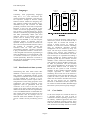
and the QRUPDO region’s FHLOLQJ
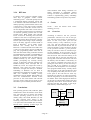
can be set to any way, they can even overlap.
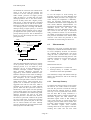
Figure 6.27 illustrates two possible settings.
On the left is the cache divided into one big
QRUPDO cache area, one smaller WUDQVLHQW cache
area and a small locked area. To the right the
QRUPDO cache region and the WUDQVLHQW region
overlap in part. The whole WUDQVLHQW region is
part of the QRUPDO region and but only a part of
the normal region is also a part of the WUDQVLHQW
region.
63
63
Normal floor
IBM will next year release a new PowerPC
processor having a new and unique cache
structure. The level 1 cache can be as big as
64kB and the set associativity up to 128-ways
which is quite high. Normal processors usually
have 4-way or 8-way set associativity in the
level-1 cache. Some just have 2-way set
associativity like the MPC860 used in this
thesis. The high associativity of the 440GP
gives a more linear behaviour of the cache.
Meaning that if 10% of the cache is locked the
average slow down on the rest of the system
should be around 10% as well. The effects of
the locking are more predictable and less time
is needed to test run and worry about which
critical functions are slowed down. IBM,
instead of using the common LRU replacement
algorithm choose a round-robin replacement
that in reality is just FIFO replacement
scheme. Each way has a pointer pointing to the
oldest block in the set. On a cache miss the
block pointed to by the pointer is thrown out, a
new block is loaded and the CPU increments
the pointer to point at the next block. This
pointer has a FHLOLQJ and a IORRU and the pointer
can’t point to any blocks above the URRI or
below the IORRU. The processor introduces a
new addition to the level-1 cache design that
IBM calls WUDQVLHQWcache. According to IBM’s
website the purpose of the WUDQVLHQW cache is to
map data that isn’t frequently be used to the
WUDQVLHQW region. IBM adds a second pointer to
each way with it’s own FHLOLQJ and IORRU. Now
two separate cache regions exist in the CPU,
one of the regions is called the QRUPDO region
and is the default cache region. The other
region is called the WUDQVLHQW region. The only
difference between the QRUPDO and the
WUDQVLHQW regions of the cache is that memory
blocks mapped to the WUDQVLHQW region must be
explicitly set in the MMU (Memory
Management Unit). The FHLOLQJ of the QRUPDO
region can’t be changed and is set to the last
way of the set. But the WUDQVLHQW FHLOLQJ, the
24
Normal
Normal
Transient Ceiling
Normal /
Transient
Transient
Transient floor
Locked
Locked
0
0
() *,+.-/10,2 T > 8@,;9: 6.D /B87 ( ;>F?/A46;-M ) M ) 89=.) =,*
Since locking is done in the same way as with
the MPC8260 the rest of this chapter focuses
on the transient region.
%LJWUDQVLHQWUHJLRQ
According to IBM the purpose of the WUDQVLHQW
region is to map data and instructions that
aren’t going to be used for very long to prevent
more important data being removed from the
QRUPDO cache. But the WUDQVLHQW region can
actually be used for the opposite, to keep data
in the cache longer than it would have survived
in the normal region. For instance, the purpose
of this thesis was to evaluate if locking parts of
the interrupt handler in the cache reduces the
interrupt latency. Now what if the interrupt
handler was mapped to the transient region and
the rest to the normal region. The WUDQVLHQW
region will in this case always contain part of
or the entire interrupt code. If the entire
interrupt handler fits in the WUDQVLHQW region the
result is exactly the same as if the interrupt
handler was locked into the cache. What
happens if the interrupt handler is bigger than
the transient region? Let’s look at a very
simple scenario where we have four sets and a
transient region of three ways, this just a
simple illustration. The interrupt handler
consists of 102 words; meaning 14 8-word
blocks are used. A real 440GP with 128Kbytes
of instruction cache has 16 sets each with 128
ways; each block has eight words.
http://www.ibm.com
- Page 31 -