1
3
as a function of two coordinates: the film width along the scan direction (axis Z), and the film
length along conveyer motion (axis Y), the dose value integrated along film thickness (axis X).
Modeling of EB transport from the exit window of accelerator to the incident surface of the
irradiated target takes into account scattering of electrons in an air gap. The requirements for
computer modeling were chosen so that in selected range of absorbed doses the relative rootmean-square statistical error was less than 1%.
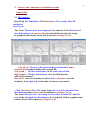
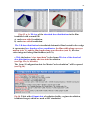
The software ModeDW provides the end-user with: data sets in the graphic and tabular form
for an absorbed dose within the dosimetric devices irradiated with a scanned EB; comprehensive
comparative analysis of output data; cognitive visualization of output data; decision of
optimization problems with using dynamic and statistical databases; presentation of physical and
operational characteristics for radiation processing.
Developed software can be used for the following problem tasks in radiation processing:
1. Determination of dependence of an absorbed dose distribution in a film as function of: density
and a chemical composition of film material; width and thickness of a film; geometrical
arrangement of a film in a wedge and stack; density and a chemical composition of a wedge and
stack materials; geometrical sizes of a wedge and stack; an orientation angle of a wedge and stack
relatively to incident electron beam.
2. Examination of dependence of an absorbed dose distribution in a film as function of: an EB
current and speed of a conveyer motion; an angular distribution of electrons in a beam; a spatial
distribution of electrons in a beam; a width of EB scanning; an angular characteristics of a scan
process; a time sweep of the scanner; an air gap between the scanner and a target.
3. The comparative analysis of visual and numerical difference of the depth-dose distributions in a
film for: various parameters of calculation; various calculation models; an experimental and
calculated depth-dose distributions in a film.
The feature of the software ModeDW are the following:
1. Built-in tools for statistical analysis.
2. Built-in tools for uncertainties estimation of results simulation due to uncertainties of input
data for radiation facility.
3. Estimation of uncertainties for physical models.
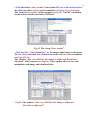
4. Comparison Modulus for visual and a numerical analysis of calculated and experimental data
and for decision of optimization tasks in radiation processing.
5. Built-in tools for processing of experimental dosimetric data and their comparison with
simulation predictions.
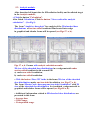
The software have intuitively clear graphical interface for the end-users with the following
features:
1. Detailed decomposition of input data for main elements of source and target (including
spectral characteristics for irradiation source).
2. Two levels for entering of input data via configuration files and manually.
3. Expert control for the range of input data and co-ordination for the set of geometrical and
physical input data.
4. Compatibility of export an input data to different modules.