1
Page 260
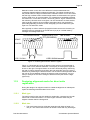
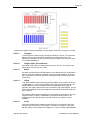
current 16-bit pattern generator using “nosort” exposure mode to expose
consecutive complete lines.
2. Provide a mechanism for fine tuning the tradeoff between settling
overheads and subfield stitching accuracy.
These enhancements are possible by changing the order in which shapes, after
fracturing into subfields, are exposed. The term “sub-shapes” is used to refer to
those shapes produced by fracturing the original shape into subfields.
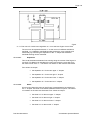
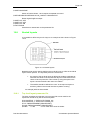
The order in which subfields are addressed affects the amount of subfield
stitching error on a shape passing through adjacent subfields due to beam drift.
The order in which subfields are addressed also affects the settling time. There
are 3 different settling delays used by the PG when switching from one subfield
to another:
1. Short: Used for jumps between adjacent subfields.
2. Medium: Used for jumps of 2 to 6 subfields
3. Long: Used for jumps of more than 6 subfields.
24.9.1.
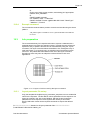
Defining the grating
The grating must be defined in terms of the linewidth, lineheight, pitch, start
position, the number of lines with dimensions in micrometres (consistent with
units of sman) and the relative dose for the lines. The origin for the start
x_position and y_position is the centre of field (consistent with sman). One
exposure field may contain groups of lines exposed with different relative doses.
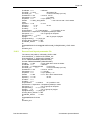
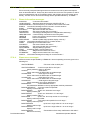
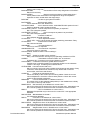
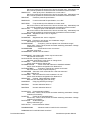
The Emma command is :
VB_OPER>qset grating n /width=<width_of_line>
/height=<height_of_line> /pitch=x=<x_pitch> | pitch=y=<y_pitch>/start=
(x_position,y_position)
/number_of_lines=<number>/relative_dose=<relative_dose>
/shape_meander=<number of shapes exposed together before switching
subfields> /block=<blocknumber between 1 and 19> /offset=(X=<>,Y=<>)
/scale=(X= ,Y=)
Part Number:878275
Vectorbeam Operator Manual