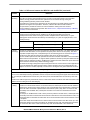
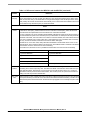
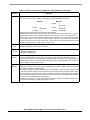
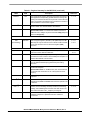
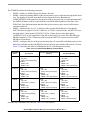
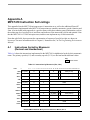
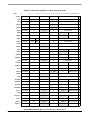
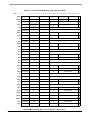
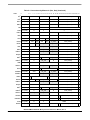
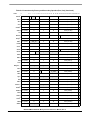
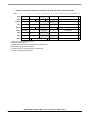
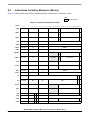
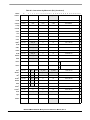
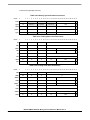
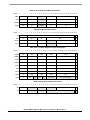
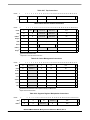
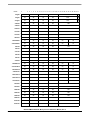
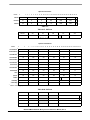
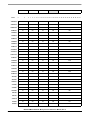
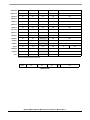
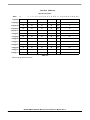
1
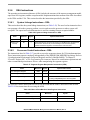
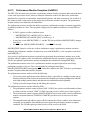
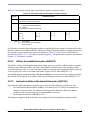
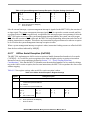
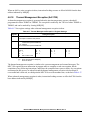
•
•
•
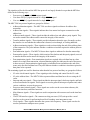
— Integer load and store multiple instructions
— Floating-point load and store
— Primitives used to construct atomic memory operations (lwarx and stwcx. instructions)
Flow control instructions—These include branching instructions, condition register logical
instructions, trap instructions, and other instructions that affect the instruction flow.
— Branch and trap instructions
— Condition register logical instructions
Processor control instructions—These instructions are used for synchronizing memory accesses
and management of caches, TLBs, and the segment registers.
— Move to/from SPR instructions
— Move to/from MSR
— Synchronize
— Instruction synchronize
— Order loads and stores
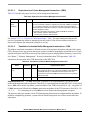
Memory control instructions—These instructions provide control of caches, TLBs, and SRs.
— Supervisor-level cache management instructions
— User-level cache instructions
— Segment register manipulation instructions
— Translation lookaside buffer management instructions
This grouping does not indicate the execution unit that executes a particular instruction or group of
instructions.
Integer instructions operate on byte, half-word, and word operands. Floating-point instructions operate on
single-precision (one word) and double-precision (one double word) floating-point operands. The
architecture uses instructions that are four bytes long and word-aligned. It provides for byte, half-word,
and word operand loads and stores between memory and a set of 32 GPRs. It also provides for word and
double-word operand loads and stores between memory and a set of 32 floating-point registers (FPRs).
Computational instructions do not modify memory. To use a memory operand in a computation and then
modify the same or another memory location, the memory contents must be loaded into a register,
modified, and then written back to the target location with distinct instructions.
Processors follow the program flow when they are in the normal execution state. However, the flow of
instructions can be interrupted directly by the execution of an instruction or by an asynchronous event.
Either kind of exception may cause one of several components of the system software to be invoked.
Effective address computations for both data and instruction accesses use 32-bit unsigned binary
arithmetic. A carry from bit 0 is ignored in 32-bit implementations.
MPC7410/MPC7400 RISC Microprocessor Reference Manual, Rev. 2
Freescale Semiconductor
1-29