1
Licensed to: iChapters User
MEDICAL GAS SUPPLY EQUIPMENT • 19
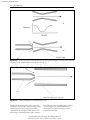
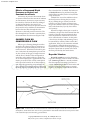
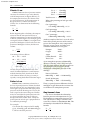
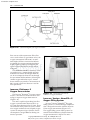
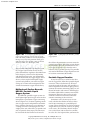
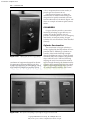
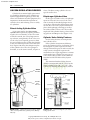
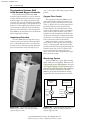
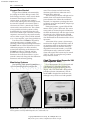
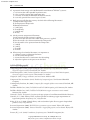
Figure 1-17 A photograph of the Invacare ® Venture ®
HomeFill TM II oxygen filling system. This unit is a
multi-stage pump designed to fill portable oxygen
cylinders.
designed to interface with the Invacare® ML6
(164 liter) and M9 (248 liter) capacity portable
oxygen cylinders. It takes approximately 11⁄2 to
21⁄2 hours to fill a cylinder (ML6 and M9,
respectively). The filling system provides
patient independence from their home care
provider delivering filled portable oxygen
cylinders for ambulatory use, as well as longterm cost savings.
Liter flow from the concentrator during
transfilling is limited to 0 to 3 L/min. The
input to the transfilling compressor during
operation is 2 L/min. Power consumption
averages 200 watts when transfilling the cylinders. An electrical outlet separate from the
concentrator must be available for the HomeFill II® oxygen filling system, in that each unit
has its own independent power supply.
Puritan Bennett
Companion 492a
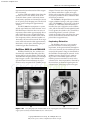
The Puritan Bennett Companion 492a oxygen concentrator operates using two molecu-
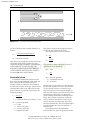
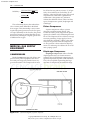
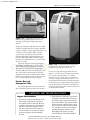
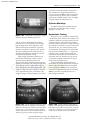
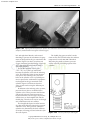
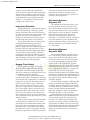
Figure 1-18 A photograph of the Puritan Bennett
Companion 492a oxygen concentrator. (Courtesy
Puritan Bennett Corporation, Lenexa, KS)
lar sieves to separate oxygen from room air
(Figure 1-18). The unit is capable of providing
95% oxygen concentration ± 3% at flows
between 1 and 3 L/min. If the oxygen flow is
4 L/min, oxygen concentrations are 92% ± 3%.
During normal operation the Companion 492a
will consume an average of 330 watts electrical
power. Ideally, the concentrator should be the
only item connected to the electrical outlet and
on that electrical circuit.
ASSEMBLY AND TROUBLESHOOTING
Oxygen Concentrators
1. Position the oxygen concentrator in the
room where your patient will spend
the majority of his or her time. Be sure
to choose a location away from heaters,
radiators, and hot-air registers. Place
the unit so that the back and sides are
at least 6 inches away from any objects
to ensure adequate air flow through
the unit.
2. Concentrators incorporate a particle filter. Remove the filter from its housing
or holder. Inspect the particle filter for
lint or other debris. The patient should
be instructed to wash this filter at least
once a week. The filter may be washed
in a solution of warm water and dishwashing detergent and then rinsed
thoroughly with warm tap water
and toweled dry. The filter should be
Copyright 2005 Thomson Learning, Inc. All Rights Reserved.
May not be copied, scanned, or duplicated, in whole or in part.