1
Licensed to: iChapters User
MEDICAL GAS SUPPLY EQUIPMENT • 5
of water pressure or Kilopascals (KPa) (le
Système International d’Unités [si], or metric
units). Table 1-1 lists standard units of pressure measurement.
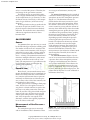
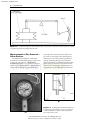
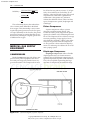
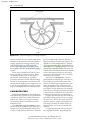
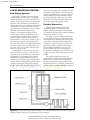
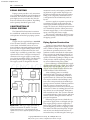
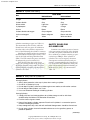
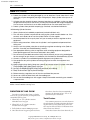
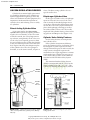
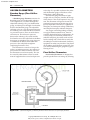
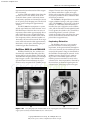
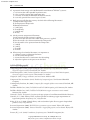
A Bourdon gauge (Figure 1-4) consists of a
hollow coiled metal tube with an elliptical
cross section that is exposed to an area where
gas pressure measurement is desired.
Attached to the coiled tube are a gear mechanism and a pointer. As pressure increases, the
tube begins to straighten, causing the gears to
turn and the position of the pointer to change.
The tube straightens because the pressure
causes the cross section of the tube to become
rounder. As the cross section changes, the outside of the tube is stretched while the inside
becomes compressed. These gauges are commonly found on medical gas cylinders, indicating the pressure inside of the cylinder, and
are calibrated in pounds per square inch (psi).
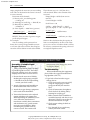
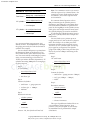
TABLE 1-1 Units of Pressure Measurement
Unit
1 Atm
Equivalent
=
1 cm H2O =
.735 mm Hg
.0142 lb/in2
1 mmHg
=
1.36 cm H2O
.019 lb/in2
1 KPa
=
.133 mm Hg
.098 cm H2O
6.895 lb/in2
1 lb/in2
=
51.7 mm Hg
70.34 cm H2O
GAS FLOW
Cause
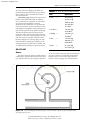
Gas flows from one point to another due to
a difference in pressure between the two points.
Gas will flow from an area of greater pressure
760 mm Hg
29.921 in Hg
1034 cm H2O
101.325 KPa
14.7 lb/in2
to an area of lower pressure. The area of greater
pressure contains gas molecules with greater
kinetic activity. As a result of the increased
kinetic activity (energy), the molecules push
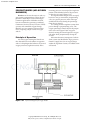
Figure 1-4 A functional diagram of a Bourdon gauge. As the coiled tube expands, the gear mechanism rotates,
causing the pointer to move.
Copyright 2005 Thomson Learning, Inc. All Rights Reserved.
May not be copied, scanned, or duplicated, in whole or in part.