1
Licensed to: iChapters User
CHAPTER 1
MEDICAL GAS SUPPLY
EQUIPMENT
INTRODUCTION
Administration of medical gases is involved in most of the tasks performed by a respiratory
care practitioner. It is important to understand how the supply equipment for oxygen therapy
and mixed-gas therapy operates and how to troubleshoot these devices when problems arise.
In this chapter you will study the physics of equipment operation, focusing especially on gas
supply systems. Only by thoroughly understanding the equipment and its components can you
safely use it and troubleshoot it if it fails to function properly.
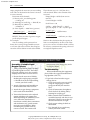
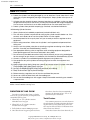
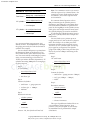
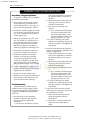
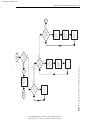
OBJECTIVES
After completing this chapter, the student
will accomplish the following objectives:
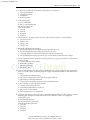
— Fick’s law
— Henry’s law
— Graham’s law
PHYSICS OF THE PRINCIPLES
• Describe the kinetic theory of gases.
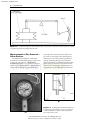
• Define the term gas pressure; explain what
causes it and how it is measured.
• Explain Pascal’s law.
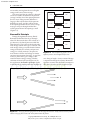
• Explain what causes gases to flow from
one place to another and how gas flow is
measured.
• Explain Bernoulli’s principle.
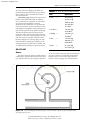
• Describe the principle of viscous shearing
and vorticity.
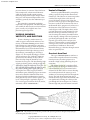
• Explain how ejectors work:
— in conjunction with venturi tubes
— with constant area ducts
• Describe choked flow and the conditions
under which it occurs.
• Explain the significance of Reynolds’
number.
• Apply the following laws to solve for
volume, temperature, or pressure:
— Boyle’s law
— Charles’ law
— Dalton’s law
— Gay-Lussac’s law
— Combined or ideal gas law
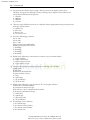
MEDICAL GAS SUPPLY EQUIPMENT
• Differentiate between the following supply
systems; describe their construction and
their principles of operation:
— cylinders
— liquid reservoirs, including calculation of
oxygen duration based on weight
— piping systems
— compressors
— concentrators
• Identify the contents of a medical gas
cylinder, using the U.S. and international
color code system, for the following gases:
— oxygen
— carbon dioxide
— nitrous oxide
— cyclopropane
— helium
— carbon dioxide and oxygen
— helium and oxygen
— air
• Given an oxygen “E” or “H” cylinder, gauge
pressure and liter flow, calculate how long
the cylinder will last.
Copyright 2005 Thomson Learning, Inc. All Rights Reserved.
May not be copied, scanned, or duplicated, in whole or in part.