1
Chapter 1: Building Resources
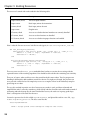
The tests are very similar to what you’d use for the normal edit and update, just with different URLs. The
response for the update method is the ingredient display string, not a redirect to the show ingredient
page, which enables the updated ingredient to be inserted back into place on the recipe page. In the
interest of full disclosure among friends, I should reveal that I didn’t actually develop this part strictly
test-first — I played around with the layout within the recipe page a little bit before going back and
writing the test.
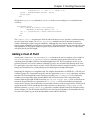
Because this is a new action for a RESTful controller, new routes have to be added in the routes.rb file.
Modify it as follows:
map.resources :recipes do |recipes|
recipes.resources :ingredients,
:member => {:remote_edit => :get, :remote_update => :put}
end
This creates a new remote_edit route that responds to GET, and a remote_update route that
responds to PUT. Each of these routes gets a named method to refer to it: remote_edit_recipe_
ingredient_path and remote_update_recipe_ingredient_path. Run the rake routes command
for full details.
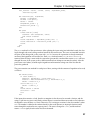
Both of these methods need controller methods and views. The controller methods are quite simple, and
go in app/controller/ingredient_controller.rb as follows:
def remote_edit
edit
end
You can’t get much simpler than that. The remote_edit method uses the same method of getting its
ingredient as edit does, so in the interest of avoiding cut and paste, I just call the other method directly.
The next step would be another before_filter, which would make both methods empty.
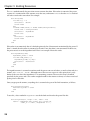
There’s also the following view for remote_edit, keeping things on as few lines as possible:
<% remote_form_for(@ingredient,
:url => remote_update_recipe_ingredient_path(@recipe, @ingredient),
:update => “ingredient_#{@ingredient.id}”) do |f| %>
<table>
<tr>
<th class=”subtle”>Amount</th>
<th class=”subtle”>Unit</th>
<th class=”subtle”>Ingredient</th>
<th class=”subtle”>Directions</th>
</tr>
<tr>
<td><%= f.text_field :amount, :size => “5” %></td>
<td><%= f.text_field :unit, :size => “10” %></td>
<td><%= f.text_field :ingredient, :size => “25” %></td>
<td><%= f.text_field :instruction, :size => “15” %></td>
<td><%= f.submit “Update” %></td>
</tr>
</table>
<% end %>
36