
1
General Timing Considerations
8150 Technical Guide
to any source sent to it via an 8150 Aux output, provided that the
destination device is referenced to the 8150 Aux Ref signal.
Video encoders often require a black burst reference to add correct sync,
burst, and blanking to the final composite output. The 8150 does not
output a black burst signal, but in 525-line environments, the Accom A28
Digital Encoder has a mode that can properly encode the 8150’s output
for a composite digital (D2) or analog (NTSC) signal.
Setting the outputs to a full frame delay is useful in allowing you to
retime the switcher output back into your video system, or for routing
the switcher output to a device that locks only to reference, and cannot
lock to its own input. Another use is when editing with analog VTRs,
whose outputs lock to input video when in E-E or Record mode.
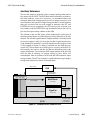
System Locking Reference
The 8150 accepts either NTSC or PAL black burst (nominally 340mV or
300mV p-p into 75 ohms, respectively) or 525/625 composite sync (either
2V or 4V p-p into 75 ohms) as a system locking reference signal. Ensure
that the line standard selected in the Engineering Setup menu matches
the line standard of the reference signal. The SYNC LED on the Output
module lights green when it detects a reference signal at the selected line
standard. See Section 5 – Engineering Setup for more information.
Automatic Input Timing
The 8150 can accept sources that are advanced by up to one half line or
delayed by up to two lines with regard to reference; this eliminates the
need for source timing adjustments. The source, however, must be
genlocked to the same reference as the 8150; the automatic input timing
does not function as a frame synchronizer or time base corrector. Also,
if a DVE or other source is locked to the Aux Ref output, the 8150 can
automatically compensate for the timing delay of the returning video.
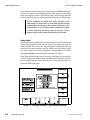
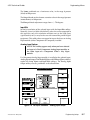
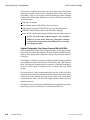
Propagation (Throughput) Delay
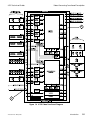
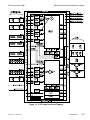
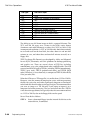
As mentioned above, the processing delay through the 8150 is more
significant than with some other component switchers. The delays fall
into three main categories. The following applies to the standard 8100
Output module Aux 1 and 2 outputs, the Enhanced (Frame Delay)
Output module with the Aux 1 and 2 outputs set to Auto delay, and the
Aux 3 and 4 outputs. If an output is set to one frame delay, all sources
are delayed by a full frame.
6-2
System Timing
9100-0212-04 - May 2000


















































































![User's Manual[FBD1] ProMax ProMedia Converter](http://vs1.manualzilla.com/store/data/006881326_1-9e3a0042b45fc9f5f8ff38953ecf78a2-150x150.png)