1
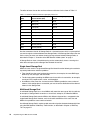
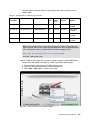
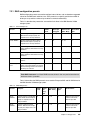
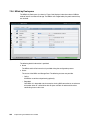
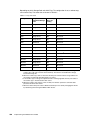
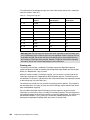
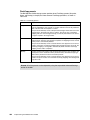
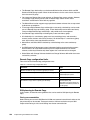
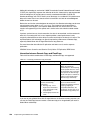
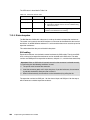
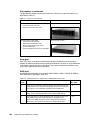
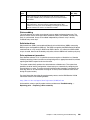
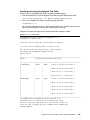
Slot numbers in enclosures The IBM Storwize V3700 is made up of enclosures. There are six types of enclosures, as described in Table 11-7. Table 11-7 Enclosure slot numbering Enclosure type Number of slots Enclosure 12x 3.5-inch drives: Control enclosure 2072-12C Expansion enclosure 2077-12E Enclosure with 12 slots Enclosure 24x 2.5-inch drives: Control enclosure 2072-24C Expansion enclosure 2072-24E Direct current (dc)-powered control enclosure 2072-2DC dc-powered expansion enclosure 2072-2DE Enclosure with 24 slots Array goal Each array has a set of goals that describe the location and performance of each array member. A sequence of drive failures and hot spare takeovers can leave an array unbalanced (with members that do not match these goals). The system automatically rebalances such arrays when appropriate drives are available. RAID level An IBM Storwize V3700 disk array supports RAID 0, RAID 1, RAID 5, RAID 6, or RAID 10. Each RAID level is described in Table 11-8. Table 11-8 RAID levels that are supported by an IBM Storwize V3700 array 588 RAID level Where data is striped Drive count (Min - Max) 0 Arrays have no redundancy, and do not support hot-spare takeover. Data is striped evenly across the drives without parity. Performance is improved at the expense of the redundancy provided by other RAID levels. 1-8 1 Provides disk mirroring, which duplicates data between two drives. A RAID 1 array is internally identical to a two-member RAID 10 array. 2 5 Arrays stripe data over the member drives with one parity strip on every stripe. RAID 5 arrays have single redundancy, with higher space efficiency than RAID 10 arrays, but with some performance penalty. RAID 5 arrays can tolerate no more than one member drive failure. 3 - 16 Implementing the IBM Storwize V3700