1
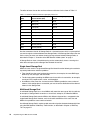
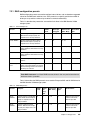
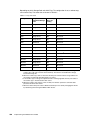
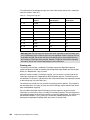
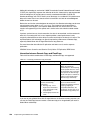
Adding this technology at each end of a WAN Transmission Control Protocol/Internet Protocol (TCP/IP) link significantly improves the utilization of the link. It does this by applying patented artificial intelligence (AI) to hide latency normally associated with WANs. Instead, the Storwize technology uses TCP/IP latency to its advantage. In a traditional IP link performance drops off as more data is sent, because each transmission must wait for acknowledgment before the next can be sent. Rather than wait for the acknowledgment to come back, the Storwize technology sends more sets of packets across other virtual connections. The number of virtual connections is controlled by the AI engine. This improves WAN connection use, which results in a data transfer rate approaching full line speed, and is similar to the use of buffer-to-buffer credits in FC. If packets are lost from any virtual connection, the data is retransmitted, and the remote unit waits for it. Presuming that this is not a frequent problem, overall performance is only marginally affected because of the delay of an extra round trip for the data that is resent. The implementation of this technology can greatly improve the performance of Remote Copy, especially Global Mirror with Change Volumes over long distances. For more information about Native IP replication and how to use it, see the separate publication: IBM SAN Volume Controller and Storwize Family Native IP Replication, REDP-5103 Interaction between Remote Copy and FlashCopy Table 10-5 lists which combinations of FlashCopy and Remote Copy are supported. Table 10-5 FlashCopy and Remote Copy interaction Component Remote Copy primary Remote Copy secondary FlashCopy source Supported Supported. When the FlashCopy relationship is in the Preparing and Prepared states, the cache at the Remote Copy secondary site operates in write-through mode. This process adds more latency to the already-latent Remote Copy relationship. FlashCopy target This combination is supported and has the following restrictions: Running stop -force might cause the Remote Copy relationship to fully resynchronize. The I/O group must be the same. This combination is supported by the restriction that the FlashCopy mapping cannot be copying, stopping, or suspended. Otherwise, the restrictions are the same as at the Remote Copy primary site. If you are not using Global Mirror with Change Volumes, for disaster recovery purposes, you can use the FlashCopy feature to create a consistent copy of an image before you restart a Global Mirror relationship. 528 Implementing the IBM Storwize V3700