1
CoPilot User’s Manual
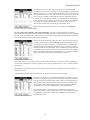
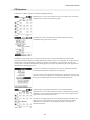
When inserting a new waypoint, the Mid… button displays the twenty waypoints that are nearest a midpoint
of the leg. The midpoint is the specified percentage of the way from the previous waypoint to the selected
waypoint. In order to split a leg into two, simply specify a 50% midpoint and then select a new waypoint to
be inserted into the route. In order to split a leg into three, first select a 33% midpoint to find the first
intermediate waypoint, and then select a 50% midpoint of the remaining portion to find the second
intermediate waypoint.
If the ident of the new waypoint is not known, the Find… button opens a dialog box that facilitates a search
of the waypoint database for any text within the waypoint description or waypoint ident. The New…button
opens the Edit Waypoint form in order to add a new waypoint to the database. The small triangle button opens
a dialog box with a list of the most recently used waypoints.
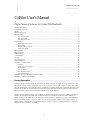
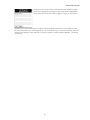
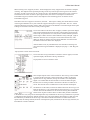
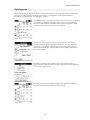
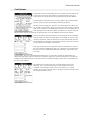
If one of the idents on the Route form is tapped, a window opens that displays
some useful information about the waypoint. The beginning and end of the
aviation day are specified as UTC time, and are valid for the date specified
for the flight. CoPilot uses the aviation definition of day and night (night is
defined as when the sun is six degrees or more below the horizon). This
differs (by about 30 minutes) from the official definition of sunrise/sunset.
The Morse code for the ident is also displayed.
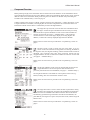
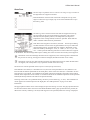
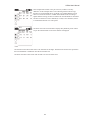
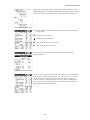
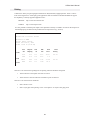
After the Morse code, any information that was entered into the Waypoint
Note field of the waypoint database is displayed (see page 7 - Edit Waypoint
Form).
Tap anywhere to return to the Route form.
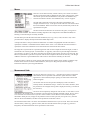
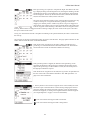
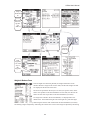
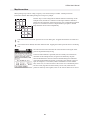
If one of the lines of leg information on the Route form is tapped, a window
opens that displays the details of the leg calculations.
Tap anywhere to return to the Route form.
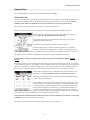
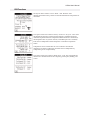
This example explains some of the calculations. The first leg is from CYRO
to CYTZ, and the second leg is from CYTZ back to CYRO. A blank leg
separates the two legs; therefore, the legs are treated as two independent
flights. It is assumed that the aircraft lands in CYTZ and takes off again;
therefore, the second leg includes a calculation of the time to climb out of
CYTZ. The start/taxi fuel is included twice in the total fuel consumption.
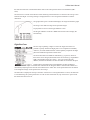
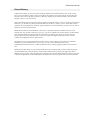
The distances are the same, but there are different times for the two legs. The
ETE for the first leg is 1:50, and the ETE for the second leg is 1:37. The most
obvious reason for the difference is the wind. The first leg has a headwind
and the return leg has a tailwind. There are three other possible contributors
to the difference. First, the pressure and temperature may be different for the two legs. Differences in pressure
or temperature affect the density altitude; therefore, the cruise speed and the time/distance to climb. Second,
the altitude may be different for the two legs. This affects both the time/distance to climb and the cruise
speed. Third, the starting altitude (elevation of the departure point) is different for the two legs; therefore, the
time/distance to climb is different.
12