1
CoPilot User’s Manual
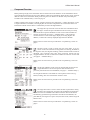
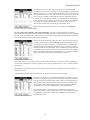
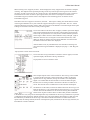
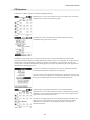
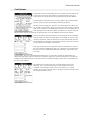
The third aircraft form (Climb) collects the data used to calculate climb
performance and climb fuel consumption. Climb performance (time to climb,
distance to climb, etc.) is used to estimate flight times. In most cases, the two
easiest altitudes to enter are zero (sea level) and the service ceiling. Note: the
service ceiling is defined as the altitude at which the climb speed drops to
100 ft/min. If two altitudes are entered, it is assumed that the values change
linearly between sea level and the service ceiling. If more than two altitudes
are entered, the program fits a quadratic curve to the points given, and
performs the calculations by integrating the appropriate curves.
Note: The climb airspeed entered on this form should be the indicated
airspeed (IAS) at the specified altitude.
It is very important to include a wide range of altitudes. The time to climb and the fuel to climb are
calculated by integrating the equations that are derived from the data. It is important that the data is provided
for a full range of altitudes from sea level to the service ceiling. A wide range of altitudes results in the most
accurate mathematical model of the aircraft performance.
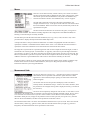
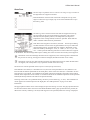
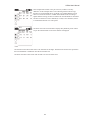
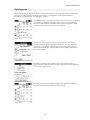
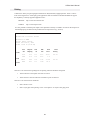
There is an option for entering fuel as Fuel Flow, which is the flow rate (e.g.
in gallons per hour) when climbing through the specified altitude, or Fuel
Used which is the amount of fuel (e.g. in gallons) required to climb to the
specified altitude. Most light aircraft manuals specify the amount of fuel
required to climb to various altitudes. The C172 manual provides climb fuel
as a measure of fuel required to climb to a specified altitude. In the example
shown, the column header has been changed to Fuel Used and the number of
gallons required to climb to the specified altitude is entered.
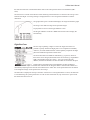
If this climb data is not provided, the leg times assume that the aircraft is already at the cruising altitude (i.e.
no extra time is added for the climb). In practice, this is not a big problem since it is easy to add an estimate
of climb time.
The additional fuel used for climbing is calculated. If the information is not supplied, the cruise fuel flow is
used for the climb.
CoPilot does not perform descent calculations -- it assumes that descent is at cruise speed.
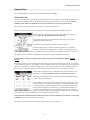
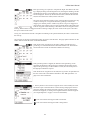
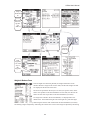
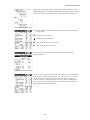
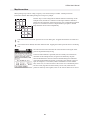
There are cases when there is a different climb profile for different parts of
the climb. For example, high power for the first part of the climb, and then a
lower power for the remainder of the climb. CoPilot can accommodate two
climb profiles. If an altitude is repeated, two equations are calculated. The
first equation is used when climbing below the repeated altitude, and the
second equation is used when climbing above the repeated altitude.
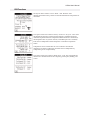
In the example shown, a linear equation is calculated for climbs below
10,000 feet (linear since two data points are given), and a quadratic equation
is calculated for climbs above 10,000 feet (quadratic since more than two
data points are given).
5