1
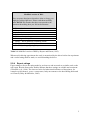
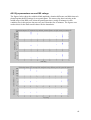
Vigilance
score
0
1
2
3
4
EEG content
Background of continuous beta
waves, no alpha, no theta waves
Occurrence of alpha and/or theta
waves, in at least two regions of the
brain, for less than a cumulative
length of 5 second
Occurrence of alpha and/or theta
waves, in at least two regions of the
brain, for less than a cumulative
length of 5 second
or
occurrence of alpha and/or theta
waves, in at least two regions of the
brain, for more than a cumulative
length of 5 second
Occurrence of alpha and/or theta
waves, in at least two regions of the
brain, for more than a cumulative
length of 5 second
Continuous alpha and/or theta waves
Blinks and eye
movements
Normal blinks and eye
movements
Normal blinks and eye
movements
and slow blink (s) or eye
movement (s)
and normal blinks and eye
movements
and slow blink (s) or eye
movement (s)
Slow blinks and eye
movements
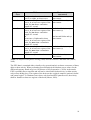
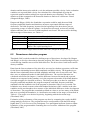
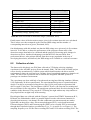
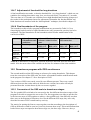
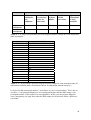
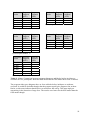
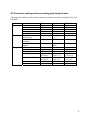
Table 5.1: Objective Sleepiness Scoring (OSS) derived from EEG and blink data (Muzet,
2002).
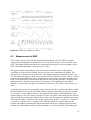
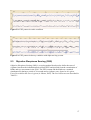
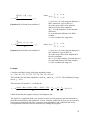
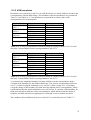
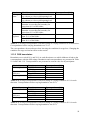
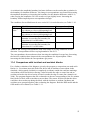
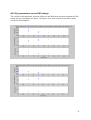
The EEG data is examined either visually or by spectral analysis to detect occurrence of theta,
alpha or beta activity. When performing spectral analysis the absolute power values for the
different frequency bands are given. Occurrence of low frequencies (< 4 Hz) in the awake
EEG is probably due to artefacts and will not be classified as delta activity, as delta activity
only occurs during sleep. The regions of the brain are the occipital, temporal, parietal, frontal
and central region. To eliminate cases where only localized EEG patterns arise, the activity
shall be found in at least two regions of the brain (Muzet, 2002).
18