1
Chapter 24
RNA structure
Contents
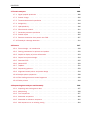
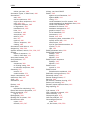
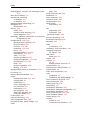
24.1 RNA secondary structure prediction . . . . . . . . . . . . . . . . . . . . . . . 502
24.1.1
Selecting sequences for prediction . . . . . . . . . . . . . . . . . . . . . 502
24.1.2
Structure output . . . . . . . . . . . . . . . . . . . . . . . . . . . . . . . 503
24.1.3
Partition function
24.1.4
24.1.5
Advanced options . . . . . . . . . . . . . . . . . . . . . . . . . . . . . . 504
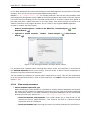
Structure as annotation . . . . . . . . . . . . . . . . . . . . . . . . . . . 507
. . . . . . . . . . . . . . . . . . . . . . . . . . . . . . 504
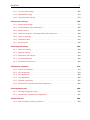
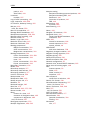
24.2 View and edit secondary structures . . . . . . . . . . . . . . . . . . . . . . . 508
24.2.1
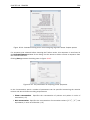
Graphical view and editing of secondary structure . . . . . . . . . . . . . 508
24.2.2
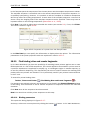
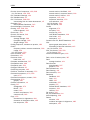
Tabular view of structures and energy contributions . . . . . . . . . . . . 511
24.2.3
Symbolic representation in sequence view . . . . . . . . . . . . . . . . . 514
24.2.4
Probability-based coloring . . . . . . . . . . . . . . . . . . . . . . . . . . 515
24.3 Evaluate structure hypothesis . . . . . . . . . . . . . . . . . . . . . . . . . . 515
24.3.1
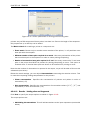
Selecting sequences for evaluation . . . . . . . . . . . . . . . . . . . . . 516
24.3.2
Probabilities . . . . . . . . . . . . . . . . . . . . . . . . . . . . . . . . . 517
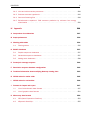
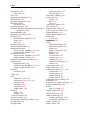
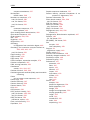
24.4 Structure Scanning Plot
. . . . . . . . . . . . . . . . . . . . . . . . . . . . . 518
24.4.1
Selecting sequences for scanning . . . . . . . . . . . . . . . . . . . . . 518
24.4.2
The structure scanning result . . . . . . . . . . . . . . . . . . . . . . . . 519
24.5 Bioinformatics explained: RNA structure prediction by minimum free energy
minimization . . . . . . . . . . . . . . . . . . . . . . . . . . . . . . . . . . . . 520
24.5.1
The algorithm . . . . . . . . . . . . . . . . . . . . . . . . . . . . . . . . 521
24.5.2
Structure elements and their energy contribution . . . . . . . . . . . . . 523
Ribonucleic acid (RNA) is a nucleic acid polymer that plays several important roles in the cell.
As for proteins, the three dimensional shape of an RNA molecule is important for its molecular
function. A number of tertiary RNA structures are know from crystallography but de novo prediction
of tertiary structures is not possible with current methods. However, as for proteins RNA tertiary
structures can be characterized by secondary structural elements which are hydrogen bonds
within the molecule that form several recognizable "domains" of secondary structure like stems,
hairpin loops, bulges and internal loops. A large part of the functional information is thus
501