1
CHAPTER 18. PRIMERS
18.6.1
331
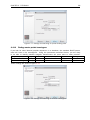
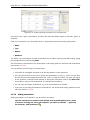
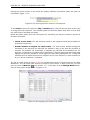
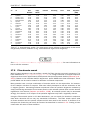
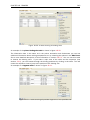
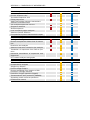
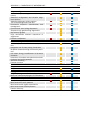
Nested PCR output table
In nested PCR there are four primers in a solution, forward outer primer (FO), forward inner primer
(FI), reverse inner primer (RI) and a reverse outer primer (RO).
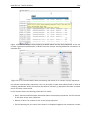
The output table can show primer-pair combination parameters for all four combinations of
primers and single primer parameters for all four primers in a solution (see section on Standard
PCR for an explanation of the available primer-pair and single primer information).
The fragment length in this mode refers to the length of the PCR fragment generated by the inner
primer pair, and this is also the PCR fragment which can be exported.
18.7
TaqMan
CLC Main Workbench allows the user to design primers and probes for TaqMan PCR applications.
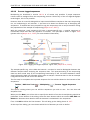
TaqMan probes are oligonucleotides that contain a fluorescent reporter dye at the 5' end and a
quenching dye at the 3' end. Fluorescent molecules become excited when they are irradiated and
usually emit light. However, in a TaqMan probe the energy from the fluorescent dye is transferred
to the quencher dye by fluorescence resonance energy transfer as long as the quencher and the
dye are located in close proximity i.e. when the probe is intact. TaqMan probes are designed
to anneal within a PCR product amplified by a standard PCR primer pair. If a TaqMan probe is
bound to a product template, the replication of this will cause the Taq polymerase to encounter
the probe. Upon doing so, the 5'exonuclease activity of the polymerase will cleave the probe.
This cleavage separates the quencher and the dye, and as a result the reporter dye starts to
emit fluorescence.
The TaqMan technology is used in Real-Time quantitative PCR. Since the accumulation of
fluorescence mirrors the accumulation of PCR products it can can be monitored in real-time and
used to quantify the amount of template initially present in the buffer.
The technology is also used to detect genetic variation such as SNP's. By designing a TaqMan
probe which will specifically bind to one of two or more genetic variants it is possible to detect
genetic variants by the presence or absence of fluorescence in the reaction.
A specific requirement of TaqMan probes is that a G nucleotide can not be present at the 5' end
since this will quench the fluorescence of the reporter dye. It is recommended that the melting
temperature of the TaqMan probe is about 10 degrees celsius higher than that of the primer pair.
Primer design for TaqMan technology involves designing a primer pair and a TaqMan probe.
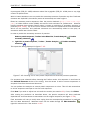
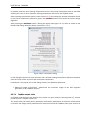
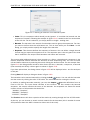
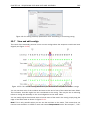
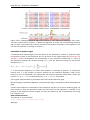
In TaqMan the user must thus define three regions: a Forward primer region, a Reverse primer
region, and a TaqMan probe region. The easiest way to do this is to designate a TaqMan
primer/probe region spanning the sequence region where TaqMan amplification is desired. This
will automatically add all three regions to the sequence. If more control is desired about the
placing of primers and probes the Forward primer region, Reverse primer region and TaqMan
probe region can all be defined manually. If areas are known where primers or probes must not
bind (e.g. repeat rich areas), one or more No primers here regions can be defined. The regions
are defined by making a selection on the sequence and right-clicking the selection.
It is required that at least a part of the Forward primer region is located upstream of the TaqMan
Probe region, and that the TaqMan Probe region, is located upstream of a part of the Reverse
primer region.