1
I N T R O D U C T I O N
T O
V I R T E X - I I
P R O
A A N D
I S E
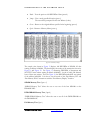
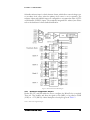
design hierarchy browser, and an area constraint editor. By using PACE, designers are
able to observe and describe information regarding the connectivity and resource
requirements of a design, resource layout of a target FPGA, and the mapping of the
design onto the FPGA via location/area.
This rich mixture of design entry capabilities provides the easiest to use design
environment available today for your logic design.
2.1.2
Synthesis
Synthesis is one of the most essential steps in your design methodology. It takes your
conceptual Hardware Description Language (HDL) design definition and generates the
logical or physical representation for the targeted silicon device. A state of the art
synthesis engine is required to produce highly optimized results with a fast compile and
turnaround time. To meet this requirement, the synthesis engine needs to be tightly
integrated with the physical implementation tool and have the ability to proactively
meet the design timing requirements by driving the placement in the physical device. In
addition, cross probing between the physical design report and the HDL design code
will further enhance the turnaround time.
Xilinx ISE provides the seamless integration with the leading synthesis engines from
Mentor Graphics, Synopsys, and Synplicity. You can use the synthesis engine of your
choice. In addition, ISE includes Xilinx proprietary synthesis technology, XST. You
have options to use multiple synthesis engines to obtain the best-optimized result of
your programmable logic design.
2.1.3
Implementation and Configuration
Programmable logic design implementation assigns the logic created during design
entry and synthesis into specific physical resources of the target device.
The term “place and route” has historically been used to describe the implementation
process for FPGA devices and “fitting” that has been used for CPLDs.
Implementation is followed by device configuration, where a bitstream is generated
from the physical place and route information and downloaded into the target
programmable logic device.
To ensure designers get their product to market quickly, Xilinx ISE software provides
several key technologies required for design implementation:
•
Ultra-fast runtimes enable multiple “turns” per day
•
ProActive™ Timing Closure drives high-performance results
•
Timing-driven place and route combined with “push-button” ease
•
Incremental Design
DN6000K10SC User Guide
www.dinigroup.com
21